
Good artists copy, great artists steal. – Steve Jobs
I guess, according to Steve Jobs (not Picasso, who this quote is often misattributed to), that makes me a good artist. But, and there is always a but, I find nothing wrong with starting your artistic journey by imitating the work of masters. For example, Japanese manga artist Toyotarou is famously known for imitating Akira Toriyama’s iconic art style, and imitation is just the beginning. The keyword is mastering, much like Toyotarou, who mastered Toriyama’s style and is now his official successor for the Dragon Ball Super manga.

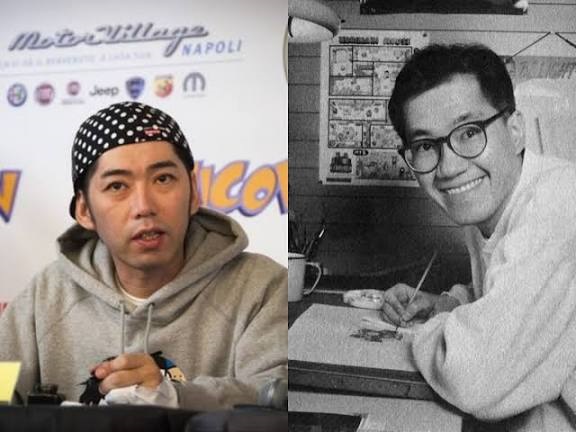

Mastering brings about real learning, and the latter happens when you start asking questions. In my case, those same questions were spurred by a wish to develop my own style and evoke a sense of originality in my artwork. This is still a work in progress, no thanks to my on-and-off approach to my art (after all, I’m the lost artist).
So, let’s go ahead and refine Jobs’ quote to better suit our situation,
Good artists imitate, great artists emulate.
Imitation is akin to scratching the surface. You get to replicate a specific style, subject, or technique. It is still a valid approach because it allows you to build muscle memory and also trace the footsteps of another artist. Unfortunately, imitation lacks creative development or personal perspective.
Emulation is all about internalizing the process of imitation. This comes from asking questions. You ask why a specific artist’s style is effective and apply those rules to your own unique concepts. The point here is to ask enough questions and frequently so that you internalize the answers you find and make them part of your own distinctive style. You aren’t necessarily “stealing” but combining your personal alchemy and perspective to build something completely new.
Long story short, imitation is great for practice and reverse-engineering a craft. On the other hand, emulation is transformative and fuels your creative process by helping you deconstruct your idol’s technique, build your visual vocabulary, and, most importantly, discover what you don’t like.
I have been doing a lot of emulating, and trust me, it is so much fun to discover the tricks behind an artist’s work. Though not a recent example, my first step towards emulation began when I did an illustration of a classical, animation-style baby with Aaron Blaise for his Procreate course.
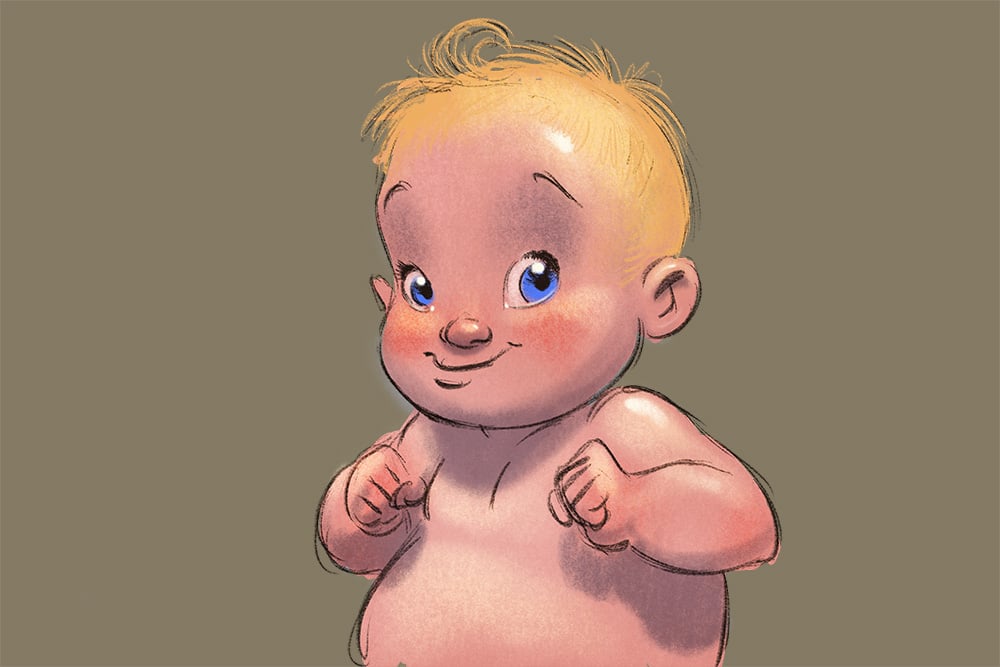
Frustrated that the baby’s anatomy wasn’t coming along like Aaron’s, I realized I was basing my work’s perfection on another’s metric. So, I threw it aside and made my own rendition, inspired by my then-baby daughter:
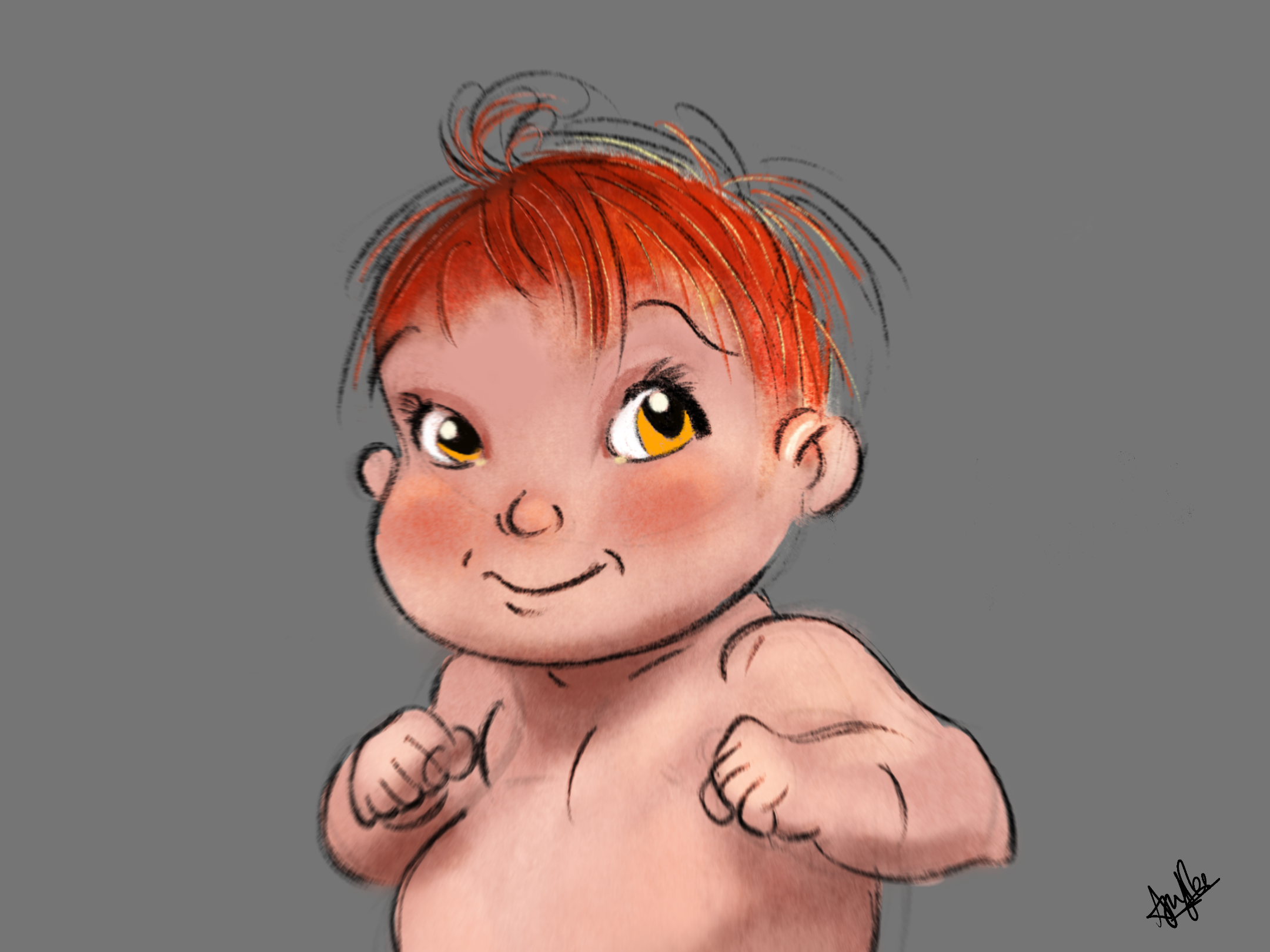
Could it be better? Yes, absolutely. There is always space to improve, but only if you allow it for yourself. So, to all those good artists, like me, who are out there, you are not alone in this seemingly Sisyphean effort towards mastery. Try emulation for a change. Don’t just imitate; study other artists for your own learning, ask a lot of questions, and then put it all to use in your own masterpiece. Most importantly, make sure to judge your final piece by your own metric and yearning for mastery, not that of those you are emulating.


I think all art forms are the elitists’ representation of the reality experienced and imagined. They do not make sense to the poor. Art there is for the privileged by the privileged.
LikeLike