The Lost Artist – Chapter 3 – From Imitation to Emulation

Good artists copy, great artists steal. – Steve Jobs

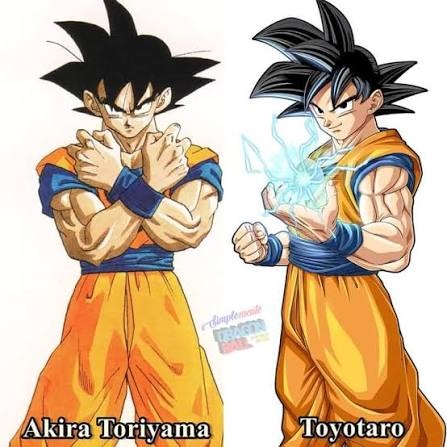
I guess, according to Steve Jobs (not Picasso, who this quote is often misattributed to), that makes me a good artist. But, and there is always a but, I find nothing wrong with starting your artistic journey by imitating the work of masters. For example, Japanese manga artist Toyotarou is famously known for imitating Akira Toriyama’s iconic art style, and imitation is just the beginning. The keyword is mastering, much like Toyotarou, who mastered Toriyama’s style and is now his official successor for the Dragon Ball Super manga.
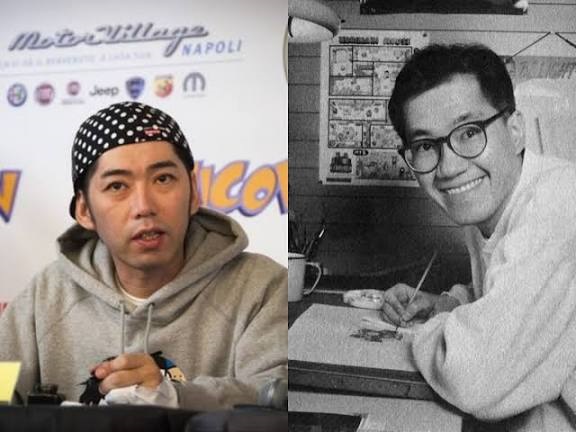
Mastering brings about real learning, and the latter happens when you start asking questions. In my case, those same questions were spurred by a wish to develop my own style and evoke a sense of originality in my artwork. This is still a work in progress, no thanks to my on-and-off approach to my art (after all, I’m the lost artist).

So, let’s go ahead and refine Jobs’ quote to better suit our situation,

Good artists imitate, great artists emulate.

Imitation is akin to scratching the surface. You get to replicate a specific style, subject, or technique. It is still a valid approach because it allows you to build muscle memory and also trace the footsteps of another artist. Unfortunately, imitation lacks creative development or personal perspective.

Emulation is all about internalizing the process of imitation. This comes from asking questions. You ask why a specific artist’s style is effective and apply those rules to your own unique concepts. The point here is to ask enough questions and frequently so that you internalize the answers you find and make them part of your own distinctive style. You aren’t necessarily “stealing” but combining your personal alchemy and perspective to build something completely new.

Long story short, imitation is great for practice and reverse-engineering a craft. On the other hand, emulation is transformative and fuels your creative process by helping you deconstruct your idol’s technique, build your visual vocabulary, and, most importantly, discover what you don’t like.

I have been doing a lot of emulating, and trust me, it is so much fun to discover the tricks behind an artist’s work. Though not a recent example, my first step towards emulation began when I did an illustration of a classical, animation-style baby with Aaron Blaise for his Procreate course.
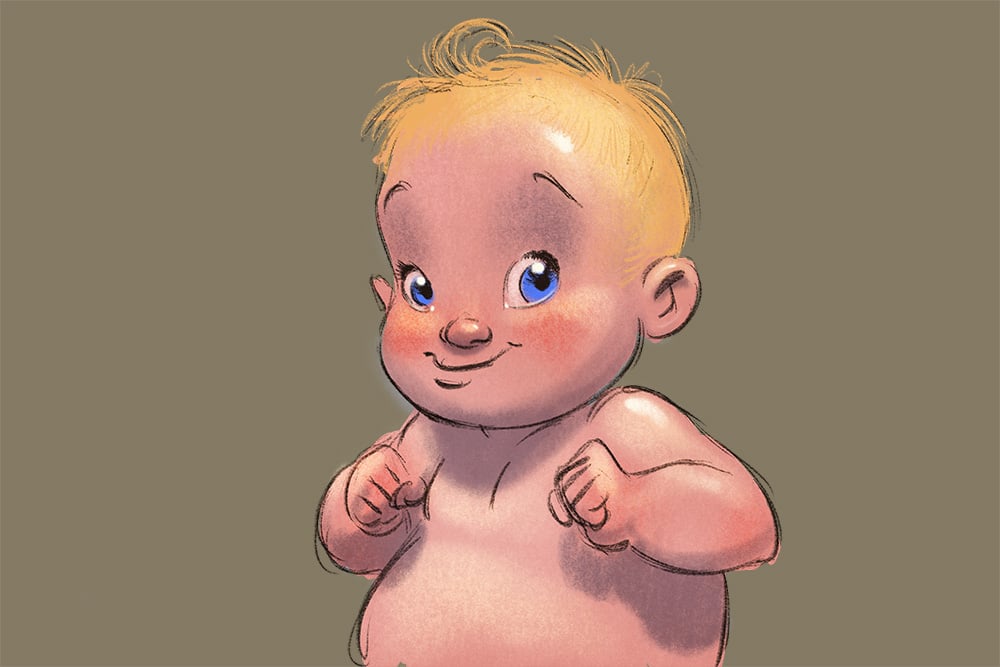
Frustrated that the baby’s anatomy wasn’t coming along like Aaron’s, I realized I was basing my work’s perfection on another’s metric. So, I threw it aside and made my own rendition, inspired by my then-baby daughter:
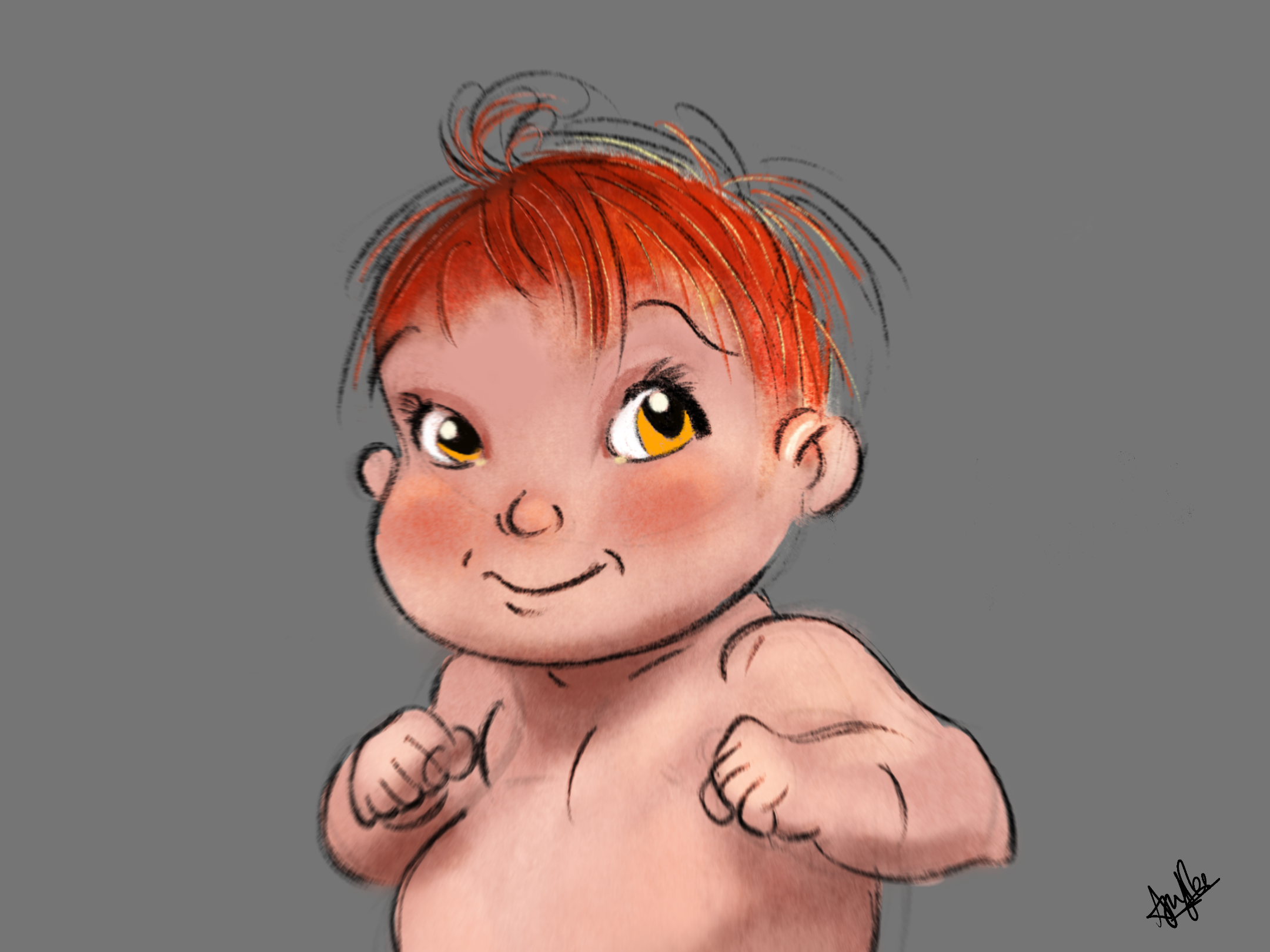
Could it be better? Yes, absolutely. There is always space to improve, but only if you allow it for yourself. So, to all those good artists, like me, who are out there, you are not alone in this seemingly Sisyphean effort towards mastery. Try emulation for a change. Don’t just imitate; study other artists for your own learning, ask a lot of questions, and then put it all to use in your own masterpiece. Most importantly, make sure to judge your final piece by your own metric and yearning for mastery, not that of those you are emulating.
Writer’s Corner – Daydreaming Your Next Story

Ideas are writing’s currency. They are also a dime a dozen. Writers feel considerable pressure to put their best work on paper. For starters, their ideas must be unique and interesting enough to catch the reader’s attention. What follows then is the story, and it has to live up to expectations. Overall, it is a tall task, so it is no wonder many writers feel a sense of dread when they sit down and stare at the muted, blank white page on their desk. Fortunately, I’ve learned to bypass this fear. That very same blank, white page speaks to me of opportunity and an inescapable sense of freedom. Personally, I find writing offers a sense of escapism, and the best ideas appear when you let your mind drift freely. In other words, you learn to master the art of effective daydreaming.

Daydreaming comes naturally to me. Even now, I fondly recall spending my lunch breaks in my high school’s garden. I would lie down on the grass and watch the clouds above, enjoying the silence and solitude. These sessions were also primetime for my creativity. My mind would swim with random thoughts, the initial sparks of ideas that I would incorporate in my stories later. I still daydream to this day. Much like an artist’s sketchbook, I have one of my own filled with one-liners and random thoughts that serve as sparks for stories I formulate later. When I switched to writing as a full-time career, I realized I could make a few tweaks to this daydreaming hobby of mine and better harness it for my creative purposes. 

For starters, I leaned on a little bit of science to help me out. We have all heard the classic line about the need for a writer to read other books and learn more about the world to write their own book or come up with new ideas. There is scientific grounding for this. Reading primes our brain’s Default Mode Network (DMN), the neural autopilot responsible for daydreaming and spontaneous imagination. What we read and take in about the world around us shapes the visual, emotional, and social content of our daydreams. Essentially, reading fuels our subconscious, but that is not all there is to it. How we read also makes a difference. Silent reading leans on our visual cortex to decode words. This means there is less room for our brains to wander. On the other hand, audiobooks don’t care about our visual channel. This allows the brain’s DMN to drift and generate daydreams much more frequently, causing you to zone out of the narrative and sink into your thoughts. 

So, how do we leverage this? Since reading fuels our subconscious, it helps to take frequent pauses. Stopping to reflect on what we are reading, like the sensory details, character motives, or underlying themes, allows our minds to actively construct the story’s world, rather than push the narrative forward. In this manner, we get to experience and deeply immerse ourselves in what we are reading. These pauses also help trigger your DMN and transfer what you have read from short-term to long-term memory. Contrary to belief, the whole process prevents cognitive overload. Throughout, we remain engaged with what we read. Similarly, by switching up what we read, we can also prevent our daydreams from becoming repetitive and diversify our ideas. Using this combination of neural simulation and schema activation, where we experience what we read and activate our working memory (cause the reading mind tends to remember things, no matter how small the detail), we continuously fuel our subconscious. 

When our minds drift, the intake becomes real estate in the form of mental models or schemas that later serve as the foundations of the thoughts and ideas that populate our daydreams. To get to this point, we have to begin by slowing down, and that’s a major no-no in a day and age when everything moves at breakneck speeds. My success in this aspect came from natural circumstances. Once you become a parent, you don’t have as much time for things you love as you did before. Similarly, when you do get the time, you are too tired to make the same level of progress. So, you’ve got to adopt the turtle strategy. Small and slower, but consistent, bites towards greater goals. I applied this approach to my reading (audio and visual), writing, and social media intake. Obviously, when you have a kid, much of what you read or watch also follows their preferences. For the last few years, my daydreams have largely focused on ideas for children’s stories, fairy tales, and fantasy. Recently, I have switched things up and started gradually getting back into my favorite genre: science fiction, and right on cue, I have enjoyed my latest palette of dreams about apocalyptic scenarios and hard sci-fi survival horrors.

So, for writers who are struggling to find ideas for their stories, I suggest setting that pen aside and letting your mind unwind. Take some time during the day and daydream. It may not feel like it, but you are still making those writing milestones by letting your mind drift. Support your mind’s supposed “procrastination” by tailoring your cognitive intake of the world around you to match your writing needs. This can be through books, newspapers, podcasts, TV, etc. The only disclaimer I place here is to be mindful of your intake and not let it slip into overindulgence that pulls you away from the actual writing. Oh, and have a writing journal! You’ll never know when those random ideas and scribbles come together to make the perfect story! 

Take it from the legendary Poe,

Those who dream by day are cognizant of many things which escape those who dream only by night.

The Lost Artist – Chapter 2 – Finding a Focus

Around three years ago, and a few months to count, I wrote the first chapter to this series. I know what you are thinking. I could certainly do with some consistency. Unfortunately, life isn’t too kind to a set schedule, and, as it happens, things fell by the wayside. Fast-forward to the present: I’m now a writer-artist hybrid working hard to find a balance between these two creative endeavors. That is where today’s narrative on focus comes in.

For a creative, time is an invaluable asset. Unfortunately, most of us don’t get the time we would like on our projects. This means you have to make some tough decisions. I’m the kind of guy who has multiple interests. In other words, I tend to take on too many things at once. This has been a recurring issue since the start of my creative journey, but I was finally able to resolve it over the extended break since the first chapter of this series.

The catch was to find a focus. Sounds easy, but it is not so simple. For an amateur artist, the smallest questions loom the largest. Like, where do I start? The answer can take you down a rabbit hole of diverse perspectives and destinations. The real trick to getting your journey started, I’ve found, is to tailor and focus questions within the lens of your needs. For a writer-artist hybrid like myself, this helped narrow down a lot of my interests.

From choosing a medium of choice to the fundamental skills related to a specific path, all of it can be identified if you tailor it to your goals and interests. The good news? There are many resources out there that can help with this.
The bad news? It takes time, just like any other creative process. If you can combine your inherent focus (guided by what interests you most) with patience, the answer comes a little quicker. Or, you can also take the scenic route: try everything out there and see which one lands.

In my case, this translated into action by exploring art that is already out there. It is akin to sending out a feeler to see what piques your curiosity and interest the most. I spent a few minutes every day just engaging with artists out there (across various platforms like YouTube, Pinterest, Udemy, DeviantArt) and learning the realities of the trade. Not only did this help identify the specific media that I wished to master, but it also helped identify the creative path I wished to take as a writer-artist: storyboarding. I’m now in the process of consolidating my artistic focus toward mastering the skills and tools of this trade.

Now, what worked for me may not necessarily work for everyone else. At the end of the day, I find that art is often guided by intuition, and the same could apply to our intent. Take what you like and set aside what you don’t, without overthinking or being too hard on yourself.

Here are a few resources to get your mind jogging:

(i) The Draftsmen – hosted by Stan Prokopenko and Marshall Vandruff, it covers studying masters, composition, and overcoming art fears. Also, make sure to check out Stan’s very own Proko.com, an invaluable online art education platform with high-quality tutorials on various topics, including drawing, painting, and anatomy.

(ii) The Virtual Instructor – one of my earliest influences, and whose website hosts a treasure trove of lectures and project-oriented tutorials that can pique your interests in various media.

(iii) Jazza Art – another of my early influences, Jazza is a phenomenal artist, but what really helped were his videos on finding inspiration and general advice on how to get your artistic journey started.

(iv) Aaron Blaise – a legend in the industry, Aaron’s site is a treasure trove of everything you would want to get from an actual expert.

And, when you get the time, follow along in my art journey at LockeInArt!