I spy, with my ‘kutty’ (little, in Tamil) eye, something that is…
These are the words to a classic, interactive game. They are also the very same words I hear every day when I take my daughter to preschool. It is a solid 20-minute trip where we spy on the colors of the world, or at least that is the theme my daughter likes to stick with.
And there are a variety of colors to catch in our neighborhood. There is the ever-blue sky, the wispy trails of white clouds, the grey roads filled with those darn potholes (a tradition of Calgary), the iridiscent blue-green of the screeching magpies, and many more.
Between the two of us, I find that my daughter has an eye for detail that I often miss. I guess that is the way with children, and on that point, they also tend to be quite straightforward with their questions. For us adults, long immersed in the seeming monotony of daily life, these questions can throw us off.
That is exactly how I felt when, one day, my daughter said, “I spy, with my ‘kutty’ eye, something that is brown. Appa, it’s you!” So far, so good, but then she asked, “Appa, why are you brown?”
Taken aback by her question, I simply said, “Because I am.”
Of course, as always, that response was not enough, and what followed was a series of “Why, Appa? Why?”
By the time I had dropped her off, our conversation had meandered from catching the colors of our local neighborhood to discussing people of color, my daughter’s own complexion, and what it meant in today’s world.
In a day and age when the world seems so monochrome in its ways, my daughter’s questions were like that blade of light caught on the edge of a broken glass, creating a piercing caustic. Growing up, I’ve lived the experience of standing on the sidelines, solely for being a person of color. I would never want that for anyone, including my own kid.
An increasingly globalized world creates a reality in which various forms of difference often set the seeds for division. Of late, the latter’s effects have been more pronounced, with isolationism favored over inclusivity. My daughter’s simple question was a throwback to a discussion of survival methods in such a world, especially when she and I were on opposite ends of the complexion spectrum.
Interestingly enough, being Indian helped in this context. I hail from a nation defined by diversity. Living away from home for much of my life only deepened my appreciation for my culture. Every now and then, I find myself opening a window into my culture’s past, learning something new, and sharing. This became one of those occasions.
In an attempt to address my daughter’s questions about people of color and the evolution of diversity in modern times, I came across the Navagunjara.
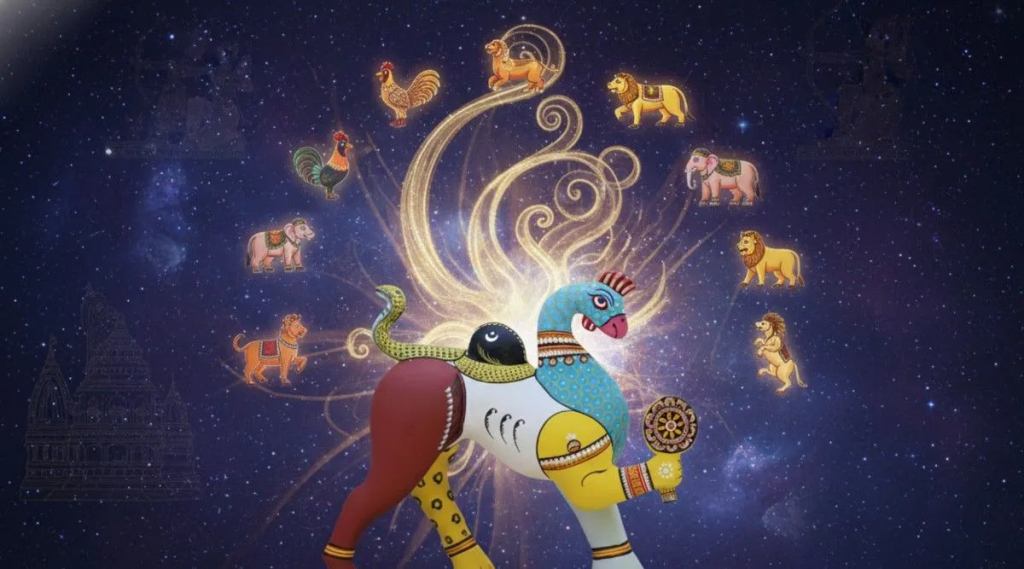
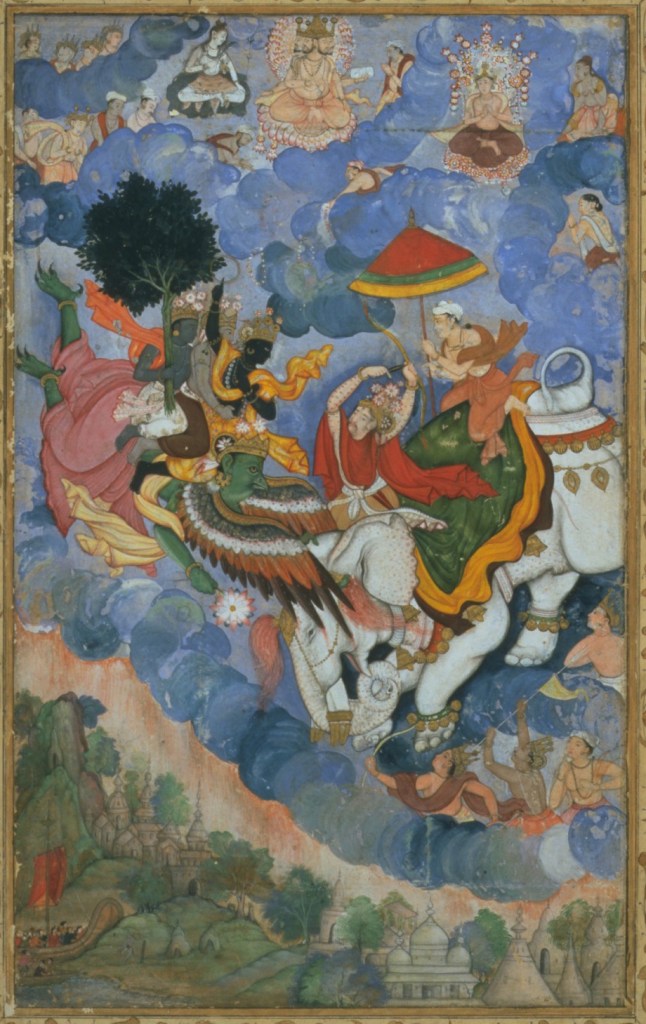
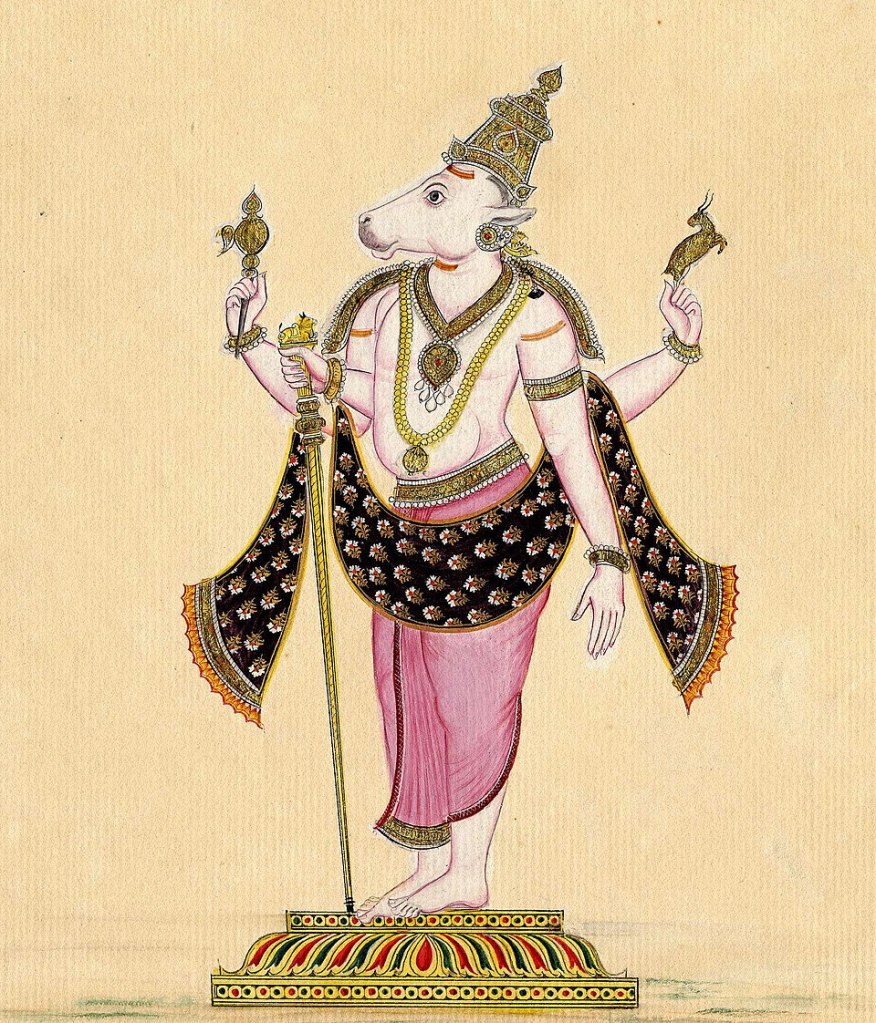
The archetype of a composite being, the Navagunjara, is a creature from Indian mythology (the Mahabharata) composed of various body parts and rendered in bright colors that each hold a specific meaning.
| Body Part | Symbolism |
| Head of a rooster | Awakening and vigilance, spiritual consciousness |
| Neck of a peacock | Beauty, rhythm and divine elegance |
| Back of a bull | Steadfastness, strength and dharma |
| Lion’s waist | Courage, leadership and vitality |
| Trunk of an elephant | Wisdom, prosperity and memory |
| Tail of a serpent | Transformation and cosmic energy |
| Human arm holding a lotus | Consciousness, purity, and divine intent |
| Leg of a deer | Grace, agility and innocence |
| Leg of a tiger | Power, ferocity and protection |
Carl Jung postulated that the universality of human experience is encoded in our stories. These stories have often been expressed through mythological symbols. The Navagunjara is that and more; it is a reflection of the human psyche. The creature’s whimsical anatomy is symbolic, with every disparate part forming a cohesive whole that represents unity in diversity. My daughter’s reaction upon seeing the Navagunjara was a simple, “It’s beautiful.” She was drawn to its brightly contrasting hues, and the creature’s eccentric anatomy. The metaphor of inclusion was hard to miss, and there was my answer.
Much like the Navagunjara, I explained to her, we were distinct in our own ways. From our physical appearances to even our personal beliefs, we were separated by a world of differences. But these differences were also our strengths. It spoke to the wholeness and balance we felt when we were together, all because we were different. Those differences challenged us and also provided the incentive to communicate.
Of course, I had to simplify a lot of this so that my daughter could understand. As a simple example, I related to our differing preferences in ice cream flavors. This didn’t stop us from enjoying eating ice cream together. All that mattered was that we made the right order at the cashier so that we were equally satisfied, and to do that, we communicated.
The Navagunjara is a metaphorical reminder that true beauty arises from a harmony that is rendered in our differences. It is a message of inclusion, compassion, empathy, sustainability, and global citizenship, in which our connectivity speaks to our greatest strength: solidarity in diversity.
Or as my daughter put it, there is a lot of space for different colors in the world.