William Erwin Eisner – A Perspective

Before quarantine became the new norm, there was a store a few minutes from my apartment that I would frequent on a weekly basis called Wee Book Inn.

A used bookstore, Wee Book Inn was my go-to destination whenever I fancied a random late night walk and on many occasions, casual dates with my partner. (The cat is also awesome.)

Apart from their diverse collection of literature, I was drawn to the venue as they also offered a healthy collection of comic books, often in very good condition, for their modest pricing. Needless to say, I’ve been a ravenous customer, and have trounced on any opportunity to land some good titles. In my efforts to explore the graphic novel medium over the last few years, Wee Book Inn has served as a wonderful resource for inspiration.

My most recent purchase of a collection of William Eisner’s graphic novels was the figurative equivalent of hitting jackpot. Prior to the purchase, I had only ever heard the name “Eisner” as part of the “Eisner Award” winning icon that graced the covers of popular and successful comic books. It wasn’t until after my discovery of the graphic novels that I realized Eisner was a prominent graphic novelist himself (I agree, it’s kinda stupid that I didn’t make this connection beforehand).

Will Eisner - Wikipedia

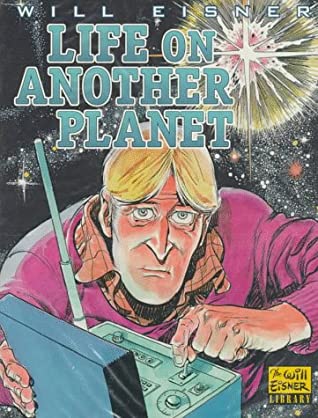
So far, I have finished reading two of his titles: Life on Another Planet and The Building. Eisner’s intricate penmanship on top of his unique presentation of panels and sequential storytelling immediately caught my attention. Much of Eisner’s graphic novels were published in the late 1970s in what have been early examples of the American graphic novel medium. In reading his works, it was easy to recognize the foundational aspects of Eisner’s penmanship in modern day comics and graphic novels. His style was reminiscent of the weekly newspaper cartoon strips I had read during my childhood in India.

It came as no surprise to find out that Eisner was also one of the earliest cartoonists to work in the American comic book industry with his earlier series The Spirit (1940-1952) setting a standard in experimentation of content and form in the graphic medium.

It was also easy to recognize the repetitive but endearing theme that characterizes much of Eisner’s works: humanity. Eisner’s graphic novels focus on the human psyche and its vulnerabilities through characters whose worlds seem to be a mote of dust against the larger order that is life.
1209837._SX318_

In Life on Another Planet, knowledge of first contact with an alien civilization becomes a reflection of tragic human foibles expressed in the collective and individual responses of governmental organizations, religious pariahs, and all the way down to homeless and impoverished individuals.

Meanwhile, in The Building, Eisner does a reverse sweep in humanizing a building through its relation to the lives of four different characters ranging from an anonymous citizen driven by guilt for the death of a child, a woman trapped in a marriage of convenience, a real-estate developer obsessed with aging, and an amateur musician whose music accompanies the drama of the former trio.

1535935._SX318_

Under the light of current circumstances in our world, the events of Life of Another Planet  were eerily relatable. The same could be said of The Building though the readers’ relationship to the characters originate from our personal memories toward past experiences and attachments in life (be it another person or an artifact).

Eisner wrote several graphic novels until his death in 2005. Many of his novels  converged in relating the history of New York’s immigrant communities, particularly Jews (elements of which is very notable in The Building). I was also lucky enough to purchase Eisner’s Graphic Storytelling and Visual Narrative where he details his thoughts as a lecturer about the craft and uses of sequential art.

As a student of the graphic novel medium, and as an ardent reader, I would highly suggest Eisner’s works to anyone interested in well-balanced examples of the art of story-telling.

Making A Difference

I’m fortunate enough to have been given the opportunities that I have had in my life. Thanks to my father’s employment in a prominent non-governmental organization (NGO) called PLAN International (a child rights organization that works with communities in many countries to alleviate child poverty), I, along with my family, have traveled to several countries around the world. We were modern-day nomads, traveling wherever my father’s work beckoned. Whenever possible, I joined my father on his daily adventures, allowing myself the opportunity to understand and learn the multifaceted nature of humanitarian service and development. It also helped that my father often brought his work home, leading to long-winded conversations on his day-to-day exploits.

Growing up, I tried to emulate my father. But as my future beckoned, I learned to find my own unique path, and destiny in life. Still, to this day, I carry the lessons I have learned in the presence of my father, most notably his compassion to his fellow human beings as well as his perseverance and commitment to his work. My father found great satisfaction in the simple act of helping others, and even more, in the happiness of his family. His efforts were largely directed to these objective. Thus, he made a big difference in my life, and of countless others. So it is not at all surprising that I too feel a strong calling toward contributing to the society and making a difference in the world.

Our world is riddled with doubt and confusion. The toils of war, civil unrest, corruption, racial and ethnic differences, climate change (along with an assortment of environmental issues), to name a few, are the great uncertainties of our time. These issues afflict our daily lives, standing as we are, mute and in the shadow of a persistent struggle to communicate and unite, as a species, toward a better and brighter future. At the crux of it all, we have allowed our fear and anger to dictate our choices and actions, leading the greater part of the world to be divided.

Take racism for instance, it manifests in many aspects of our social lives. It pervades modern-day societies and political systems; the basis of its strength is a volatile expression of pride, prejudice or aversion to others via discriminatory practices. Humanity has a deep history with racism, and its various forms including segregation, supremacism, xenophobia, nativism, hierarchical ranking, and other related social phenomena. Reaching back to the ancient societies of the past: Greeks, Romans, Indians, Arabs, and even further, to their predecessors, I find that racism was a by-product of our own vanity. Natural circumstances subscribed to humanity our beliefs in an expression of individuality, dividing and classifying us, into specific races. Racism is an institution, not an ideology, founded in capitalism and slave trade.

To me, racism is nothing more than a word that describes the highly- convoluted story that is human cooperation and communication. Is there a solution to this? I admit that many of the issues that plague modern society have great histories behind them, making it difficult to distinguish a unique solution in any case. Nevertheless, I believe we owe it to ourselves to iterate the necessity for action, particularly in recognition of alternatives that may provide the foundation for future solutions.

At one point in my life, I told my father that I would love to build a university. Finding inspiration in the Akademia of Plato, I modeled my university to be an institution that pioneered free thought. People could come and go, study what they must, openly discussing their thoughts with their peers, without fear or discrimination; a platform for reason and rational conversation. I still harbor this dream, though it is a work in progress (there remains more room for thought in the realization of such an institution, especially with regards to its structures and inner workings, but what matters to me is the message of such a concept). In knowledge, and in education, I found what I believed to be a solution towards the fractured communication of the human species. By educating ourselves, and our children in proactive and collaborative thinking we may slowly shear away towards a solution. By addressing our differences, openly and without fear, we may find unity. Of course, at this point, it becomes a question of how are we to do that? I find my answer again in what I proposed earlier. All of us are unique in our own ways, but it is in the same pride with which we define our individuality that we can also define our humanity. The hierarchical structures of knowledge and government weren’t constructed as a means to enslave our species, but as a medium to liberate ourselves in collective thought and action.

This will be the challenge of our time. Communication without fear, government without bias, education without limitations…While it may require an acceptance of short-term losses for the sake of long-term benefits, we must learn to recognize the importance of our world. While anger and fear may have allowed us to survive and evolve over the millennia, those very emotions can also fuel our motivation towards building a better world, not just for those who are alive now, but more importantly for those who follow us, our children, our legacy. Therein lies what may be a small part of the bigger picture, to learn to see ourselves as a global family rather than as select individuals.

My father had a bigger picture that motivated his own actions. It was his family. He found his strength in the happiness of his family, an emotion that he channeled into his work and in the lives of others whom he met and helped. Simply put, he made a difference. Just as much as ignorance can be bliss and can forestall change, anger can be proactive and enforce our will to action. I too want to make a difference, and though I have a long way to go, by expressing my anger, not to separate myself from others, but as a tool to define and communicate my knowledge, to help shape the world, I could one day just like everyone else, if they are willing to, be the difference that will become a brighter future.

Seeking Perspective…

Curiosity is a defining characteristic of human nature. More often than not, our curiosity leads us to be engrossed in the minor details of our daily lives. This is particularly evident in this modern day and age where social media has become a prevalent source of knowledge, and entertainment. It is in our nature to ask questions, and seek answers. From an evolutionary perspective, we associate such traits as attributive of the “survival-of-the-fittest,” helping our species to provide and support for its survival, and reproduction.

The more we learn about our world, the greater do we struggle to define our existence.  Who am I? What is my purpose? These are questions we all ask at some point in our lives. We strive to find answers to said questions through the scope of our experiences. This allows us to examine and interpret our lives relative to those of others, such as our friends and family. By doing so, we gain perspective. Life is filled with dichotomies but it is within the structure of these relative measures of “compare-and-contrast” that we enrich our thoughts, and find a means to define our identities as unique individuals.

Returning to India, my homeland, was an experience that provided much needed perspective. It was a journey that had long been overdue since my arrival in Canada, eight years earlier (2009), for post-secondary studies. Up to that point, my life was a collage of the experiences I had at Egypt (where I completed my elementary education), and Sudan (where I completed my secondary education); experiences that now serve as the foundation of my identity. My life in Canada supplemented this foundation, further motivating my future dreams and aspirations.

While in India, I was frequently asked to express my opinions and observations on the state of things, under political and social contexts, in the country. Initially, I was inclined to believe that such inquiries were an inevitable motion of my status as an “outsider”, but this was a naive conclusion. In retrospect, I identified that such queries were simply another means to an end, in this case, an aggregation of knowledge via perspective. It is a facet of the curious case of cultural diffusion in India, a concept I am largely familiar with, in an identity crisis amid the divisive cultural and social experiences of my past and imminent future. Apart from enjoying my time with friends and family, my journey home allowed me to put this problem to rest.

Differences shouldn’t be a cause for silence or division but an incentive for discussion. Such an idea is applicable to the personal dynamics of a family, and other hierarchical structures as that of a government or a society. In observing my country and its culture, I had openly stated my surprise for the lack of active change and progress within the society.  I was motivated to blame the established bureaucracy which I felt had embezzled the citizens from what they deserved. Though civil services and liberties provided for the general run-of-the-mill needs and requirements of the common man and woman, the citizen’s willingness to call for active progress and change had been woefully bargained away by the existing political atmosphere, and the natural course of life. At the same time, in light of my statements, I felt a hypocrite. Though I was voicing my opinions, I hadn’t necessarily acted upon them. Vainly, I had reaped judgment, and deferred the call for action.

This prompted an awakening. The keyword was change, and thankfully enough, I built the courage to enact upon the differences that had once set me apart from my family. By openly communicating my thoughts, and feelings I paved the way for understanding and reconciliation. In this manner, I could voice my opinions, and prove them in action.  Now, back in my fortress of solitude in Edmonton, I can’t help but look forward to a brighter future where I intend to act upon the answers I’ve gained in my personal journey.  Having struggled to balance my past, and my future, I have come to realize that both these states of time are largely a measure of the present that I interpret. My trip to India offered a unique, and worldly view into these very dichotomies that now define the person I am. I hope to take this lesson, and apply it fruitfully in my aspirations to change the world for the better.

While the actions of our past may have implications for the future, we may find balance by being attentive to the present. This is a notion that is applicable to the individual as well as to the collective society, for rather than defer to alternatives in response to a problem it is imperative that we seek solutions through open communication, in the spirit of the inherent curiosity that makes all us different individuals, and yet one human species.

Revan

Peace is a lie, there is only passion. Through passion, I gain strength. Through strength, I gain power. Through power, I gain victory. Through victory, my chains are broken. The Force shall free me.

-The Sith Code

There is no emotion, there is peace. There is no ignorance, there is knowledge.There is no passion, there is serenity.There is no chaos, there is harmony.There is no death, there is the Force.

The Jedi Code

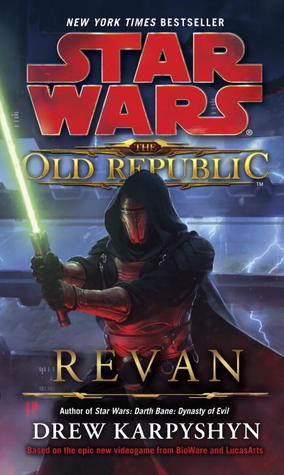
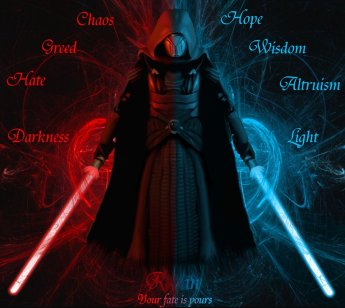
Revan’s search for his identity while strung between the polarizing dictates of the Jedi, and the Sith order, is at the crux of the plot of Star Wars: The Old Republic: Revan.  

“Hero, traitor, conqueror, villain, savior-the man called Revan has been all of these.”

Revan left Coruscant as a Jedi, sent on a mission to defeat the Mandalorians,  a warrior race immersed in a great tradition for war, and inhabiting the planet of Mandalore. He would prove to be successful, gaining the mask of Mandalore, a ceremonial war mask worn by the leader of the Mandalorians. The mask would become an enduring symbol of Revan’s power, and conquest. But with his rise, Revan fell, returning instead as a Sith Lord bent on destroying the Republic.

choose__revan__by_sadreams-d32zak2

The man behind the mask would find his redemption through the love of a young, and promising Jedi named Bastila Shan,

BastilaAvatar

but paid the price for his crimes with the loss of his memories.   Guiding the Republic once again through the ravages of his past actions, Revan would assist the Jedi Order to reassert peace in the galaxy.

  “At the start, they were not much of a threat to speak of, but once the Jedi Revan had taken charge, things began to turn against us. The Republic fleets began to use more than just basic tactics. Feints, counterattacks, mass deceptions. Revan was a genius on the field. Revan abandoned worlds of their defenders so that others would be too fortified to strike, and was willing to make sacrifices in order to advance goals. And in the end, Revan proved too much for us.” – Canderous Ordo, a Mandalorian.

Now, an exile of the Jedi order, Revan lives a secretive, but comfortable life with his wife Bastila. Nevertheless, he remains tormented by nightmares that seek his return to the past, foreshadowing a growing threat that bodes its time in the dark. In order to recover his memories, and discover the source of the threat, Revan embarks on a journey that would culminate in his struggle against a powerful, and diabolic enemy. His failure could mean the end of the Republic, “but only death can stop him from” succeeding.

And that’s basically it.

13359972
A damn good book for any reader interested in the Star Wars lore!

Revan is an excellent book that draws the reader into the world of the Old Republic; a definite recommendation for both Stars Wars, and non-Star Wars fans alike. Though on the outset it may seem to be a story modeled around the journey of Anakin Skywalker, by the end of the book, Revan seals his place as a unique, and powerful character in his own right, within the Star Wars mythology.

What personally drew me to the book, and Revan’s character, was his enduring struggle against a very human desire for power. It is a concept that is at the heart of the central dichotomy of the Jedi, and the Sith, about which several plot lines revolve in the Star Wars universe.

tumblr_static_tumblr_static_64khnigid80s04oocoosk4ogk_640

I remember once walking past a blackboard at the university. The board had the message “Peace is …” with an abundance of scrawls, and notes left by other students with their opinions on peace. Their statements were food for thought. I eventually found some empty space at the corner of the board, and felt compelled to write, peace is what power defines. A few months later, I found myself reading Star Wars: The Old Republic: Revan. By the end of the book, I felt compelled once again to believe that peace is nothing more than compromised power.

I’m a fan of the Star Wars universe, and thus I couldn’t help myself in finding analogies to the politics of its worlds with the history of humanity. The current generation of youngsters face a world rapid in its growth, and unraveling in the myriad changes of modern-day society. Strife, inequality, ostracism, and tyranny still seem to echo in this hall of democracy, and unity that humanity seems to believe it represents. I’ve never been a fan of politics, yet I do not shun knowledge of its principles, and also understand its contribution to society.

What is peace? It is a difficult question, and a unique answer is nigh impossible.  I personally believe peace is a phase, somewhat like a smaller gear, in a larger system that defines society. While it may be revered, and glorified as an ideal of the highest standard, along with justice, and morality, peace is still very much a concept that adheres to the beliefs, and feelings of an individual as it would as a social contract to a greater populace.

dove-bird-for-world-peace-1280x1024-1024x819

In the Star Wars mythology, the Jedi Council, and the Sith seem to be two sides of the same coin, vying for power, though the Jedi distinguish themselves in their motivation towards peace, and harmony. While the Sith are open in their passion for power, the Jedi stand their ground as their counterpart, proclaiming themselves as protectors of the Republic. Revan, having been a hero of the Jedi, and a dark lord of the Sith, illustrates the illusions surrounding the motivations of both “cults.”

  “Is that what he was? Or was he always true to himself, no matter what personality he wore? And there is something that the Council may never understand. That perhaps Revan never fell. The difference between a fall and a sacrifice is sometimes difficult, but I feel that Revan understood that difference, more than anyone knew. The galaxy would have fallen if Revan had not gone to war. Perhaps he became the dark lord out of necessity, to prevent a greater evil.” – Sith Lord Kreia

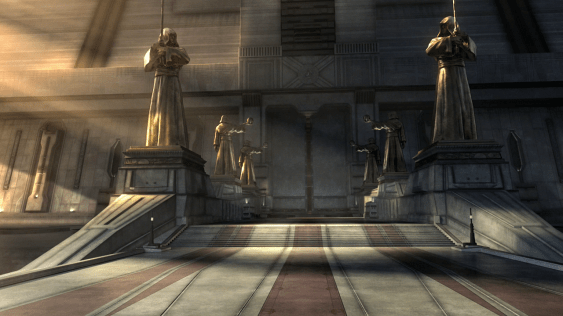
As time passes, the Jedi grow stronger, unified in their purpose, while the Sith dwindle, succumbing to their lust for power that results in inner strife, and ultimately their demise. But after a millenia, the roles are reversed, and the Jedi are overthrown by the Sith. Having reached the status as peacekeepers of the Republic, the Jedi removed themselves from society, preferring the solace of their temples, and archives. In their rule, we see a shadow of Plato’s vision of a “Republic” ruled by philosophical warriors.

ProcessionalWay-Deceived
The Jedi Temple

But by throwing away their identity as peace-keepers (or social workers), the Jedi council’s disjunct views clash with societal, and communal paradigms, resulting in peace becoming a tool used to maintain the Republic that is now the foundation of the Jedi council’s political power, and authority.  Consequently, the Jedi fall victim to their own vanity. Meanwhile, the Sith’s ability to reassess, manipulate, and even become subservient to the current state of affairs, over generations, helps in their recovery, and victory over the Jedi.

Revan, Anakin Skywalker, and  other popular characters of the Star Wars lore symbolize this contest between the two factions, often defined as an eternal conflict towards balance in the force. Taken in the context of the Republic, and its citizens, this could also define the efforts toward a stable government. Revan’s position as an exile, and his dual personality as a Sith Lord, and a Jedi Master, help him succeed when he may be doomed to fail. By the end of the book, Revan doesn’t necessarily find answers to all his questions. Instead, he finds his peace in the hope that the future of his loved ones is safe. 

Peace is an ideal, and may never be achieved completely. It is a notion that requires us to address our own failures, individually, and as a species. While its results may be temporary, it is in the hope of such an ideal that our wars are waged, our beliefs are found, and our lives are balanced. In conclusion, peace is a question without an answer. Revan is a metaphor of this truth.

“Who I am is not important, my message is.” – Darth Revan