Embracing Differences: Lessons from My Brother’s Husband – Manga Review

Life is strange. One moment, we find ourselves surrounded by family and friends. These are people who we believe have our best interests at heart, provide valuable counsel on our beliefs and convictions, and accept us for who we are and who we wish to be. But, now and then, life presents a situation where those very people seem like strangers. In their place, someone else comes along. Someone we have never met before. Someone who, with no immediate cause or reason, and by the simple honesty of their actions, becomes family.

This is the reality that hits Yaichi, a work-at-home suburban dad in contemporary Tokyo. Formerly married to Natsuki and father to their young daughter Kana, Yaichi’s life takes a turn when a hulking Canadian named Mike Flanagan arrives at their doorstep. But Mike is no ordinary person. He is the widower of Yaichi’s estranged gay twin, Ryoji. What follows is a melancholic and beautiful story, authored by the critically acclaimed Gengoroh Tagame, that sheds light on the highly closeted Japanese gay culture and how the next generation can positively influence its future.  

Confronting Differences

For Yaichi, Mike’s arrival is akin to opening Pandora’s box. Hidden within its depths aren’t sickness, death, and misfortune, but Yaichi’s own inhibitions, fears, regrets, remorse, and apathy. As the story unfolds, Yaichi wrestles with these emotions in extended inner monologues, amid moments that highlight the disruptive influence of Mike’s presence.

These monologues are brutally straightforward and describe the void that separates Mike’s world from Yaichi’s and vice versa. Their relationship, in its infancy, involves a fair share of prejudices and veiled preconceptions that Yaichi holds about Mike’s identity as a gay man. Yaichi feigns ignorance as a coping mechanism. While he is aware of his personal inhibitions, Yaichi takes the easy way out, rather than coming to terms with his feelings. Mike’s arrival forces Yaichi to face his inner demons.

It is a rocky start. Both men are seemingly lost on how to proceed with their relationship as in-laws. On one side, we have Yaichi wrestling with his twin’s past. On the other hand, we have Mike, who wishes to complete his family. It is like an awkward tea party, until Kana comes along.

Our Children Are a Reflection of Us

“Daddy has a brother?! Men can marry each other?! Is that even allowed?!”

“Well, it’s like…In Japan, it’s not allowed, but I guess it’s possible in other parts of the world.”

“Huh? That’s weird. It’s weird that it’s ok over there, but not here.”

Growing up, we are taught about the systematic rules that govern our day to day lives. Somewhere along the way, we lose our ability to question and engage, as well as our capacity to change the world dynamically. Early childhood remains an exception. Filters are meaningless to children. They don’t see the world the way we do as adults. It is their greatest strength, and it is what makes them so damn endearing. It is also for this very reason that we adults have to keep ourselves in check. Our behavior, worldview, and the answers we provide to their questions are crucial. It is not an easy task, and in many cases, it is through our eyes that our children’s worlds often lose their colors.

Yaichi is cautious in his approach to raising Kana. Mike’s appearance throws a wrench in what is a mistakenly ignorant lifestyle. Unlike her father, Kana has no inhibitions and becomes immediately attached to her Canadian uncle. Her curiosity and willingness to ask complex questions often catch both men off guard. At the same time, Kana’s innocence guides the two men to have the conversations they need. Gradually, Yaichi begins to change, and as he does, he begins to recognize the weight of his responsibility as a father. He understands the burden he has inadvertently placed upon his daughter. Kana never needed protection from Mike. Rather, he had been protecting himself from coming to terms with his past.

Chasing Shadows

There is one more thing children are great at, and that is calling out adults for their double standards. Especially true when it is about making excuses for ourselves. Kana does the same to Yaichi, setting the stage for the latter to accept his shortcomings as a brother and a father. This ultimately enables Yaichi to seek redemption.

With Mike for company, he relives the childhood memories of his brother; memories buried deep in his heart. The resulting journey is one of fulfillment for both men and something that brings the whole family together. Yaichi’s redemption operates on multiple levels, illustrating how every individual is a product of various threads of influence, including family, cultural stereotypes, religious beliefs, and traditions. On the other hand, helping Yaichi through this process also ensures that Mike fulfills his husband’s wish for the latter to meet his family. From being reluctant about Mike’s presence in their lives, by the conclusion of the story, Yaichi feels encouraged by his company. Finding happiness in their differences, he openly states that Mike is a part of his family.

That pieces together the final message of the story. In this world, our lives are a transient phenomenon. There are very few who we get to meet, know, live with, and who live for us. In the short time that we have together, rather than dividing ourselves over our differences, let’s live with acceptance.

Gengoroh Tagame

The author of dozens of graphic novels, Gengoroh Tagame’s past works have primarily catered to the adult gay manga audience. My Brother’s Husband is his first all-ages title and an Eisner award-winning title at that. In a dramatic change from the graphic depictions of hypermasculinity, sadomasochism, and sexual violence common to his works, Tagame relies on various cultural motifs to elevate and distinguish the polarizing and heartbreaking nature of life in a highly closeted Japanese gay culture. My personal favorite in My Brother’s Husband involves varying cultural interpretations of otherwise structured sushi dishes to relate to Yaichi’s changing perception of Mike.

My Brother’s Husband is a heart-warming story describing how familial connections can originate from surprising corners of the world. The world is not as big as it used to be. Social media has contributed to this, and we are all caught up in its rapid frenzy, some of which is not entirely positive. My Brother’s Husband switches up the pace. It is heartbreaking, yet hopeful. It is painful, yet healing. It asks us to slow down and look around. It asks us to not throw our judgments upon others so haphazardly. It asks us to be willing to have a conversation. All this and more, in a beautifully rendered story that emphasizes the importance of compassion.

Monster Party in the Monsterverse Titanthology

I am a huge fan of Godzilla (Gojira) and a sucker for anything that involves giant monsters causing widespread destruction and havoc. We can add giant robots to that list as well.

Needless to say, I was hyped when the monsterverse hit the big screens with: Godzilla, Kong, Godzilla: King of the Monsters, and Godzilla vs. Kong (GvK). Godzilla: King of the Monsters is my absolute favorite as we get to see most of the franchise players of the monsterverse play a role in the story. An added bonus was the unforgettable experience at the theater and the sight of my wife, who grew up watching Godzilla in Japan, well up in tears from pure nostalgia.

I’m not ashamed to admit it, but it all started with this 1998 abomination for me. I found my way to the real material after that.

Post Godzilla vs. Kong in 2021, amidst the pandemic hitting its peak (and continues to go strong), I was craving for more monster material to digest.

I was very happy that they were able to recreate the epic “eat your vegetables” moment in Godzilla vs Kong.

I eventually found out that Legendary Comics did exactly that in their release of the Monsterverse Titanthology graphic novel. That is what I will be reviewing today.

The best part of the Monsterverse Titanthology is that it perfectly caters to new readers of the Monsterverse as well as fans who wish to discover the backstories of the two titular characters holding up the franchise: Godzilla and Kong. The Titanthology was released in June 2021 but its contents actually bring together previous released graphic novels (that slipped under my radar) in Skull Island: The Birth of Kong (2017) and Godzilla: Aftershock (2019) in one volume.

The tone and pacing of both stories vary. This is a positive as it keeps the reader hooked moving from one story to another in what is essentially a shared universe. Yet, despite the shared universe, there is also a lot of contrast in the backstories of Godzilla and Kong and if you are a fan of stories that reference and work off of inspirations from ancient mythology, the Titanthology is a perfect treat.

One of the best aspects of the movie series was the world building. There were so many cool elements such as the hollow earth and ancient civilizations interspersed in a story that is grounded, not by the pure spectacle of the monsters, but by the human experience when confronted with this reality. The movies had their share of flaws but when it came to pure entertainment factor they ticked all the boxes for me.

Now, while the movies could only show so much, the Titanthology provides a lot more by building on the mythologies and worlds introduced in the movies while spinning them within various cultural subtexts. This makes for an intriguing and interesting read made even better by incorporating a journal or mystery file element to the stories. Altogether, the Titanthology adds to the history of its titular monsters and their motivations, prior to their appearances (in the films), and their climactic confrontation.

With that said, for any Godzilla or Kong fans out there, this is an anthology you don’t want to miss. The Monsterverse is still going strong with two television series concurrently in development and hopefully more movies too! A few more graphic novels have also been published since the release of the Titanthology including GvK Kingdom Kong and GvK Godzilla Dominion which serve as specific prequels to 2021’s Godzilla vs. Kong, so make sure to check them out as well.

Now, if you will excuse me, I have a few buildings worth of monsterverse resources to pillage.

Reviewing Mercy & The Fade Out

It was in 2020 that I had my last in-person comics haul at Warp 1- the friendly neighborhood comics and games store at Old Strathcona -before pandemic restrictions set in.

Little did I know that a year would pass until I actually got to read the comics I had purchased, thanks to an onset of events like the pandemic, working from home, completing my doctoral studies, looking for employment, and becoming a father.

As my baby daughter slowly settled into a manageable routine, I found pockets of time to catch up on all the reading I had missed out on, starting with,

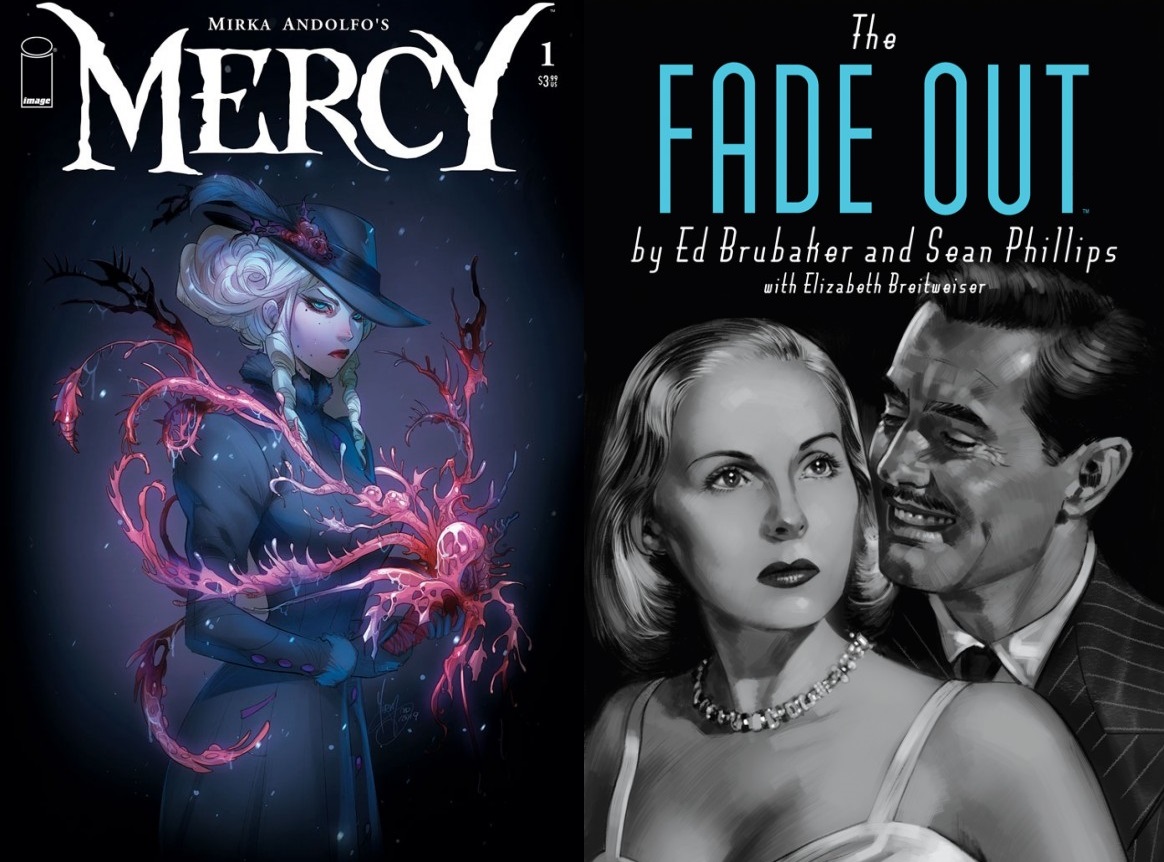
Mercy – Mirka Andolfo

Any surprise on the tone of the story is thrown out the window as Mirka Andolfo’s graphic novel begins with a bang. Monsters are on the menu, and they are on the hunt for humans. But, these monsters are unique as they are hosted by select humans and are fighting for their own survival.

The prelude sets the stage for the characters in the present timeline, many of whom are haunted by events of their past that may or may not have something to do with the origins of these monsters. Wracked by guilt, these characters spend their present lives trying to reconcile their feelings with their actions in the past.

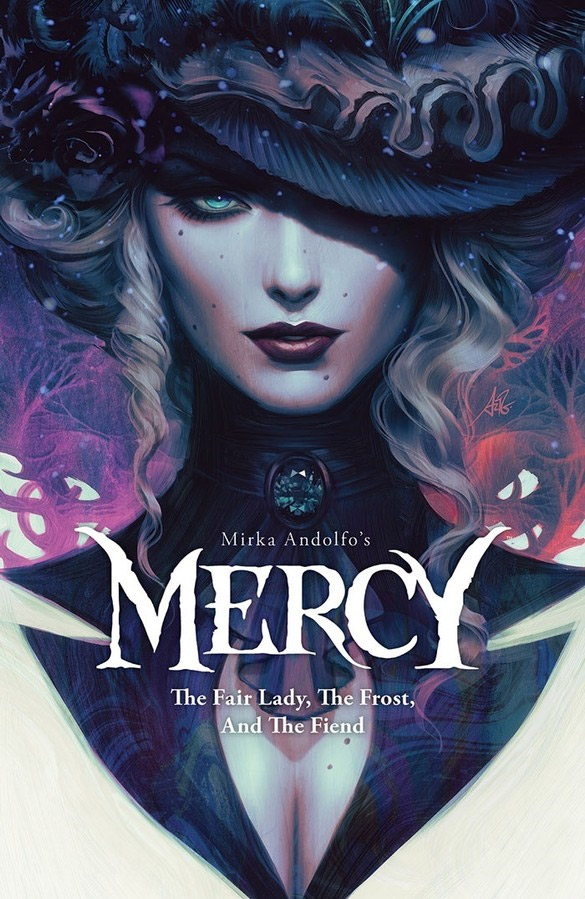
On the opposing side, we have a potent mix of personalities between Lady Hellaine, the titular character with a secret that she must protect, and Rory, the innocent little girl who believes that Hellaine is her mother. Set within the streets and tight-knit community of Woodsburgh, a small mining town close to the Canadian border, Mirka Andolfo’s story treads the path of the gothic horror genre with the town being victimized by a heinous creatures killings its citizens. The story revolves around finding the connection, if any, between these disturbances and the engimatic Lady Hellaine who has just arrived in Woodsburgh.

While the plot is a little predictable, the art work and the glorious color palette make up for the flaws. Slap in some religious symbolism, and a greater focus on the monsters we confront in human nature as opposed to the physical monsters themselves, Andolfo’s story provides a surprising and refreshing ending that leaves one wanting for more. It is essentially a horror story that questions what it means to be a monster.

The six editions of Mercy have been collected into one volume Mercy – The Fair Lady, The Frost, and The Fiend available in stores and online. If you are a fan of Victorian gothic-horror, this is one series to check out.

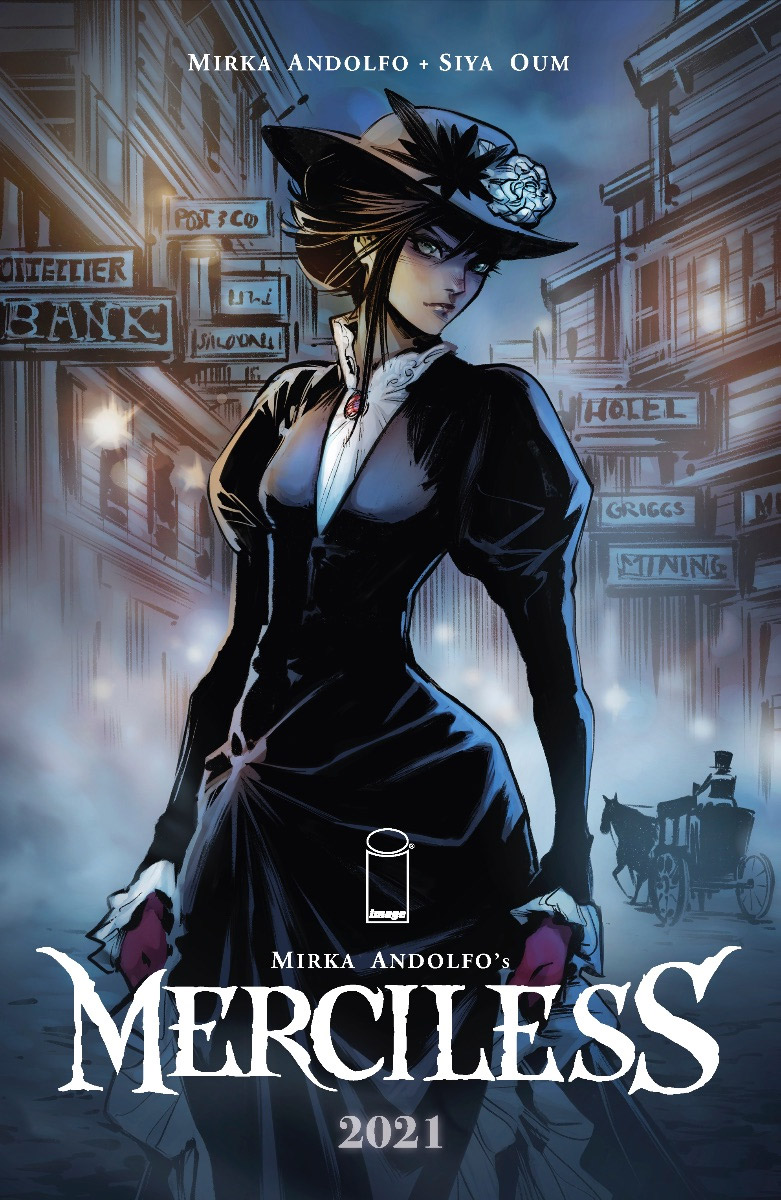
The sequel Merciless is set to arrive in 2021, though there may be delays due to the global pandemic.

My personal rating: 8/10

Shifting from the Victorian gothic-horror set piece, and moving forward in time from the late 1800s to the mid-1900s, our next story brings us to the streets of Hollywood in,

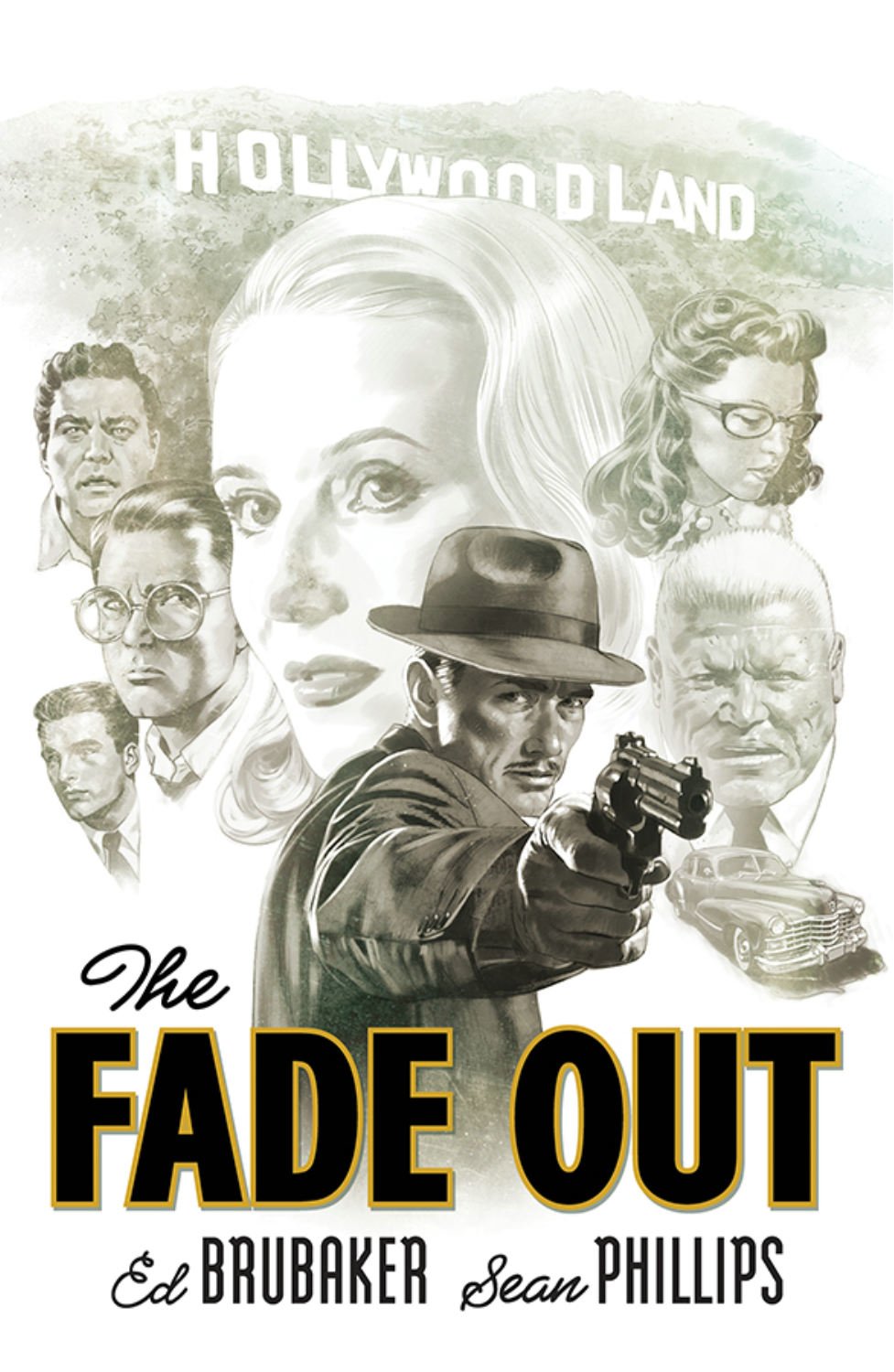
The Fade Out – Ed Brubaker, Sean Phillips

I love film noir so I didn’t hesitate in picking up this title, and the graphic novel delivered in all departments.

Enter Hollywood, 1948. Our main character is Charlie Parish, a writer stuck in the sets of a noir film that is plagued by endless reshoots in the aftermath of an up and coming starlet’s death. It isn’t a normal death by any means and suspicions abound among the cast as to who is responsible.

The Fade Out is unlike the usual mystery plot and there is much more to it than the generic murder story. What I really admired about this graphic novel was the research done by the writer to capture the atmosphere of Hollywood in 1948. Real life background events such as the Red Scare, a widespread fear for a potential rise of communism, World War II, and the Pearl Harbor bombings continue to torment the American psyche and are described near perfectly through Brubaker’s characters. Film is instrumental in allowing the public to immerse in a happier world, and the plot unravels much like a film within a film.

We, the readers, get to indulge in the underbelly of the film industry and witness its darker sides. All of this through the literal and figurative glasses of the main character Charlie Parish, who is somehow connected to the death of the starlet. Charlie himself is unable to recollect his connection to the murder. Feeling morally obligated to get to the bottom of the mystery, and disgusted by the industry’s attempts to sweep the story under the rug, we follow our disgruntled writer on his journey to discover the truth.

What makes the story click is not the usual cliché of solving a murder mystery. Rather, it is the reality of how vulnerable and powerless the common can be facing against authoritative institutions that determine and are crucial to one’s way of life. Charlie faces this very obstacle, fighting against the industry that is responsible for his paycheck, and the decision he makes in the end confronted by this oppressive power leaves the reader stunned.

The Fade Out is one graphic novel you don’t want to miss.

My personal rating: 10/10

Expos, Research, Scripts, and a whole lot of Books…

The last two weeks have been a blast. Back-to-back events involving my doctoral research, comic book script, art and animation expos, and a bucket load of books that hit my purchase list have kept me on my toes.

Research during a pandemic

Most of us have had to work from home since COVID-19 introduced itself to the world. It has been the same for me for the most part of the last 5 months. September’s arrival marked the beginning of the final year of my doctoral studies and I’ve spent the last few weeks working intermittently between home and the university.

Science is a collaborative effort and I’m thankful to the support I have received from my colleagues who have assisted in my research especially during a period of time where most research facilities are running at smaller capacity. While this has generally led to a lower results yield, I count myself lucky in that the majority of my research was complete prior to the shutdown.

Nothing beats the joy of getting experimental results that work and support your paper.

Looking ahead, I have also had the chance to engage in some networking for science writing by getting a membership at the National Association of Science Writers, successful registration in a Science Write-a-thon event, submitting a few pitches to scientific journals (fingers crossed, I get to write about my research, the wait has been killing me), and starting a medium account where I also share my posts on The Procrastinating Scientist.

Lightbox

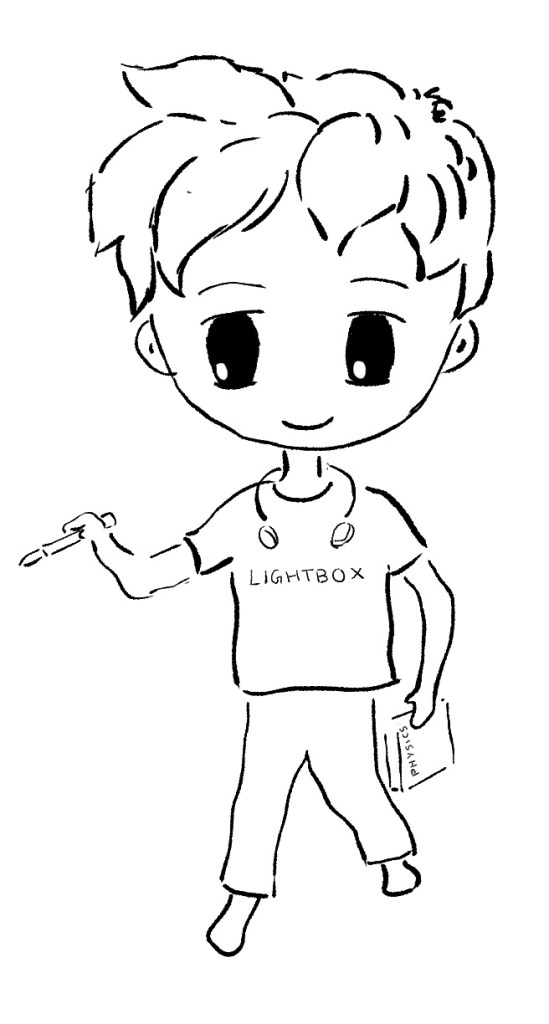
On that note, I made a giant leap in progress when it came to my efforts in pursuing a career in art and animation. Shout out to the Lightbox team for setting up an amazing expo over the course of a hyper-content loaded weekend.

The expo provided a wonderful insider look at the animation, arts, and comic book industry. Networking was also a big plus with sponsors and representatives from Disney, Pixar, etc. More than anything else, the expo provided a friendly and welcoming atmosphere. Be it if you are an amateur or a professional, there were no distinctions and the event altogether served as a wonderful community experience where everyone could learn from everyone.

An awesome source of inspiration, Lightbox left me wanting more. I cannot wait for next year’s expo in an experience that I heartily recommend to anyone who wishes to pursue a career in animation or the film industry.

Script and a whole lot of books

Attending Lightbox expo with a writer’s background (as opposed to an artistic background) gave me unique insights into my own progress with my comic book script. In art, it is very common for the instructor to advise the student to step back from his piece every now and then to gain a larger perspective of his project’s goal.

My experience at Lightbox made me do the same. My recent struggles in transcribing my script into art notwithstanding, I had to take a step back and recognize that there was still much left to do in organizing the plot, not to mention the plot holes that have been creeping out of nowhere in recent days.

It has been a steep learning curve but one that I have appreciated very much. It helped to find common ground in my struggles with many professional artists and writers who attended the expo. With that being said, I have made great progress in demolishing my original draft and elevating it toward greener pastures with every passing day. My goal is to have a fully polished script alongside preliminary concept art ready by the end of the year. Whether I make the deadline is up in the air but I know I’m going to enjoy every bit of it.

This brings us to the end of my two-week adventure. I hope you’ve all had a great weekend and I will see you soon with another post. My newly bought bookshelf speaks to the volumes of reading I will be doing in the coming weeks, so look forward to some book reviews in the near future.

See you all next week!!

Touching base with Pencil and Paper

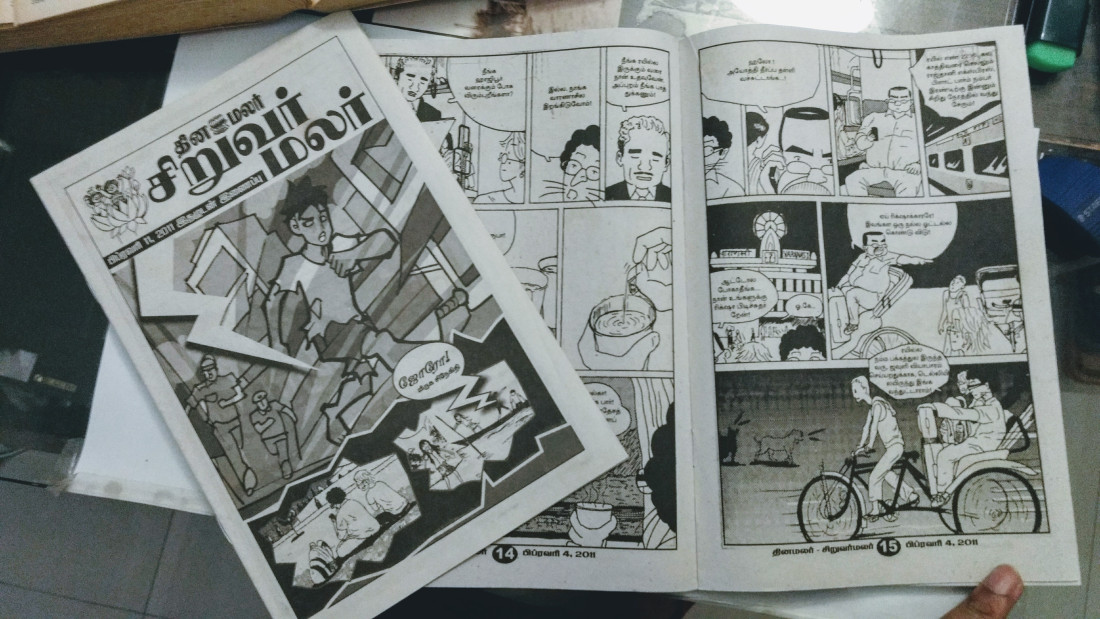
When I was young, I spent a good chunk of time at my grandparents. It helped that their house was situated right next to ours, and my grandfather’s collection of weekly kids comics and magazines were an abundant source of entertainment and inspiration for the kid in me.

img_20170505_191214596
My grandfather collected enough of these that we probably had over 500 of these thin magazines stacked up in a corner of the storage room.

Drawing came naturally to me back then, and I took any chance with a blank paper to draw whatever caught my eye. My grandfather fueled my imagination by sharing folk tales of old and just about everything that he knew while my grandmother indulged me with all the treats she could make to keep me energized with a full tummy.

11
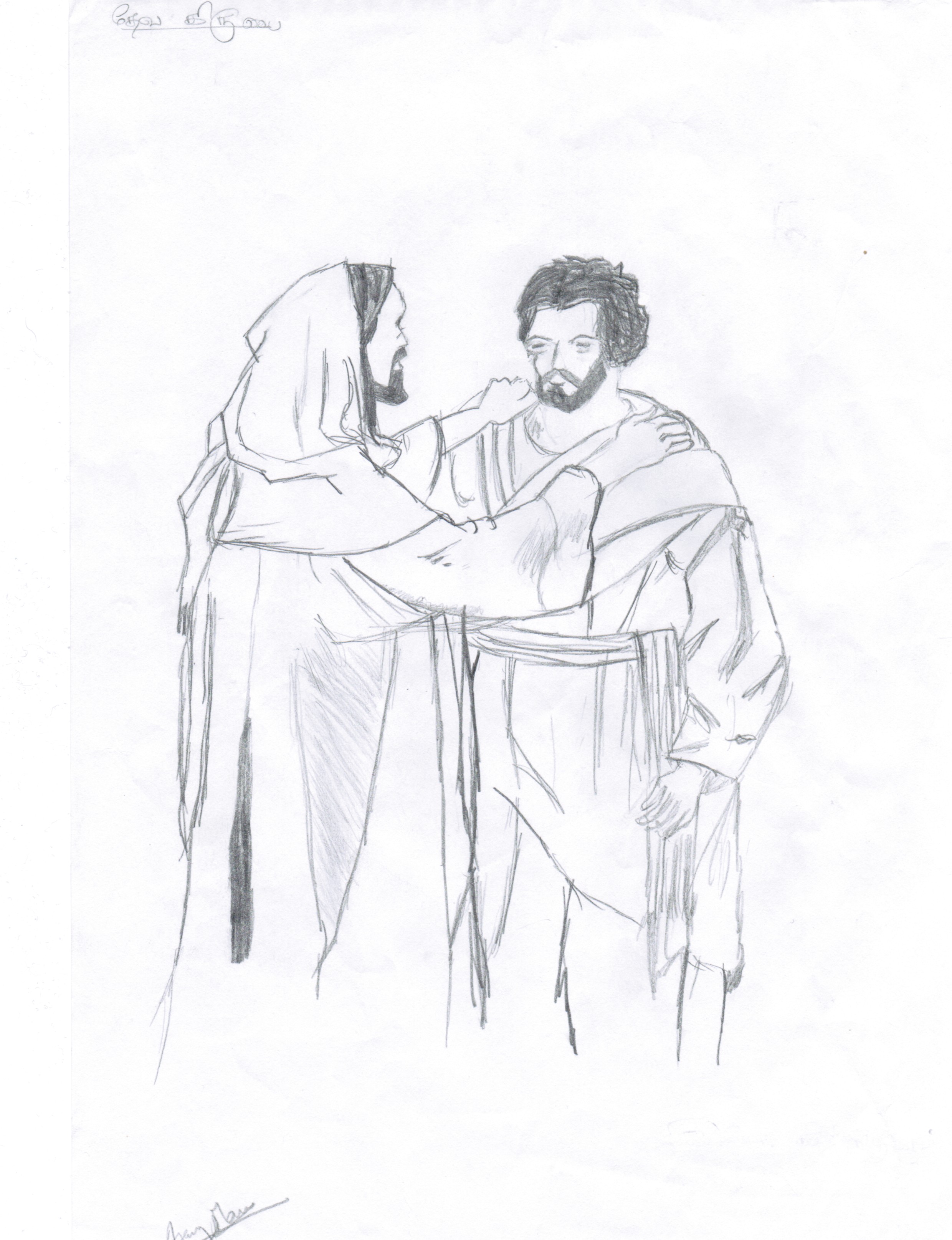
Being a Christian, my grandfather often shared his unique perspectives on the Bible. As a kid, the stories came off more as an epic fantasy, leading me to draw this rendition of Jesus and Simon Peter, no doubt referenced from an illustrated bible at his home.

As the years passed, my interest in drawing gradually took a backseat to my newfound love for writing. Rather than transpose what I felt was a simplified projection of my imagination onto paper, I felt it better to immerse in my imagination as a whole through writing. I was naive to think that between writing and art, one was lesser than the other.

Now, I have come full circle in realizing that art and writing are just two faces of the same coin. It is particularly sweet that I struck upon this knowledge in the process of completing the script to the graphic novel I have been developing over the last two years, and intend to dedicate in memory of my grandfather.

I have spent the last few weeks touching base with old friends in Pencil and Paper. It has been a difficult reunion to say the least, but we are gradually patching a decade of our on-and-off relationship in a newfound resolve to build a strong foundation for the future.

Frustration has been a loyal companion, but I’ve also used it as a source of motivation.

Firstly, I had to start by identifying the relevant skills I required to transition into the “graphical” aspect of my graphic novel. Phase Infinity, as I now call it, has all the characteristics of a long and arduous journey through diverse art courses intended to boost my amateurish skills while simultaneously churning out the artwork for my graphic novel.

To be honest, I find the final product to be a goal for the distant future. This isn’t necessarily discouraging as it is my first attempt after all. What has been annoying though is the persistent need to be overly critical about my work and for lack of any other word, too stiff and tight about my daily progress.

Figure drawing is my first priority as of this moment, and I have been enjoying it in all its gestures and forms. Consistency is the word for the rest of my year, as I hope to amass daily practice sessions.

Steve Huston has been my hero on this front, and I highly advice his books to my fellow artists among my readers.

Learning the human anatomy from an artistic perspective has also opened the door to some philosophy. Gesture drawing, in particular, has helped me embrace the fluid nature of our environments and our very bodies. For someone who has been enamored with the axiomiatic logistics of science and mathematics over the last decade or so, figure drawing has provided a refreshing, and new perspective of the world and its motions and rhythm.

Being a fan of Bruce, these two messages which aligned with the philosophy of gesture drawing became de facto screensavers in my mind throughout my artistic process.

That is all for today! I will keep you all updated with my struggles in art-realm over the coming weeks by sharing some of my art work in the Art Corner, as well as a review in my next post of one of my favorite artists in Kim Jung Gi.

William Erwin Eisner – A Perspective

Before quarantine became the new norm, there was a store a few minutes from my apartment that I would frequent on a weekly basis called Wee Book Inn.

A used bookstore, Wee Book Inn was my go-to destination whenever I fancied a random late night walk and on many occasions, casual dates with my partner. (The cat is also awesome.)

Apart from their diverse collection of literature, I was drawn to the venue as they also offered a healthy collection of comic books, often in very good condition, for their modest pricing. Needless to say, I’ve been a ravenous customer, and have trounced on any opportunity to land some good titles. In my efforts to explore the graphic novel medium over the last few years, Wee Book Inn has served as a wonderful resource for inspiration.

My most recent purchase of a collection of William Eisner’s graphic novels was the figurative equivalent of hitting jackpot. Prior to the purchase, I had only ever heard the name “Eisner” as part of the “Eisner Award” winning icon that graced the covers of popular and successful comic books. It wasn’t until after my discovery of the graphic novels that I realized Eisner was a prominent graphic novelist himself (I agree, it’s kinda stupid that I didn’t make this connection beforehand).

Will Eisner - Wikipedia

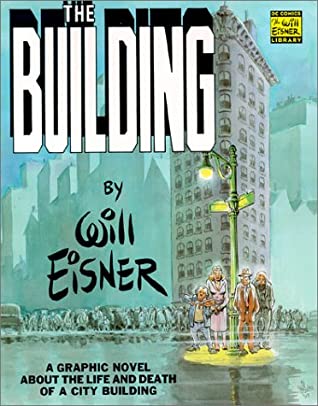
So far, I have finished reading two of his titles: Life on Another Planet and The Building. Eisner’s intricate penmanship on top of his unique presentation of panels and sequential storytelling immediately caught my attention. Much of Eisner’s graphic novels were published in the late 1970s in what have been early examples of the American graphic novel medium. In reading his works, it was easy to recognize the foundational aspects of Eisner’s penmanship in modern day comics and graphic novels. His style was reminiscent of the weekly newspaper cartoon strips I had read during my childhood in India.

It came as no surprise to find out that Eisner was also one of the earliest cartoonists to work in the American comic book industry with his earlier series The Spirit (1940-1952) setting a standard in experimentation of content and form in the graphic medium.

It was also easy to recognize the repetitive but endearing theme that characterizes much of Eisner’s works: humanity. Eisner’s graphic novels focus on the human psyche and its vulnerabilities through characters whose worlds seem to be a mote of dust against the larger order that is life.

1209837._SX318_

In Life on Another Planet, knowledge of first contact with an alien civilization becomes a reflection of tragic human foibles expressed in the collective and individual responses of governmental organizations, religious pariahs, and all the way down to homeless and impoverished individuals.

Meanwhile, in The Building, Eisner does a reverse sweep in humanizing a building through its relation to the lives of four different characters ranging from an anonymous citizen driven by guilt for the death of a child, a woman trapped in a marriage of convenience, a real-estate developer obsessed with aging, and an amateur musician whose music accompanies the drama of the former trio.

1535935._SX318_

Under the light of current circumstances in our world, the events of Life of Another Planet  were eerily relatable. The same could be said of The Building though the readers’ relationship to the characters originate from our personal memories toward past experiences and attachments in life (be it another person or an artifact).

Eisner wrote several graphic novels until his death in 2005. Many of his novels  converged in relating the history of New York’s immigrant communities, particularly Jews (elements of which is very notable in The Building). I was also lucky enough to purchase Eisner’s Graphic Storytelling and Visual Narrative where he details his thoughts as a lecturer about the craft and uses of sequential art.

As a student of the graphic novel medium, and as an ardent reader, I would highly suggest Eisner’s works to anyone interested in well-balanced examples of the art of story-telling.

Finishing the script – a new journey

After an entire year, I finally finished the rough draft of my comic book script last weekend.

LikelyFinishedHerculesbeetle-max-1mb

This post is a little late to the party but my mind desperately needed a break from writing. The last few days have allowed me to recuperate as well as re-evaluate my goals and objectives with regards to the comic book, and to a larger extent, my future.

What I required was a dose of reality, and I got a good share of it reading reference books on making and publishing comics. While I’m very happy to have finished the rough draft, there still remains a lot to be done. Reading and listening to the words of professional writers and comic book artists has also made it very clear how the journey towards becoming a full-fledged writer/artist is not an easy one. There is still a long way to go, and there is even more to learn. I need to really patch up my art skills, and consistently improve my writing as well. It is a difficult career, and success is not guaranteed, but when all is said and done I find that what is required is a little bit of initiative and a whole lot of discipline.

tenor
Vegeta and I are on the same wavelength concerning this. 

I’ve been writing ever since high school. It started off with corny and over the top cheesy romantic teen novels. My first ever novel was titled, Love As It Is, so I think you get the point.

TediousClosedGreyhounddog-size_restricted
These novels now serve as comedic enterprises on those days when I’m stressed and don’t feel too good about my writing just so I can remind myself how much I have improved since.

Then came an autobiography in Our Last Summer that allowed me to reflect on the most dynamic stages of my life growing up from a scrawny teenager to a responsible adult. At it’s heart, the book was about family, friendship, and remembering my roots while paving my own path in life.

This soon followed suit with a short, fictionalized novel in A Little Bit of Everything.  Despite being fiction, the story touched base and drew inspiration from what I believe will remain the most important and memorable moments of my life. Writing A Little Bit of Everything helped me define who I am and who I wished to be as an individual. When I completed the book, I realized that what meant the most to me in life was to keep my loved ones happy, and share my happiness with them and others through my stories and writing. Now, having finished the script for my comic book, that emotion has become a resolution for what I’m convinced and determined will be the foundation for my future career. 

While the script is complete, I can’t deny that it will be a few more years until the comic book as a whole comes together. I have just begun dissecting an art course on line drawings and fundamentals. I have purchased a few more on figure drawing, perspective drawing, and animation, in a toolbox that I expect will grow in time. I will soon begin polishing my script and setting out the layouts for the comic while doing a hefty bit of research on topics relevant to the work. I will be juggling these activities in between brainstorming another novel and completing my doctoral studies.

I have my work cut for me but I look forward to this new adventure, one that I intend to share with all my readers, friends, and family. With your love and support, I intend to pull through. That being said, I hope you are all doing well and staying safe amidst the current COVID-19 pandemic!

tenor (1)
I’ll see you all very soon with another post.

Writing with a brick in my head

Writing with a brick in my head or taking a long walk down Stumped avenue, call it what you may, writer’s block is ultimately a frustrating experience. Supplement it with a dash of stubbornness, a pinch of OCD, and you have the annoyingly difficult jigsaw puzzle that was my writing process over the last week and a half.

Image result for anime frustration gif

July will mark a year since I began writing the first draft of a script for my comic book and currently active writing project. There still remains a mountain of obstacles to climb considering the drawing portions that I have yet to begin. For the most part, I was thankful that compared to my earlier autobiographical efforts in Our Last Summer and A Little Bit of Everything, my pacing and writing were hitting the right chord.

At first, I attributed this to a different writing approach, revolving around heavy sessions of brainstorming and research, followed by focused writing.

Image result for anime writing gif
This was the complete opposite to the free writing that propelled my earlier projects.

I felt the change was all the more necessary and obvious as this comic book script was my initiation in writing a third-person narrative. On the outset, there were promising signs that I would scrape through this project without a detour down Block canyon, and that’s where I jinxed it. Dark clouds loomed along the horizon, and soon enough I was tumbling downwards in what seemed to be an endless spiral of frustration in my existential struggle to piece together the crux and climactic portion of the story.

Image result for anime despair gif
It cannot be…How could I have let this happen? 

As usual, I fell prey to something that I had repeatedly advised myself to avoid: to let my ideas and thoughts, and not my research, shape the story. As integral as it had been for me to do extensive research on the fantasy elements I wished to include in my story, I had failed to keep up with my resolution in only allowing my creativity to guide my writing, and be inspired from what I learned from external references. Writing in the fantasy genre is an amazing experience, especially when there is so much material out there that just captivates one’s imagination. Somewhere along the way, I had lost the plot, and had allowed my research to limit rather than enhance my writing.

Image result for anime girl slap boy gif
A stern beat down from my in-house editor and partner woke me up and made me realize the solution was staring me right in the face. 

What did I learn? Writer’s block is not fun. But, stressing about it ain’t going to help either. What matters is that one is willing to take a step back, to gain perspective, before stepping forward again. While this may be counter-intuitive, and for my fellow stubborn writers out there who like me (initially) may believe it an ostensible wasting of one’s time, it is very important to take a step back and approach your writing as though you were an impartial audience member. 

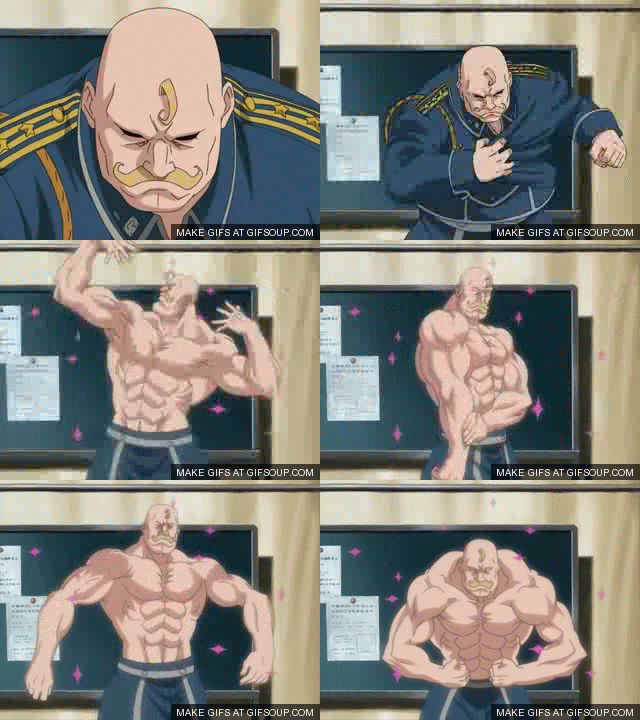
Just as in science, where complicated problems often exercise a simple and elegant solution, the same could be said of writing. This is a familiar piece of advice for those entrenched in figure drawing where instructors often grill the student to take a step back and look at their work in progress to gain perspective and incentive in proceeding forward. The same applies for the mind as well, all I had to do was step back, take it easy, and, as Major Armstrong would likely agree,

Image result for anime motivation gif
 Revel in the the truth and justice that is your sparkling freedom in writing. 


A Boatload of Reading

The last month of pseudo-relaxing has followed a successful reset of my PhD research accompanied by a boatload of reading of graphic novels and comic books. Marvel’s Endgame was the initial spark that set ablaze my voracious appetite on revisiting various titles from the past.  While Endgame signaled

in the marvel cinematic universe (MCU), a moment met by mixed emotions among the fans, I was glad to move on from what was a decade of movies and get back to roots with the comics that had been in my reading list for several years.

This would be most apt for fans of Captain America and Iron Man. 

Although I lean more towards DC as a comic book fan than Marvel, I have thoroughly enjoyed reading stories from both universes. Considering the recent MCU releases, I found an obvious choice to begin with The Infinity Gauntlet, following which I have been on a blatantly biased run of DC titles. But at some point, you need to call a break and get your head out of the books, so I’ve decided to use this opportunity to briefly review the titles I’ve read thus far for both the experienced and amateur comic book fans among my readers.

While Marvel and DC have both gone through major relaunches of their respective universes over the recent years (New 52, DC Rebirth, Marvel Legacy) the titles I have chosen to review predate these events, and involve a mix of standalone novels that serve as perspectives into leading characters from the respective universes as well as sagas that span lengthy series.

The Infinity Gauntlet

If Thanos in MCU’s Infinity War was draped in shades of an anti-hero or a pragmatic villain, the Thanos of The Infinity Gauntlet identifies strongly with his sobriquet of The Mad Titan. The Infinity Gauntlet is the stage of a climactic struggle (and yet the first of many to follow) that pits the Avengers and literally all of Marvel’s pantheon of heroes and cosmic entities against the Mad Titan in the backdrop of what is largely a friend-zone drama between Thanos and the female entity that is Death. To capture the heart of his eternal love, we follow Thanos in what is an enjoyable and at times weirdly comical adventure that pits the balance of the universe at stake.

infinitygauntlety.png

Superman: Red Son

Swinging into the DC universe, we have a title that is literally one of the best stories in the history of the Man of Steel. Superman: Red Son is a groundbreaking title from DC with a twist on the familiar tale of a Kryptonian rocketship that crash-lands on Earth carrying an infant who will one day become the most powerful being on the planet. Rather than being raised in Smallville, Kansas and become a hero who fights for “…truth, justice, and the American way,” in Red Son, Superman finds  a new home in the Soviet Union where he becomes “…the Champion of the common worker who fights a never-ending battle for Stalin, socialism, and the international expansion of the Warsaw Pact,” making us all look up toward the skies and say, “Look! Up in the Sky! It’s a bird! It’s a plane! It’s…Russian Superman!”

supermanredson

Batman: Year One & Batman: The Long Halloween

A foil to Superman in many ways, Batman ranks among the most popular superheroes of the DC medium. Written by Frank Miller, shortly after the publication of The Dark Knight Returns (a storyline that inspired several sequences in Christopher Nolan’s The Dark Knight trilogy), Batman: Year One is another reinterpretation of a classic hero, and provides a detailed perspective on his origins, the humanity behind the caped crusader’s rationale, as well as his struggles, and growth to become the seemingly invincible hero we know him to be.

batman


alfred-is-tired-of-batman-amp-039-s-crap_o_6047215

The end of Batman: Year One (1986) transitions perfectly into Batman: The Long Halloween (2011) where we follow a compelling adventure in Batman’s early career. The humanity of the Dark Knight, often overlooked by most readers, is in plain view in a story where Batman confronts a former friend turned foe in Harvey Dent.

‘I believe in Harvey Dent,” a line repeated frequently to great purpose in The Long Halloween.


Alongside Superman: Red Son, these two titles hold up as great standalone stories that focus on the inherent humanity and fragility behind the essentially unbreakable beacons of justice, and truth these characters serve to be, making them suitable for amateur comic book readers.

Infinite Crisis & Final Crisis

Rounding off this blog post, we have two more titles that serve as DC’s counterpart to Marvel’s The Infinity Gauntlet. Infinite Crisis and Final Crisis span events that can be considered as the DC Universe’s darkest days. Infinite Crisis serves as a lead-in to the events of Final Crisis. In both cases, our heroes are faced with crises of cosmic proportions that bring together many familiar and unfamiliar faces in the pantheon of DC heroes.

crisis

Infinite Crisis highlights a critical moment that has divided Earth’s three greatest heroes: Superman, Batman, and Wonder Woman. As such, the burden falls upon long-lost heroes from the past and other less recognized faces from the DC pantheon to set things straight in a crisis that spans infinite universes. On the other hand, Final Crisis follows the efforts of DC’s “Thanos” (but much better, in my humble opinion) Darkseid who takes advantage of the fallout from the prior crisis and decides to remake reality and the universe in his dark image.

Both Infinite Crisis and Final Crisis are among the last set of publications that preceded DC’s ultimately unsuccessful relaunch in the New 52, and their stories involve hero slug-fests and bouts on a global and universal scale.  While these two titles would be most suitable for the well-versed DC fan, the stories are nonetheless a joy to read through for the pure fun, and escapism they provide into the world of DC’s superheroes.

Pretty similar to what Darkseid essentially tries to achieve with the anti-life equation in Final Crisis. 

This completes my reviews of the works I have read so far. I’m pretty sure the coming week will see another visit to the public library as I strive to go through the remaining books in what seems to be my endless reading list. See you all next week!


Graphic Novel Review – The Cartoon Introduction to Philosophy

I love reading books, and especially so, when I’m sick. Last week was one such example when I endured a severe throat infection, spending my days doing the bare minimum of work that was necessary, and whiling away my remaining time alternating between bed-rest and pouring through the pages of my latest purchase from Chapters, The Cartoon Introduction to Philosophy, by Michael F. Patton and Kevin Cannon.

Amusing as it may be, I often find my mind to be a lot more productive when I’m sick compared to when I’m active.


My discovery of this book was by chance and followed my efforts to purchase another philosophy text I have reviewed in the past in Luc Ferry’s A Brief History of Thought. Having read Ferry’s work, I had a pretty good idea of what to expect in The Cartoon Introduction to Philosophy, which as is obvious from the title, is a cartoon rendition of the great tradition of philosophy. Incidentally, it is also the subject of my first official review of a graphic novel, and what a wonderful read it was.

While the work may be considered moderate in volume, it more than makes up for this in the expansive content that it covers. In what serves as an engaging and entertaining read of the philosophical landscape, the humorous and instructive prose of Professor Patton dances alongside the pivotal illustrations of Kevin Cannon that ring true with the classic idiom, “A picture is worth a thousand words.”

We are off to a great start as we get acquainted with our guide who is one of my favorites among the group of philosophers now considered as the pre-Socratics: Heraclitus.

“Upon those who step into the same rivers, different and again different waters flow.”

Nicknamed “The Dark One” for his philosophical style, Heraclitus was a pre-Socratic Greek philosopher whose emphasis was on change and impermanence being the defining characteristics of our world as opposed to stability and balance.

Paddling alongside him on a metaphorical canoe, we set off on our journey through the long, and winding “river of philosophy.” Our adventures begin in the land of logic where we study the rules of reasoning  and thought. Our travails are not an individual effort as we are joined by a fellow philosopher in Aristotle whose strict deductive relationships help us bridge our premises and establish the conclusion of our argument.

We loosen up a fair bit upon the arrival of a good friend from the future (there is a fair amount of time travel in the plot) in John Stuart Mill whose inductive reasoning paves the way for his generalizations about past events to predict the future.


Sometimes we can be deductively inductive.


Having learned how to assert and defend our beliefs, we look ahead to understanding what we know and how we know it. Our perceptions are brought to light through our skepticism that warrants a fundamental truth independent of all our senses in Descartes’ proposition that “I think therefore I am.” Descartes’ presumptions are subsequently set to a blank slate or the tabula rasa  in John Locke’s empirical divisions of our world’s qualities, which are themselves ultimately laid to rest and grounded in the idealism of George Berkeley where the world is nothing more than a collection of ideas

Plato’s cave is a wonderful allegory on the differences between perception and reality. 

This of course leaves us with no with no doubt that our perception of the world cannot be taken for granted, and honestly with more doubts than when we began our journey. Nevertheless, the dialogue continues as we traverse the realm of our minds, being as indecisive as we can ever be in finding our mind-body connection, before beginning to question our free will or the possible lack of one in the existence of God, and finally come to terms with our responsibilities and actions as we are driven by our knowledge of the world in ethics. 

In what is a smart, witty, and up-to-date account, The Cartoon Introduction to Philosophy is a perfect starting point for any uninitiated reader in the pleasures of philosophy. Patton and Cannon have done a great job in providing a work that is sure to inspire the love and wisdom of learning or “philosophia” in both young and old. By the time we flip through the last page of the novel, it is obvious that our once metaphorical “river of philosophy” has now metamorphosed into an ocean comprised of various personalities, creativity, and a heck of a lot of thoughts in what is a gloriously concise compendium of a field of study that is its own protagonist.