In the summer of 2022, I started hearing murmurs about OpenAI’s upcoming release of an AI-powered conversational chatbot that would presumably be a game-changer. There was a sense of dread in the writing industry, with some of my colleagues and friends bemoaning the potential impact of this technology on the field and their careers. Later that year, on November 30, 2022, OpenAI released the first iteration of ChatGPT.
It has been nearly four years since. AI tools are now just about everywhere. From chatbots, coding assistants, and workflow automation to writing, image, and video generation, there is an AI tool out there to suit everyone’s needs. I’ve already crossed paths with Claude, ChatGPT, Gemini, Grok, Copilot, Perplexity, Grammarly, and many more. My take on all of it is similar to a popular character (who confronts the reality of his success, achieved through years of effort and hard work, becoming a poor and cheap imitation) from one of my favorite anime:

I have followed the development of ChatGPT and other AI tools very closely and approached their use with great caution. Adaptation is part of the writer’s journey. It has also been a central characteristic of my personal journey regarding new technologies. Hailing from a small town in Madurai, I didn’t come across a compact disc until the early 2000s, when I had the opportunity to attend an international private school. There I was, packing floppy disks into my backpack while my friends were working with USB drives. A few megabytes were my data domain, while others were advancing to gigabytes and terabytes. This pattern of catching up and adapting to emergent tech has persisted throughout my life. It has been both a frustrating and a great learning experience.
Being slower has helped me assess and adapt to new trends cautiously. Today, in my day-to-day life as a writer, I see AI (in its various forms) simply as a tool and an imperfect one at that. Take ChatGPT, for example, it is essentially a Large Language Model (LLM) in action. Chat is trained on vast amounts of data, including publicly available internet content, books, and articles. It recognizes patterns and generates text without directly storing any information. This approach entails a Pandora’s box of ethical challenges, including potential bias, inaccuracy, intellectual property concerns, and data privacy issues. Like its brethren, Chat is both beneficial and harmful, depending on its use and oversight. That last part can apply to any tool, in general. The funny thing is, none of this is new. It’s just that AI tools today bring a boatload of abilities that, at one point, weren’t possible.
Remember this guy?
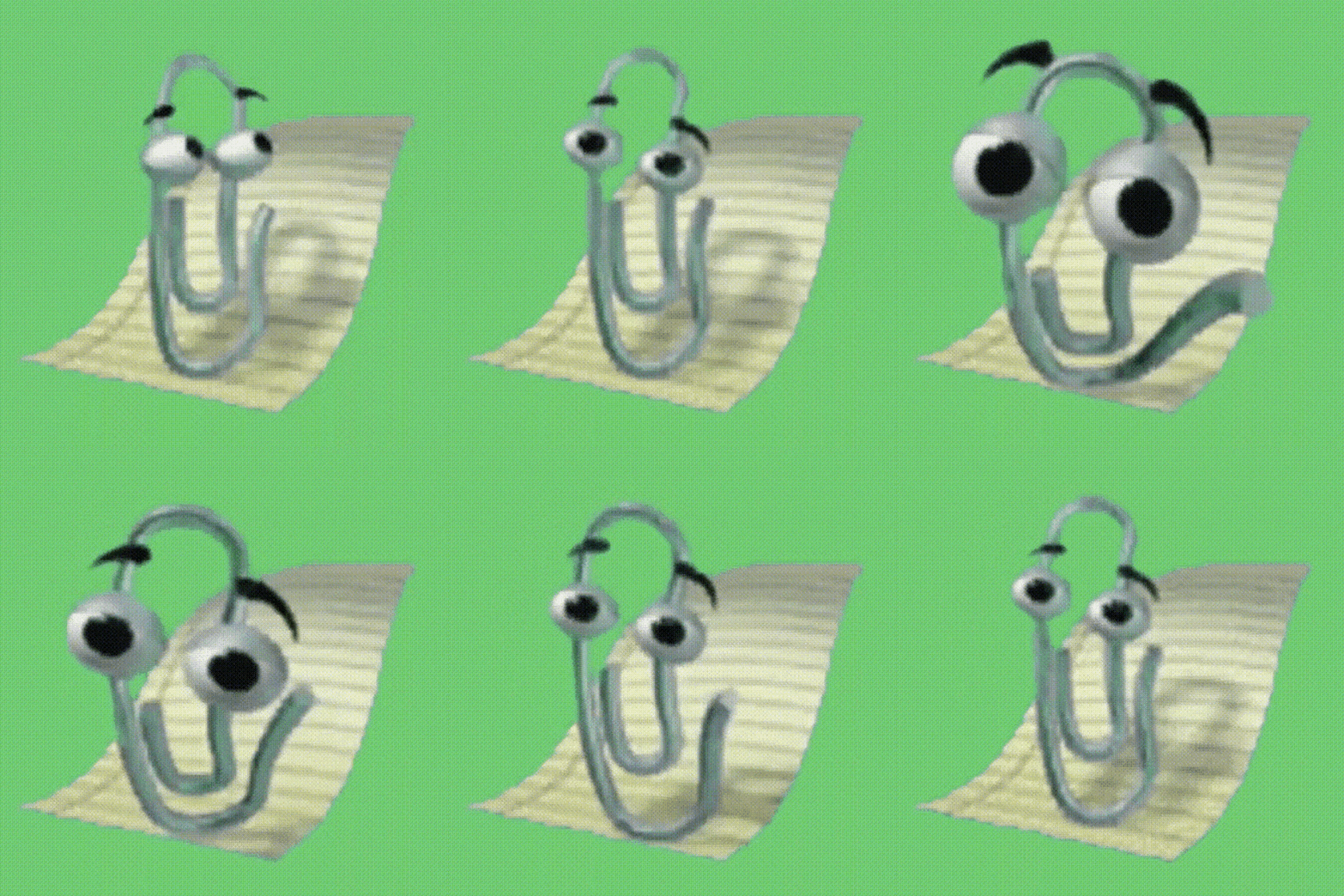
Clippy was a primitive, rule-based AI (yup, you heard that right) that helped predict user needs and offer help on the go. You can call it a predecessor of sorts to modern generative AI. Clippy also used early machine-learning techniques to analyze user actions and offer suggestions. In a way, Clippy is the granddaddy of modern chatbots.
Go back a little further, and you have this guy:
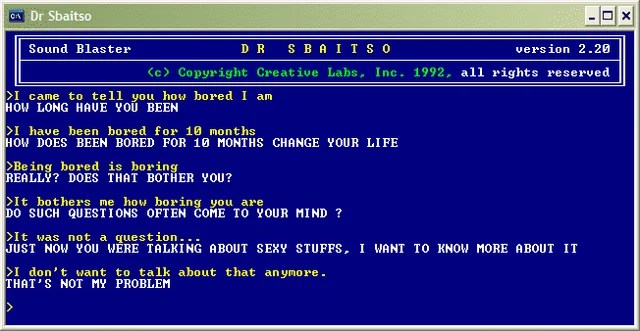
As AI tools proliferate, they have sparked extensive discussion about privacy, mitigation, transparency, and more. Careers and fields are undergoing a transformative era where jobs and roles are being realigned and remade. The art of writing is also riding this wave of change. AI tools have improved and expanded accessibility and productivity for the average user. Where once you would hire the services of a working professional, say a graphic designer for a specific design task, AI tools make it easy for the uninitiated to be able to come up with something on their own. As such, some tout that AI has levelled the playing field, but I disagree. Rather, I find that AI has significantly elevated the ceiling for talent emergence and recognition.
In my line of work, AI tools have helped streamline parts of my writing pipeline that were tedious or lacking. Much of this doesn’t involve the actual writing. Rather, it mostly concerns the brainstorming and research phase of a given project. Googling things is easy enough, but sometimes there are nitty-gritty details that a basic Google query may not necessarily be effective for. Tools like ChatGPT/Gemini/Claude do make it easier to find what you need on the web, IF you know how to prompt them properly. This whole process is quite analogous to my reaction when Wikipedia first came out. The online encyclopedic database blew everyone’s mind. At the same time, it was imperative for users to remember that Wikipedia is a collaborative, open-editing platform. This means anyone with an internet connection can potentially alter content, creating opportunities for errors, vandalism, and bias, especially on controversial topics. Back then and to this day, I use Wikipedia as a decent starting point to gather information. I don’t take anything on its page at face value; instead, I cross-check with the provided bibliography or supplement my notes with further research.
AI tools are just the same for me. On the one hand, I use them to ease the brainstorming and research phase of my writing. This can involve finding an obscure passage related to a specific work or prompting the AI to provide working examples of a writing concept I may find confusing when a cursory search on my end does not yield what I want. It is a collaboration in which the AI tool serves as “sound board” of sorts, enhancing my efficiency while supporting my originality. I do not let the tool dictate my writing. Rather, I let my writing dictate how I use the tool. This helps me maintain my authenticity, voice, and critical thinking. As a tool, AI is just another cog in my creative process. I remain the director. On the other hand, AI tools have helped me identify areas for improvement in my writing process. Grammarly, for one, has pushed me to further study and build on fundamentals, including grammar, style, and composition (in fact, it was my persistent mistakes in these departments that got me reading “The Elements of Style” by William Strunk Jr. and E.B. White).
Using an AI tool for coding doesn’t necessarily make me proficient in programming. The same logic applies to writing as well. One still has to learn the skills of the trade to have the basic know-how and to keep improving. AI tools for writing often seem like a shortcut, but an overreliance on them may potentially come at a loss of one’s personal voice, that most critical aspect of your writing that makes it original and, simply, you. AI tools geared toward writing are as much a means to enhancing your efficiency as they are in helping you identify weaknesses in your writing. Working and improving in those areas is on the writer.
At the end of the day, the actual writing is my very own personal journey, untouched by AI.