Book Review – Redwall – A Journey In Childhood Nostalgia

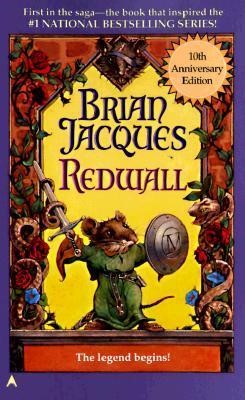
“It was the summer of the late rose.” The year was 2002, and I was a scrawny 11-year-old kid, sitting in a corner at the school library, fully immersed in Brian Jacques’ Redwall. A year had passed since my family and I first arrived in Cairo, Egypt. I was admitted at the Cairo American College (CAC) International school to complete my elementary and middle school education. The lack of a strong foundation in spoken and written English led to my registration in the English as a Second Language (ESL) program. The school library, with its treasure trove of books and resources (I hadn’t actually ever visited a library in my life till then), would naturally become a second home in my efforts to improve my hold over the English language.

redwall1

My finding of Redwall was preceded by my discovery of another great literary work in J.R.R. Tolkien’s Lord of the Rings. I was largely drawn to the illustrations on the book cover, alongside the descriptive maps in the appendix. Jousting my way through the first few pages of The Fellowship of the Ring I would ultimately give up, confused and frustrated in my inability to understand the contents.  A friendly librarian would see to it that my efforts weren’t wasted, suggesting an easier (and more suitable) read of the fantasy genre in Brian Jacques’ Redwall. Thus began my adventures with the peaceful creatures of Redwall Abbey, a journey that continues to this day.

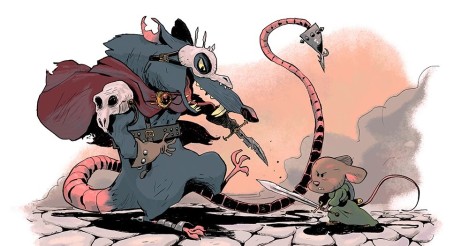
Redwall follows the tale of a young mouse named Matthias who dreams of adventures as opposed to the quiet and peaceful life of servitude he is advised to follow by his mentors and the inhabitants of Redwall Abbey. When the abbey’s tranquil atmosphere is destroyed by the coming of Cluny the Scourge, an evil-one eyed rat warlord, Matthias must find the courage necessary in himself to step forward, become the champion of the abbey, and protect his family and loved ones.

redwall2

The primary theme of Redwall is centered on the triumph of good over evil. Jacques does not shy away from describing the harsh realities of battle, and death through the medieval setting upon which the peaceful mice, badgers, voles, hares, squirrels, sparrows, and moles fight and defeat the violent rats, weasels, snakes, stoats, and ferrets.Jacques follows the traditional template of the monomyth or the hero’s journey in his protagonist, Matthias. Matthias’ story begins at Redwall Abbey but the impending danger upon Cluny’s arrival sends him on a journey through the heart of Mossflower Woods, deep within the forests, where he faces and succeeds in the hero’s challenge to obtain the courage required to save the abbey and vanquish its enemies.

redwall3
“Imagination is a gift given to us from God and each one of us use it differently.”

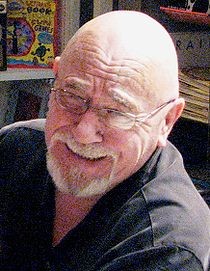
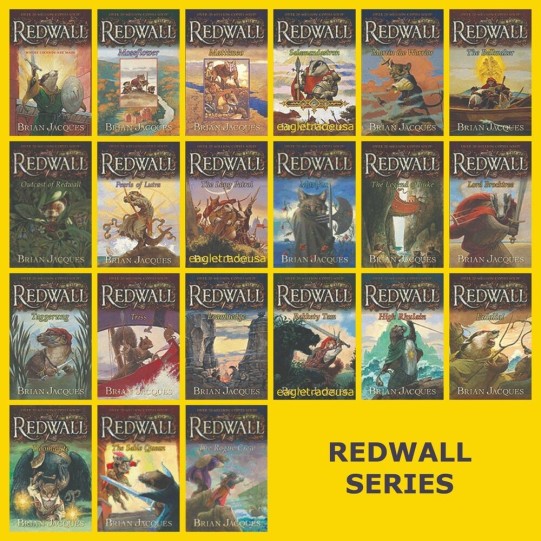
Jacques’ vivid descriptions of his characters, as well as his unique style in combining action, poetry, and songs makes for a wonderful read for both children and adults alike. It comes of no surprise then that Jacques’ Redwall  was originally dedicated to his friends, the children of the Royal Wavertree School for the Blind, whom he first met while working as a milkman. The success of Redwall kick-started the growth of a 22-book series that now has a lasting legacy as among the best of children’s fantasy novels.

Reading Redwall in 2002, I was captivated by the world Jacques’ had constructed in his novel. Now, almost 17 years down the road and having recently re-read the novel, I cannot deny the childhood nostalgia that sums my experience of Redwall and the influence it has had in my own efforts to writing books in the fantasy genre for a diverse audience. The enduring cast of Redwall characters, their trials and tribulations, and their ultimate success provide, in my humble opinion, valuable lessons in courage, love, peace, family, and freedom. While the overall series may be guilty, on certain occasions, of recycling old plot lines and propagating an obvious pattern of predictability, Jacques’ Redwall sets the stage for an unforgettable journey alongside memorable and diverse characters in a story that is full of heart.

redwall4

Graphic Novel Review – The Cartoon Introduction to Philosophy

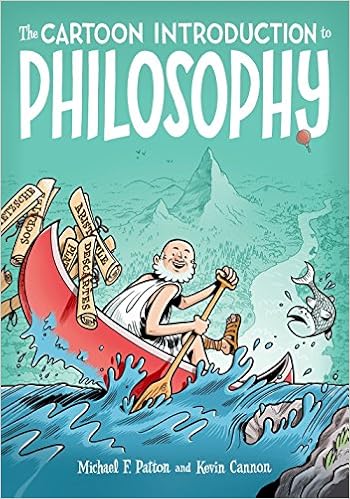
I love reading books, and especially so, when I’m sick. Last week was one such example when I endured a severe throat infection, spending my days doing the bare minimum of work that was necessary, and whiling away my remaining time alternating between bed-rest and pouring through the pages of my latest purchase from Chapters, The Cartoon Introduction to Philosophy, by Michael F. Patton and Kevin Cannon.

Amusing as it may be, I often find my mind to be a lot more productive when I’m sick compared to when I’m active.


My discovery of this book was by chance and followed my efforts to purchase another philosophy text I have reviewed in the past in Luc Ferry’s A Brief History of Thought. Having read Ferry’s work, I had a pretty good idea of what to expect in The Cartoon Introduction to Philosophy, which as is obvious from the title, is a cartoon rendition of the great tradition of philosophy. Incidentally, it is also the subject of my first official review of a graphic novel, and what a wonderful read it was.

While the work may be considered moderate in volume, it more than makes up for this in the expansive content that it covers. In what serves as an engaging and entertaining read of the philosophical landscape, the humorous and instructive prose of Professor Patton dances alongside the pivotal illustrations of Kevin Cannon that ring true with the classic idiom, “A picture is worth a thousand words.”

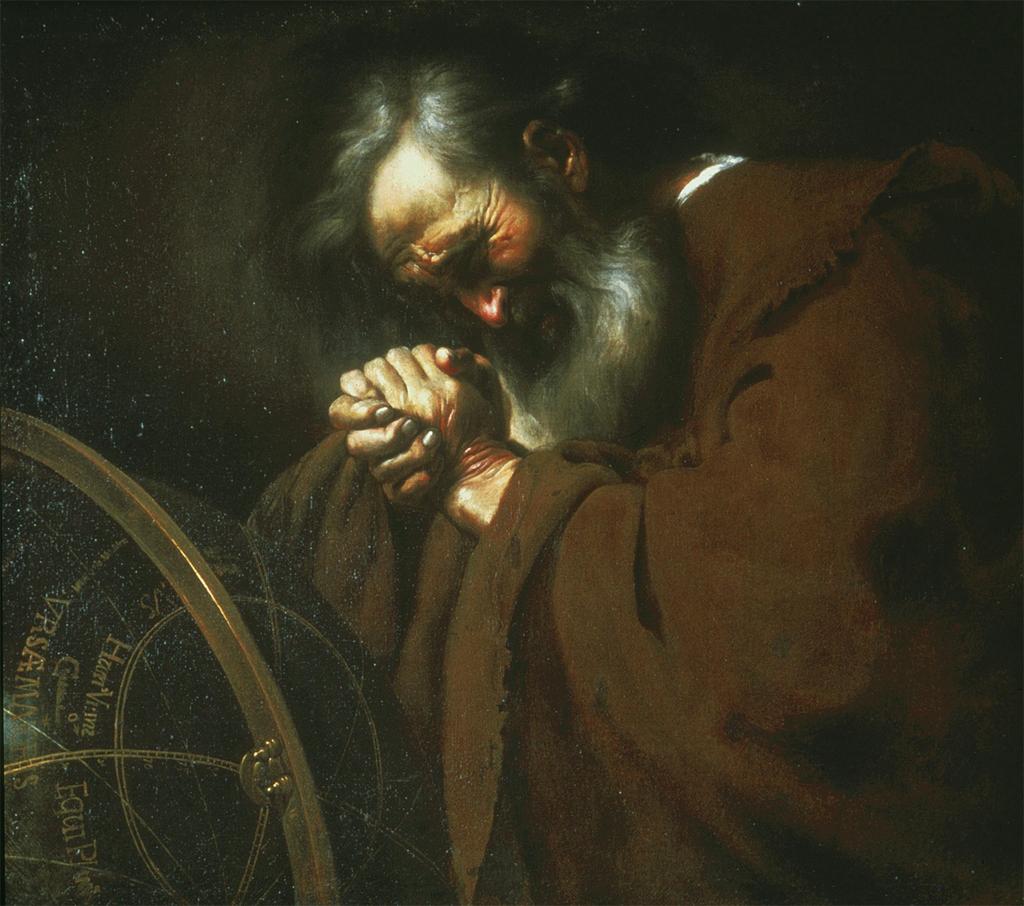
We are off to a great start as we get acquainted with our guide who is one of my favorites among the group of philosophers now considered as the pre-Socratics: Heraclitus.

“Upon those who step into the same rivers, different and again different waters flow.”

Nicknamed “The Dark One” for his philosophical style, Heraclitus was a pre-Socratic Greek philosopher whose emphasis was on change and impermanence being the defining characteristics of our world as opposed to stability and balance.

Paddling alongside him on a metaphorical canoe, we set off on our journey through the long, and winding “river of philosophy.” Our adventures begin in the land of logic where we study the rules of reasoning  and thought. Our travails are not an individual effort as we are joined by a fellow philosopher in Aristotle whose strict deductive relationships help us bridge our premises and establish the conclusion of our argument.

We loosen up a fair bit upon the arrival of a good friend from the future (there is a fair amount of time travel in the plot) in John Stuart Mill whose inductive reasoning paves the way for his generalizations about past events to predict the future.


Sometimes we can be deductively inductive.


Having learned how to assert and defend our beliefs, we look ahead to understanding what we know and how we know it. Our perceptions are brought to light through our skepticism that warrants a fundamental truth independent of all our senses in Descartes’ proposition that “I think therefore I am.” Descartes’ presumptions are subsequently set to a blank slate or the tabula rasa  in John Locke’s empirical divisions of our world’s qualities, which are themselves ultimately laid to rest and grounded in the idealism of George Berkeley where the world is nothing more than a collection of ideas

Plato’s cave is a wonderful allegory on the differences between perception and reality. 

This of course leaves us with no with no doubt that our perception of the world cannot be taken for granted, and honestly with more doubts than when we began our journey. Nevertheless, the dialogue continues as we traverse the realm of our minds, being as indecisive as we can ever be in finding our mind-body connection, before beginning to question our free will or the possible lack of one in the existence of God, and finally come to terms with our responsibilities and actions as we are driven by our knowledge of the world in ethics. 

In what is a smart, witty, and up-to-date account, The Cartoon Introduction to Philosophy is a perfect starting point for any uninitiated reader in the pleasures of philosophy. Patton and Cannon have done a great job in providing a work that is sure to inspire the love and wisdom of learning or “philosophia” in both young and old. By the time we flip through the last page of the novel, it is obvious that our once metaphorical “river of philosophy” has now metamorphosed into an ocean comprised of various personalities, creativity, and a heck of a lot of thoughts in what is a gloriously concise compendium of a field of study that is its own protagonist.

The Prince, A Reflection Of Our World

Hi everyone, it’s been a while!

My absence over the last month has coincided with my directing a war upon many fronts, mostly revolving around my studies and research at the university. The slew of paper work resting by the side of my computer monitor serves as evidence of the ragged battlefield that has become my home over the last few months.

amjrVPN8m_480wa_v1
Studying…it’s a hard fought battle between Expectations…
tumblr_mfymmal6gd1rosuzvo1_500
and Reality…

But, with the semester coming to an end, I’ve had several windows of opportunity to kind of sit back and take a break from these daily battles. In setting the stage for the statesmanship of the enduring war that has been my PhD degree so far, I found an interesting perspective and a read worth the time in Niccolo Machiavelli’s The Prince.

Setting aside the  intricacies of 16th century Italian politics that often made me reference Wikipedia (since my purchase of a discounted edition of the book came without supplementary notes), Machiavelli’s realpolitik treatise was quite the enjoyable read.

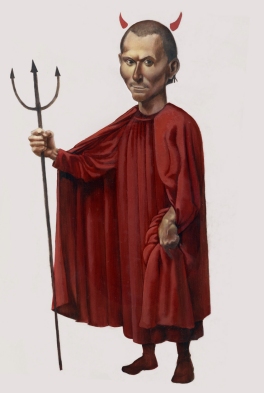
Unlike the idealism portrayed in Plato’s Republic, Machiavelli’s distinctly non-idealistic guide to the nature of statecraft is obvious within the first few pages of reading. The amoral pragmatism expressed in his perspectives on how a prince should establish and maintain his power make it all the more obvious as to why the author’s name is considered synonymous to the devil, and an adjective for devilish cunning.

machiavelli-Zachary-Franzen3.jpg
“You’re the devil in disguise…” – pretty much what all religious institutions had to say about Old Nick.

Despite the crude and downright insipid methods that Machiavelli purports for use in the struggle for power, I couldn’t help but be drawn into his work, especially when considering the legacy it has left behind in world history and its persistent influence in the prevailing political climate.

Across the world, politicians continue breaking their promises or rather continue making empty promises; the meaning of politics has become distorted amidst what is a solicitation of power, followed by corruption, and atrocities of various sorts of nature. While it may seem that the democracies of the world have not advertised their affinity to Machiavelli’s teachings, elements of his work are prevalent in the administrative institutions of several nations around the world, and by their many leaders who have taken note of his recommendation to appear benevolent, moral and religious.

“It is necessary for a prince wishing to hold his own to know how to do wrong, and to make use of it or not according to necessity…” (ch XV)

“A prince ought to take care that he never lets anything slip from his lips that is not replete with the above-named five qualities, that he may appear to him who sees and hears him altogether merciful, faithful, humane, upright, and religious. There is nothing more necessary to appear to have than this last quality…” (ch XVIII)

Machiavelli’s teachings are inherently a reflection of the state of the world, and therein lies the power of its influence. No matter the millenia that may come to pass, the emphasis of Machiavelli’s teachings largely depend on the basic tenets of human nature, especially when confronted by the opportunity for power. In that front, it is not difficult to observe the diverse constructs of power integral to various institutions that serve as the foundations of modern-day society, from education to government.

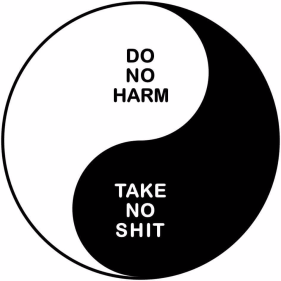
Nevertheless, Machiavelli’s obtuse perspectives on the employment of power can also serve as a case study for the positive outcomes that could be drawn from the knowledge of its opposite. A black and white perspective on the myriad complexities that dictate the ritualistic facets of human life is far too extreme, and while the idealism most often romanticized by philosophers and religious stalwarts may be a far-cry from reality, Machiavelli’s The Prince by describing one side of the extreme, leaves much for argument on the establishment of a grey middle ground of sorts.

Ch3RosB
The Tao of “The Prince” kind of borders between these two extremes.

In that vein, I suggest The Prince for anyone willing to engage and wrack their mind in a work that can essentially be described as a game of chess about human ethics and the corrupting potential of power.

As for myself, having completed my fair share of reading for the semester, I look forward to getting started on the next set of writing projects that have been stewing in the back of my mind for quite a while. As such, I hope to see you all again very soon in my next post where I will provide another short discussion of what writing means to me, both as a blogger and an aspiring author, and what exactly makes my imagination click!

Book Review – The Dragons of Eden

Until now, my coverage of Carl Sagan’s The Dragons of Eden has been on a chapter to chapter basis presented in the “Read Along” section of the blog. As mentioned in my last post,  I will be scrapping this in favor of exclusive reviews on selective books I wish to discuss, henceforth. So, without further delay, let’s bring the curtains down on The Dragons of Eden.

Carl Sagan, noted astronomer, science communicator, and author of The Dragons of Eden.

The premise of the book is clearly stated in the subtitle: “Speculations on the Evolution of Human Intelligence.” Sagan wishes to explore the various facets of human intelligence by calling to motion a simple question: why are humans, humans? He attempts to investigate, in what has been a shared effort by the academic community, a conclusive answer to this question from a purely scientific viewpoint while entertaining “occasional excursions into myths, ancient and modern.” The title of the book supports Sagan’s approach in a compilation of ideas on the “unexpected aptness” of various different myths when compared to scientific theories.

Beginning with time immemorial at the Big Bang, we ride the waves of time flowing toward the current epoch of human civilization. Human evolution is often described in the form of a metaphor, an “abstraction of beasts,” as Sagan uses various comparative arguments to build the foundation of his work in the earlier chapters, particularly in Chapter 2 – Genes and Brains (which I provided a full summary of in the Read Along), before settling into the pivotal point of his work which focuses on the evolution of human intelligence in the subsequent chapters describing the characteristics of the human brain and its evolutionary growth.

eden
Very old are we men; our dreams re tales told in dim Eden… – Walter De La Mare “All That’s Past”

Following the footsteps of his predecessor in Jacob Bronowski, whose work in The Ascent of Man is an account of how human beings and human brains evolved, Sagan has presented his own unique approach to the same subject in his book.  While we don’t necessarily discover an absolute answer on the origin of human intelligence, Sagan’s book is nevertheless an exhilarating journey that offers his insight into the brains of man and beast, the plethora of recent discoveries in science supporting the theory of human evolution, and most interestingly how they serve to be the function of our most familiar myths, and legends. 

Sagan’s work doesn’t end there. His arguments and words serve as microphone toward the need for intellectual rigor, and a rejection of the absent skepticism prevalent in modern-day society. Altogether, The Dragons of Eden is an excellent book that talks about all kinds of things, from the reasons for sleeping and dreaming to the definition of death in what is a fascinating and delightfully short compendium of knowledge that should be read by everyone alike. Sagan was an influential science communicator (one of my favorites), if not one of the best; his works are well worth the effort of reading for anyone interested with or without a scientific background.

Book Review: A Brief History of Thought

Luc Ferry’s A Brief History of Thought recently caught my eye as I wandered through the library. The book promised a brief summary of human thought and its evolution across significant historical epochs within a meager volume of pages. Who wouldn’t wish to entertain such a prospect?

A-Brief-History-of-Thought-Ferry-Luc-97800620742491

The book’s strength is in Ferry’s ability to summarize various complicated worldviews with such simplicity, and conciseness. While I can’t call upon an extensive knowledge of philosophy to critique Ferry’s work, I certainly identified my share of agreements and disagreements with the opinions and perspectives proposed in the book. In this review, I will summarize Ferry’s claims and arguments, which while insightful and highly educational, personally, fell short of convincing by the final pages.

Ferry begins by addressing the question at the heart of human existence, a quest for salvation (an answer to the mystery that is death), which he identifies to be the vital aspect of every philosophical system. Characterizing philosophy as more than an act of reasoning and logic, Ferry asserts that philosophy is also a measure of human thought that “claims to save us – if not from death itself, then from the anxiety it causes, and to do so by the exercise of our own resources and our innate faculty of reason.”

From there on, Ferry uses this argument as a guide to expound his views and perspectives on the various philosophical movements that have spanned the history of human thought: Stoicism, Christianity, Humanism, Postmodernism (Nietzsche), and Contemporary philosophy (post-Nietzsche). The book flows smoothly from one time period to another while providing an effective summary of the relevant aspects of each philosophical movement. By the end of each chapter, the reader is able to identify the questions and answers that serve as the foundation for the consecutive movement.

We are first acquainted with the Greeks and their establishment of Stoicism, the representation of the world as a perfect cosmos, an ordered logos where transcendence and immanence are united; a cause that the human strives to be a reflection of.

boorstin.jpg
Cosmos refers to the explicit complexity, and perfection of the external universe. Logos defines the divine reason implicit in the cosmos, providing it order and meaning.

The impersonal  approach towards death and salvation in Stoicism is rectified by Christianity where the human is the focal point of the argument. Unlike in Stoic reflections, salvation is personalized through the evocative belief  in a Son of God, a motion towards “love in God,” promising fulfillment and an immortality where we maintain our personal identities.

The foundations upon which both Stoicism and Christianity rested soon come crashing down with the advent of science. Modern physics reveals “an infinite chaos devoid of sense; a field of forces and objects jostling for place without harmony.”

ccf5d64d5dabfdc224fd4166aad076d7

Thus, mankind is once again alone in a cosmos void of a logos or god of any kind. Reality is marked by chaos. The Stoic measure for study or contemplation and the Christian revelation fall flat against the ensuing chaos.

The human is once again the focal point of the argument, but this time, “it was going to require man himself…to introduce some order into a universe which seemed no longer to offer any of its own.” Man’s ability to devise a personal history distinguishes him from his animal brethren resulting in a Humanism that takes the reigns in a movement where humans forge the history of the world through the ideals and laws we invent to judge our actions and their consequences. Nevertheless, humanism stumbles in offering a solution to our quest for salvation, leading to a well-defined struggle that lasts to this day between the various pantheons of human thought.

The cycle doesn’t end here as we alight upon the arrival of Nietzsche and Postmodernism. Nietzsche dismissed both science and religion. His critical deconstruction of the conventional philosophies of the time focused on their inseparable similarity that adhered to a disregarding of the essence of life, and instead building metaphysical constructs/ideals to allow the human to find “salvation” or a purpose.

220px-Nietzsche1882
“People don’t want to hear the truth because they don’t want their illusions destroyed.” – Friedrich Nietzsche

All of which Nietzsche believed was nothing more than a lie, a negation of life from what it essentially is by supplanting it with transcendental ideas of god, and the ideal human being. Nietzsche’s nihilism would fuel his famous ideas for the “will to power,” an attempt for control in a deconstructed universe by the self physically, emotionally, and also morally.

Ferry concludes his work by providing an assessment of modern day Contemporary philosophy in the wake of the revolutionary movements summarized above. This concerns a world where there is no longer a universal meaning towards human existence, but rather an incessant and a seemingly directionless promotion of progress for the sake of progress, a morose form of materialism.

In conclusion, Ferry provides a wonderful and enlightening primer on the various philosophical attitudes that span the history of human thought. I would certainly recommend this book for any philosophy enthusiast. The reader gets a taste of the major aspects of Western philosophy over the vast vista of time. Nevertheless, the  fact that the book is a philosophical overview for a mass audience makes it a tough prospect in accurately capturing the more subtle facets of the various philosophies discussed. While this can be seen as a weakness, it is also a strength, as it will drive the interested reader to learn more about the topics involved (it did for me). Though Ferry himself stumbles in deriving a clear answer to the human quest for “salvation,” his work succeeds in emphasizing the significance of said journey in that it is defining of our very humanity, and individual spirit. In that vein, A Brief History of Thought is a wonderful journey in itself.


Brave New World – Book Review

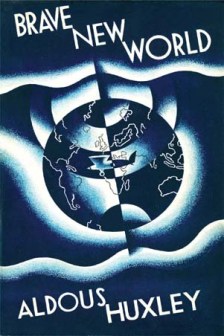
It took me about a month, but I finally finished reading Aldous Huxley’s Brave New World, completing my journey through a dystopian future set in London in the year 2540 A.D. BraveNewWorld_FirstEdition

‘The greater a man’s talents, the greater his power to lead astray’

This quote sets the tone for Huxley’s novel, written in 1931, and published a year later in 1932. In the context of the history of the 20th century, the novel served as a unique, and menacing vision of the future during the interwar period between the end of the First World War (1914-1918), and the beginning of the Second World War (1939-1945).

Through his skillful prose, Huxley provides a prescient view of a future where he anticipates the development of various scientific ideas such as reproductive technology, sleep-learning, psychological manipulation, and classical conditioning. Human lives are controlled by a variety of forces including genetic engineering, indoctrination, and drugs. In fact, the concept of the individual is mired, and ultimately lost in the foundation of an “ideal” society where “everyone belongs to everyone else.”

17152835
“…a bokanovskified egg will bud, will proliferate, will divide…making ninety-six human beings grow where only one grew before. Progress.”

Spontaneous human desires, and emotions are nullified by the anesthetizing public mantras, the messengers of the societal indoctrination that pervades Huxley’s world, but it doesn’t matter as “everybody’s happy nowadays.” The reader is provided entry into this bleak, but brave new world, through the daily lives, and attitudes of the major characters in the novel. Through their eyes, the reader is able to identify his/her critical opinions of a biased world where skepticism is in itself a crime, feared as an unnatural, and tainting element of the supposed balance expressed in the societal hierarchy.

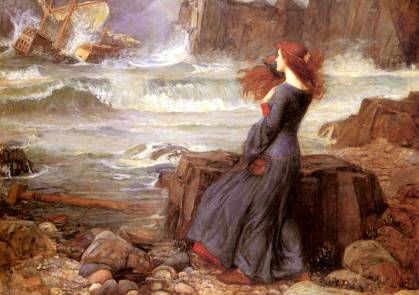
Throughout the novel, Huxley borrows heavily from the works of his predecessors. In particular, he draws inspiration from much of Shakespeare’s works, providing several quotations from The Tempest, Troilus and Cressida, Romeo and Juliet, and Macbeth to name a few. The title of the novel is in fact from Miranda’s speech in The Tempest,

Miranda_-_The_Tempest_original

“O wonder!
How many goodly creatures are there here!
How beauteous mankind is! O brave new world,
That has such people in’t.”

– William Shakespeare, The Tempest, Act V, Scene I, ll.

While Huxley himself speaks of his work’s inspiration from the utopian novels of H.G. Wells, including A Modern Utopia (1905) and Men Like Gods (1923), he disavows Wells’ hopeful vision of the future in place of the darker presentation he provides in his novel. Huxley’s novel also serves as a counterpart to the George Orwell’s 1984. The two novels differentiate themselves in the prescient views they prescribe to the future. While Orwell’s fears are borne of a world that rejects knowledge, Huxley’s fears are beset upon a world that finds knowledge redundant, or rather irrelevant.

drawing on paper by Laurie Lipton
“…most men and women will grow up to love their servitude and will never dream of revolution.”

In conclusion, I believe Huxley feared the loss of the complexities that make human culture unique in exchange for triviality. He expresses this fears through the cyclical, and largely indifferent activities that his characters engage in their daily lives. By reading the book, and finding the various allusions it provides to modern-day society, I was left exhilarated at the daunting responsibility for the future that the current generation faces amidst a rapidly changing world. The triviality that Huxley frequently alludes to in his work is evident in today’s society, dominated by social media, leaving us blind to an extent, and in much need of a reassessment of what may constitute the necessary discussions, decisions, and actions we must partake in, for the greater security of our world, and the human species as a whole.

Multiracial Hands Around the Earth Globe
“Again the greatest use of a human was to be useful. Not to consume, not to watch, but to do something for someone else that improved their life, even for a few minutes.”
― Dave Eggers, A Hologram for the King 

While Huxley may have realized his vision of such a brave new world several years ago, his work remains today as a warning, and as a reminder of the social responsibility every individual shares in the maintenance, and regulation of the world we live in.

The Dragons of Eden-Chapter 2- Genes and Brains


Introduction

Biological evolution accompanies a linear increase in complexity. Look around you, it doesn’t take much time for us to realize that our world is quite complicated. The Earth hosts a variety of taxa (species, subspecies, and races), with the major taxa, which have evolved most recently, being the most complex. Humans, or homo sapiens, are in this bracket.

It is easy for us to identify, on the basis of our physical and mental attributes, functions and behaviors, factors that may set us apart from others, and contribute to our unique identity. By doing so, we have merely partaken in a significant evolutionary behavior, namely the ability to identify differences among ourselves, as opposed to other species, including members of our own taxa. Most often, we relegate our comparisons to distinctions based on the quantity, and quality of characteristics.

In this chapter, Sagan uses this notion as a medium towards the deeper understanding of our evolutionary history as a species by addressing the history of life in the gradual dominance of brains over genes.

The Book of Life

While a primitive notion on the complexity of an organism can be obtained by considering its behavior, and functions, we can do the same by considering the minimum amount of information contained within said organism. In other words, how much genetic material does the organism hold?

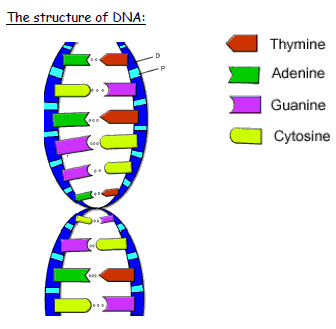
The book of life is written in the language of four alphabets, consisting of complex molecular structures called the nucleotides. DNA (Figure 1), or Deoxyribonucleic acid, the primary hereditary molecule, consists of about five billion pairs of nucleotides. In the nucleus of each cell, the DNA molecule is packaged into thread-like structures called chromosomes.

dna
Figure 1. The four alphabets of DNA, the nucleotides: Thymine, Adenine, Guanine, and Cytosine.

All the organisms on Earth share this genetic language composed of four alphabets, leading to the theory that we are all descended from a single ancestor, or a single instance of life some billion years ago.

“If there are approximately six letters in an average word, the information content of a human chromosome corresponds to five hundred million words. If there are about three hundred words on an ordinary page of printed type, this corresponds to about two million pages. If a typical book contains five hundred such pages, the information content of a single chromosome corresponds to four thousand volumes.” – Carl Sagan, The Dragons of Eden

Brains vs. Genes

The gradual dominance of brains over genes, the premise of this chapter, is shown to follow a practical necessity in the evolution, and survival of various species. The main working materials of evolution are mutations (Figure 2), heritable changes in the nucleotide sequences of our DNA.

x-men-15
Figure 2. Well, not exactly…but you get the point. 

Most mutations/genetic changes are too slow for any practical benefit (occurring over millions of years). Most mutations are also harmful, and in some cases recessive. In the end, what really counts are mutations in the gametes, the eggs and sperm cells, the agents of sexual reproduction.

“Large organisms such as human beings average about one mutation per ten gametes-that is, there is a 10 percent chance that any given sperm or egg cell produced will have a new and inheritable change in the genetic instructions that determine the makeup of the next generation.” –  Carl Sagan, The Dragons of Eden

With such a high mutation rate to already cope with, a greater complement of DNA could suggestively result in unacceptably high mutation rates. Too much would go wrong, for anything to stay right! As Sagan postulates, there must be a practical upper limit to the amount of genetic information that the DNA of larger organisms can accommodate, thus by the same instance, necessitating the existence of substantial resources of extragenetic information to allow for their survival, and growth. Such information is contained in all “higher” organisms, except humans (who have invented extrasomatic knowledge, or information stored outside our bodies, like writing), exclusively in the brain.

Peering Into The Brain

The remainder of the chapter an exclusive tour de force of the brain. The corresponding questions, and their central arguments can be summarized as follows,

What is the information content of the brain?

There are two extreme opinions on brain function:

(a) The brain or the cerebral cortex (its outer layers) are considered to be equipotent; there is no localization of function, such that any part of the brain can substitute for another.

(b) The brain is completely hard-wired, and specific cognitive functions are localized in specific parts of the brain.

The actual answer lies somewhere between the two as has been portrayed by various experiments over the years. Modern-day neuroscience continues to address this question.

Is there a correlation between brain mass, and intelligence?

There isn’t a one-to-one between brain mass or size and intelligence in human beings, but there remains a statistical correlation nonetheless (namely in that there are upper and lower limits which may correspond to normal adult human brain function). It has been found that the correlation between brain size, and intelligence is much better than the correlation between intelligence, and adult body weight. Sagan presents the criterion of brain mass to body mass, with no consideration of behavior to provide an acceptable first approximation for intelligence.

What is the structure of the brain, or how is it packed?

The human brain contains about ten billion switching elements called neurons. There is contention among neurobiologists that neurons are the active elements in the brain, as evidence has been provided that specific memories and other cognitive functions are contained in certain molecules in the brain, like RNA or small proteins. An average neuron in a human brain is said to have been 1000-10,000 synapses. If we were to consider each synapse as equivalent to a on-off state, then the number of different states of a human brain is far greater than the total number of elementary particles in the entire universe. We are all truly unique!

The brain is basically a system of microcircuits, and a very dense on at that with an information content of ten billion bits per cubic centimeter. As Sagan points out, a modern computer able to process the information in the human brain would have to be about ten thousand times larger in volume than the human brain. Though the processing speed of a computer is far higher than the brain, the fact that our brain can do so many significant tasks so much better than the best computer is a testament to how tightly packed, and well-organized it is. We have yet to break this mystery, and come to a complete understanding of the brain, and its functions.

The End Game

Thus, having considered the quality and quantity of genetic material, and brain information in organisms, Sagan is able to compare the gradual increase through evolutionary time of both the genetic, and brain information of organisms, showing that somewhere around the Carboniferous period, a few hundred million years ago, there first emerged an organism with more information in its brain than in its genes. While Sagan refers this organism to be an early reptile, conflicting theories exist today in contention of this statement, and our earliest ancestor.

In conclusion, the evolution of the brain is a symbolic event in the history of life. The consequent bursts of brain evolution would result in the emergence of mammals, and of manlike primates. Nevertheless, there still remains much to the story.

“Mankind is poised midway between the gods and the beasts.”- Plotinus

As we will see in the following chapters, humankind’s naivety rests in its pride as the summit of the biological cycle, but while our authority on this Earth may be justified by the repeated insistence of our higher intelligence, and brain function, we are yet to realize that we are not so completely removed from the “beasts” themselves.

“…with all these exalted powers- Man still bears in his bodily frame the indelible stamp of his lowly origin.” – Charles Darwin, The Descent of Man

Phrenology1

The Dragons of Eden – Chapter 1 – The Cosmic Calendar

“What seest thou else in the dark backward and abysm of time?” – William Shakespeare

Time is a component quantity of our daily lives. It is symbolic of the indefinite progress of existence, and events that are generally considered to occur in an apparently irreversible sequence from the past, to the present, and onto the future.

The concept of time has been central to the growth, and evolution of human civilizations. It has also served as an important facet of knowledge that has been studied to a great effect in religion, philosophy, and science. But, to this day, an absolute definition of time still evades scholars.

In The Dragons of Eden, Sagan does not extend his arguments toward an extensive discussion on the concept of time, but rather focuses on its use as a metaphor to describe humanity’s place in the cosmos. To infer the future, it is necessary for us to understand our origins. This is the basis of Sagan’s approach.

Now, it is argued that the predecessors of modern-day human beings, the Homo sapiens¸ evolved somewhere between 250,000, and 400,000 years ago. This number pales in comparison to the appearance of the first primitive humans, such as the Australopithecines, which happened somewhere between 8-9 million years ago. But, even these events, are preceded by an even greater “vista of time” reaching far back into the history of our planet, the solar system, and the universe. Very little is known about these periods of time, and even with the numbers mentioned earlier, we still struggle to grasp the immensity of these time intervals (Figure 1).

Figure 1. Humanity is yet to define its existence amidst the vast cosmos.

Nevertheless, science has found success in the establishment of specific methods that have allowed us to date events from the remote past, such as geological stratification (Figure 2), and radioactive dating (Figure 3).

Figure 2. Geological stratification, bluntly said, involves the study of rock layers, and layering.
Figure 3. Radioactive dating is a technique involving the tracing of radioactive materials in select objects, carbon dating is one such method that is limited to the dating of organic (carbon-based) organisms.

These two methods have provided information on archaeological, paleontological, and geological events. Astrophysical theory has provided for the same on a grander scale involving the dating of stars, planetary surfaces, galaxies, and the even the age of the universe (Sagan states this to be 15 billion years old, though recent results from the Wilkinson Microwave Anisotropy Probe (WMAP) puts the number somewhere at 14 billion years old). The earliest event known in record is called the Big Bang, an intense explosion from the universe is said to have formed, but rather than a beginning, the Big Bang is generally considered to be a discontinuity in time where the earlier history of the universe was destroyed.

To put this further into perspective, Sagan introduces the Cosmic Calendar, where he compresses the 14-billion-year-old chronology of the universe, into the span of a single earth year. In this manner, one billion years of Earth history is the equivalent of twenty-four days of our cosmic year, and one second of the cosmic year is the same as 475 real revolutions of the Earth about the sun. The Cosmic Calendar is a humbling account of humanity’s place in the universe, with all our recorded history occupying the last few seconds of December 31.

Though a short chapter, Sagan’s use of the Cosmic Calendar is quite analogous to a common argument used in astronomy to provide a picture of our place in the universe (Figure 4).


Figure 4. Our place in the universe. The planet Earth is smaller than a speck among the greater part of the observable universe.

While the major premise of Sagan’s book focuses on discussions on the evolution of human intelligence, this introductory chapter is a necessary prelude that helps to symbolize the significance of the subject matter. While it may be true that humanity occupies an insignificant instance in the face of cosmic time, we are now embarking on a new cosmic year, one which is highly dependent on our ability as a species to come together, use our wisdom, and unique sensitivity to the world for our survival, and a greater future.

References 

The Dragons of Eden – Introduction

Mankind is poised midway between the gods and the beasts. – Plotinus

Plotinus’ quote is symbolic of a fundamental biological principle illustrating that man is descended from some lowly organized form, and which serves as the backdrop to the discussions Carl Sagan (Figure 1) presents in The Dragons of Eden. In order to provide a description of nature, and human growth, Sagan begins by discussing this principle, one that distinctly identifies the field from other physical sciences, evolution by natural selection.

Figure 1. Carl Sagan, noted astronomer, science communicator, and author of The Dragons of Eden.

Let’s digest that last bit, piece by piece. The word evolution is commonly used to describe the gradual development of something, from a simple to a more complex form. In scientific terms, evolution is the change evidenced in hereditary characteristics that are carried over successive generations in biological populations. It is the fundamental process that has led to biodiversity within species, and individual organisms.

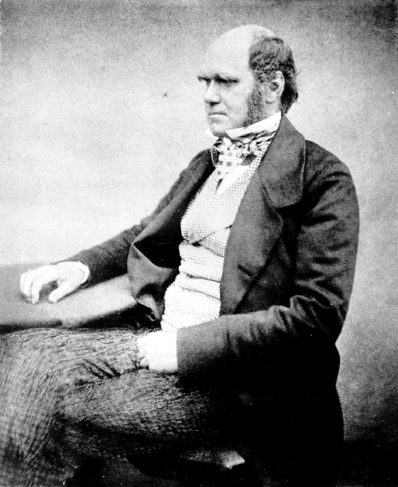
Figure 2. Charles Darwin

Natural selection was the brilliant discovery of Charles Darwin and Alfred Russell Wallace (Figures 2-3), detailed in the publication of their joint works in 1858. It is the theory that describes evolution, and is the preferential survival and reproduction of organisms that are by accident better adapted to the environment.

Figure 3. Alfred Russell Wallace

Natural selection is due to differences in the phenotypes of individual organisms. A phenotype is basically a composite description of an organism’s traits and characteristics including its physical and biochemical properties, as well as morphology, development, and behavior. An organism’s phenotype is a consequence of an organism’s genetic code, or genotype, along with environmental factors, and the collective influence and interaction of the two. It is important to differentiate natural selection from artificial selection, or selective breeding, where humans use animal and plant breeding to “select” for the development of particular characteristics by choosing which males and females of animal and plant species will sexually reproduce, and have offspring together.

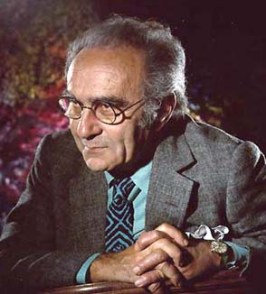
In The Dragons of Eden, Sagan, much like Jacob Bronowski (Figure 4), best remembered as the presenter and writer of the 1973 BBC television documentary series, The Ascent of Man, wants to provide an account of how human beings and human brains “evolved” or grew up together. By understanding the evolution of human beings and human brains, Sagan intends to provide a platform from which he can speculate on the nature of human intelligence, its evolution, and its future.

bronowski
Figure 4. Jacob Bronowski was a British mathematician, historian of science, theatre author, poet and inventor.

For starters, he addresses the role of knowledge and learning in a species’ ability to survive, and adapt to its environment. In order for an organism to survive, it must have the basic ability to extract and manipulate information from the environment. Most organisms depend on their genetic information to survive, but in their lifetime, they can also collect extragenetic information. On the other hand, humans and mammals exclusively depend on extragenetic information.

Mammals are warm-blooded (maintaining a constant body temperature compared to the temperature of the environment), vertebrate (have a backbone or spinal column) animals distinguished from other animal classes by their possession of hair or fur, the birth of live young, and the secretion of milk by the females for the nourishment of the young.

While our genetic history does exert a significant influence in our behavior, our brains allow for us to interact at a higher level with what we learn from the environment. This has drastically enhanced the chances of survival of the human species. Human beings have also invented extrasomatic knowledge, or information that can be stored outside our bodies, writing being a notable example. As Sagan points out, our dependence on extragenetic, and extrasomatic information is crucial to the survival of our species. Since the timescales involving evolutionary or genetic change is far too long, we cannot depend on a process that may take place over hundred thousands to millions of years in order to keep up with the changes that we encounter in the world. In fact, we now live in a time where our world is changing at an unprecedented rate. To deal with an unknown and perilous future, Sagan insists it will be necessary for humans to actively consider the changes in our environment, and learn to adapt, control, and adjust our lifestyles accordingly. Our survival relies on the evolution, growth, and sensitivity of human intelligence, which has been a solution and a cause to the many problems and changes that afflict our species (Figure 5).

Figure 5. Our evolution is tied to the growth of our environment, and vice versa.

Sagan’s interests in addressing the evolution of human intelligence is also an extension of the work he accomplished at SETI (Search for Extraterrestrial Intelligence) as the insights we derive from an investigation of terrestrial intelligence will help in our search for extraterrestrial intelligence.

Both the existence of those other civilizations and the nature of the messages they may be sending depend on the universality of the process of evolution of intelligence that has occurred on Earth. – Carl Sagan, The Dragons of Eden

Ultimately, his treatment of the evolution of the brain will assume that its workings, or what can be called the mind, are a result of its physiology and anatomy. His primary goal in addressing the evolution of human intelligence  is to dissect the various aspects of a subject that touches base with various other scientific fields. By understanding the evolution of human intelligence, he stresses the insight that can be gained from the interactions between brain physiology, anatomy, and human introspection.

485px-descartes_mind_and_body
Figure 6. René Descartes, addressed the mind-body problem in the 17th century. He believed that inputs from the environment were passed on by the sensory organs to the brain and from there to the immaterial spirit

With this approach, Sagan considers the “mind” to be the result of collective processes of the components of the brain, and chooses to not entertain the hypothesis of what is called the mind-body dualism (Figure 6). The mind-body problem deals with various arguments about how mental states, events, and processes can be related to physical states, and likewise, with the governing assumption that the human body is a physical entity, while the mind is non-physical. (The Stanford Enyclopedia of Philosophy is a wonderful primer’s read-through of this highly detailed topic.)

And that’s all there is to the introduction! While it may read as a book review, the introduction is a concise summary of what we will see later in the book. Now, to reiterate, Sagan’s work in The Dragons of Eden  is presented against the backdrop of the theory of evolution. Since its induction in science, evolution has garnered its share of controversy, and disagreement. To all my readers, by reviewing this book, I am in no way forcing these views, and arguments on you. Science is not dogmatic, neither should it be in its endeavor to discover the nature of our world, and our place in it. It is an open stage, and thus, I leave it to you, my readers,to decide on the views you wish to accept, and decline in my review of the book.

References

The Silmarillion – Book Review

I was 12 years old when I first got my hands on The Hobbit, while absent-mindedly exploring my school library’s fantasy collection, and that was about it. In the years that followed, I watched  various animated and live-action film adaptations of Tolkien’s works, but ultimately didn’t commit to fully reading The Lord of the Rings (LOTR) trilogy. In retrospect, I could attribute this to my inability then, to fully appreciate the depth and grandeur of Tolkien’s Middle-Earth.

It wasn’t until the final year of my undergraduate studies, when I met my partner Leina, who was herself an avid fan of Tolkien, that my interests in the events and rich history of Middle-Earth were renewed. I ended up re-watching Peter Jackson’s adaptation of the LOTR trilogy, and later indulged heavily on the online forums and wikis dedicated to Tolkien’s mythology, digesting pretty much all that there was to learn about Middle-Earth. But reading wikis and online forums is a completely different matter from actually reading the books.

And so, I purchased The Silmarillion, eventually completing what was an adventurous ride through Eä over the course of the last three months.

thesilmarillion

The Silmarillion is a collection of J.R.R. Tolkien’s mythopoeic works that were edited and published posthumously by his son Christopher Tolkien in 1977. It is a narrative describing the universe of Eä where exist the mythical lands of Valinor, Beleriand, Numénor, and lastly, Middle-Earth, which serves as the backdrop for the events of The Hobbit and The Lord of the Rings. 

middleearth

The narrative is incomplete, ranging over prominent events and happenings in the Elder Days (the First Age in Tolkien’s world) comprising Eä’s creation to the downfall of Morgoth (the prime antagonist of the First Age), much of which would be forgotten in the coming of the Second and Third Ages detailing the rise and fall of Sauron, Morgoth’s lieutenant.

melkor_by_formenost
Melkor, “He who arises in might”, later known as Morgoth, the Black Enemy.

While the tales of The Hobbit  and The Lord of the Rings chiefly concern the events surrounding Sauron’s One Ring of power, the foundation of The Silmarillion revolves about the Silmarils, three jewels that were created by Feänor, the most gifted among the Elves. Within those jewels were stored the light of the Two Trees of Valinor, the land of the Valar (higher spirits who are the guardians and governors of Arda, or the Earth) before they were destroyed by Morgoth.

feanor1
Feanor, the creator of the Silmarils.

Thereafter, the light of the trees of Valinor forever lived only in the Silmarils. Unfortunately, Morgoth would seize those jewels and flee to his fortress Angband in the North of Middle-Earth, where he would set them in his crown. Thus, the story of The Silmarillion is the long history of the rebellion that followed in the wake of Morgoth’s theft of the jewels, led by Feänor and his elven kindred against the Valar, their subsequent exile from Valinor, their return to Middle-Earth, and their war until the end of the First Age against their most bitter foe, the Black Enemy,  Morgoth.

The Silmarillion consists of several overlapping themes highlighted in the individual stories of the various characters who live through the First Age of Middle-Earth. Tolkien’s creation myth draws heavy similarities with the Biblical creation story, where Eru can be held analogous to Yahweh. One could also compare the Valar to various Greco/Roman/Hindu Gods, and the Maiar (the servants of the Valar) to Christian angelic figures.

valar
Fan art of the Valar, “Those with Power.” I suggest you read the book to discover their identities and their powers.

Several such open inferences and interpretations of the characters in the story make for an extremely enjoyable read. In my case, it certainly motivated me to explore and learn the details and history of other major religious pantheons that have held power in human history, several of which may also have duly served as inspiration for Tolkien in his writing.  

The penultimate theme of the story is the cosmic struggle between good and evil, order and chaos, mirrored in the actions of its characters. The passing of time and the inevitable hand of fate serve as recurring imagery of the circular nature of Tolkien’s world. Even the most subtle decisions made as a result of a character’s emotions, be it pride, vanity, confidence, or grief, result in far-reaching consequences, the ends of which we see resolved in later events of The Hobbit and The Lord of the Rings. While each character is subject to his emotions, those same primal instincts are often presented as the will of a higher being.

As such, an individual’s actions and the dire set of resulting circumstances often provoke the reader to question the morality of Tolkien’s world and its hierarchy. Questions on existentialism and freewill follow hand-in-hand when the reader is left to reflect on the motives and fate of several characters, many of whose lives are quite Sisyphean in nature.

sisyphus-shirt
Rock beats Sisyphus.

At the same time, Tolkien also explicitly uses specific characters to fully symbolize prominent themes such as love and hope to  counteract the grave world we find in The Silmarillion.

Altogether, the book is a wonderful read, and is a must for LOTR fans. In this brief book review, I have specifically gone to great lengths to not divulge details on the individual characters and myriad stories we find in The Silmarillion. The discontinuous nature of these stories define a fundamental element of the First Age of Middle-Earth which resembles a broken world. I highly encourage both LOTR and non-LOTR fans to give the book a read. As for me, having read The Silmarillion, it is only proper that I now follow through and read the LOTR trilogy, for another collective three book reviews waiting in the future!