The Dragons of Eden – Introduction

Mankind is poised midway between the gods and the beasts. – Plotinus

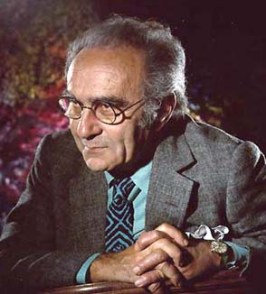
Plotinus’ quote is symbolic of a fundamental biological principle illustrating that man is descended from some lowly organized form, and which serves as the backdrop to the discussions Carl Sagan (Figure 1) presents in The Dragons of Eden. In order to provide a description of nature, and human growth, Sagan begins by discussing this principle, one that distinctly identifies the field from other physical sciences, evolution by natural selection.

Figure 1. Carl Sagan, noted astronomer, science communicator, and author of The Dragons of Eden.

Let’s digest that last bit, piece by piece. The word evolution is commonly used to describe the gradual development of something, from a simple to a more complex form. In scientific terms, evolution is the change evidenced in hereditary characteristics that are carried over successive generations in biological populations. It is the fundamental process that has led to biodiversity within species, and individual organisms.

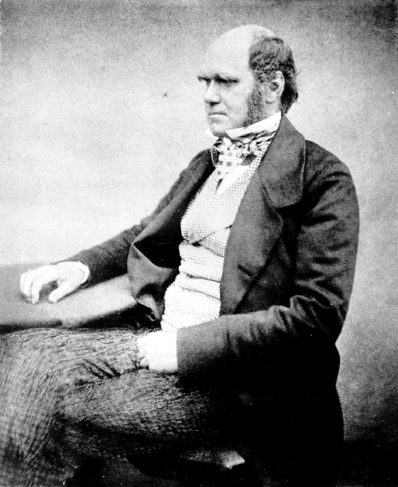
Figure 2. Charles Darwin

Natural selection was the brilliant discovery of Charles Darwin and Alfred Russell Wallace (Figures 2-3), detailed in the publication of their joint works in 1858. It is the theory that describes evolution, and is the preferential survival and reproduction of organisms that are by accident better adapted to the environment.

Figure 3. Alfred Russell Wallace

Natural selection is due to differences in the phenotypes of individual organisms. A phenotype is basically a composite description of an organism’s traits and characteristics including its physical and biochemical properties, as well as morphology, development, and behavior. An organism’s phenotype is a consequence of an organism’s genetic code, or genotype, along with environmental factors, and the collective influence and interaction of the two. It is important to differentiate natural selection from artificial selection, or selective breeding, where humans use animal and plant breeding to “select” for the development of particular characteristics by choosing which males and females of animal and plant species will sexually reproduce, and have offspring together.

In The Dragons of Eden, Sagan, much like Jacob Bronowski (Figure 4), best remembered as the presenter and writer of the 1973 BBC television documentary series, The Ascent of Man, wants to provide an account of how human beings and human brains “evolved” or grew up together. By understanding the evolution of human beings and human brains, Sagan intends to provide a platform from which he can speculate on the nature of human intelligence, its evolution, and its future.

bronowski
Figure 4. Jacob Bronowski was a British mathematician, historian of science, theatre author, poet and inventor.

For starters, he addresses the role of knowledge and learning in a species’ ability to survive, and adapt to its environment. In order for an organism to survive, it must have the basic ability to extract and manipulate information from the environment. Most organisms depend on their genetic information to survive, but in their lifetime, they can also collect extragenetic information. On the other hand, humans and mammals exclusively depend on extragenetic information.

Mammals are warm-blooded (maintaining a constant body temperature compared to the temperature of the environment), vertebrate (have a backbone or spinal column) animals distinguished from other animal classes by their possession of hair or fur, the birth of live young, and the secretion of milk by the females for the nourishment of the young.

While our genetic history does exert a significant influence in our behavior, our brains allow for us to interact at a higher level with what we learn from the environment. This has drastically enhanced the chances of survival of the human species. Human beings have also invented extrasomatic knowledge, or information that can be stored outside our bodies, writing being a notable example. As Sagan points out, our dependence on extragenetic, and extrasomatic information is crucial to the survival of our species. Since the timescales involving evolutionary or genetic change is far too long, we cannot depend on a process that may take place over hundred thousands to millions of years in order to keep up with the changes that we encounter in the world. In fact, we now live in a time where our world is changing at an unprecedented rate. To deal with an unknown and perilous future, Sagan insists it will be necessary for humans to actively consider the changes in our environment, and learn to adapt, control, and adjust our lifestyles accordingly. Our survival relies on the evolution, growth, and sensitivity of human intelligence, which has been a solution and a cause to the many problems and changes that afflict our species (Figure 5).

Figure 5. Our evolution is tied to the growth of our environment, and vice versa.

Sagan’s interests in addressing the evolution of human intelligence is also an extension of the work he accomplished at SETI (Search for Extraterrestrial Intelligence) as the insights we derive from an investigation of terrestrial intelligence will help in our search for extraterrestrial intelligence.

Both the existence of those other civilizations and the nature of the messages they may be sending depend on the universality of the process of evolution of intelligence that has occurred on Earth. – Carl Sagan, The Dragons of Eden

Ultimately, his treatment of the evolution of the brain will assume that its workings, or what can be called the mind, are a result of its physiology and anatomy. His primary goal in addressing the evolution of human intelligence  is to dissect the various aspects of a subject that touches base with various other scientific fields. By understanding the evolution of human intelligence, he stresses the insight that can be gained from the interactions between brain physiology, anatomy, and human introspection.

485px-descartes_mind_and_body
Figure 6. René Descartes, addressed the mind-body problem in the 17th century. He believed that inputs from the environment were passed on by the sensory organs to the brain and from there to the immaterial spirit

With this approach, Sagan considers the “mind” to be the result of collective processes of the components of the brain, and chooses to not entertain the hypothesis of what is called the mind-body dualism (Figure 6). The mind-body problem deals with various arguments about how mental states, events, and processes can be related to physical states, and likewise, with the governing assumption that the human body is a physical entity, while the mind is non-physical. (The Stanford Enyclopedia of Philosophy is a wonderful primer’s read-through of this highly detailed topic.)

And that’s all there is to the introduction! While it may read as a book review, the introduction is a concise summary of what we will see later in the book. Now, to reiterate, Sagan’s work in The Dragons of Eden  is presented against the backdrop of the theory of evolution. Since its induction in science, evolution has garnered its share of controversy, and disagreement. To all my readers, by reviewing this book, I am in no way forcing these views, and arguments on you. Science is not dogmatic, neither should it be in its endeavor to discover the nature of our world, and our place in it. It is an open stage, and thus, I leave it to you, my readers,to decide on the views you wish to accept, and decline in my review of the book.

References

The Silmarillion – Book Review

I was 12 years old when I first got my hands on The Hobbit, while absent-mindedly exploring my school library’s fantasy collection, and that was about it. In the years that followed, I watched  various animated and live-action film adaptations of Tolkien’s works, but ultimately didn’t commit to fully reading The Lord of the Rings (LOTR) trilogy. In retrospect, I could attribute this to my inability then, to fully appreciate the depth and grandeur of Tolkien’s Middle-Earth.

It wasn’t until the final year of my undergraduate studies, when I met my partner Leina, who was herself an avid fan of Tolkien, that my interests in the events and rich history of Middle-Earth were renewed. I ended up re-watching Peter Jackson’s adaptation of the LOTR trilogy, and later indulged heavily on the online forums and wikis dedicated to Tolkien’s mythology, digesting pretty much all that there was to learn about Middle-Earth. But reading wikis and online forums is a completely different matter from actually reading the books.

And so, I purchased The Silmarillion, eventually completing what was an adventurous ride through Eä over the course of the last three months.

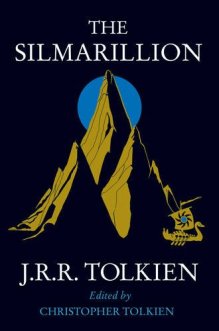
thesilmarillion

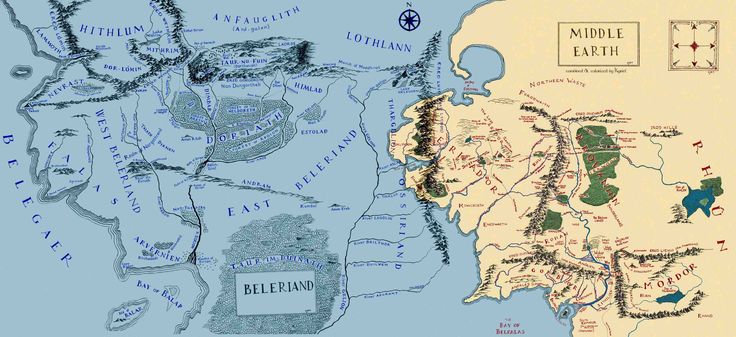
The Silmarillion is a collection of J.R.R. Tolkien’s mythopoeic works that were edited and published posthumously by his son Christopher Tolkien in 1977. It is a narrative describing the universe of Eä where exist the mythical lands of Valinor, Beleriand, Numénor, and lastly, Middle-Earth, which serves as the backdrop for the events of The Hobbit and The Lord of the Rings. 

middleearth

The narrative is incomplete, ranging over prominent events and happenings in the Elder Days (the First Age in Tolkien’s world) comprising Eä’s creation to the downfall of Morgoth (the prime antagonist of the First Age), much of which would be forgotten in the coming of the Second and Third Ages detailing the rise and fall of Sauron, Morgoth’s lieutenant.

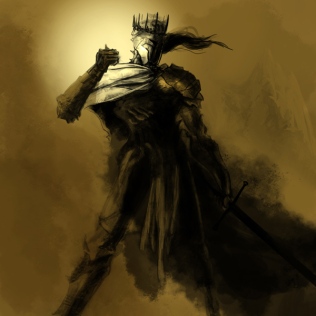
melkor_by_formenost
Melkor, “He who arises in might”, later known as Morgoth, the Black Enemy.

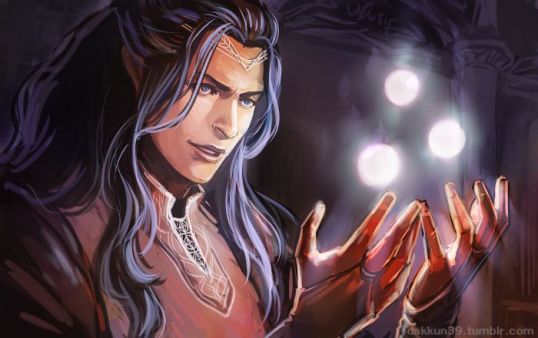
While the tales of The Hobbit  and The Lord of the Rings chiefly concern the events surrounding Sauron’s One Ring of power, the foundation of The Silmarillion revolves about the Silmarils, three jewels that were created by Feänor, the most gifted among the Elves. Within those jewels were stored the light of the Two Trees of Valinor, the land of the Valar (higher spirits who are the guardians and governors of Arda, or the Earth) before they were destroyed by Morgoth.

feanor1
Feanor, the creator of the Silmarils.

Thereafter, the light of the trees of Valinor forever lived only in the Silmarils. Unfortunately, Morgoth would seize those jewels and flee to his fortress Angband in the North of Middle-Earth, where he would set them in his crown. Thus, the story of The Silmarillion is the long history of the rebellion that followed in the wake of Morgoth’s theft of the jewels, led by Feänor and his elven kindred against the Valar, their subsequent exile from Valinor, their return to Middle-Earth, and their war until the end of the First Age against their most bitter foe, the Black Enemy,  Morgoth.

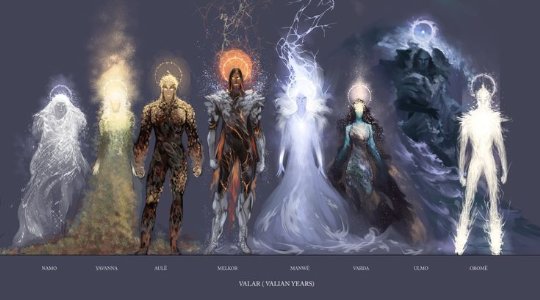
The Silmarillion consists of several overlapping themes highlighted in the individual stories of the various characters who live through the First Age of Middle-Earth. Tolkien’s creation myth draws heavy similarities with the Biblical creation story, where Eru can be held analogous to Yahweh. One could also compare the Valar to various Greco/Roman/Hindu Gods, and the Maiar (the servants of the Valar) to Christian angelic figures.

valar
Fan art of the Valar, “Those with Power.” I suggest you read the book to discover their identities and their powers.

Several such open inferences and interpretations of the characters in the story make for an extremely enjoyable read. In my case, it certainly motivated me to explore and learn the details and history of other major religious pantheons that have held power in human history, several of which may also have duly served as inspiration for Tolkien in his writing.  

The penultimate theme of the story is the cosmic struggle between good and evil, order and chaos, mirrored in the actions of its characters. The passing of time and the inevitable hand of fate serve as recurring imagery of the circular nature of Tolkien’s world. Even the most subtle decisions made as a result of a character’s emotions, be it pride, vanity, confidence, or grief, result in far-reaching consequences, the ends of which we see resolved in later events of The Hobbit and The Lord of the Rings. While each character is subject to his emotions, those same primal instincts are often presented as the will of a higher being.

As such, an individual’s actions and the dire set of resulting circumstances often provoke the reader to question the morality of Tolkien’s world and its hierarchy. Questions on existentialism and freewill follow hand-in-hand when the reader is left to reflect on the motives and fate of several characters, many of whose lives are quite Sisyphean in nature.

sisyphus-shirt
Rock beats Sisyphus.

At the same time, Tolkien also explicitly uses specific characters to fully symbolize prominent themes such as love and hope to  counteract the grave world we find in The Silmarillion.

Altogether, the book is a wonderful read, and is a must for LOTR fans. In this brief book review, I have specifically gone to great lengths to not divulge details on the individual characters and myriad stories we find in The Silmarillion. The discontinuous nature of these stories define a fundamental element of the First Age of Middle-Earth which resembles a broken world. I highly encourage both LOTR and non-LOTR fans to give the book a read. As for me, having read The Silmarillion, it is only proper that I now follow through and read the LOTR trilogy, for another collective three book reviews waiting in the future!

Revan

Peace is a lie, there is only passion. Through passion, I gain strength. Through strength, I gain power. Through power, I gain victory. Through victory, my chains are broken. The Force shall free me.

-The Sith Code

There is no emotion, there is peace. There is no ignorance, there is knowledge.There is no passion, there is serenity.There is no chaos, there is harmony.There is no death, there is the Force.

The Jedi Code

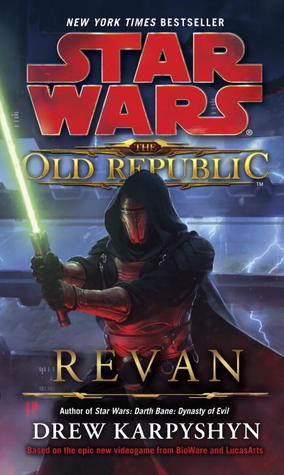
Revan’s search for his identity while strung between the polarizing dictates of the Jedi, and the Sith order, is at the crux of the plot of Star Wars: The Old Republic: Revan.  

“Hero, traitor, conqueror, villain, savior-the man called Revan has been all of these.”

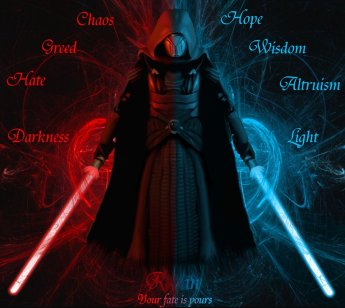
Revan left Coruscant as a Jedi, sent on a mission to defeat the Mandalorians,  a warrior race immersed in a great tradition for war, and inhabiting the planet of Mandalore. He would prove to be successful, gaining the mask of Mandalore, a ceremonial war mask worn by the leader of the Mandalorians. The mask would become an enduring symbol of Revan’s power, and conquest. But with his rise, Revan fell, returning instead as a Sith Lord bent on destroying the Republic.

choose__revan__by_sadreams-d32zak2

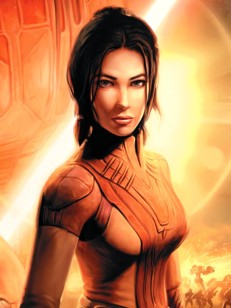
The man behind the mask would find his redemption through the love of a young, and promising Jedi named Bastila Shan,

BastilaAvatar

but paid the price for his crimes with the loss of his memories.   Guiding the Republic once again through the ravages of his past actions, Revan would assist the Jedi Order to reassert peace in the galaxy.

  “At the start, they were not much of a threat to speak of, but once the Jedi Revan had taken charge, things began to turn against us. The Republic fleets began to use more than just basic tactics. Feints, counterattacks, mass deceptions. Revan was a genius on the field. Revan abandoned worlds of their defenders so that others would be too fortified to strike, and was willing to make sacrifices in order to advance goals. And in the end, Revan proved too much for us.” – Canderous Ordo, a Mandalorian.

Now, an exile of the Jedi order, Revan lives a secretive, but comfortable life with his wife Bastila. Nevertheless, he remains tormented by nightmares that seek his return to the past, foreshadowing a growing threat that bodes its time in the dark. In order to recover his memories, and discover the source of the threat, Revan embarks on a journey that would culminate in his struggle against a powerful, and diabolic enemy. His failure could mean the end of the Republic, “but only death can stop him from” succeeding.

And that’s basically it.

13359972
A damn good book for any reader interested in the Star Wars lore!

Revan is an excellent book that draws the reader into the world of the Old Republic; a definite recommendation for both Stars Wars, and non-Star Wars fans alike. Though on the outset it may seem to be a story modeled around the journey of Anakin Skywalker, by the end of the book, Revan seals his place as a unique, and powerful character in his own right, within the Star Wars mythology.

What personally drew me to the book, and Revan’s character, was his enduring struggle against a very human desire for power. It is a concept that is at the heart of the central dichotomy of the Jedi, and the Sith, about which several plot lines revolve in the Star Wars universe.

tumblr_static_tumblr_static_64khnigid80s04oocoosk4ogk_640

I remember once walking past a blackboard at the university. The board had the message “Peace is …” with an abundance of scrawls, and notes left by other students with their opinions on peace. Their statements were food for thought. I eventually found some empty space at the corner of the board, and felt compelled to write, peace is what power defines. A few months later, I found myself reading Star Wars: The Old Republic: Revan. By the end of the book, I felt compelled once again to believe that peace is nothing more than compromised power.

I’m a fan of the Star Wars universe, and thus I couldn’t help myself in finding analogies to the politics of its worlds with the history of humanity. The current generation of youngsters face a world rapid in its growth, and unraveling in the myriad changes of modern-day society. Strife, inequality, ostracism, and tyranny still seem to echo in this hall of democracy, and unity that humanity seems to believe it represents. I’ve never been a fan of politics, yet I do not shun knowledge of its principles, and also understand its contribution to society.

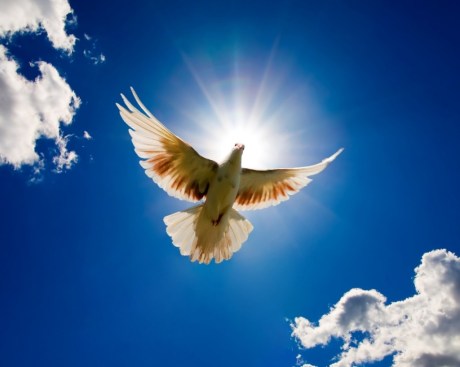
What is peace? It is a difficult question, and a unique answer is nigh impossible.  I personally believe peace is a phase, somewhat like a smaller gear, in a larger system that defines society. While it may be revered, and glorified as an ideal of the highest standard, along with justice, and morality, peace is still very much a concept that adheres to the beliefs, and feelings of an individual as it would as a social contract to a greater populace.

dove-bird-for-world-peace-1280x1024-1024x819

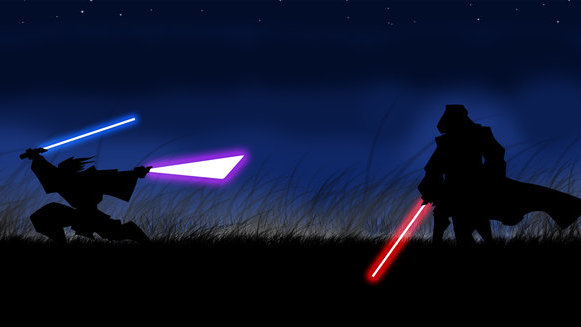
In the Star Wars mythology, the Jedi Council, and the Sith seem to be two sides of the same coin, vying for power, though the Jedi distinguish themselves in their motivation towards peace, and harmony. While the Sith are open in their passion for power, the Jedi stand their ground as their counterpart, proclaiming themselves as protectors of the Republic. Revan, having been a hero of the Jedi, and a dark lord of the Sith, illustrates the illusions surrounding the motivations of both “cults.”

  “Is that what he was? Or was he always true to himself, no matter what personality he wore? And there is something that the Council may never understand. That perhaps Revan never fell. The difference between a fall and a sacrifice is sometimes difficult, but I feel that Revan understood that difference, more than anyone knew. The galaxy would have fallen if Revan had not gone to war. Perhaps he became the dark lord out of necessity, to prevent a greater evil.” – Sith Lord Kreia

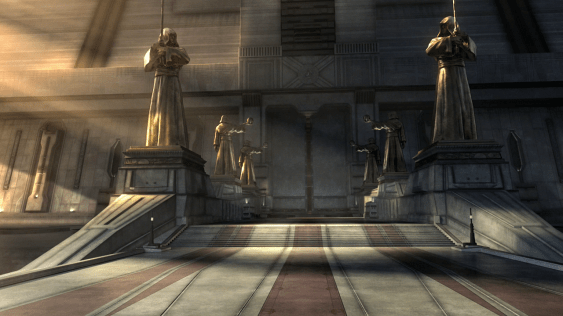
As time passes, the Jedi grow stronger, unified in their purpose, while the Sith dwindle, succumbing to their lust for power that results in inner strife, and ultimately their demise. But after a millenia, the roles are reversed, and the Jedi are overthrown by the Sith. Having reached the status as peacekeepers of the Republic, the Jedi removed themselves from society, preferring the solace of their temples, and archives. In their rule, we see a shadow of Plato’s vision of a “Republic” ruled by philosophical warriors.

ProcessionalWay-Deceived
The Jedi Temple

But by throwing away their identity as peace-keepers (or social workers), the Jedi council’s disjunct views clash with societal, and communal paradigms, resulting in peace becoming a tool used to maintain the Republic that is now the foundation of the Jedi council’s political power, and authority.  Consequently, the Jedi fall victim to their own vanity. Meanwhile, the Sith’s ability to reassess, manipulate, and even become subservient to the current state of affairs, over generations, helps in their recovery, and victory over the Jedi.

Revan, Anakin Skywalker, and  other popular characters of the Star Wars lore symbolize this contest between the two factions, often defined as an eternal conflict towards balance in the force. Taken in the context of the Republic, and its citizens, this could also define the efforts toward a stable government. Revan’s position as an exile, and his dual personality as a Sith Lord, and a Jedi Master, help him succeed when he may be doomed to fail. By the end of the book, Revan doesn’t necessarily find answers to all his questions. Instead, he finds his peace in the hope that the future of his loved ones is safe. 

Peace is an ideal, and may never be achieved completely. It is a notion that requires us to address our own failures, individually, and as a species. While its results may be temporary, it is in the hope of such an ideal that our wars are waged, our beliefs are found, and our lives are balanced. In conclusion, peace is a question without an answer. Revan is a metaphor of this truth.

“Who I am is not important, my message is.” – Darth Revan