A few months ago, I had visited my family at Bangalore, India. Returning to my homeland was a nostalgic experience. During this period, my family, and I took a trip to a biological park.
While I enjoyed my time at the park, the excursion accompanied a fair share of contemplation on my part particularly with regards to the treatment of the world’s wildlife, and environment.
As much as I enjoyed observing the various species of animals that the park hosted, I felt a certain measure of guilt, remorse, and even anger at the state of said animals within their caged amenities.
I felt distraught that the freedom of said beasts, so majestic, was dampened within these structures, structures that were all too human; built around our ego, and will for dominance that have left us blind to the truth that we all depend on the measured balance of the ecosystem for survival.
While we pride upon our intellect to differentiate, and set us apart from the beasts, it grieved me to think, that in this modern day, and age humankind continues to digress to a base notion of primacy in its interaction with other species on this planet, and the environment.
Ruminating on these thoughts, I passed by a message upon our departure from the park. Carved along the head of a rock, the message read, (as I recall, it was a quote by the founder of the institution)
The survival of man is dependent on the survival of animal, and plant life.
Providing poetic irony to my reflections, the message inspired me to write the poem below, a brief meditation on the Cages that imprison human nature.
Cages
Decrepit,
Those shadows stare,
The blackened soot of their vacant eyes,
Clamoring against the leering smiles,
Forcing open the void from whence,
Comes that onerous resonance,
Tarnished ivories gaping amid the sputum,
Coagulating in the filth of their stature,
Wrinkled by the posture of their pride,
Dictating their steps,
Upon the earth they tread,
Mutely claiming what they desire,
Declaring their supremacy,
In these rusted chains,
So to rest,
Behind these bars,
Where this existence caged,
In limbo dwells,
Awaiting the spell,
That falls to the ground,
Submitting to the prejudice of vanity,
In ignorance of an action,
That remains,
Human, all too human…
“They’re animals, all right. But why are you so goddamn sure that makes us human beings?” – The Long Walk, Stephen King
With winter’s departure at my doorstep, I alight upon the memory of a day in a rainfall that caressed me with the soothing warmth of your touch.
Falling upon the blankets of water that condensed from the gray skies, I clung to you, slipping amid the warmth of your skin.
Time awaits no one, and in a moment that carried me away in the bliss of a cool breeze, you walked by my side.
Ripples in the ponds of life stemmed forth in our every step together, your smile, a reflection amid the mirrors that coalesced at every turn.
Observing our progress along the white of clouds that brushed our feet, gently ascending, leading us to where the stars lay hidden, and our spirits flew free.
In a story that is to be told, your eyes reflected the words of my heart, our laughter resonating amid the silent melodies of the world.
A beautiful blossom, you remained, weathering the winds of time that passed our wake, embracing me into the petals of your life.
Into a stillness that resounded in the minute strikes of my heart, my eyes met yours, the cold moisture of the crystals giving way to the warmth of your lips.
Serenaded by the orchestral pitter-patter of the rainfall surrounding our feet, I indulged in the moment, falling and rising about your heartbeat.
Carried by the whims of nature, our shadows basking in the gentle ray of sunshine that awakens the distant horizon, in an adventure to continue, with the coming of spring.
Biological evolution accompanies a linear increase in complexity. Look around you, it doesn’t take much time for us to realize that our world is quite complicated. The Earth hosts a variety of taxa (species, subspecies, and races), with the major taxa, which have evolved most recently, being the most complex. Humans, or homo sapiens, are in this bracket.
It is easy for us to identify, on the basis of our physical and mental attributes, functions and behaviors, factors that may set us apart from others, and contribute to our unique identity. By doing so, we have merely partaken in a significant evolutionary behavior, namely the ability to identify differences among ourselves, as opposed to other species, including members of our own taxa. Most often, we relegate our comparisons to distinctions based on the quantity, and quality of characteristics.
In this chapter, Sagan uses this notion as a medium towards the deeper understanding of our evolutionary history as a species by addressing the history of life in the gradual dominance of brains over genes.
The Book of Life
While a primitive notion on the complexity of an organism can be obtained by considering its behavior, and functions, we can do the same by considering the minimum amount of information contained within said organism. In other words, how much genetic material does the organism hold?
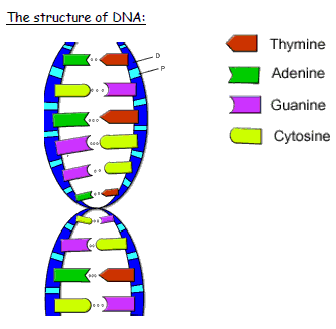
The book of life is written in the language of four alphabets, consisting of complex molecular structures called the nucleotides. DNA(Figure 1), or Deoxyribonucleic acid, the primary hereditary molecule, consists of about five billion pairs of nucleotides. In the nucleus of each cell, the DNA molecule is packaged into thread-like structures called chromosomes.
Figure 1. The four alphabets of DNA, the nucleotides: Thymine, Adenine, Guanine, and Cytosine.
All the organisms on Earth share this genetic language composed of four alphabets, leading to the theory that we are all descended from a single ancestor, or a single instance of life some billion years ago.
“If there are approximately six letters in an average word, the information content of a human chromosome corresponds to five hundred million words. If there are about three hundred words on an ordinary page of printed type, this corresponds to about two million pages. If a typical book contains five hundred such pages, the information content of a single chromosome corresponds to four thousand volumes.” – Carl Sagan, The Dragons of Eden
Brains vs. Genes
The gradual dominance of brains over genes, the premise of this chapter, is shown to follow a practical necessity in the evolution, and survival of various species. The main working materials of evolution are mutations (Figure 2), heritable changes in the nucleotide sequences of our DNA.
Figure 2. Well, not exactly…but you get the point.
Most mutations/genetic changes are too slow for any practical benefit (occurring over millions of years). Most mutations are also harmful, and in some cases recessive. In the end, what really counts are mutations in the gametes, the eggs and sperm cells, the agents of sexual reproduction.
“Large organisms such as human beings average about one mutation per ten gametes-that is, there is a 10 percent chance that any given sperm or egg cell produced will have a new and inheritable change in the genetic instructions that determine the makeup of the next generation.” – Carl Sagan, The Dragons of Eden
With such a high mutation rate to already cope with, a greater complement of DNA could suggestively result in unacceptably high mutation rates. Too much would go wrong, for anything to stay right! As Sagan postulates, there must be a practical upper limit to the amount of genetic information that the DNA of larger organisms can accommodate, thus by the same instance, necessitating the existence of substantial resources of extragenetic information to allow for their survival, and growth. Such information is contained in all “higher” organisms, except humans (who have invented extrasomatic knowledge, or information stored outside our bodies, like writing), exclusively in the brain.
Peering Into The Brain
The remainder of the chapter an exclusive tour de force of the brain. The corresponding questions, and their central arguments can be summarized as follows,
What is the information content of the brain?
There are two extreme opinions on brain function:
(a) The brain or the cerebral cortex (its outer layers) are considered to be equipotent; there is no localization of function, such that any part of the brain can substitute for another.
(b) The brain is completely hard-wired, and specific cognitive functions are localized in specific parts of the brain.
The actual answer lies somewhere between the two as has been portrayed by various experiments over the years. Modern-day neuroscience continues to address this question.
Is there a correlation between brain mass, and intelligence?
There isn’t a one-to-one between brain mass or size and intelligence in human beings, but there remains a statistical correlation nonetheless (namely in that there are upper and lower limits which may correspond to normal adult human brain function). It has been found that the correlation between brain size, and intelligence is much better than the correlation between intelligence, and adult body weight. Sagan presents the criterion of brain mass to body mass, with no consideration of behavior to provide an acceptable first approximation for intelligence.
What is the structure of the brain, or how is it packed?
The human brain contains about ten billion switching elements called neurons. There is contention among neurobiologists that neurons are the active elements in the brain, as evidence has been provided that specific memories and other cognitive functions are contained in certain molecules in the brain, like RNA or small proteins. An average neuron in a human brain is said to have been 1000-10,000 synapses. If we were to consider each synapse as equivalent to a on-off state, then the number of different states of a human brain is far greater than the total number of elementary particles in the entire universe. We are all truly unique!
The brain is basically a system of microcircuits, and a very dense on at that with an information content of ten billion bits per cubic centimeter. As Sagan points out, a modern computer able to process the information in the human brain would have to be about ten thousand times larger in volume than the human brain. Though the processing speed of a computer is far higher than the brain, the fact that our brain can do so many significant tasks so much better than the best computer is a testament to how tightly packed, and well-organized it is. We have yet to break this mystery, and come to a complete understanding of the brain, and its functions.
The End Game
Thus, having considered the quality and quantity of genetic material, and brain information in organisms, Sagan is able to compare the gradual increase through evolutionary time of both the genetic, and brain information of organisms, showing that somewhere around the Carboniferous period, a few hundred million years ago, there first emerged an organism with more information in its brain than in its genes. While Sagan refers this organism to be an early reptile, conflicting theories exist today in contention of this statement, and our earliest ancestor.
In conclusion, the evolution of the brain is a symbolic event in the history of life. The consequent bursts of brain evolution would result in the emergence of mammals, and of manlike primates. Nevertheless, there still remains much to the story.
“Mankind is poised midway between the gods and the beasts.”- Plotinus
As we will see in the following chapters, humankind’s naivety rests in its pride as the summit of the biological cycle, but while our authority on this Earth may be justified by the repeated insistence of our higher intelligence, and brain function, we are yet to realize that we are not so completely removed from the “beasts” themselves.
“…with all these exalted powers- Man still bears in his bodily frame the indelible stamp of his lowly origin.” – Charles Darwin, The Descent of Man
Having a younger sibling isn’t always easy. One moment you find yourself the center of attention, and then all of a sudden, your thunder seems stolen when all everyone talks about is the newest member of the family. At least, that’s how it seemed to me when you entered my life. Little did I know it would be the beginning of a wonderful, and life-long journey of friendship to follow.
I can never forget the day when I first met you. You were the most beautiful baby I had ever seen in my life (you still are, for me). Approaching on my tip-toes, I had come to your side, looking down with great intrigue as you lay fast asleep, your deep breaths coming with the gentle rise, and fall of your full-sized tummy.
You eventually opened your eyes, closing them almost immediately into a narrow slit. The light must have hurt you, but you didn’t give up, as you opened your eyes a bit wider, struggling before they tuned in to focus on my own. It was then you pulled back your lips, your face radiant with a fleeting smile that left me speechless, and overwhelmed. There was no doubt whatsoever. I knew then that this was my baby sister smiling at me, and in a moment that tied me to you forever, I was utterly, and irrevocably smitten.
You would soon become my best-friend, and my greatest nemesis. You would have my back whenever I needed it the most, and also turned out to be the best partner in crime I could ever ask for. You brought the best in me, and still do so to this very day. Over the twenty-years of our journey together, there is not a moment that I would want to change. While our dreams, and ambitions may take us to different destinations, I can never forget our beginning, a moment that will always bring us together.
Happy Birthday Annie. On this day, I want you to know, I love you, and will do so forever. Nothing will ever change that. To me, you are and will always be the light in our family, a vibrant flame I wish to protect, and hold dear for all my life.
Hello everyone, it’s been a while since my last post. Life has kept me busy but what better occasion to return to my pensive reverie than Resurrection Sunday.
The past two weeks leading up to this day have involved a lot of work at my end as I have been gearing up for a productive summer of writing, publishing, and studying (Doctor of Philosophy in Robotics doesn’t sound bad). I’m now teeming with various concepts for discussion as blog posts in the near future. I can’t wait to get them all out soon enough, but for now, I will begin with a long overdue report on my read-along of Carl Sagan’s The Dragons of Eden. I finished the book a while back, and have brainstormed the ideas I wish to present on the blog.
We will begin our next course on Sagan’s dragons by considering the dominance of brains over genes!
Apart from this, I’m embarking on a grand new stage of adventure in my life as I immerse myself in the world of manga. I hope to retire as a writer one day, and my enormous interest in anime has motivated me to explore, and exploit the manga medium for my stories. With that in mind, I have begun my study of the arts, namely DRAWING! After a preliminary investigation of my neighbourhood, and a long haul at Michaels Arts & Crafts with a surplus list of required arts supplies, I’m ready to put pen to the paper, and crank out some really amateurish illustrations (which I may post on this blog too, as a beacon of my progress).
It may take a while, actually a few years, but it’s going to be worth it.
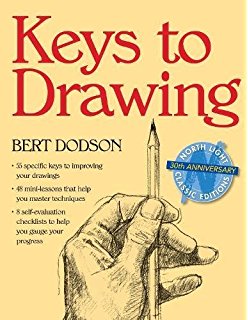
For anyone out there in my shoes, a great start would be the book by Bert Dodson, Keys to Drawing.
I was lucky to come across this book in the local library. It is a great read to get your imagination churning with an intuitive, and realistic approach to drawing.
That’s all I have for today, and so I shall now take my leave, but before I forget, on this day of joy, celebration, new life, and a heck of a load of chocolate eggs, I wish everyone an amazing, and wonderful Easter.
I’m fortunate enough to have been given the opportunities that I have had in my life. Thanks to my father’s employment in a prominent non-governmental organization (NGO) called PLAN International (a child rights organization that works with communities in many countries to alleviate child poverty), I, along with my family, have traveled to several countries around the world. We were modern-day nomads, traveling wherever my father’s work beckoned. Whenever possible, I joined my father on his daily adventures, allowing myself the opportunity to understand and learn the multifaceted nature of humanitarian service and development. It also helped that my father often brought his work home, leading to long-winded conversations on his day-to-day exploits.
Growing up, I tried to emulate my father. But as my future beckoned, I learned to find my own unique path, and destiny in life. Still, to this day, I carry the lessons I have learned in the presence of my father, most notably his compassion to his fellow human beings as well as his perseverance and commitment to his work. My father found great satisfaction in the simple act of helping others, and even more, in the happiness of his family. His efforts were largely directed to these objective. Thus, he made a big difference in my life, and of countless others. So it is not at all surprising that I too feel a strong calling toward contributing to the society and making a difference in the world.
Our world is riddled with doubt and confusion. The toils of war, civil unrest, corruption, racial and ethnic differences, climate change (along with an assortment of environmental issues), to name a few, are the great uncertainties of our time. These issues afflict our daily lives, standing as we are, mute and in the shadow of a persistent struggle to communicate and unite, as a species, toward a better and brighter future. At the crux of it all, we have allowed our fear and anger to dictate our choices and actions, leading the greater part of the world to be divided.
Take racism for instance, it manifests in many aspects of our social lives. It pervades modern-day societies and political systems; the basis of its strength is a volatile expression of pride, prejudice or aversion to others via discriminatory practices. Humanity has a deep history with racism, and its various forms including segregation, supremacism, xenophobia, nativism, hierarchical ranking, and other related social phenomena. Reaching back to the ancient societies of the past: Greeks, Romans, Indians, Arabs, and even further, to their predecessors, I find that racism was a by-product of our own vanity. Natural circumstances subscribed to humanity our beliefs in an expression of individuality, dividing and classifying us, into specific races. Racism is an institution, not an ideology, founded in capitalism and slave trade.
To me, racism is nothing more than a word that describes the highly- convoluted story that is human cooperation and communication. Is there a solution to this? I admit that many of the issues that plague modern society have great histories behind them, making it difficult to distinguish a unique solution in any case. Nevertheless, I believe we owe it to ourselves to iterate the necessity for action, particularly in recognition of alternatives that may provide the foundation for future solutions.
At one point in my life, I told my father that I would love to build a university. Finding inspiration in the Akademia of Plato, I modeled my university to be an institution that pioneered free thought. People could come and go, study what they must, openly discussing their thoughts with their peers, without fear or discrimination; a platform for reason and rational conversation. I still harbor this dream, though it is a work in progress (there remains more room for thought in the realization of such an institution, especially with regards to its structures and inner workings, but what matters to me is the message of such a concept). In knowledge, and in education, I found what I believed to be a solution towards the fractured communication of the human species. By educating ourselves, and our children in proactive and collaborative thinking we may slowly shear away towards a solution. By addressing our differences, openly and without fear, we may find unity. Of course, at this point, it becomes a question of how are we to do that? I find my answer again in what I proposed earlier. All of us are unique in our own ways, but it is in the same pride with which we define our individuality that we can also define our humanity. The hierarchical structures of knowledge and government weren’t constructed as a means to enslave our species, but as a medium to liberate ourselves in collective thought and action.
This will be the challenge of our time. Communication without fear, government without bias, education without limitations…While it may require an acceptance of short-term losses for the sake of long-term benefits, we must learn to recognize the importance of our world. While anger and fear may have allowed us to survive and evolve over the millennia, those very emotions can also fuel our motivation towards building a better world, not just for those who are alive now, but more importantly for those who follow us, our children, our legacy. Therein lies what may be a small part of the bigger picture, to learn to see ourselves as a global family rather than as select individuals.
My father had a bigger picture that motivated his own actions. It was his family. He found his strength in the happiness of his family, an emotion that he channeled into his work and in the lives of others whom he met and helped. Simply put, he made a difference. Just as much as ignorance can be bliss and can forestall change, anger can be proactive and enforce our will to action. I too want to make a difference, and though I have a long way to go, by expressing my anger, not to separate myself from others, but as a tool to define and communicate my knowledge, to help shape the world, I could one day just like everyone else, if they are willing to, be the difference that will become a brighter future.
Curiosity is a defining characteristic of human nature. More often than not, our curiosity leads us to be engrossed in the minor details of our daily lives. This is particularly evident in this modern day and age where social media has become a prevalent source of knowledge, and entertainment. It is in our nature to ask questions, and seek answers. From an evolutionary perspective, we associate such traits as attributive of the “survival-of-the-fittest,” helping our species to provide and support for its survival, and reproduction.
The more we learn about our world, the greater do we struggle to define our existence. Who am I? What is my purpose? These are questions we all ask at some point in our lives. We strive to find answers to said questions through the scope of our experiences. This allows us to examine and interpret our lives relative to those of others, such as our friends and family. By doing so, we gain perspective. Life is filled with dichotomies but it is within the structure of these relative measures of “compare-and-contrast” that we enrich our thoughts, and find a means to define our identities as unique individuals.
Returning to India, my homeland, was an experience that provided much needed perspective. It was a journey that had long been overdue since my arrival in Canada, eight years earlier (2009), for post-secondary studies. Up to that point, my life was a collage of the experiences I had at Egypt (where I completed my elementary education), and Sudan (where I completed my secondary education); experiences that now serve as the foundation of my identity. My life in Canada supplemented this foundation, further motivating my future dreams and aspirations.
While in India, I was frequently asked to express my opinions and observations on the state of things, under political and social contexts, in the country. Initially, I was inclined to believe that such inquiries were an inevitable motion of my status as an “outsider”, but this was a naive conclusion. In retrospect, I identified that such queries were simply another means to an end, in this case, an aggregation of knowledge via perspective. It is a facet of the curious case of cultural diffusion in India, a concept I am largely familiar with, in an identity crisis amid the divisive cultural and social experiences of my past and imminent future. Apart from enjoying my time with friends and family, my journey home allowed me to put this problem to rest.
Differences shouldn’t be a cause for silence or division but an incentive for discussion. Such an idea is applicable to the personal dynamics of a family, and other hierarchical structures as that of a government or a society. In observing my country and its culture, I had openly stated my surprise for the lack of active change and progress within the society. I was motivated to blame the established bureaucracy which I felt had embezzled the citizens from what they deserved. Though civil services and liberties provided for the general run-of-the-mill needs and requirements of the common man and woman, the citizen’s willingness to call for active progress and change had been woefully bargained away by the existing political atmosphere, and the natural course of life. At the same time, in light of my statements, I felt a hypocrite. Though I was voicing my opinions, I hadn’t necessarily acted upon them. Vainly, I had reaped judgment, and deferred the call for action.
This prompted an awakening. The keyword was change, and thankfully enough, I built the courage to enact upon the differences that had once set me apart from my family. By openly communicating my thoughts, and feelings I paved the way for understanding and reconciliation. In this manner, I could voice my opinions, and prove them in action. Now, back in my fortress of solitude in Edmonton, I can’t help but look forward to a brighter future where I intend to act upon the answers I’ve gained in my personal journey. Having struggled to balance my past, and my future, I have come to realize that both these states of time are largely a measure of the present that I interpret. My trip to India offered a unique, and worldly view into these very dichotomies that now define the person I am. I hope to take this lesson, and apply it fruitfully in my aspirations to change the world for the better.
While the actions of our past may have implications for the future, we may find balance by being attentive to the present. This is a notion that is applicable to the individual as well as to the collective society, for rather than defer to alternatives in response to a problem it is imperative that we seek solutions through open communication, in the spirit of the inherent curiosity that makes all us different individuals, and yet one human species.
Holding your hand, I walk by your side. The joy in your eyes, a vibrant flame that nurtures the promise I made in a dream to cherish, and protect you forever.
With our continued acquaintance, I remain satisfied, the depth of our bond personified in a silence that renders words impotent amidst the emotions that persist.
I had found you in the void, where you lay alone, the light of your heart shimmering in the darkness that clung to your shoulders.
Unable to discern your truth against the tempest of your soul, I embraced you in a vow to help you break free of the shadows.
Urging you to smile in a struggle that perseveres, unyielding to the passage of time, I fail continuously to wrest the burdens of your heart.
But in this grudging hour, where I’m forced to accept the truth of my own limitations, I find a greater purpose to our journey together.
Encouraging me to stay strong, to remain at your side, to live for the moments when I can see your beautiful smile.
It is a sweet pain that indulges my efforts, to maintain my promise to you, so that even when I stumble, I find joy in the knowledge that you are a part of me, as I am of you, bound together and forever.
Believing yourself to be imperfect, broken, you collapsed under the weight of your doubts, falling victim to your own thoughts.
Inspired by the same, I will strive to help you understand, that beyond those imperfections and the broken reflection you may perceive, you are the innocent and graceful soul whom I love and wish to set free.
I wish for you to be happy, and though I may not know exactly what I’ll be able to do for you, if there is one thing that I would want you to remember, now and to the end of time, it is that I will be with you, and that you are not alone…
To the heavens, I will set my eyes, in hopes of the day when I shall find thee, flying free…
February 14, an annual holiday celebrating the feast of St. Valentine, otherwise popularly known as Valentine’s Day. The day was first associated with romantic love in the 14th century by Geoffrey Chaucer, a time period when the tradition of courtly love flourished. As such, it became an occasion when lovers expressed their love to one another by various means from presenting flowers, offering confectionery, or sending greeting cards.
A poet myself (from a young age), I’ve always celebrated Valentine’s Day by putting my creativity to the test, writing several poems on the occasion, mostly of romantic nature. As a teenager, I exercised my inspiration from experiences at home, in the company of the love I witnessed between my parents, to the ordinary circumstances of life that were my adventures at school. In fact, my first published work, Our Last Summer, found its beginning in a poem. With its end came the realization of a truth that aptly described my first infatuation when I fell in love with love itself.
Shortly after, I would fly away from home, pursuing a future in the star spangled skies that awaited me in Edmonton. In the solitude of the years that followed, I would contemplate much about the nature of love and life, finding peace in my own isolation, and yet constantly seeking for company in my dreams. And in that manner, on the venue of this 14th, I would write a poem experiencing for the first time my own inability to express my feelings in a question that required no answer.
Yet, for what it’s worth, my voice was heard on that day by someone I hold dear to my heart, and to her I now say, in what has become a melodious sonata of our time together as friends, as partners, and as soulmates I find myself running out of words to describe the beautiful poem that has been the four years of our life together. So for now, I shall stutter, and stumble into the comfort of the night’s silence as I reminisce about us, and the promise I made you in our early days, and one I intend to keep for all my life…
Watashi wa itsumademo anata wo airisu desho, Leina-chan!
Hi everyone, I’m back from my brief hiatus. I wanted to do something different this time, and am looking for an interesting topic to discuss, and post on the blog. I’m open to ideas, so feel free to name your choice of interest by commenting on the post.





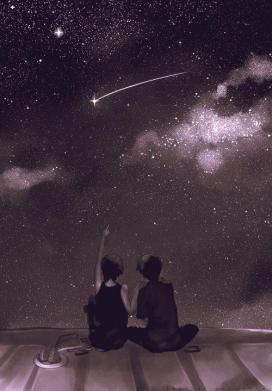

 The Pensive Reverie