There and Back Again

A writer’s journey towards finding purpose

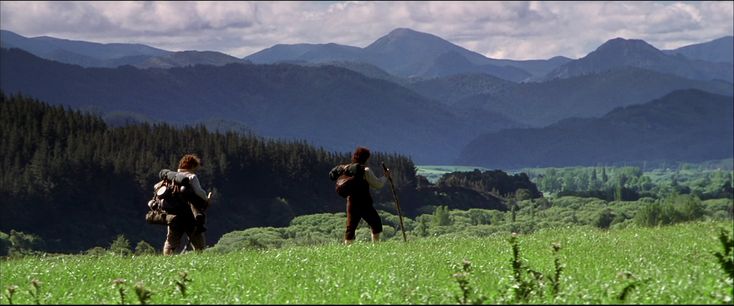
Recently, I have been binging Peter Jackson’s “The Lord of the Rings”, and by that, I mean, having it playing in the background throughout the day. Relistening to the familiar scenes made one thing clear to me: the last decade of my life is no different than a Baggins’ adventure.

“It’s a dangerous business, Frodo, going out your door. You step onto the road, and if you don’t keep your feet, there’s no knowing where you might be swept off to.”

Bilbo was right about that one. I have experienced a lot of being “swept off” over the last few years. The latest twist in my journey came right around today except in late 2024: I got laid off from my job.

Now, getting laid off is a dangerous business, and it can do a lot to you. When the Balrog of Unemployment came trotting along, my wife consoled me, and I did my best Gandalf the Grey impression as I fell into a pit of depression:

Unfortunately, the popular mantra of “this too shall pass” didn’t stand a chance in my confrontation with this demon of the corporate world for it certainly “did not pass.” Getting laid off meant a lot of things. For one, it emptied a large portion of my savings. Second, it scrambled my brain and packed a wallop of stress. Sounds terrible, yes. But there was still hope.

So, while I sat there, much like Frodo,

In my case, replace “the ring” with “the lay off”.

I realized something else:

And I did. I got perspective. A year’s worth of bountiful perspective when all I could do was to continue walking and seeking. Being lost was the first step to finding the right path, and this was undoubtedly my eureka moment. Being unemployed helped me realize what I really wanted my day-to-day life to be. To make it happen, I had to wait patiently and bid my time.

It was challenging but I somehow persevered, and a job prospect, much like the esteemed reputation of the wizards of Middle-Earth arrived precisely when it had to.

So, what exactly am I up to?

Well, I’m diving headfirst into a full-time writing career. Freelancing is one way to put it, but I get to try the entire palette, at least from the writer’s perspective. The opportunities that await are multifaceted with a tablespoon of science writing, a teaspoon of script writing, a dash of tutoring, and a boat load of creative writing and art.

The journey up to this point has been very much a “there and back again” tale. Yes, there is a veritable measure of uncertainty attached to freelancing. Still, I’ve realized it offers me the freedom to indulge in my creative spirit as an individual and flexibly juggle my responsibilities as a father. Do enough of it and the savings eventually start adding up too. Further twists may yet come to pass, but for now, I’m more committed than ever before toward my writing and creative aspirations. As such, it felt great to jump into the tail end of the year by sharing with you my latest success in the science writing realm.

I’ve always enjoyed writing about the what and why of science, but now and then, I love taking a deep dive into the how. How did we get to where we are now? Whose contributions have set the foundations for modern-day innovation and knowledge?

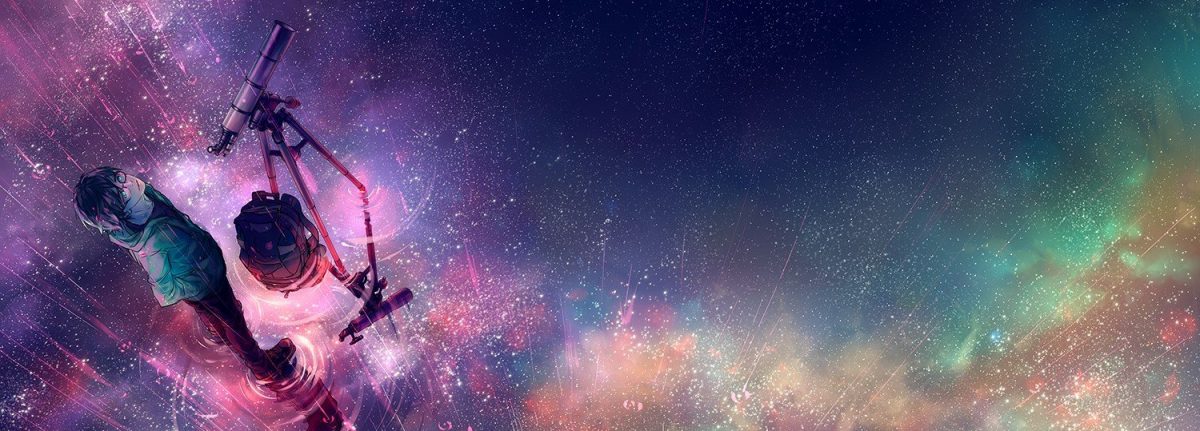
Science history allows writers to unravel stories of the past. This year, I got the chance to do the same with a lesser-known ancient scholar, and the first of the major mathematician-astronomers of the Indian subcontinent: Aryabhata. From explaining solar and lunar eclipses to proposing Earth’s rotation, Aryabhata was far ahead of his peers. His contributions to astronomy and mathematics profoundly influenced Middle Eastern and Western thought.

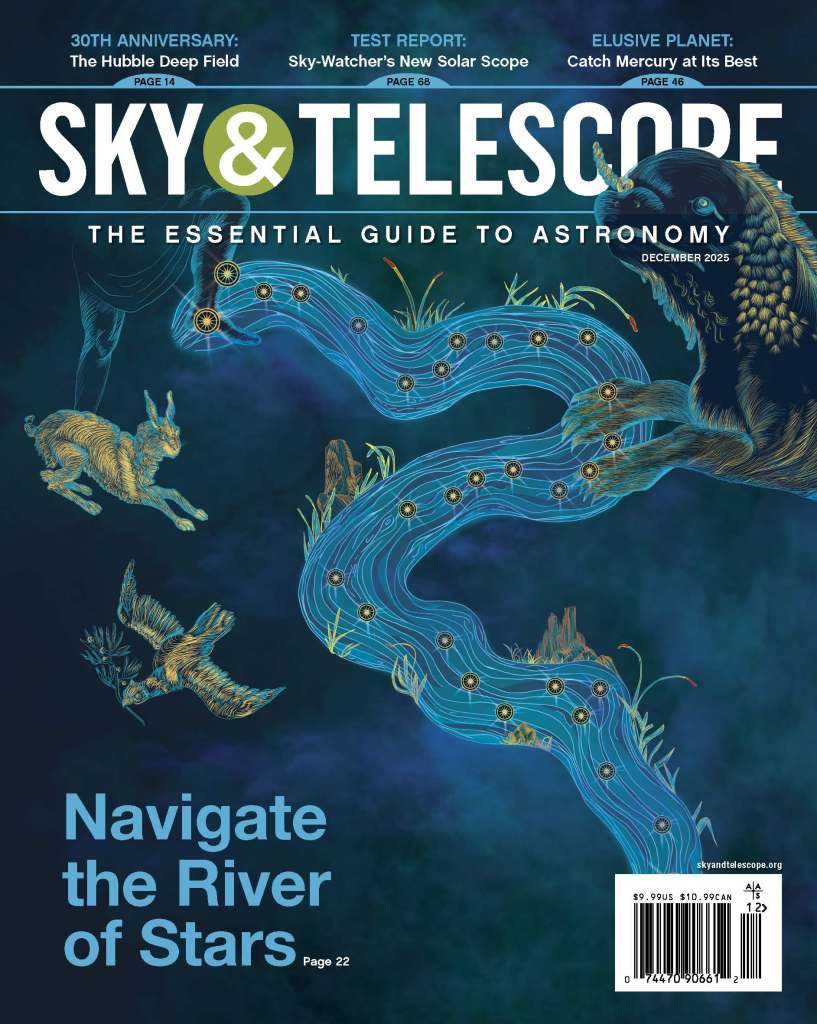
I’m all the merrier to wrap up this year with the opportunity to publish a feature about this great scholar in the December 2025 issue of Sky & Telescope magazine. It is now available at your nearest bookstore! You can order your copy here.

Let’s stop here for today. This is just a taste of what is to come. After all, keeping up with the Lord of the Rings metaphors,

All in preparation for what will be a glorious 2026.

The Silmarillion – Book Review

I was 12 years old when I first got my hands on The Hobbit, while absent-mindedly exploring my school library’s fantasy collection, and that was about it. In the years that followed, I watched  various animated and live-action film adaptations of Tolkien’s works, but ultimately didn’t commit to fully reading The Lord of the Rings (LOTR) trilogy. In retrospect, I could attribute this to my inability then, to fully appreciate the depth and grandeur of Tolkien’s Middle-Earth.

It wasn’t until the final year of my undergraduate studies, when I met my partner Leina, who was herself an avid fan of Tolkien, that my interests in the events and rich history of Middle-Earth were renewed. I ended up re-watching Peter Jackson’s adaptation of the LOTR trilogy, and later indulged heavily on the online forums and wikis dedicated to Tolkien’s mythology, digesting pretty much all that there was to learn about Middle-Earth. But reading wikis and online forums is a completely different matter from actually reading the books.

And so, I purchased The Silmarillion, eventually completing what was an adventurous ride through Eä over the course of the last three months.

thesilmarillion

The Silmarillion is a collection of J.R.R. Tolkien’s mythopoeic works that were edited and published posthumously by his son Christopher Tolkien in 1977. It is a narrative describing the universe of Eä where exist the mythical lands of Valinor, Beleriand, Numénor, and lastly, Middle-Earth, which serves as the backdrop for the events of The Hobbit and The Lord of the Rings. 

middleearth

The narrative is incomplete, ranging over prominent events and happenings in the Elder Days (the First Age in Tolkien’s world) comprising Eä’s creation to the downfall of Morgoth (the prime antagonist of the First Age), much of which would be forgotten in the coming of the Second and Third Ages detailing the rise and fall of Sauron, Morgoth’s lieutenant.

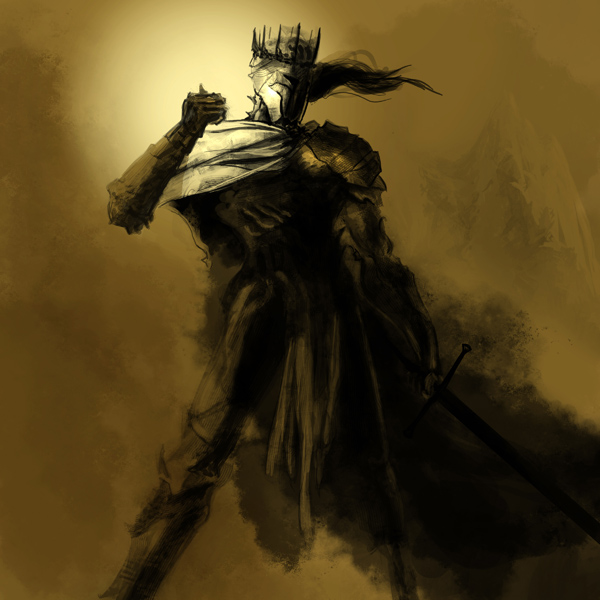
melkor_by_formenost
Melkor, “He who arises in might”, later known as Morgoth, the Black Enemy.

While the tales of The Hobbit  and The Lord of the Rings chiefly concern the events surrounding Sauron’s One Ring of power, the foundation of The Silmarillion revolves about the Silmarils, three jewels that were created by Feänor, the most gifted among the Elves. Within those jewels were stored the light of the Two Trees of Valinor, the land of the Valar (higher spirits who are the guardians and governors of Arda, or the Earth) before they were destroyed by Morgoth.

feanor1
Feanor, the creator of the Silmarils.

Thereafter, the light of the trees of Valinor forever lived only in the Silmarils. Unfortunately, Morgoth would seize those jewels and flee to his fortress Angband in the North of Middle-Earth, where he would set them in his crown. Thus, the story of The Silmarillion is the long history of the rebellion that followed in the wake of Morgoth’s theft of the jewels, led by Feänor and his elven kindred against the Valar, their subsequent exile from Valinor, their return to Middle-Earth, and their war until the end of the First Age against their most bitter foe, the Black Enemy,  Morgoth.

The Silmarillion consists of several overlapping themes highlighted in the individual stories of the various characters who live through the First Age of Middle-Earth. Tolkien’s creation myth draws heavy similarities with the Biblical creation story, where Eru can be held analogous to Yahweh. One could also compare the Valar to various Greco/Roman/Hindu Gods, and the Maiar (the servants of the Valar) to Christian angelic figures.

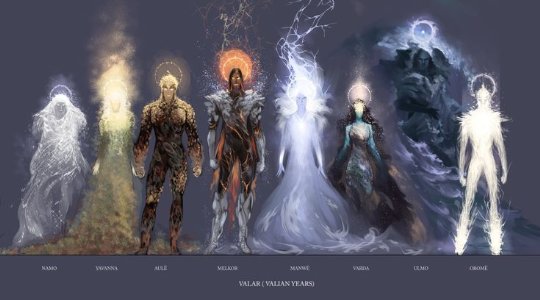
valar
Fan art of the Valar, “Those with Power.” I suggest you read the book to discover their identities and their powers.

Several such open inferences and interpretations of the characters in the story make for an extremely enjoyable read. In my case, it certainly motivated me to explore and learn the details and history of other major religious pantheons that have held power in human history, several of which may also have duly served as inspiration for Tolkien in his writing.  

The penultimate theme of the story is the cosmic struggle between good and evil, order and chaos, mirrored in the actions of its characters. The passing of time and the inevitable hand of fate serve as recurring imagery of the circular nature of Tolkien’s world. Even the most subtle decisions made as a result of a character’s emotions, be it pride, vanity, confidence, or grief, result in far-reaching consequences, the ends of which we see resolved in later events of The Hobbit and The Lord of the Rings. While each character is subject to his emotions, those same primal instincts are often presented as the will of a higher being.

As such, an individual’s actions and the dire set of resulting circumstances often provoke the reader to question the morality of Tolkien’s world and its hierarchy. Questions on existentialism and freewill follow hand-in-hand when the reader is left to reflect on the motives and fate of several characters, many of whose lives are quite Sisyphean in nature.

sisyphus-shirt
Rock beats Sisyphus.

At the same time, Tolkien also explicitly uses specific characters to fully symbolize prominent themes such as love and hope to  counteract the grave world we find in The Silmarillion.

Altogether, the book is a wonderful read, and is a must for LOTR fans. In this brief book review, I have specifically gone to great lengths to not divulge details on the individual characters and myriad stories we find in The Silmarillion. The discontinuous nature of these stories define a fundamental element of the First Age of Middle-Earth which resembles a broken world. I highly encourage both LOTR and non-LOTR fans to give the book a read. As for me, having read The Silmarillion, it is only proper that I now follow through and read the LOTR trilogy, for another collective three book reviews waiting in the future!