
Balancing Ambitions and Obsessions

So, that broken toe kept me out longer than expected. As my good friend Boromir would say,
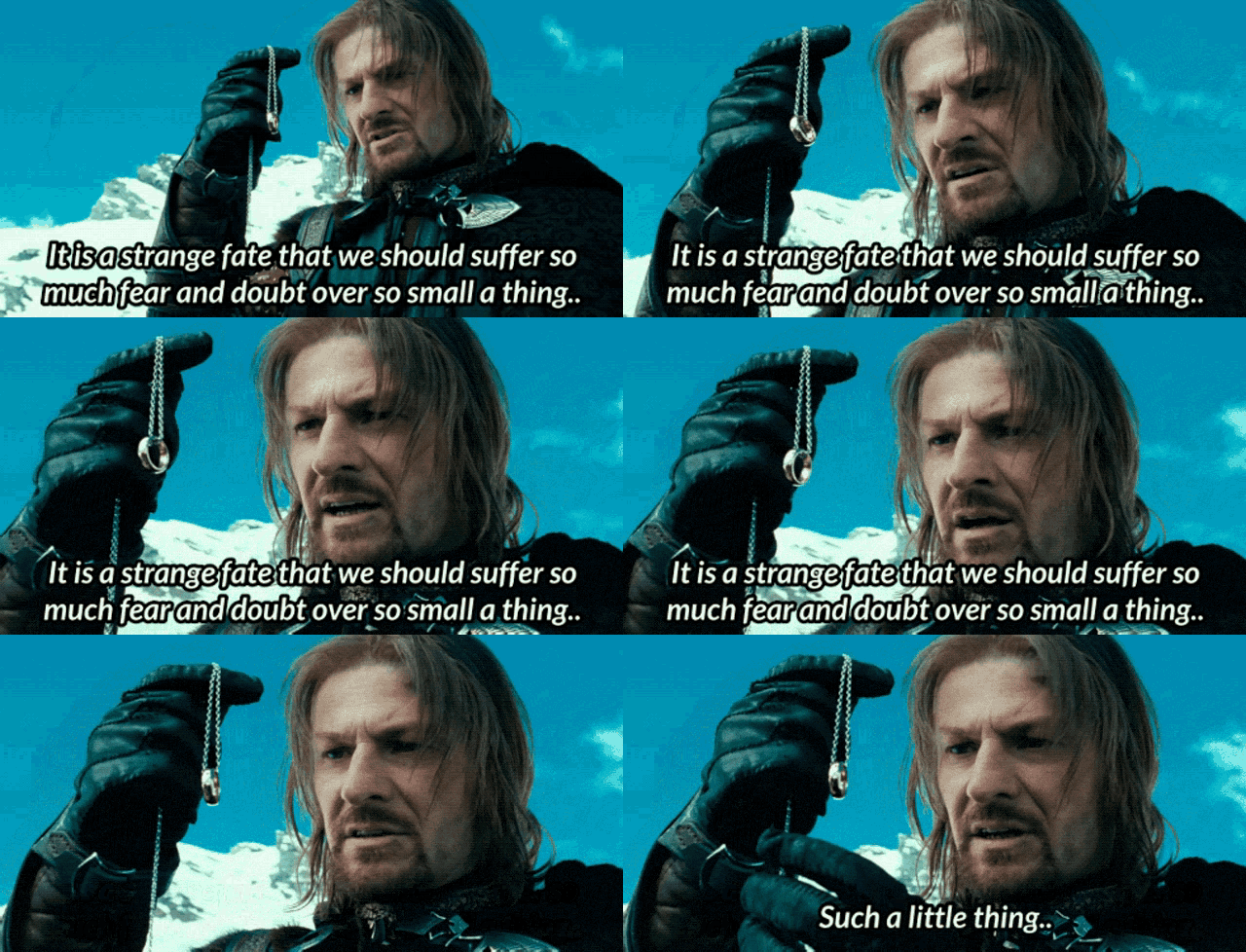
This past weekend, I finally hit the gym after an extended break. Every minute reminded me how out of shape I was. All this, on top of my toe telling me, “Brother, you ain’t ready yet. Let’s take it slow.”

To make matters worse, I’m that guy who always gets overzealous and works at 100%, no matter the scenario. First impressions-wise, this attribute is often mistaken for motivation, but it is exhausting and born of obsession.

It is also a problem of my own making. They say our greatest flaws usually stem from our deepest griefs. 2026 has taught me this lesson about balancing my ambitions with my obsessions.

The latter has been fostered by the setbacks I’ve experienced in my personal and professional life. It is the age-old tale of finding something that works for you and keeps you happy, only to lose it to circumstances well beyond your control.

If it happens often enough, what was once a craving for success becomes a desperate obsession that drives you to prove yourself. So much so that you end up forgetting what it means to simply enjoy your life and whatever you do.

In that context, my broken toe has been a godsend.

When life slows down, it forces you to reflect, especially on things you don’t want to think about. Long story short, I’ve been depressed, and it’s been about a lot of things.

Thankfully, the time away has helped me learn a few tricks, like accepting what has happened and recognizing that it is okay to grieve.

Part of that has been realizing that ambition is great, especially when it motivates you to try new things and be proactive. What doesn’t work is when that ambition replaces what may have been a natural enthusiasm with a need to prove yourself to others. That last part isn’t necessary.

The only person you need to prove anything to or be accountable to is yourself. Lately, I’ve also been repeatedly listening to Japanese singer-songwriter Yui’s third album, “I Loved Yesterday.”

The album’s message is poignant: “In order to love yesterday, let’s live today without regrets. I want to live tomorrow with the same feeling.”

Much like my broken toe, the last few months have been bruising, but I’m all the better for it. Being an overzealous creative like me can mean a lot of things. For one, I think a lot (or, as my partner puts it, “you think too much and too hard”) and often not in the most productive ways.

This time around, I’ve gained perspective on how to temper that urge. It is helping me bounce back, albeit gradually. Instead of pushing through things, giving it my 100% and whatnot, I’m now taking things a little more slowly.

And that’s OK.

Phew. All that being said, what’s ahead?

Well, a lot of exciting things, to be honest. I’m happy with how 2026 has turned out so far.

For starters, I transformed into a science history sleuth and published two articles in the magazine Sky and Telescope (one published, and one currently slated for a print issue in 2027).

I’m also having the time of my life as a classic motivated yet disillusioned writer, submitting a few stories to prominent publishers and getting rejected. Tradition says I keep grinding, and I’m currently doing so by resubmitting my stories to literary agents and others.

I have a small “renovation” of sorts scheduled for this blog, and will be restarting my science blog.

Lastly, I’m developing a standalone author website and working through a year-long art study plan that has me priming up a portfolio for storyboarding and animation.

In other words, as my brain (and Frodo) would put it on days when it’s burned out (in a good way),
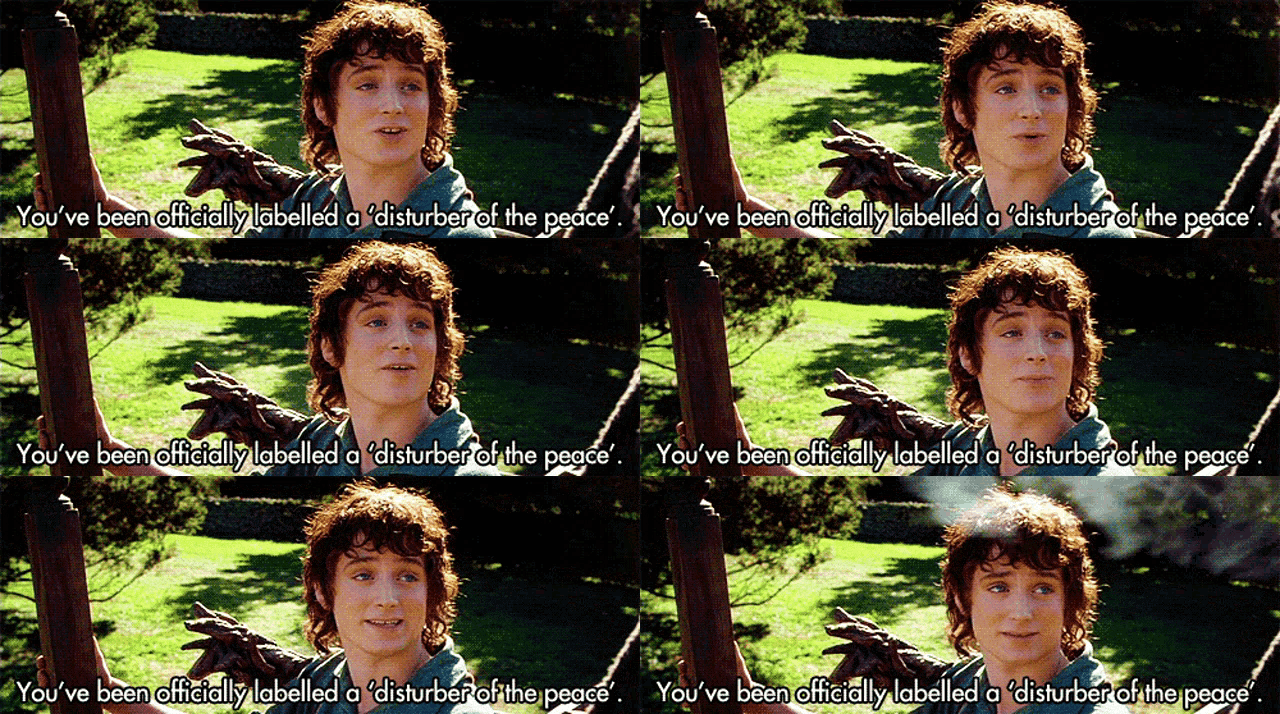
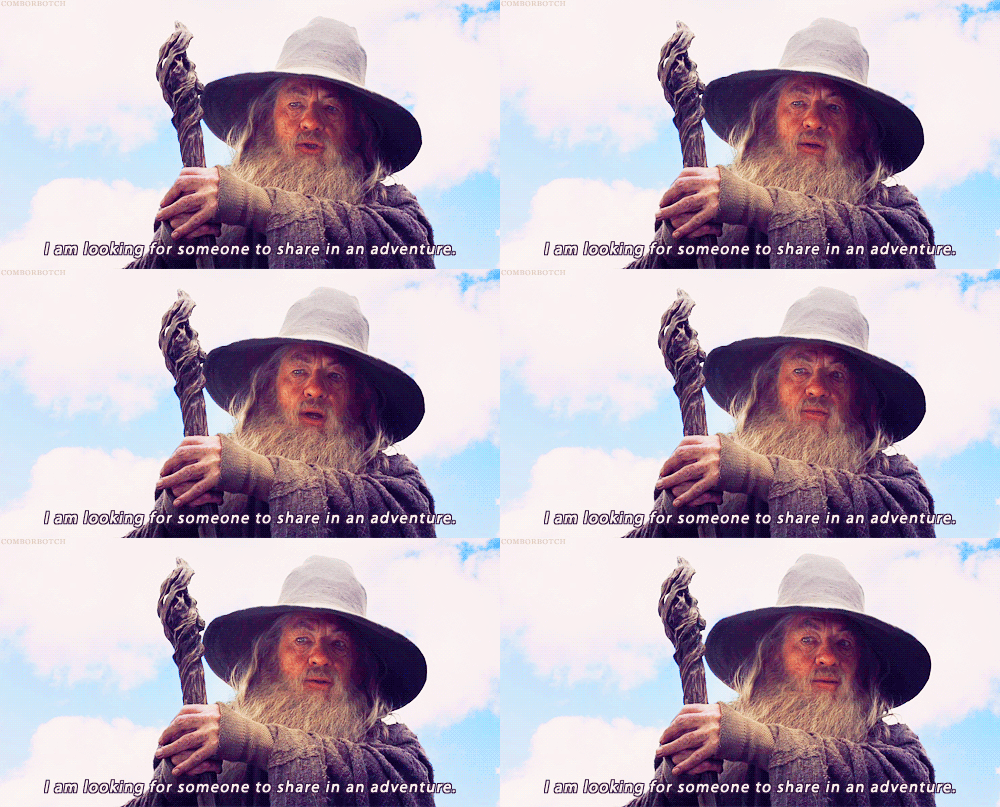
Which brings me back to my readers at the Pensive Reverie; thank you for being so patient with me. With all that is set to go down in my creative endeavors for 2027, I’m just excited to say,
Exams, Assignments, and All-Nighters

Last week was a throwback to my past as an undergraduate student when I pulled off my third all-nighter over the last eight years of studies at university. Now, an exam looms upon the horizon, followed by scores of assignments and research objectives to manage…Indeed, the gauntlet has been thrown, and I have made my decision…

FiZulWv

While I may not necessarily have an official fellowship to assist me, I take heart in that I have my fellow classmates and friends who shall also suffer in this war with me.

Bound to this confounding cycle of…

meme10 (1)

I find solace in my pensive reverie…So, having said that, hi everyone!

It has been a busy few days, but I’m hoping to regain my bearings once I complete my midterm exam this week. Looking ahead, I will be posting on my experiences so far in independent publishing having recently published my second book: A Little Bit Of Everything. 

September was also a month of several delightful surprises, not to mention, my first viewing of the Northern Lights (which occurred during a casual walk home one night from the superstore). As awesome as it was to observe the celestial event, which was surprisingly clear despite the light pollution in the city that night, I plan to write a small anecdote on the phenomenon itself touching base with my general passion for astronomy.

I now leave you all with this short update as I once again embark on the Sisyphean expedition that my PhD research has become, not to mention the general course of assignments and course work to follow. It is certainly the calm before the storm as I prepare for my midterm but with a creeping doubt where I’m,

ca9d516abe85cd58a45ecc56b0c099e6--final-exam-memes-exams-memes

As the bells of exam halls toll,

exam4
Correction: Mid-semester, the war will truly come to an end at the end of the semester.

I shall fight the good fight, and do my best so that I may soon reengage all of you, my fellow readers and friends, at The Pensive Reverie with some delightful tales, amid auroras and published books, of what has been a beautiful fall season.

The Silmarillion – Book Review

I was 12 years old when I first got my hands on The Hobbit, while absent-mindedly exploring my school library’s fantasy collection, and that was about it. In the years that followed, I watched  various animated and live-action film adaptations of Tolkien’s works, but ultimately didn’t commit to fully reading The Lord of the Rings (LOTR) trilogy. In retrospect, I could attribute this to my inability then, to fully appreciate the depth and grandeur of Tolkien’s Middle-Earth.

It wasn’t until the final year of my undergraduate studies, when I met my partner Leina, who was herself an avid fan of Tolkien, that my interests in the events and rich history of Middle-Earth were renewed. I ended up re-watching Peter Jackson’s adaptation of the LOTR trilogy, and later indulged heavily on the online forums and wikis dedicated to Tolkien’s mythology, digesting pretty much all that there was to learn about Middle-Earth. But reading wikis and online forums is a completely different matter from actually reading the books.

And so, I purchased The Silmarillion, eventually completing what was an adventurous ride through Eä over the course of the last three months.

thesilmarillion

The Silmarillion is a collection of J.R.R. Tolkien’s mythopoeic works that were edited and published posthumously by his son Christopher Tolkien in 1977. It is a narrative describing the universe of Eä where exist the mythical lands of Valinor, Beleriand, Numénor, and lastly, Middle-Earth, which serves as the backdrop for the events of The Hobbit and The Lord of the Rings. 

middleearth

The narrative is incomplete, ranging over prominent events and happenings in the Elder Days (the First Age in Tolkien’s world) comprising Eä’s creation to the downfall of Morgoth (the prime antagonist of the First Age), much of which would be forgotten in the coming of the Second and Third Ages detailing the rise and fall of Sauron, Morgoth’s lieutenant.

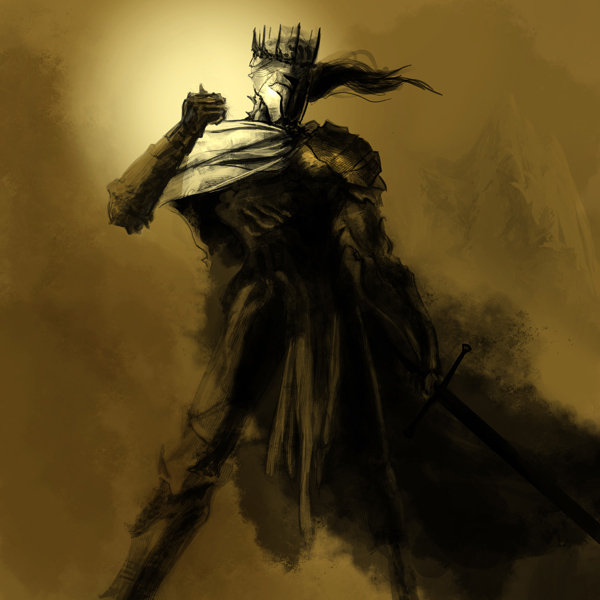
melkor_by_formenost
Melkor, “He who arises in might”, later known as Morgoth, the Black Enemy.

While the tales of The Hobbit  and The Lord of the Rings chiefly concern the events surrounding Sauron’s One Ring of power, the foundation of The Silmarillion revolves about the Silmarils, three jewels that were created by Feänor, the most gifted among the Elves. Within those jewels were stored the light of the Two Trees of Valinor, the land of the Valar (higher spirits who are the guardians and governors of Arda, or the Earth) before they were destroyed by Morgoth.

feanor1
Feanor, the creator of the Silmarils.

Thereafter, the light of the trees of Valinor forever lived only in the Silmarils. Unfortunately, Morgoth would seize those jewels and flee to his fortress Angband in the North of Middle-Earth, where he would set them in his crown. Thus, the story of The Silmarillion is the long history of the rebellion that followed in the wake of Morgoth’s theft of the jewels, led by Feänor and his elven kindred against the Valar, their subsequent exile from Valinor, their return to Middle-Earth, and their war until the end of the First Age against their most bitter foe, the Black Enemy,  Morgoth.

The Silmarillion consists of several overlapping themes highlighted in the individual stories of the various characters who live through the First Age of Middle-Earth. Tolkien’s creation myth draws heavy similarities with the Biblical creation story, where Eru can be held analogous to Yahweh. One could also compare the Valar to various Greco/Roman/Hindu Gods, and the Maiar (the servants of the Valar) to Christian angelic figures.

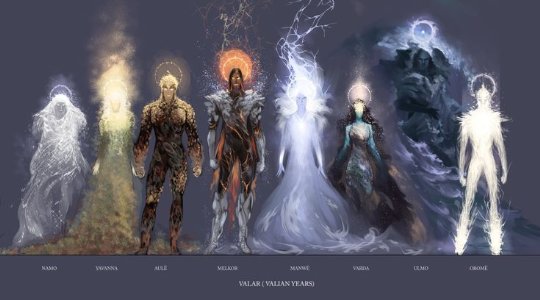
valar
Fan art of the Valar, “Those with Power.” I suggest you read the book to discover their identities and their powers.

Several such open inferences and interpretations of the characters in the story make for an extremely enjoyable read. In my case, it certainly motivated me to explore and learn the details and history of other major religious pantheons that have held power in human history, several of which may also have duly served as inspiration for Tolkien in his writing.  

The penultimate theme of the story is the cosmic struggle between good and evil, order and chaos, mirrored in the actions of its characters. The passing of time and the inevitable hand of fate serve as recurring imagery of the circular nature of Tolkien’s world. Even the most subtle decisions made as a result of a character’s emotions, be it pride, vanity, confidence, or grief, result in far-reaching consequences, the ends of which we see resolved in later events of The Hobbit and The Lord of the Rings. While each character is subject to his emotions, those same primal instincts are often presented as the will of a higher being.

As such, an individual’s actions and the dire set of resulting circumstances often provoke the reader to question the morality of Tolkien’s world and its hierarchy. Questions on existentialism and freewill follow hand-in-hand when the reader is left to reflect on the motives and fate of several characters, many of whose lives are quite Sisyphean in nature.

sisyphus-shirt
Rock beats Sisyphus.

At the same time, Tolkien also explicitly uses specific characters to fully symbolize prominent themes such as love and hope to  counteract the grave world we find in The Silmarillion.

Altogether, the book is a wonderful read, and is a must for LOTR fans. In this brief book review, I have specifically gone to great lengths to not divulge details on the individual characters and myriad stories we find in The Silmarillion. The discontinuous nature of these stories define a fundamental element of the First Age of Middle-Earth which resembles a broken world. I highly encourage both LOTR and non-LOTR fans to give the book a read. As for me, having read The Silmarillion, it is only proper that I now follow through and read the LOTR trilogy, for another collective three book reviews waiting in the future!