There and Back Again

A writer’s journey towards finding purpose

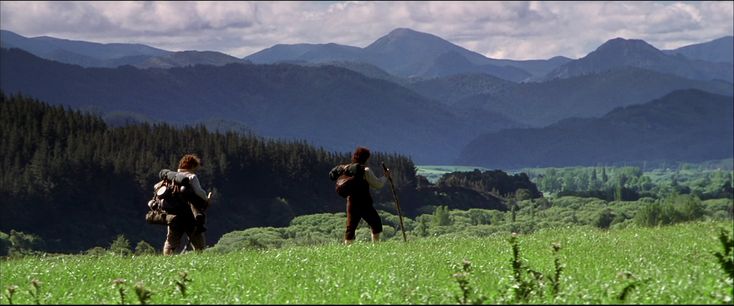
Recently, I have been binging Peter Jackson’s “The Lord of the Rings”, and by that, I mean, having it playing in the background throughout the day. Relistening to the familiar scenes made one thing clear to me: the last decade of my life is no different than a Baggins’ adventure.

“It’s a dangerous business, Frodo, going out your door. You step onto the road, and if you don’t keep your feet, there’s no knowing where you might be swept off to.”

Bilbo was right about that one. I have experienced a lot of being “swept off” over the last few years. The latest twist in my journey came right around today except in late 2024: I got laid off from my job.

Now, getting laid off is a dangerous business, and it can do a lot to you. When the Balrog of Unemployment came trotting along, my wife consoled me, and I did my best Gandalf the Grey impression as I fell into a pit of depression:

Unfortunately, the popular mantra of “this too shall pass” didn’t stand a chance in my confrontation with this demon of the corporate world for it certainly “did not pass.” Getting laid off meant a lot of things. For one, it emptied a large portion of my savings. Second, it scrambled my brain and packed a wallop of stress. Sounds terrible, yes. But there was still hope.

So, while I sat there, much like Frodo,

In my case, replace “the ring” with “the lay off”.

I realized something else:

And I did. I got perspective. A year’s worth of bountiful perspective when all I could do was to continue walking and seeking. Being lost was the first step to finding the right path, and this was undoubtedly my eureka moment. Being unemployed helped me realize what I really wanted my day-to-day life to be. To make it happen, I had to wait patiently and bid my time.

It was challenging but I somehow persevered, and a job prospect, much like the esteemed reputation of the wizards of Middle-Earth arrived precisely when it had to.

So, what exactly am I up to?

Well, I’m diving headfirst into a full-time writing career. Freelancing is one way to put it, but I get to try the entire palette, at least from the writer’s perspective. The opportunities that await are multifaceted with a tablespoon of science writing, a teaspoon of script writing, a dash of tutoring, and a boat load of creative writing and art.

The journey up to this point has been very much a “there and back again” tale. Yes, there is a veritable measure of uncertainty attached to freelancing. Still, I’ve realized it offers me the freedom to indulge in my creative spirit as an individual and flexibly juggle my responsibilities as a father. Do enough of it and the savings eventually start adding up too. Further twists may yet come to pass, but for now, I’m more committed than ever before toward my writing and creative aspirations. As such, it felt great to jump into the tail end of the year by sharing with you my latest success in the science writing realm.

I’ve always enjoyed writing about the what and why of science, but now and then, I love taking a deep dive into the how. How did we get to where we are now? Whose contributions have set the foundations for modern-day innovation and knowledge?

Science history allows writers to unravel stories of the past. This year, I got the chance to do the same with a lesser-known ancient scholar, and the first of the major mathematician-astronomers of the Indian subcontinent: Aryabhata. From explaining solar and lunar eclipses to proposing Earth’s rotation, Aryabhata was far ahead of his peers. His contributions to astronomy and mathematics profoundly influenced Middle Eastern and Western thought.

I’m all the merrier to wrap up this year with the opportunity to publish a feature about this great scholar in the December 2025 issue of Sky & Telescope magazine. It is now available at your nearest bookstore! You can order your copy here.


Let’s stop here for today. This is just a taste of what is to come. After all, keeping up with the Lord of the Rings metaphors,

All in preparation for what will be a glorious 2026.
Writing with a brick in my head

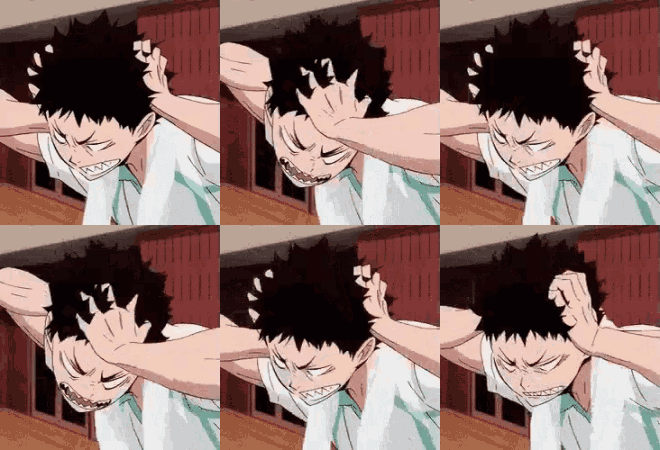
Writing with a brick in my head or taking a long walk down Stumped avenue, call it what you may, writer’s block is ultimately a frustrating experience. Supplement it with a dash of stubbornness, a pinch of OCD, and you have the annoyingly difficult jigsaw puzzle that was my writing process over the last week and a half.

Image result for anime frustration gif

July will mark a year since I began writing the first draft of a script for my comic book and currently active writing project. There still remains a mountain of obstacles to climb considering the drawing portions that I have yet to begin. For the most part, I was thankful that compared to my earlier autobiographical efforts in Our Last Summer and A Little Bit of Everything, my pacing and writing were hitting the right chord.

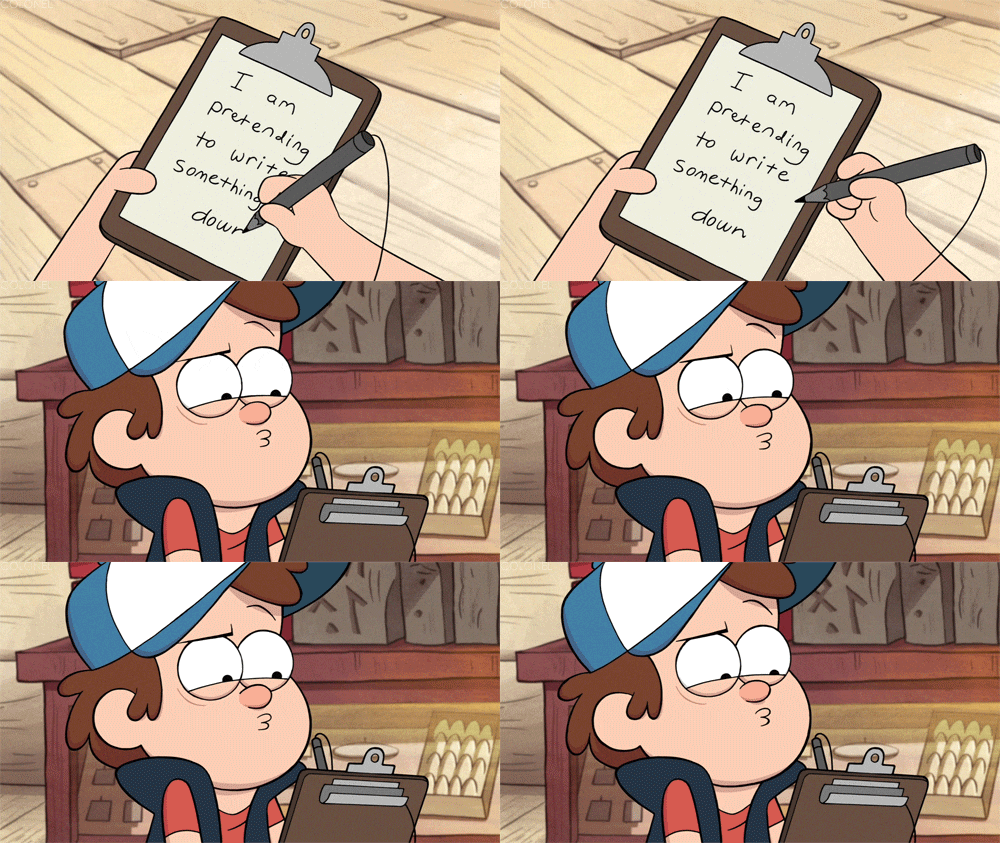
At first, I attributed this to a different writing approach, revolving around heavy sessions of brainstorming and research, followed by focused writing.

Image result for anime writing gif
This was the complete opposite to the free writing that propelled my earlier projects.

I felt the change was all the more necessary and obvious as this comic book script was my initiation in writing a third-person narrative. On the outset, there were promising signs that I would scrape through this project without a detour down Block canyon, and that’s where I jinxed it. Dark clouds loomed along the horizon, and soon enough I was tumbling downwards in what seemed to be an endless spiral of frustration in my existential struggle to piece together the crux and climactic portion of the story.

Image result for anime despair gif
It cannot be…How could I have let this happen? 

As usual, I fell prey to something that I had repeatedly advised myself to avoid: to let my ideas and thoughts, and not my research, shape the story. As integral as it had been for me to do extensive research on the fantasy elements I wished to include in my story, I had failed to keep up with my resolution in only allowing my creativity to guide my writing, and be inspired from what I learned from external references. Writing in the fantasy genre is an amazing experience, especially when there is so much material out there that just captivates one’s imagination. Somewhere along the way, I had lost the plot, and had allowed my research to limit rather than enhance my writing.

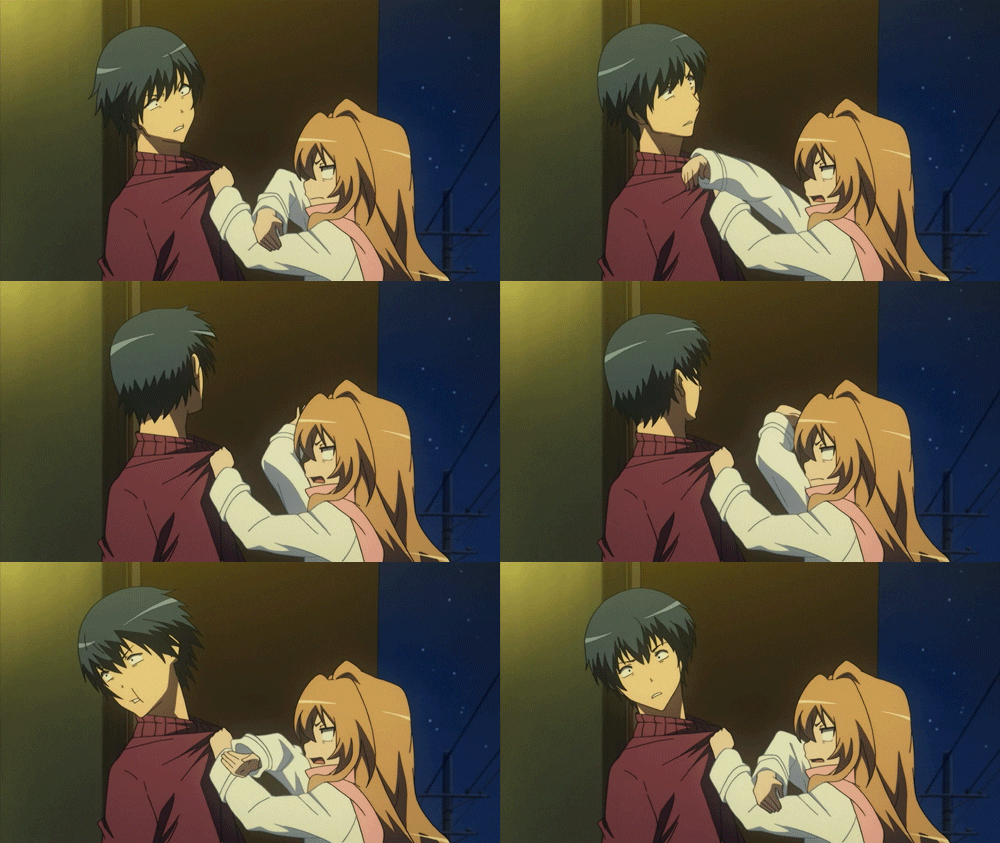
Image result for anime girl slap boy gif
A stern beat down from my in-house editor and partner woke me up and made me realize the solution was staring me right in the face. 

What did I learn? Writer’s block is not fun. But, stressing about it ain’t going to help either. What matters is that one is willing to take a step back, to gain perspective, before stepping forward again. While this may be counter-intuitive, and for my fellow stubborn writers out there who like me (initially) may believe it an ostensible wasting of one’s time, it is very important to take a step back and approach your writing as though you were an impartial audience member. 

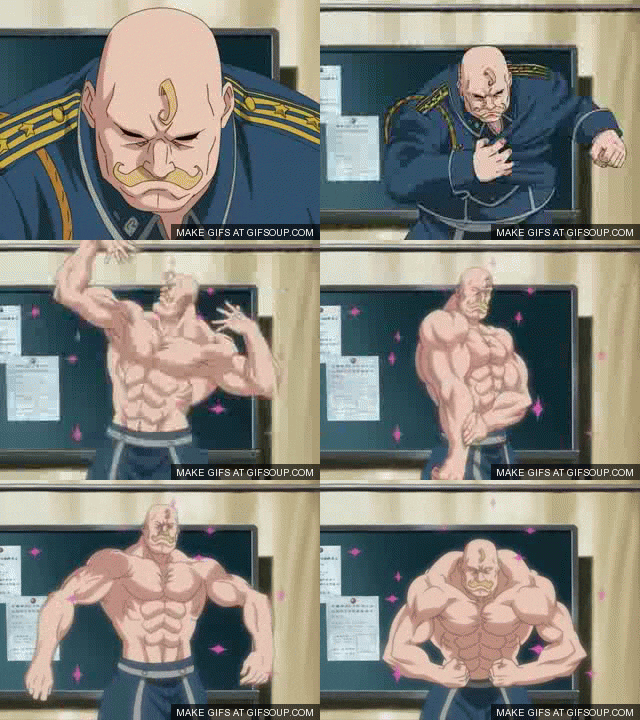
Just as in science, where complicated problems often exercise a simple and elegant solution, the same could be said of writing. This is a familiar piece of advice for those entrenched in figure drawing where instructors often grill the student to take a step back and look at their work in progress to gain perspective and incentive in proceeding forward. The same applies for the mind as well, all I had to do was step back, take it easy, and, as Major Armstrong would likely agree,

Image result for anime motivation gif
 Revel in the the truth and justice that is your sparkling freedom in writing. 


Book Review – Redwall – A Journey In Childhood Nostalgia

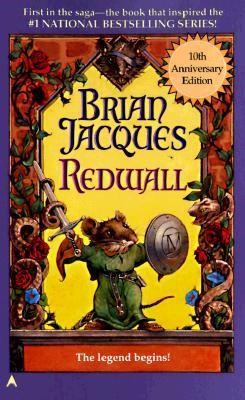
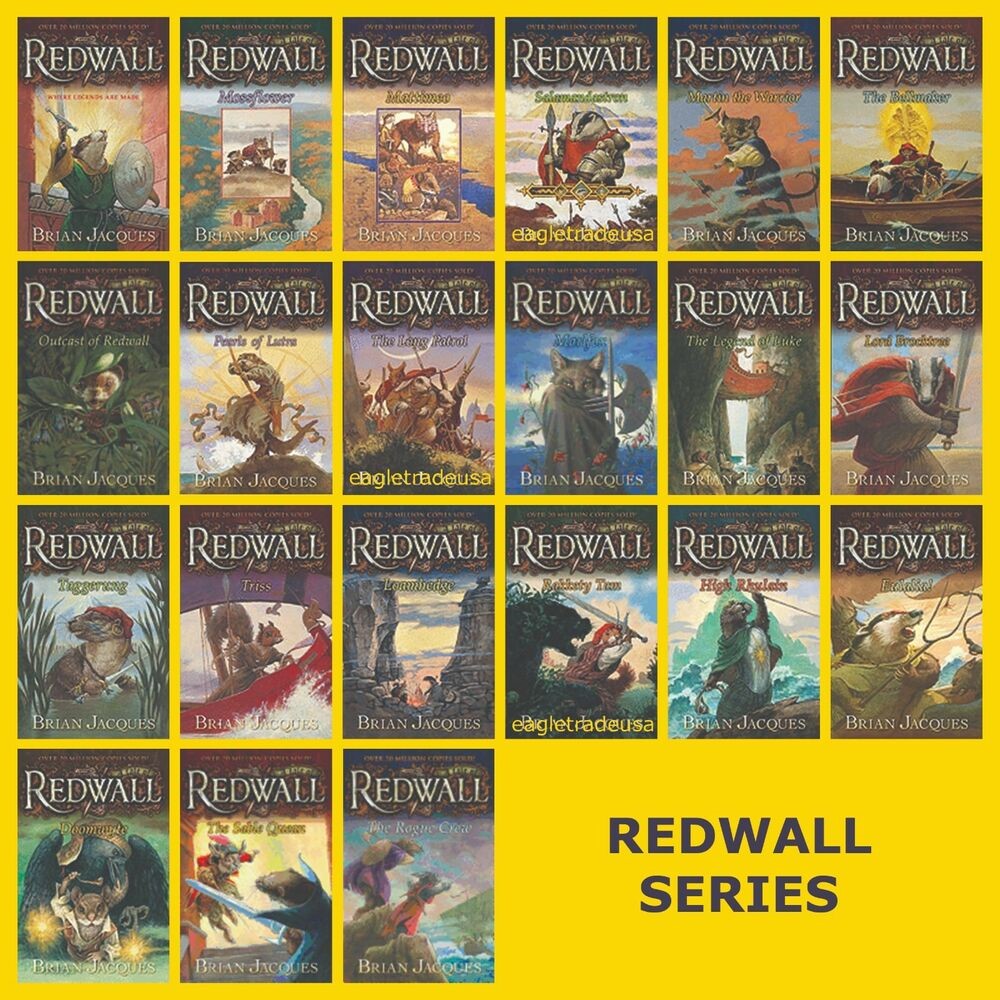
“It was the summer of the late rose.” The year was 2002, and I was a scrawny 11-year-old kid, sitting in a corner at the school library, fully immersed in Brian Jacques’ Redwall. A year had passed since my family and I first arrived in Cairo, Egypt. I was admitted at the Cairo American College (CAC) International school to complete my elementary and middle school education. The lack of a strong foundation in spoken and written English led to my registration in the English as a Second Language (ESL) program. The school library, with its treasure trove of books and resources (I hadn’t actually ever visited a library in my life till then), would naturally become a second home in my efforts to improve my hold over the English language.

redwall1

My finding of Redwall was preceded by my discovery of another great literary work in J.R.R. Tolkien’s Lord of the Rings. I was largely drawn to the illustrations on the book cover, alongside the descriptive maps in the appendix. Jousting my way through the first few pages of The Fellowship of the Ring I would ultimately give up, confused and frustrated in my inability to understand the contents.  A friendly librarian would see to it that my efforts weren’t wasted, suggesting an easier (and more suitable) read of the fantasy genre in Brian Jacques’ Redwall. Thus began my adventures with the peaceful creatures of Redwall Abbey, a journey that continues to this day.

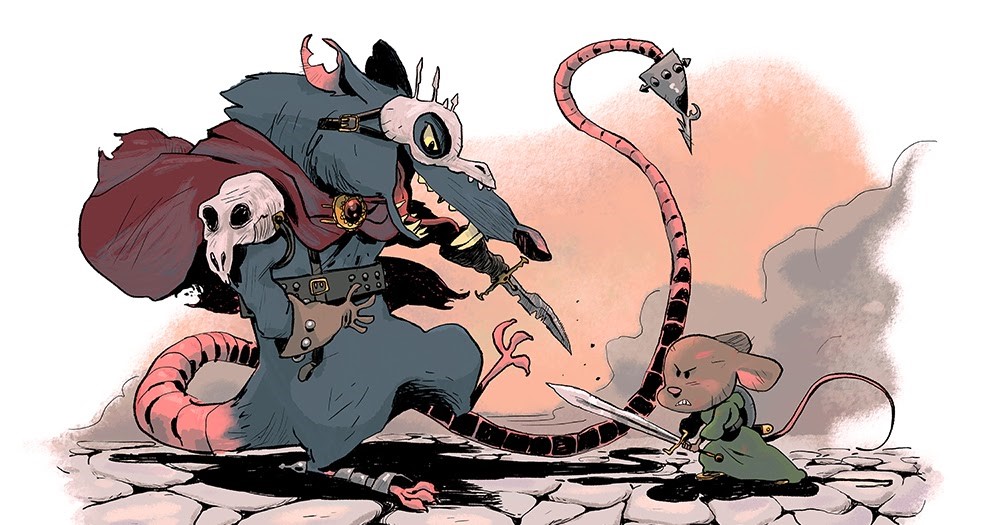
Redwall follows the tale of a young mouse named Matthias who dreams of adventures as opposed to the quiet and peaceful life of servitude he is advised to follow by his mentors and the inhabitants of Redwall Abbey. When the abbey’s tranquil atmosphere is destroyed by the coming of Cluny the Scourge, an evil-one eyed rat warlord, Matthias must find the courage necessary in himself to step forward, become the champion of the abbey, and protect his family and loved ones.

redwall2

The primary theme of Redwall is centered on the triumph of good over evil. Jacques does not shy away from describing the harsh realities of battle, and death through the medieval setting upon which the peaceful mice, badgers, voles, hares, squirrels, sparrows, and moles fight and defeat the violent rats, weasels, snakes, stoats, and ferrets.Jacques follows the traditional template of the monomyth or the hero’s journey in his protagonist, Matthias. Matthias’ story begins at Redwall Abbey but the impending danger upon Cluny’s arrival sends him on a journey through the heart of Mossflower Woods, deep within the forests, where he faces and succeeds in the hero’s challenge to obtain the courage required to save the abbey and vanquish its enemies.

redwall3
“Imagination is a gift given to us from God and each one of us use it differently.”

Jacques’ vivid descriptions of his characters, as well as his unique style in combining action, poetry, and songs makes for a wonderful read for both children and adults alike. It comes of no surprise then that Jacques’ Redwall  was originally dedicated to his friends, the children of the Royal Wavertree School for the Blind, whom he first met while working as a milkman. The success of Redwall kick-started the growth of a 22-book series that now has a lasting legacy as among the best of children’s fantasy novels.

Reading Redwall in 2002, I was captivated by the world Jacques’ had constructed in his novel. Now, almost 17 years down the road and having recently re-read the novel, I cannot deny the childhood nostalgia that sums my experience of Redwall and the influence it has had in my own efforts to writing books in the fantasy genre for a diverse audience. The enduring cast of Redwall characters, their trials and tribulations, and their ultimate success provide, in my humble opinion, valuable lessons in courage, love, peace, family, and freedom. While the overall series may be guilty, on certain occasions, of recycling old plot lines and propagating an obvious pattern of predictability, Jacques’ Redwall sets the stage for an unforgettable journey alongside memorable and diverse characters in a story that is full of heart.

redwall4