Turning 3, and 28

On June 28, 2019, I turned 28 years of age, and The Pensive Reverie completed its online journey of three years with 83 posts, and a sum total of 105 followers. A lot has happened over the last three years, but first I would like to give a big shout-out to my followers and fellow bloggers who have been supportive to the blog’s growth. Thank you very much!

Image result for anime boy thank you gif

Looking back to the night of June 27, 2016 when I published my first post in “Introducing Me, and the Pensive Reverie!” I had made a humble goal to reach at least 100 followers on the blog. Three years have flown since then, and having achieved this goal, I’m now even more motivated to further expand and build this blog, not to mention update my personal profile and status! That first blog post began with the question, “Who am I?” Three years down the road, I can now confidently ask myself a different question (one that builds on its predecessor), “Who do I intend to become?”

My name is Ajay Peter Manuel. I live in Edmonton, Alberta, Canada, my home. I hail from Madurai, Tamil Nadu, India. As a teenager, I traveled around the world with my family. I would complete my elementary education at Cairo, Egypt, followed by my secondary studies at Khartoum, Sudan. I was around 19 years old when I first set foot in Edmonton to begin my higher studies at the University of Alberta. Following the completion of my undergraduate studies in Astrophysics, I would self-publish my autobiography, Our Last Summer: A Personal Memoir, in the summer of 2013With the book’s publication I would acknowledge an annoyingly persistent identity crisis, and in the years that followed, with the help of my loved ones and friends, overcome the greatest obstacle in my life: myself.

Having learned the price of freedom and individuality, I embraced the mistakes and regrets of my past, learned to live my present, and to happily look towards the future without fear and hesitation.  caption

This journey would culminate in the publication of a second book in A Little Bit of Everything, a treasure trove of memories involving the friends and family who had helped me along my journey, and most importantly my partner and soulmate. Back then, I wished to become an individual who “integrated his various passions in education, innovation, writing, art, music, science, critical thinking, accompanied with an endless appetite for life” and I continue to work hard on that front.

I’m happy to say that I have found my true-calling in becoming a writer and an artist. As I currently pursue a doctoral degree, I intend to further hone my skills on both these fronts, so that I may one day reach my penultimate goal of “sun-lighting” as a prominent science writer, and “moon-lighting” as a writer/comic book artist and animator. My dreams remain as far-fetched as they usually have been, but I can’t deny that as an individual my journey with The Pensive Reverie has motivated me to meet these challenges head-on, and with confidence.

Settling into the fourth year of this blog, I intend to stick to its original message in sharing my life’s adventures, hobbies, and interests. For all incoming and future visitors, I welcome you to read and engage with me on the posts I have written thus far, and hope that you enjoy them. For my current friends and followers, thank you very much once again for your support!

Image result for luffy gif

Writing with a brick in my head

Writing with a brick in my head or taking a long walk down Stumped avenue, call it what you may, writer’s block is ultimately a frustrating experience. Supplement it with a dash of stubbornness, a pinch of OCD, and you have the annoyingly difficult jigsaw puzzle that was my writing process over the last week and a half.

Image result for anime frustration gif

July will mark a year since I began writing the first draft of a script for my comic book and currently active writing project. There still remains a mountain of obstacles to climb considering the drawing portions that I have yet to begin. For the most part, I was thankful that compared to my earlier autobiographical efforts in Our Last Summer and A Little Bit of Everything, my pacing and writing were hitting the right chord.

At first, I attributed this to a different writing approach, revolving around heavy sessions of brainstorming and research, followed by focused writing.

Image result for anime writing gif
This was the complete opposite to the free writing that propelled my earlier projects.

I felt the change was all the more necessary and obvious as this comic book script was my initiation in writing a third-person narrative. On the outset, there were promising signs that I would scrape through this project without a detour down Block canyon, and that’s where I jinxed it. Dark clouds loomed along the horizon, and soon enough I was tumbling downwards in what seemed to be an endless spiral of frustration in my existential struggle to piece together the crux and climactic portion of the story.

Image result for anime despair gif
It cannot be…How could I have let this happen? 

As usual, I fell prey to something that I had repeatedly advised myself to avoid: to let my ideas and thoughts, and not my research, shape the story. As integral as it had been for me to do extensive research on the fantasy elements I wished to include in my story, I had failed to keep up with my resolution in only allowing my creativity to guide my writing, and be inspired from what I learned from external references. Writing in the fantasy genre is an amazing experience, especially when there is so much material out there that just captivates one’s imagination. Somewhere along the way, I had lost the plot, and had allowed my research to limit rather than enhance my writing.

Image result for anime girl slap boy gif
A stern beat down from my in-house editor and partner woke me up and made me realize the solution was staring me right in the face. 

What did I learn? Writer’s block is not fun. But, stressing about it ain’t going to help either. What matters is that one is willing to take a step back, to gain perspective, before stepping forward again. While this may be counter-intuitive, and for my fellow stubborn writers out there who like me (initially) may believe it an ostensible wasting of one’s time, it is very important to take a step back and approach your writing as though you were an impartial audience member. 

Just as in science, where complicated problems often exercise a simple and elegant solution, the same could be said of writing. This is a familiar piece of advice for those entrenched in figure drawing where instructors often grill the student to take a step back and look at their work in progress to gain perspective and incentive in proceeding forward. The same applies for the mind as well, all I had to do was step back, take it easy, and, as Major Armstrong would likely agree,

Image result for anime motivation gif
 Revel in the the truth and justice that is your sparkling freedom in writing. 


A Boatload of Reading

The last month of pseudo-relaxing has followed a successful reset of my PhD research accompanied by a boatload of reading of graphic novels and comic books. Marvel’s Endgame was the initial spark that set ablaze my voracious appetite on revisiting various titles from the past.  While Endgame signaled

in the marvel cinematic universe (MCU), a moment met by mixed emotions among the fans, I was glad to move on from what was a decade of movies and get back to roots with the comics that had been in my reading list for several years.

This would be most apt for fans of Captain America and Iron Man. 

Although I lean more towards DC as a comic book fan than Marvel, I have thoroughly enjoyed reading stories from both universes. Considering the recent MCU releases, I found an obvious choice to begin with The Infinity Gauntlet, following which I have been on a blatantly biased run of DC titles. But at some point, you need to call a break and get your head out of the books, so I’ve decided to use this opportunity to briefly review the titles I’ve read thus far for both the experienced and amateur comic book fans among my readers.

While Marvel and DC have both gone through major relaunches of their respective universes over the recent years (New 52, DC Rebirth, Marvel Legacy) the titles I have chosen to review predate these events, and involve a mix of standalone novels that serve as perspectives into leading characters from the respective universes as well as sagas that span lengthy series.

The Infinity Gauntlet

If Thanos in MCU’s Infinity War was draped in shades of an anti-hero or a pragmatic villain, the Thanos of The Infinity Gauntlet identifies strongly with his sobriquet of The Mad Titan. The Infinity Gauntlet is the stage of a climactic struggle (and yet the first of many to follow) that pits the Avengers and literally all of Marvel’s pantheon of heroes and cosmic entities against the Mad Titan in the backdrop of what is largely a friend-zone drama between Thanos and the female entity that is Death. To capture the heart of his eternal love, we follow Thanos in what is an enjoyable and at times weirdly comical adventure that pits the balance of the universe at stake.

infinitygauntlety.png

Superman: Red Son

Swinging into the DC universe, we have a title that is literally one of the best stories in the history of the Man of Steel. Superman: Red Son is a groundbreaking title from DC with a twist on the familiar tale of a Kryptonian rocketship that crash-lands on Earth carrying an infant who will one day become the most powerful being on the planet. Rather than being raised in Smallville, Kansas and become a hero who fights for “…truth, justice, and the American way,” in Red Son, Superman finds  a new home in the Soviet Union where he becomes “…the Champion of the common worker who fights a never-ending battle for Stalin, socialism, and the international expansion of the Warsaw Pact,” making us all look up toward the skies and say, “Look! Up in the Sky! It’s a bird! It’s a plane! It’s…Russian Superman!”

supermanredson

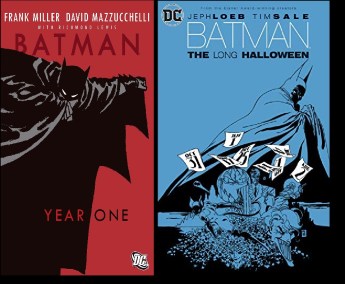
Batman: Year One & Batman: The Long Halloween

A foil to Superman in many ways, Batman ranks among the most popular superheroes of the DC medium. Written by Frank Miller, shortly after the publication of The Dark Knight Returns (a storyline that inspired several sequences in Christopher Nolan’s The Dark Knight trilogy), Batman: Year One is another reinterpretation of a classic hero, and provides a detailed perspective on his origins, the humanity behind the caped crusader’s rationale, as well as his struggles, and growth to become the seemingly invincible hero we know him to be.

batman


alfred-is-tired-of-batman-amp-039-s-crap_o_6047215

The end of Batman: Year One (1986) transitions perfectly into Batman: The Long Halloween (2011) where we follow a compelling adventure in Batman’s early career. The humanity of the Dark Knight, often overlooked by most readers, is in plain view in a story where Batman confronts a former friend turned foe in Harvey Dent.

‘I believe in Harvey Dent,” a line repeated frequently to great purpose in The Long Halloween.


Alongside Superman: Red Son, these two titles hold up as great standalone stories that focus on the inherent humanity and fragility behind the essentially unbreakable beacons of justice, and truth these characters serve to be, making them suitable for amateur comic book readers.

Infinite Crisis & Final Crisis

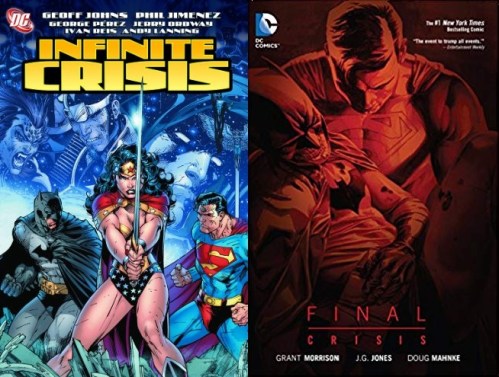
Rounding off this blog post, we have two more titles that serve as DC’s counterpart to Marvel’s The Infinity Gauntlet. Infinite Crisis and Final Crisis span events that can be considered as the DC Universe’s darkest days. Infinite Crisis serves as a lead-in to the events of Final Crisis. In both cases, our heroes are faced with crises of cosmic proportions that bring together many familiar and unfamiliar faces in the pantheon of DC heroes.

crisis

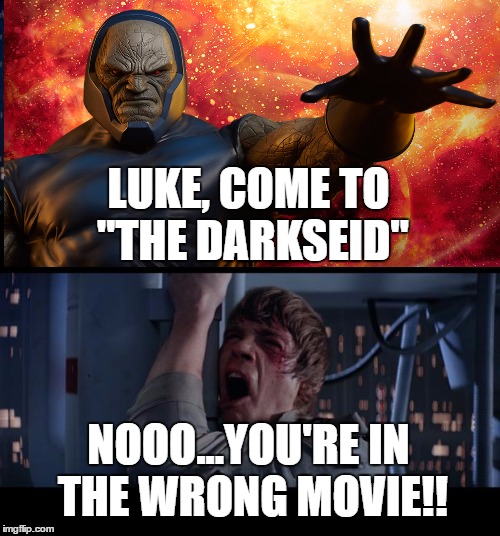
Infinite Crisis highlights a critical moment that has divided Earth’s three greatest heroes: Superman, Batman, and Wonder Woman. As such, the burden falls upon long-lost heroes from the past and other less recognized faces from the DC pantheon to set things straight in a crisis that spans infinite universes. On the other hand, Final Crisis follows the efforts of DC’s “Thanos” (but much better, in my humble opinion) Darkseid who takes advantage of the fallout from the prior crisis and decides to remake reality and the universe in his dark image.

Both Infinite Crisis and Final Crisis are among the last set of publications that preceded DC’s ultimately unsuccessful relaunch in the New 52, and their stories involve hero slug-fests and bouts on a global and universal scale.  While these two titles would be most suitable for the well-versed DC fan, the stories are nonetheless a joy to read through for the pure fun, and escapism they provide into the world of DC’s superheroes.

Pretty similar to what Darkseid essentially tries to achieve with the anti-life equation in Final Crisis. 

This completes my reviews of the works I have read so far. I’m pretty sure the coming week will see another visit to the public library as I strive to go through the remaining books in what seems to be my endless reading list. See you all next week!


The Final Exam

Exams are an annual/semi-annual ritual most students have to experience at some point during school or university. I myself had to write one last week. While I came out mostly unscathed, this particular occasion was all the more memorable given that it was truly the final curtain for my academic career as far as written exams are concerned; this final exam, was in fact, the FINAL exam of my academic life.

While my 20-year-old counterpart would have relished and wildly celebrated such a reality, I came out of the exam hall feeling quite pensive about the whole affair. It felt like the end of a long and occasionally tortuous journey that had molded my personal perspectives and opinions about written exams, and the present-day state of education.

Back in high-school, I had considered written exams as a means to test my skills and challenge my wits. By the time I had finished undergraduate studies, my viewpoint changed drastically, with written exams no longer being my cup of tea. I attributed this to the rapid environment that is university studies where exams just became another thing on that long checklist of things to do. Accompanied by tight and narrow margins of assignments and course project deadlines, written exams and studying evolved into a race against time, a means to a letter, than an actual endeavor for knowledge. I would finish my undergraduate studies quite frustrated with how things had turned about.

Ironically enough, those very frustrations set the ground for positive aspirations in the future. A few years after my BSc. degree, I would obtain an MSc. degree, following which I would begin my doctoral studies. Written exams still remained a part of my academic life but something changed. It took me a while to figure it out, but in the end, it was quite simple. I came to the realization that written exams are full of shit.

It became quite evident that my exam writing skills didn’t correlate nor were they directly transferable to improving and supplementing my academic experience or my aptitude for research. In my case, I stumbled upon this solution in the most straightforward manner possible: working as a research assistant for one year and proving to myself that I was actually “worthy” of my academic aspirations. Yet, there should have been no reason for me to be pressured into proving this to myself.

While written exams are popularly utilized as a means to weed out the student population in a hierarchical system of academic merit, it is not by any means the most efficient. On the other hand, it has served its purpose as the great illusion that often daunts a student’s psyche with regards to being an indirect and ineffective statement on their potential, and future success.

Multiple cases in point were my encounters with various students and peers who would find average turnovers in exams, and yet remain gifted personalities with great intellects and potential. It wasn’t rare to see the same batch of students also diverge from their original academic aspirations thanks to the lack of representation that written exams (and consequently, their grades) provided for their resume.

The sheer stress and pressure of exams translated to my transcript which to this date remains a beautiful collage of letters traversing the ABCDF scheme of the grading alphabet. Those same factors also translated to an inferiority complex of sorts, culminating in the completion of my undergraduate degree, when I felt that I was not good enough for my field of choice, and that I didn’t have the potential to seek and find success at greater heights.

It took me several years to overcome this complex. It helped to recognize written exams were not the absolute judgment of one’s potential as the education system so often makes it seem. I had to admit to myself that neither my skills or potential were absolutely defined by a piece of paper that I had to complete in a closed-room environment under set rules.  This pushed me to work harder, not at writing exams or getting perfect grades, but at learning to enjoy my own pursuit of knowledge including its ups and downs.

Leaving the exam hall last week, I was glad that I had finished writing my final “final.” I could now look forward to fully and freely engaging my curiosity for knowledge, in whatever form that may be. I’m thankful to have come so far. My success in overcoming my failures in such a systematic hierarchy could largely be attributed to supportive supervisors, professors, friends, and most of all, my loving family. The trials and tribulations I faced in what had once seemed a downhill adventure in self-confidence and motivation did enact a toll upon my university studies, and yet, those very same experiences had served to strengthen me.

At the end of the day, my story may not be another’s. As such, I find it necessary in the current educational climate to find an alternative to written exams (at least in the context of university studies) in an effort to better represent and evaluate a student’s skills and knowledge. In my humble opinion, I would prefer to take the classical approach of the platonic academy where the emphasis towards knowledge and one’s academic mettle were proven through oral arguments and jousts that served to strengthen one’s ability to communicate and defend his opinions, as well as learn from that of others in what could be a collectively reinforcing experience.

I have had the opportunity to be involved in few such courses during my time at university, and have also found them to be the most rewarding. How to mold such an idea into a central gear in the current education system is a whole other problem in itself, and not one that I intend to discuss at this stage (though I do intend to come back to it soon enough).

Having said this, for now, I’m going to sit back, drink a cup of tea, enjoy the view (free of exams and assignments, but mostly a busy week catching up on research), and,

giphy.gif
RELAX!

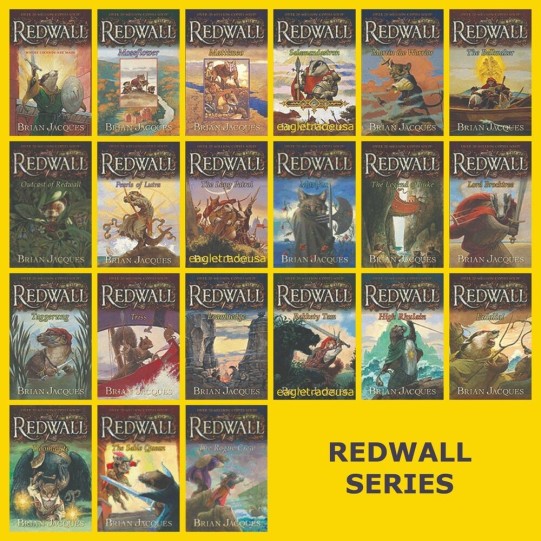
Book Review – Redwall – A Journey In Childhood Nostalgia

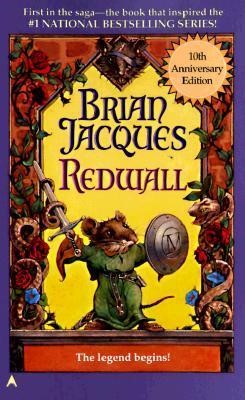
“It was the summer of the late rose.” The year was 2002, and I was a scrawny 11-year-old kid, sitting in a corner at the school library, fully immersed in Brian Jacques’ Redwall. A year had passed since my family and I first arrived in Cairo, Egypt. I was admitted at the Cairo American College (CAC) International school to complete my elementary and middle school education. The lack of a strong foundation in spoken and written English led to my registration in the English as a Second Language (ESL) program. The school library, with its treasure trove of books and resources (I hadn’t actually ever visited a library in my life till then), would naturally become a second home in my efforts to improve my hold over the English language.

redwall1

My finding of Redwall was preceded by my discovery of another great literary work in J.R.R. Tolkien’s Lord of the Rings. I was largely drawn to the illustrations on the book cover, alongside the descriptive maps in the appendix. Jousting my way through the first few pages of The Fellowship of the Ring I would ultimately give up, confused and frustrated in my inability to understand the contents.  A friendly librarian would see to it that my efforts weren’t wasted, suggesting an easier (and more suitable) read of the fantasy genre in Brian Jacques’ Redwall. Thus began my adventures with the peaceful creatures of Redwall Abbey, a journey that continues to this day.

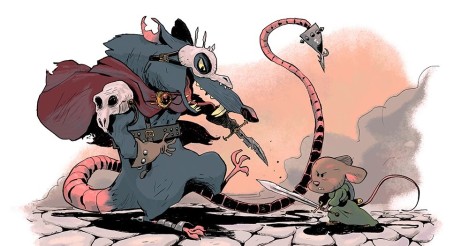
Redwall follows the tale of a young mouse named Matthias who dreams of adventures as opposed to the quiet and peaceful life of servitude he is advised to follow by his mentors and the inhabitants of Redwall Abbey. When the abbey’s tranquil atmosphere is destroyed by the coming of Cluny the Scourge, an evil-one eyed rat warlord, Matthias must find the courage necessary in himself to step forward, become the champion of the abbey, and protect his family and loved ones.

redwall2

The primary theme of Redwall is centered on the triumph of good over evil. Jacques does not shy away from describing the harsh realities of battle, and death through the medieval setting upon which the peaceful mice, badgers, voles, hares, squirrels, sparrows, and moles fight and defeat the violent rats, weasels, snakes, stoats, and ferrets.Jacques follows the traditional template of the monomyth or the hero’s journey in his protagonist, Matthias. Matthias’ story begins at Redwall Abbey but the impending danger upon Cluny’s arrival sends him on a journey through the heart of Mossflower Woods, deep within the forests, where he faces and succeeds in the hero’s challenge to obtain the courage required to save the abbey and vanquish its enemies.

redwall3
“Imagination is a gift given to us from God and each one of us use it differently.”

Jacques’ vivid descriptions of his characters, as well as his unique style in combining action, poetry, and songs makes for a wonderful read for both children and adults alike. It comes of no surprise then that Jacques’ Redwall  was originally dedicated to his friends, the children of the Royal Wavertree School for the Blind, whom he first met while working as a milkman. The success of Redwall kick-started the growth of a 22-book series that now has a lasting legacy as among the best of children’s fantasy novels.

Reading Redwall in 2002, I was captivated by the world Jacques’ had constructed in his novel. Now, almost 17 years down the road and having recently re-read the novel, I cannot deny the childhood nostalgia that sums my experience of Redwall and the influence it has had in my own efforts to writing books in the fantasy genre for a diverse audience. The enduring cast of Redwall characters, their trials and tribulations, and their ultimate success provide, in my humble opinion, valuable lessons in courage, love, peace, family, and freedom. While the overall series may be guilty, on certain occasions, of recycling old plot lines and propagating an obvious pattern of predictability, Jacques’ Redwall sets the stage for an unforgettable journey alongside memorable and diverse characters in a story that is full of heart.

redwall4

The Procrastinating Scientist

There he sits in his chair,
Ready to go through his checklist for the day,
Little does he know,
His mind has other games to play.

Experiments aside,
Its simulations for the time being,
To run the clock down,
Until lunch break comes calling.

Productivity is the motto at heart,
But thanks to an ample lack of sleep,
Such initial motivations,
Just fall apart.

Trying all he can and must,
To stay awake,
He takes a walk,
Maybe a short break.

Alighting onto the path of knowledge,
And hoping to get lost,
He picks up a review paper to go through,
Not aware his efforts will come at a high cost.

Page after page, with heavyset eyes,
He pores through the work,
Glancing every so often, tiringly, at the computer screen,
For any promising result, as would a wayward clerk.

To steady his periodic consciousness,
Intermittently, he is driven to source,
Those libraries of social media entertainment,
Youtube videos and Facebook of course.

Soon enough, work-hour comes to a close,
As the afternoon tide arrives,
And in its welcoming arms,
Life swings a surprise.

Lo and behold, he is struck by an epiphany,
A grasp at an ingenious thought,
Rushing, he notes down his idea,
Commending his mind on a battle well-fought.

Seeking the counsel of his Professor,
He wishes to share the excitement of his finding,
To his Jedi Master of sorts,
Having put to good use, his share of the funding.

And therein he meets an exhausted figure,
Forcing his will upon public grants all day,
Wishing nothing more than directing research,
That can bend to his singular way.

With only a few minutes at hand,
The padawan shares his thoughts,
The master applauding him,
On an idea well caught.

The day may have come to an end,
But the night remains,
For more experiments to begin,
And curiosity to retain.

For in science,
Results don’t come easy, as they say,
But procrastination, well done,
Can go a long way.

aa79a4567550b619b5c6ed067116afc1e52b00e5_hq

Chasing the memories of tomorrow

Setting aside the residual dream,
I welcome the gentle warmth of the sun,
Stirring, as I do,
Upon a waking dawn,
Undulating in its silent progress across the cosmic stream.

Breathing in the silence that stills my surroundings,
I relish the isolation of my existence,
In a moment that steals me away from the present,
My eyes, seeking beyond time,
Toward that distant horizon, where the future beckons.

Stepping forward onto the light,
I begin my journey,
Disposing my fears,
And following my heart’s desires,
In a wish to live free.

Shaking the uncertainties,
That question where the road ends,
I take comfort,
In the new beginnings,
That appear around every bend.

Gaining strength in every step of the way,
My shadow grows longer in the face of the rising sun,
Coalescing with others that appear,
From all walks of life, and spurring me forward,
As I begin to run.

Knowing that time waits for no one,
From the past, I borrow,
The happiness with which I may look back,
At what lies ahead,
Chasing the memories of tomorrow…

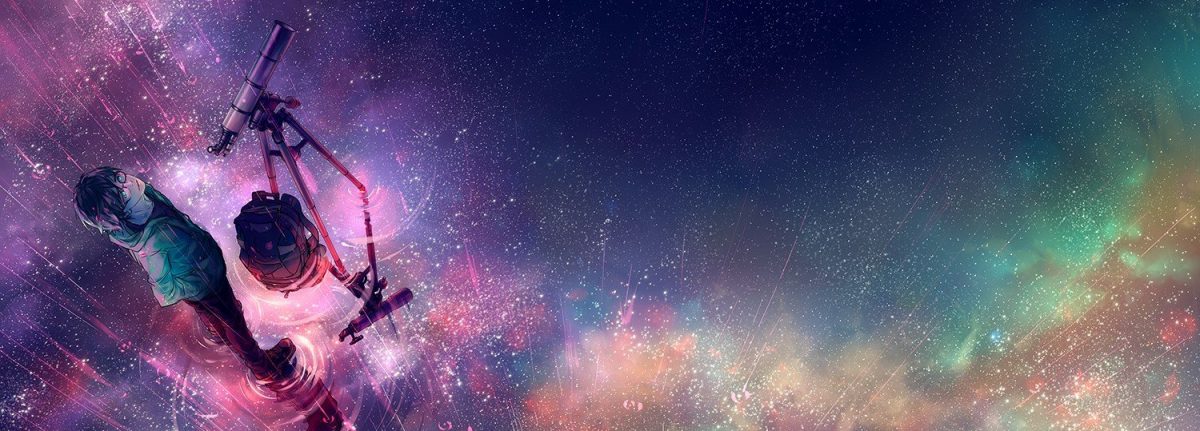
Image result for anime boy looking up at sky

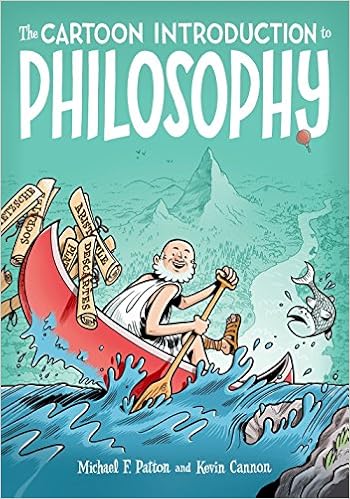
Graphic Novel Review – The Cartoon Introduction to Philosophy

I love reading books, and especially so, when I’m sick. Last week was one such example when I endured a severe throat infection, spending my days doing the bare minimum of work that was necessary, and whiling away my remaining time alternating between bed-rest and pouring through the pages of my latest purchase from Chapters, The Cartoon Introduction to Philosophy, by Michael F. Patton and Kevin Cannon.

Amusing as it may be, I often find my mind to be a lot more productive when I’m sick compared to when I’m active.


My discovery of this book was by chance and followed my efforts to purchase another philosophy text I have reviewed in the past in Luc Ferry’s A Brief History of Thought. Having read Ferry’s work, I had a pretty good idea of what to expect in The Cartoon Introduction to Philosophy, which as is obvious from the title, is a cartoon rendition of the great tradition of philosophy. Incidentally, it is also the subject of my first official review of a graphic novel, and what a wonderful read it was.

While the work may be considered moderate in volume, it more than makes up for this in the expansive content that it covers. In what serves as an engaging and entertaining read of the philosophical landscape, the humorous and instructive prose of Professor Patton dances alongside the pivotal illustrations of Kevin Cannon that ring true with the classic idiom, “A picture is worth a thousand words.”

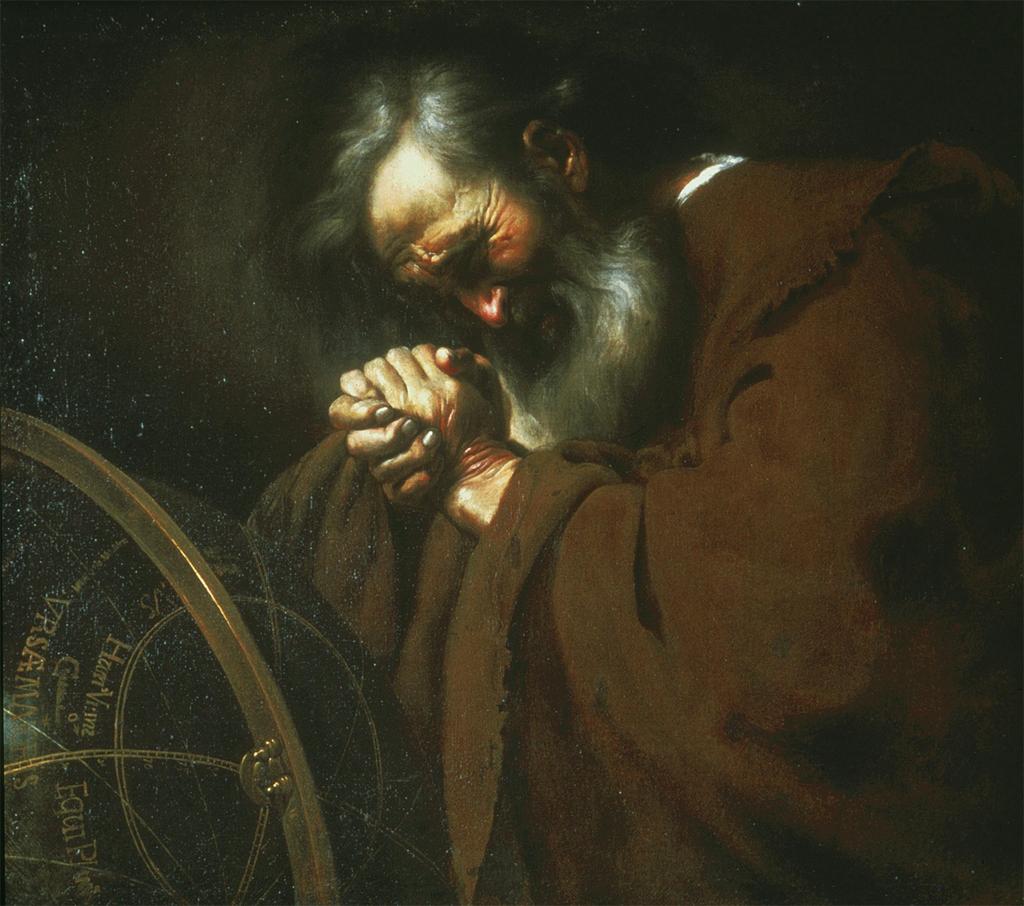
We are off to a great start as we get acquainted with our guide who is one of my favorites among the group of philosophers now considered as the pre-Socratics: Heraclitus.

“Upon those who step into the same rivers, different and again different waters flow.”

Nicknamed “The Dark One” for his philosophical style, Heraclitus was a pre-Socratic Greek philosopher whose emphasis was on change and impermanence being the defining characteristics of our world as opposed to stability and balance.

Paddling alongside him on a metaphorical canoe, we set off on our journey through the long, and winding “river of philosophy.” Our adventures begin in the land of logic where we study the rules of reasoning  and thought. Our travails are not an individual effort as we are joined by a fellow philosopher in Aristotle whose strict deductive relationships help us bridge our premises and establish the conclusion of our argument.

We loosen up a fair bit upon the arrival of a good friend from the future (there is a fair amount of time travel in the plot) in John Stuart Mill whose inductive reasoning paves the way for his generalizations about past events to predict the future.


Sometimes we can be deductively inductive.


Having learned how to assert and defend our beliefs, we look ahead to understanding what we know and how we know it. Our perceptions are brought to light through our skepticism that warrants a fundamental truth independent of all our senses in Descartes’ proposition that “I think therefore I am.” Descartes’ presumptions are subsequently set to a blank slate or the tabula rasa  in John Locke’s empirical divisions of our world’s qualities, which are themselves ultimately laid to rest and grounded in the idealism of George Berkeley where the world is nothing more than a collection of ideas

Plato’s cave is a wonderful allegory on the differences between perception and reality. 

This of course leaves us with no with no doubt that our perception of the world cannot be taken for granted, and honestly with more doubts than when we began our journey. Nevertheless, the dialogue continues as we traverse the realm of our minds, being as indecisive as we can ever be in finding our mind-body connection, before beginning to question our free will or the possible lack of one in the existence of God, and finally come to terms with our responsibilities and actions as we are driven by our knowledge of the world in ethics. 

In what is a smart, witty, and up-to-date account, The Cartoon Introduction to Philosophy is a perfect starting point for any uninitiated reader in the pleasures of philosophy. Patton and Cannon have done a great job in providing a work that is sure to inspire the love and wisdom of learning or “philosophia” in both young and old. By the time we flip through the last page of the novel, it is obvious that our once metaphorical “river of philosophy” has now metamorphosed into an ocean comprised of various personalities, creativity, and a heck of a lot of thoughts in what is a gloriously concise compendium of a field of study that is its own protagonist.

Return of the Lost Blogger

If I were to wait a few more months, I could cap my absence to one complete year since my last update. Incidentally, the subject of that last post also sets the stage for discussion on the progress I’ve made thus far. I left describing the steep learning curve that accompanied my aspirations to become a writer/comic book artist. A year down the road, those same aspirations are now ambitions that I’ve decided to fully commit towards.

Setting aside the myriad happy developments in my personal life, I struggled to consistently keep up with my writing and my art-work. While this was initially frustrating, it turned out to be a gift in disguise. My lack of consistency was largely due to the hectic schedule of my doctoral studies. Rather than spreading myself thin, I decided to focus on my immediate concerns while taking it easy on myself (which being as stubborn and obsessed as I can be about my goals, it took some time getting used to).

Those immediate concerns culminated, just a few weeks ago, in a closed-room event involving a three hour session of what was my PhD candidacy exam. I’m glad to say that I was able to pass what was ultimately a challenging but wonderful learning experience. Having completed what is often perceived as the greatest obstacle in doctoral studies (aside from the final defense itself), I can now look towards a clear-cut, and focused journey in scientific research over the few years before the final defense.

But, this journey is not all about science. While I was busy preparing for the candidacy exam, I took every opportunity available to build on my thoughts and set the foundations for my art and writing aspirations. Funnily enough, stepping away from my writing and art work helped me discover what I was missing and the skills I required moving forward.

That being said, I have continued to slowly develop the script for my graphic novel. Although the story is fully developed in my mind, a few more months may be required before I complete the first draft of the script. In what will ultimately be a long-term project, I intend to transform the script into art and a full-fledged graphic novel. These efforts will also accompany the development of a new writing project involving a story of the political genre that has been in the workings for more than a year.

Much of this is just the beginning of what will be the first step towards my determined pursuit of a career in writing, and possibly one day, in animation. Having found a common love in writing stories and communicating scientific knowledge, I’ve decided that the Pensive Reverie will remain an outlet where I can share my daily adventures in the artistic landscape. Additionally, I will be starting a new blog that will be more focused towards discussing topics rooted in science and research in an effort to support what may become my future day job as a science writer (at least until I’m able to establish a foothold on my artistic aspirations).

This is all I have for today, but I will return very soon with a new post!

Writing Comics and All That Comes With It…

Comics have always been a part of my life. Rolling back the years to my childhood at my hometown in Madurai, India, I can distinctly remember the excitement I felt every weekend awaiting the delivery of the weekly comics magazines that accompanied the local newspaper.

giphy

Siruvarmalar and Thangamalar, the literal translation beings “Kids’ Flower” and “Golden Flower,” provided a mashup of a children’s activity book mixed in with folktales, fables, and short stories presented in the format of a comic book.


(Left) Sample cover of a Siruvarmalar  issue, and (Right) a sample comic strip from within detailing a mythological tale of the Hindu God Shiva. The characters observed are of my native language, Tamil.  

I would spend hours on end pouring over the enormous collection of said magazines that my grandfather stored away in his closet, and that would be a weekend well-spent.

My family’s departure from India to Egypt would result in a break of sorts from comics and my full-fledged introduction to their animated counterparts in cartoons and anime. A few more years down the road, and following the commencement of my post-secondary studies at university, I would rekindle my love for comics in Japanese manga, and other Western staples including DC, Marvel, and an assortment of graphical novels.

As an avid comic-book fan and as an aspiring writer, the goal of kick-starting my own comic-book had always been on my mind. Now, two weeks into writing the script for what I hope will be my first graphical novel, I’ve been thoroughly enjoying the diverse challenges that seem to crop up on every front as I try to bring my story together. A large part of these challenges originate from my unfamiliarity in tackling not only a new genre of writing but also a new medium.

giphy (1)
It’s a steep learning curve, but one worth embarking on. 

So, what have I learned so far:

1. Writing a comic is not exactly the same as writing a novel. They say a picture is a thousand words. That has become the driving motto of my work thus far, being that I spend a lot of my time imagining the outline of my story before settling down on the script. It is like constructing a silent motion film in my mind.

2. Attention to detail is important, but so is also being concise with what you want to convey to your readers. In writing the script, I found my greatest challenge in getting used to the fact that my dialogues would remain in a world separate from the art work that will serve to provide the emotions to my story. Thus, I had to keep my dialogues effective, concise, and kind of resonate with the emotions I wished to convey in the scene.

3. Writing a script may seem relatively easy ONLY at the start. This was somewhat of a lesson in humility. I began with lofty expectations, assuming that I would be able to complete the script to my comic over the period of a weekend. Boy, was I wrong! Let’s give it at the least till the end of summer, or maybe the end of the year.

4. Don’t overthink. Every writer has a quirk that makes them unique. Overthinking may be a popular category for many writers, and I can certainly be counted in that special group. It’s difficult but sometimes the best way to go about writing a script, not to mention a story in general, is to not overthink to the point where you hinder your own writing.

5. Temper your expectations. This is more of a personal challenge, in that I’ve always been the greatest critic of my own works to the point that my expectations get heavier and heavier. In writing my script, on several occasions, I had to step back and tell myself to relax and not place lofty expectations on myself, especially when it was my first outing in a new medium. Most importantly, I’ve learned my lesson in patience and perseverance. 

What I’ve said thus far may make it seem that resultant process of writing my novel script has turned me into

tumblr_mi2fwmDfza1ql41ypo1_500

The reality is quite different. As frustrating as the process can be, I’m relishing in the challenge, and it has only motivated me towards my goals. In 2 weeks, I have written 2 chapters, and that’s great while trying on one hand to balance my PhD studies. I hope to keep up the pace, maybe even go a little faster, and keep the ball rolling. Once the script is done, my efforts will be fully directed toward the necessary art work, but that’s a story for another day!