Embracing Differences: Lessons from My Brother’s Husband – Manga Review

Life is strange. One moment, we find ourselves surrounded by family and friends. These are people who we believe have our best interests at heart, provide valuable counsel on our beliefs and convictions, and accept us for who we are and who we wish to be. But, now and then, life presents a situation where those very people seem like strangers. In their place, someone else comes along. Someone we have never met before. Someone who, with no immediate cause or reason, and by the simple honesty of their actions, becomes family.

This is the reality that hits Yaichi, a work-at-home suburban dad in contemporary Tokyo. Formerly married to Natsuki and father to their young daughter Kana, Yaichi’s life takes a turn when a hulking Canadian named Mike Flanagan arrives at their doorstep. But Mike is no ordinary person. He is the widower of Yaichi’s estranged gay twin, Ryoji. What follows is a melancholic and beautiful story, authored by the critically acclaimed Gengoroh Tagame, that sheds light on the highly closeted Japanese gay culture and how the next generation can positively influence its future.  

Confronting Differences

For Yaichi, Mike’s arrival is akin to opening Pandora’s box. Hidden within its depths aren’t sickness, death, and misfortune, but Yaichi’s own inhibitions, fears, regrets, remorse, and apathy. As the story unfolds, Yaichi wrestles with these emotions in extended inner monologues, amid moments that highlight the disruptive influence of Mike’s presence.

These monologues are brutally straightforward and describe the void that separates Mike’s world from Yaichi’s and vice versa. Their relationship, in its infancy, involves a fair share of prejudices and veiled preconceptions that Yaichi holds about Mike’s identity as a gay man. Yaichi feigns ignorance as a coping mechanism. While he is aware of his personal inhibitions, Yaichi takes the easy way out, rather than coming to terms with his feelings. Mike’s arrival forces Yaichi to face his inner demons.

It is a rocky start. Both men are seemingly lost on how to proceed with their relationship as in-laws. On one side, we have Yaichi wrestling with his twin’s past. On the other hand, we have Mike, who wishes to complete his family. It is like an awkward tea party, until Kana comes along.

Our Children Are a Reflection of Us

“Daddy has a brother?! Men can marry each other?! Is that even allowed?!”

“Well, it’s like…In Japan, it’s not allowed, but I guess it’s possible in other parts of the world.”

“Huh? That’s weird. It’s weird that it’s ok over there, but not here.”

Growing up, we are taught about the systematic rules that govern our day to day lives. Somewhere along the way, we lose our ability to question and engage, as well as our capacity to change the world dynamically. Early childhood remains an exception. Filters are meaningless to children. They don’t see the world the way we do as adults. It is their greatest strength, and it is what makes them so damn endearing. It is also for this very reason that we adults have to keep ourselves in check. Our behavior, worldview, and the answers we provide to their questions are crucial. It is not an easy task, and in many cases, it is through our eyes that our children’s worlds often lose their colors.

Yaichi is cautious in his approach to raising Kana. Mike’s appearance throws a wrench in what is a mistakenly ignorant lifestyle. Unlike her father, Kana has no inhibitions and becomes immediately attached to her Canadian uncle. Her curiosity and willingness to ask complex questions often catch both men off guard. At the same time, Kana’s innocence guides the two men to have the conversations they need. Gradually, Yaichi begins to change, and as he does, he begins to recognize the weight of his responsibility as a father. He understands the burden he has inadvertently placed upon his daughter. Kana never needed protection from Mike. Rather, he had been protecting himself from coming to terms with his past.

Chasing Shadows

There is one more thing children are great at, and that is calling out adults for their double standards. Especially true when it is about making excuses for ourselves. Kana does the same to Yaichi, setting the stage for the latter to accept his shortcomings as a brother and a father. This ultimately enables Yaichi to seek redemption.

With Mike for company, he relives the childhood memories of his brother; memories buried deep in his heart. The resulting journey is one of fulfillment for both men and something that brings the whole family together. Yaichi’s redemption operates on multiple levels, illustrating how every individual is a product of various threads of influence, including family, cultural stereotypes, religious beliefs, and traditions. On the other hand, helping Yaichi through this process also ensures that Mike fulfills his husband’s wish for the latter to meet his family. From being reluctant about Mike’s presence in their lives, by the conclusion of the story, Yaichi feels encouraged by his company. Finding happiness in their differences, he openly states that Mike is a part of his family.

That pieces together the final message of the story. In this world, our lives are a transient phenomenon. There are very few who we get to meet, know, live with, and who live for us. In the short time that we have together, rather than dividing ourselves over our differences, let’s live with acceptance.

Gengoroh Tagame

The author of dozens of graphic novels, Gengoroh Tagame’s past works have primarily catered to the adult gay manga audience. My Brother’s Husband is his first all-ages title and an Eisner award-winning title at that. In a dramatic change from the graphic depictions of hypermasculinity, sadomasochism, and sexual violence common to his works, Tagame relies on various cultural motifs to elevate and distinguish the polarizing and heartbreaking nature of life in a highly closeted Japanese gay culture. My personal favorite in My Brother’s Husband involves varying cultural interpretations of otherwise structured sushi dishes to relate to Yaichi’s changing perception of Mike.

My Brother’s Husband is a heart-warming story describing how familial connections can originate from surprising corners of the world. The world is not as big as it used to be. Social media has contributed to this, and we are all caught up in its rapid frenzy, some of which is not entirely positive. My Brother’s Husband switches up the pace. It is heartbreaking, yet hopeful. It is painful, yet healing. It asks us to slow down and look around. It asks us to not throw our judgments upon others so haphazardly. It asks us to be willing to have a conversation. All this and more, in a beautifully rendered story that emphasizes the importance of compassion.

Monster Party in the Monsterverse Titanthology

I am a huge fan of Godzilla (Gojira) and a sucker for anything that involves giant monsters causing widespread destruction and havoc. We can add giant robots to that list as well.

Needless to say, I was hyped when the monsterverse hit the big screens with: Godzilla, Kong, Godzilla: King of the Monsters, and Godzilla vs. Kong (GvK). Godzilla: King of the Monsters is my absolute favorite as we get to see most of the franchise players of the monsterverse play a role in the story. An added bonus was the unforgettable experience at the theater and the sight of my wife, who grew up watching Godzilla in Japan, well up in tears from pure nostalgia.

I’m not ashamed to admit it, but it all started with this 1998 abomination for me. I found my way to the real material after that.

Post Godzilla vs. Kong in 2021, amidst the pandemic hitting its peak (and continues to go strong), I was craving for more monster material to digest.

I was very happy that they were able to recreate the epic “eat your vegetables” moment in Godzilla vs Kong.

I eventually found out that Legendary Comics did exactly that in their release of the Monsterverse Titanthology graphic novel. That is what I will be reviewing today.

The best part of the Monsterverse Titanthology is that it perfectly caters to new readers of the Monsterverse as well as fans who wish to discover the backstories of the two titular characters holding up the franchise: Godzilla and Kong. The Titanthology was released in June 2021 but its contents actually bring together previous released graphic novels (that slipped under my radar) in Skull Island: The Birth of Kong (2017) and Godzilla: Aftershock (2019) in one volume.

The tone and pacing of both stories vary. This is a positive as it keeps the reader hooked moving from one story to another in what is essentially a shared universe. Yet, despite the shared universe, there is also a lot of contrast in the backstories of Godzilla and Kong and if you are a fan of stories that reference and work off of inspirations from ancient mythology, the Titanthology is a perfect treat.

One of the best aspects of the movie series was the world building. There were so many cool elements such as the hollow earth and ancient civilizations interspersed in a story that is grounded, not by the pure spectacle of the monsters, but by the human experience when confronted with this reality. The movies had their share of flaws but when it came to pure entertainment factor they ticked all the boxes for me.

Now, while the movies could only show so much, the Titanthology provides a lot more by building on the mythologies and worlds introduced in the movies while spinning them within various cultural subtexts. This makes for an intriguing and interesting read made even better by incorporating a journal or mystery file element to the stories. Altogether, the Titanthology adds to the history of its titular monsters and their motivations, prior to their appearances (in the films), and their climactic confrontation.

With that said, for any Godzilla or Kong fans out there, this is an anthology you don’t want to miss. The Monsterverse is still going strong with two television series concurrently in development and hopefully more movies too! A few more graphic novels have also been published since the release of the Titanthology including GvK Kingdom Kong and GvK Godzilla Dominion which serve as specific prequels to 2021’s Godzilla vs. Kong, so make sure to check them out as well.

Now, if you will excuse me, I have a few buildings worth of monsterverse resources to pillage.

Reviewing Mercy & The Fade Out

It was in 2020 that I had my last in-person comics haul at Warp 1- the friendly neighborhood comics and games store at Old Strathcona -before pandemic restrictions set in.

Little did I know that a year would pass until I actually got to read the comics I had purchased, thanks to an onset of events like the pandemic, working from home, completing my doctoral studies, looking for employment, and becoming a father.

As my baby daughter slowly settled into a manageable routine, I found pockets of time to catch up on all the reading I had missed out on, starting with,

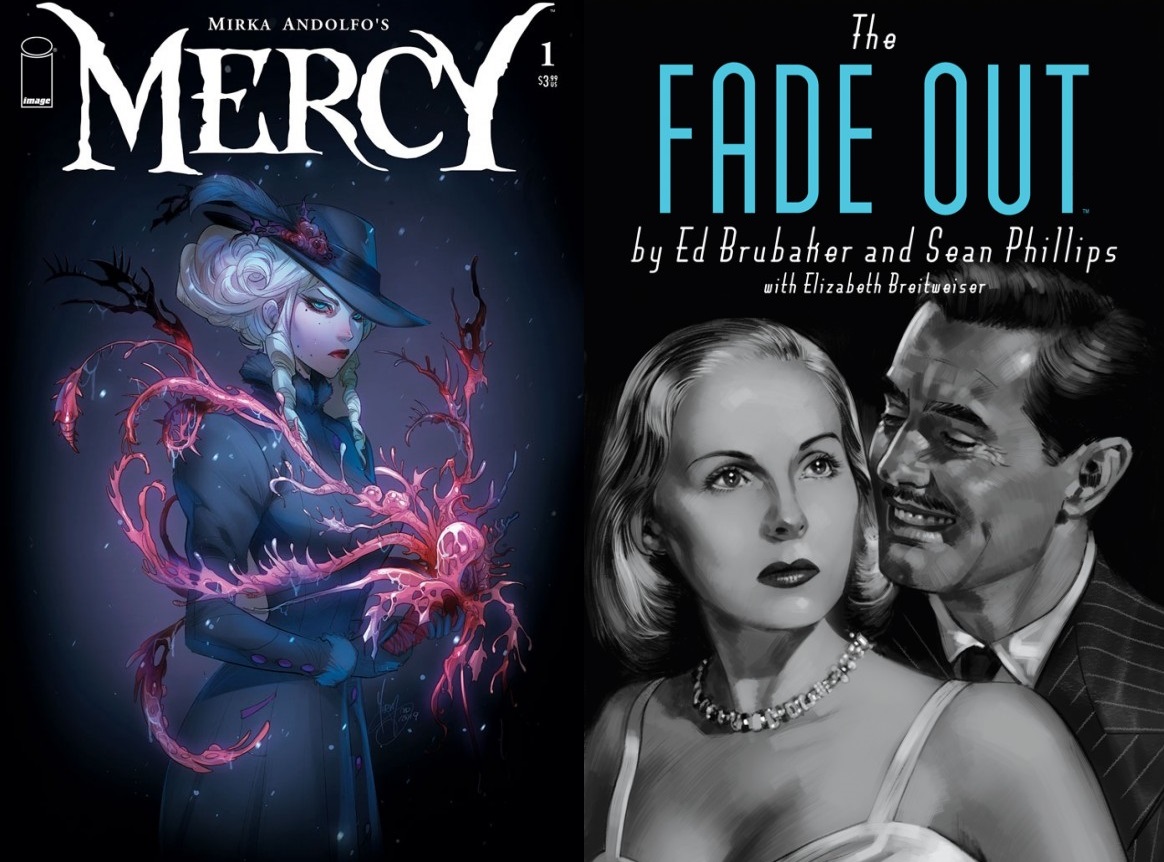
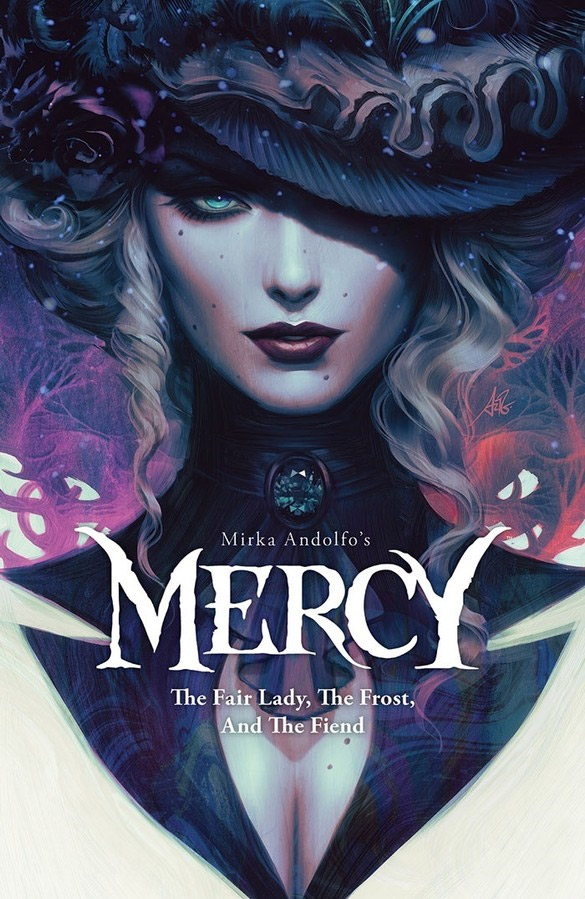
Mercy – Mirka Andolfo

Any surprise on the tone of the story is thrown out the window as Mirka Andolfo’s graphic novel begins with a bang. Monsters are on the menu, and they are on the hunt for humans. But, these monsters are unique as they are hosted by select humans and are fighting for their own survival.

The prelude sets the stage for the characters in the present timeline, many of whom are haunted by events of their past that may or may not have something to do with the origins of these monsters. Wracked by guilt, these characters spend their present lives trying to reconcile their feelings with their actions in the past.

On the opposing side, we have a potent mix of personalities between Lady Hellaine, the titular character with a secret that she must protect, and Rory, the innocent little girl who believes that Hellaine is her mother. Set within the streets and tight-knit community of Woodsburgh, a small mining town close to the Canadian border, Mirka Andolfo’s story treads the path of the gothic horror genre with the town being victimized by a heinous creatures killings its citizens. The story revolves around finding the connection, if any, between these disturbances and the engimatic Lady Hellaine who has just arrived in Woodsburgh.

While the plot is a little predictable, the art work and the glorious color palette make up for the flaws. Slap in some religious symbolism, and a greater focus on the monsters we confront in human nature as opposed to the physical monsters themselves, Andolfo’s story provides a surprising and refreshing ending that leaves one wanting for more. It is essentially a horror story that questions what it means to be a monster.

The six editions of Mercy have been collected into one volume Mercy – The Fair Lady, The Frost, and The Fiend available in stores and online. If you are a fan of Victorian gothic-horror, this is one series to check out.

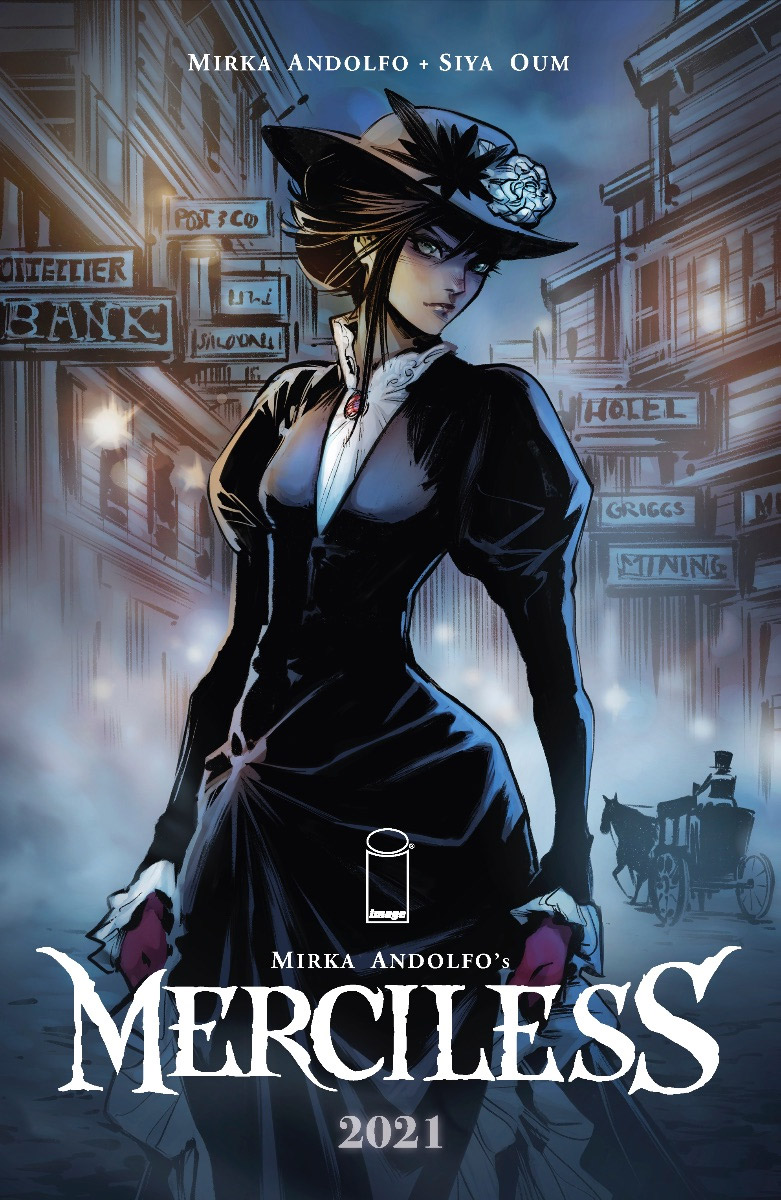
The sequel Merciless is set to arrive in 2021, though there may be delays due to the global pandemic.

My personal rating: 8/10

Shifting from the Victorian gothic-horror set piece, and moving forward in time from the late 1800s to the mid-1900s, our next story brings us to the streets of Hollywood in,

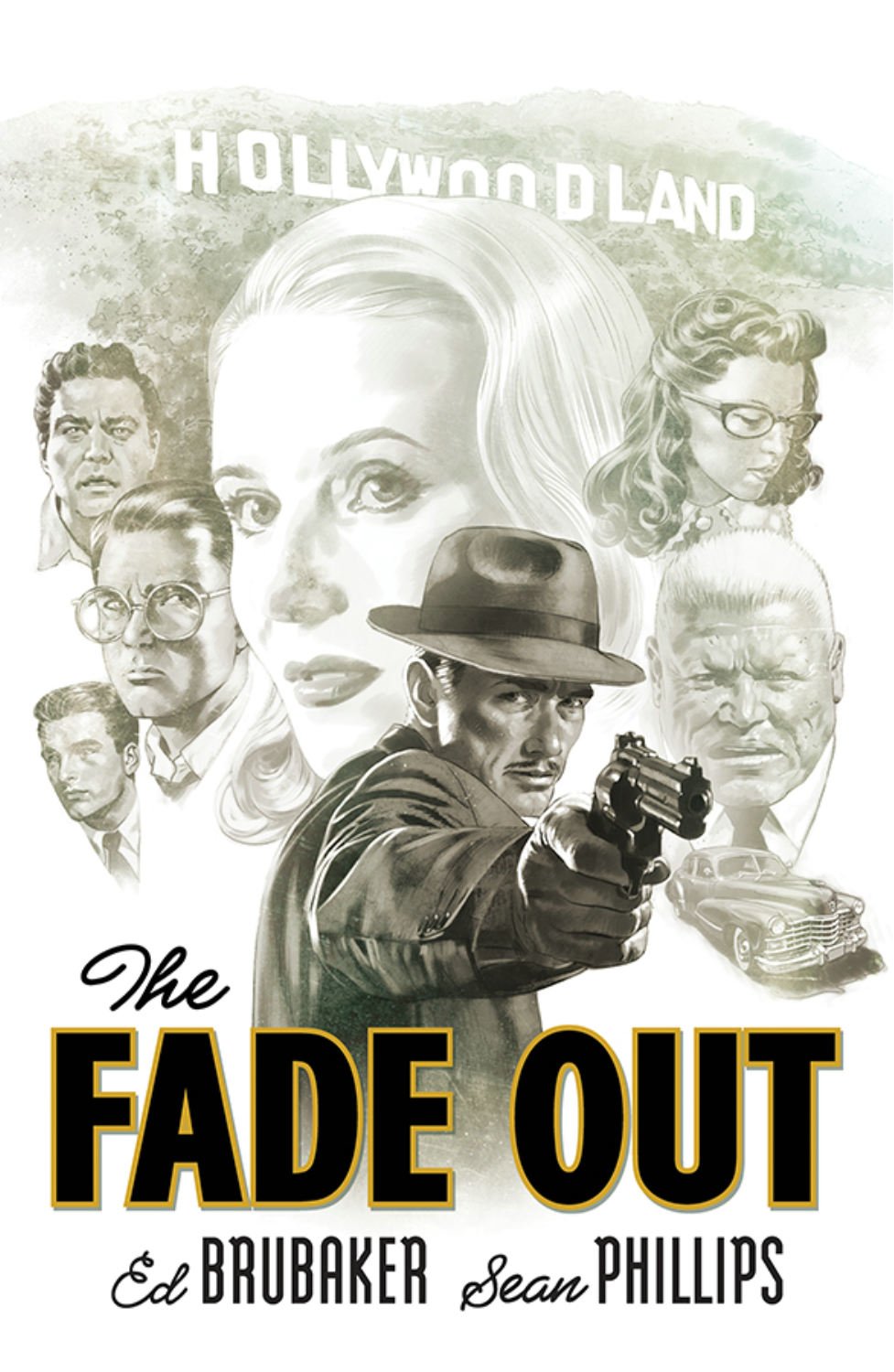
The Fade Out – Ed Brubaker, Sean Phillips

I love film noir so I didn’t hesitate in picking up this title, and the graphic novel delivered in all departments.

Enter Hollywood, 1948. Our main character is Charlie Parish, a writer stuck in the sets of a noir film that is plagued by endless reshoots in the aftermath of an up and coming starlet’s death. It isn’t a normal death by any means and suspicions abound among the cast as to who is responsible.

The Fade Out is unlike the usual mystery plot and there is much more to it than the generic murder story. What I really admired about this graphic novel was the research done by the writer to capture the atmosphere of Hollywood in 1948. Real life background events such as the Red Scare, a widespread fear for a potential rise of communism, World War II, and the Pearl Harbor bombings continue to torment the American psyche and are described near perfectly through Brubaker’s characters. Film is instrumental in allowing the public to immerse in a happier world, and the plot unravels much like a film within a film.

We, the readers, get to indulge in the underbelly of the film industry and witness its darker sides. All of this through the literal and figurative glasses of the main character Charlie Parish, who is somehow connected to the death of the starlet. Charlie himself is unable to recollect his connection to the murder. Feeling morally obligated to get to the bottom of the mystery, and disgusted by the industry’s attempts to sweep the story under the rug, we follow our disgruntled writer on his journey to discover the truth.

What makes the story click is not the usual cliché of solving a murder mystery. Rather, it is the reality of how vulnerable and powerless the common can be facing against authoritative institutions that determine and are crucial to one’s way of life. Charlie faces this very obstacle, fighting against the industry that is responsible for his paycheck, and the decision he makes in the end confronted by this oppressive power leaves the reader stunned.

The Fade Out is one graphic novel you don’t want to miss.

My personal rating: 10/10

Meeting Tintin at the Inn

Every now and then when I visit the nearby used bookshop in my neighborhood, Wee Book Inn, I am lucky enough to come across an awesome find. Amidst the crazy slog that was my thesis writing, it was equally important that I maintained my mental health. Taking a walk around the neighborhood helped a lot in that aspect, and of course visiting the bookstore (after a period of closure due to the pandemic) was an additional bonus.

This time around, my little adventure to the store, led me to a reunion with a childhood friend,

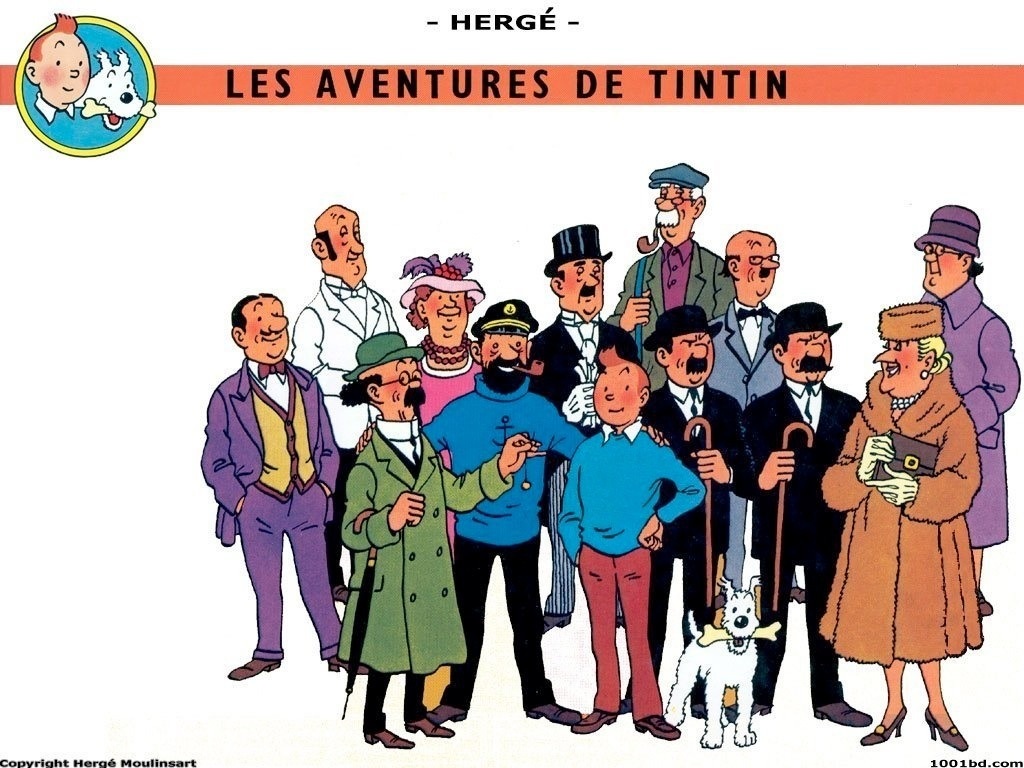
Image 1 - The-Adventures-of-Tintin-Vol-1-Tintin-in-Americ

My first encounter with Tintin followed his adventures on a TV screen rather than on print. On the occasional trip to Chennai, the capital state of my home state Tamil Nadu, India, we would transit at my parents’ favorite go-to hotel at one Hotel Maurya. (It is still there to this day!) This would provide my younger counterpart the luxurious opportunity to watch cartoons on cable TV (something that we lacked back at my home). It was on one such occasion that I got to watch an episode of The Adventures of Tintin TV series.

I was hooked! But, it wasn’t until a few years later when my family moved to Egypt that I got to read the actual comics as part of my French language studies during middle school. Given this history, it didn’t take much persuasion, on my part, to purchase this particular copy from Wee Book Inn which was very fresh in state, despite being used.

In the days that followed, my breaks from writing my thesis largely involved falling back into Tintin’s world. Among the three adventures in this book, I would have to say The Blue Lotus, covering his adventures in China during its period of invasion by Imperial Japan, was my favorite. Reading Tintin’s adventures as an adult has also provided fresh perspective on how the material has aged with time. Though there remains cultural and ethnic stereotypes that are glaring under the current atmosphere of societal norms, these stumbles are waylaid by the continued appeal I feel for Tintin in its primary themes of friendship beyond borders, loyalty, adventure, learning, honor, and compassion.

Tintin and Chang’s friendship is representative of camaraderie beyond borders. Chang’s character was indeed based on Chang Chong-Jen, a real life friend of Hergé.

The comic book medium also provides the reader the choice to build beyond the world provided by the writer/artist in their imagination of how they interpret the main characters of a work. While Tintin and his world may reflect the knowledge and views of Hergé during the era of the early 1900s, we as readers can build our own perspective on the famed protagonist while also learning from the maligned visions of the world he occupies. While one may also argue extensively about the political events referenced in Tintin’s adventures, the takeaway message from Hergé’s work is on the irreplaceable value of human compassion, the importance of friendship, and the honor in standing up for the afflicted and those who you love.

Reading Tintin as a kid widened my view of the world. Having experienced my personal share of racism and bullying, in my teen years, Tintin certainly was one of my heroes. While he seems ordinary at the outset, Tintin’s wits, quick thinking, honesty, compassion, kindness, and all-around good nature make him a hero of timeless values, and one that serves to be inspiration. I certainly was inspired by him as a kid. Still am to this day. His adventures, uncanny luck, and ability to solve mysteries is also something that I’m sure all readers would love to have.

Nor to forget, Snowy is that awesome and cute companion we all want!

I would later find out that this particular volume is the first of eight in a set, which is now in my wish list. While the complete set has a high price tag of $200, it is a must-have collection for Tintin fans. Alternatively, one could also go for the DVD Box Set collection of the TV series which follows the comics by the panel, and lastly, The Adventures of Tintin movie inspired by three volumes of the Tintin series – The Crab with the Golden Claws (1941), The Secret of the Unicorn (1943) and Red Rackham’s Treasure (1944) is an entertaining watch and available on Netflix and other streaming sites.

William Erwin Eisner – A Perspective

Before quarantine became the new norm, there was a store a few minutes from my apartment that I would frequent on a weekly basis called Wee Book Inn.

A used bookstore, Wee Book Inn was my go-to destination whenever I fancied a random late night walk and on many occasions, casual dates with my partner. (The cat is also awesome.)

Apart from their diverse collection of literature, I was drawn to the venue as they also offered a healthy collection of comic books, often in very good condition, for their modest pricing. Needless to say, I’ve been a ravenous customer, and have trounced on any opportunity to land some good titles. In my efforts to explore the graphic novel medium over the last few years, Wee Book Inn has served as a wonderful resource for inspiration.

My most recent purchase of a collection of William Eisner’s graphic novels was the figurative equivalent of hitting jackpot. Prior to the purchase, I had only ever heard the name “Eisner” as part of the “Eisner Award” winning icon that graced the covers of popular and successful comic books. It wasn’t until after my discovery of the graphic novels that I realized Eisner was a prominent graphic novelist himself (I agree, it’s kinda stupid that I didn’t make this connection beforehand).

Will Eisner - Wikipedia

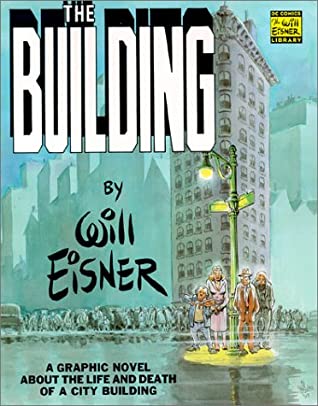
So far, I have finished reading two of his titles: Life on Another Planet and The Building. Eisner’s intricate penmanship on top of his unique presentation of panels and sequential storytelling immediately caught my attention. Much of Eisner’s graphic novels were published in the late 1970s in what have been early examples of the American graphic novel medium. In reading his works, it was easy to recognize the foundational aspects of Eisner’s penmanship in modern day comics and graphic novels. His style was reminiscent of the weekly newspaper cartoon strips I had read during my childhood in India.

It came as no surprise to find out that Eisner was also one of the earliest cartoonists to work in the American comic book industry with his earlier series The Spirit (1940-1952) setting a standard in experimentation of content and form in the graphic medium.

It was also easy to recognize the repetitive but endearing theme that characterizes much of Eisner’s works: humanity. Eisner’s graphic novels focus on the human psyche and its vulnerabilities through characters whose worlds seem to be a mote of dust against the larger order that is life.

1209837._SX318_

In Life on Another Planet, knowledge of first contact with an alien civilization becomes a reflection of tragic human foibles expressed in the collective and individual responses of governmental organizations, religious pariahs, and all the way down to homeless and impoverished individuals.

Meanwhile, in The Building, Eisner does a reverse sweep in humanizing a building through its relation to the lives of four different characters ranging from an anonymous citizen driven by guilt for the death of a child, a woman trapped in a marriage of convenience, a real-estate developer obsessed with aging, and an amateur musician whose music accompanies the drama of the former trio.

1535935._SX318_

Under the light of current circumstances in our world, the events of Life of Another Planet  were eerily relatable. The same could be said of The Building though the readers’ relationship to the characters originate from our personal memories toward past experiences and attachments in life (be it another person or an artifact).

Eisner wrote several graphic novels until his death in 2005. Many of his novels  converged in relating the history of New York’s immigrant communities, particularly Jews (elements of which is very notable in The Building). I was also lucky enough to purchase Eisner’s Graphic Storytelling and Visual Narrative where he details his thoughts as a lecturer about the craft and uses of sequential art.

As a student of the graphic novel medium, and as an ardent reader, I would highly suggest Eisner’s works to anyone interested in well-balanced examples of the art of story-telling.

5-Minute Dungeon & Kittens in a Blender – Crowd Pleasers – Board Games Review

I have been an avid board games fan since childhood. My father introduced me to the classic collection of board games including Chess, Snakes & Ladders, Checkers, Ludo etc. These board game sessions would often involve all the members of my family. Thus, it comes as no surprise that my favorite genre of board games would be those that were easy-to-play crowd pleasers.

In that category, I have to give a shout out to a good friend and colleague of mine who introduced me to 5-Minute Dungeon & Kittens in a Blender, two spectacularly fun board games that I intend to review today!

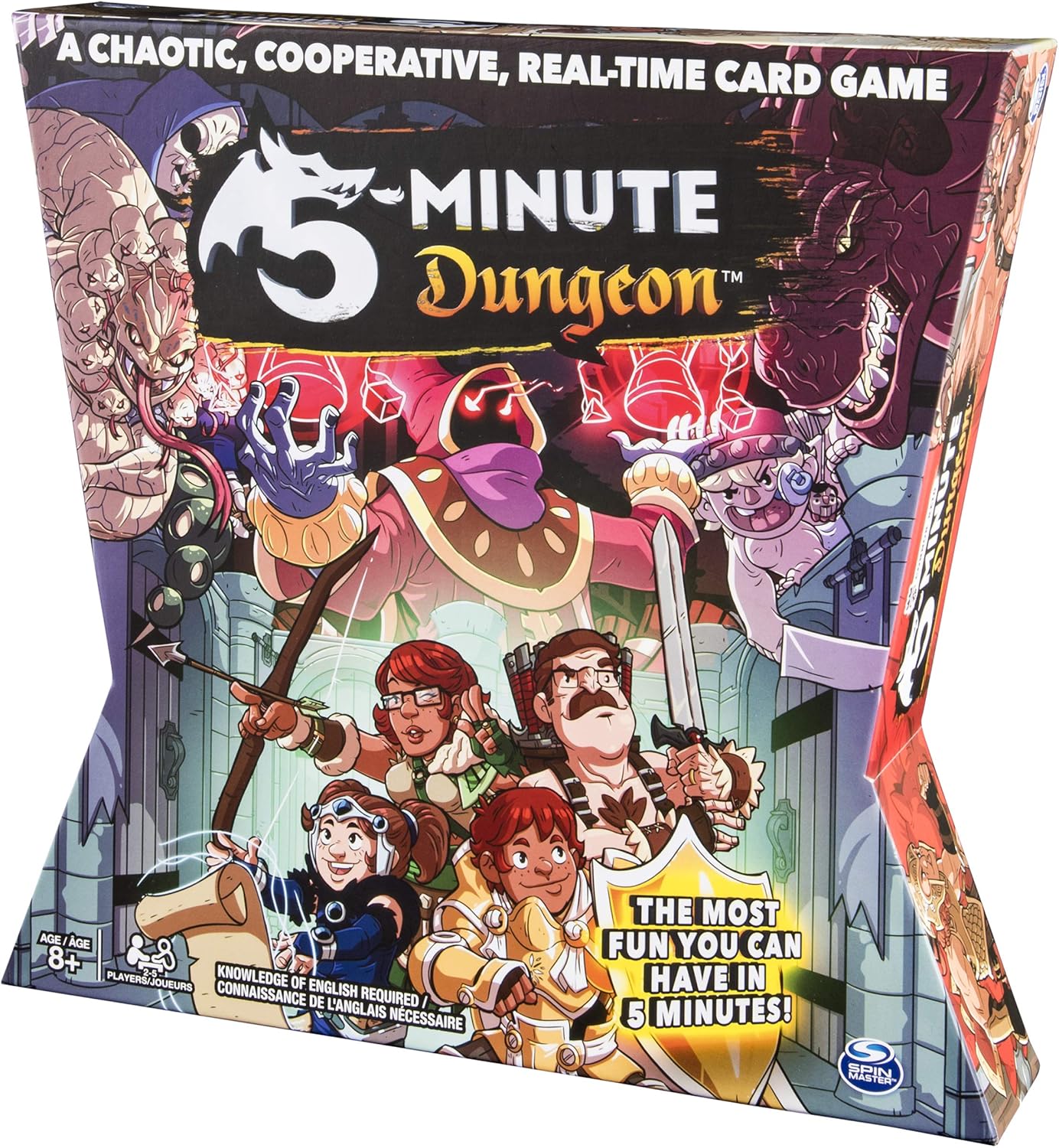
5-Minute Dungeon

Image result for 5 minute dungeon

5-Minute Dungeon is a co-op, real-time card game, and a chaotic one at that where players are provided five minutes to defeat the monsters and boss of a randomized dungeon and escape.

While this may sound like any other “beat the monster” game, what makes 5-Minute Dungeon fun is that communication and teamwork are critical to the survival of the party especially when there’s no actual time to form a plan or predict the dangers that may lie ahead. The randomized dungeon monsters prove a strong obstacle where one may even completely fail to reach the boss level. The game involves a lot of thinking on your feet.

If I were to put the two scenarios that are usually provided for those interested in playing the game:

(1) The smaller your party, the less randomized your obstacles become, the easier it is to strategize on your feet under a time limit, with the caveat that crossing certain obstacles eventually become an impossibility (without a strong hand in luck).

(2) The larger your party, the more randomized your obstacles become, the more difficult it is to strategize on your feet under a time limit, with the caveat that it is easier to succeed in the obstacles, even though failure is a persistent presence at every turn.

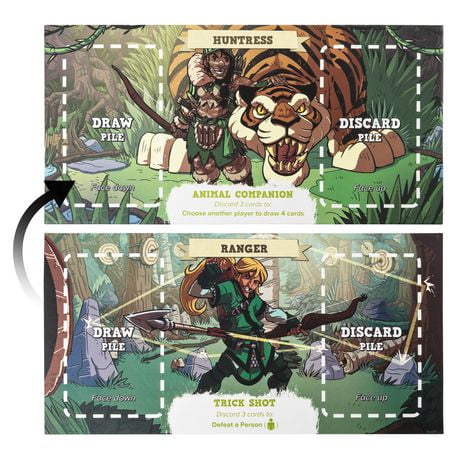
Two of the ten character slots that can be assumed by players,  and each with their special skills. 

The gameplay is quite simple. Players generally assume the role of one of ten heroes, each holding special abilities and cards. Once the timer (5 min. limit) starts, you and your motley crew of wizards, thieves, and warriors etc. race to defeat all the monsters inside the dungeon.

Defeating a monster involves matching symbols from the hand with ones on the monster’s card. If you are successful in clearing the monsters in the dungeon, the game is by no means over, as a powerful dungeon boss awaits in the end. The players must then use their remaining hands to defeat the dungeon boss. If your hands fall short of the conditions to beat the boss, you restart the dungeon. Thus, you have to think and communicate with the other members of your party to have a balanced hand leading into the final battle. After the first boss is defeated, your adventures continue onward in the next dungeon and so on to the second boss. The timer is reset at each cycle, and every subsequent dungeon gets harder (there are a total of five dungeons to clear).

The game is pure fun, and very entertaining. Repetitive failures at clearing a dungeon do not lower the entertainment factor thanks to the randomized nature of the obstacles (via the shuffling of the cards). Finding balance within your party is mighty important. While taking inspiration from expansive RPG board games like Dungeons & Dragons, 5-Minute Dungeon provides its own twist in a faster, and chaotic gaming environment. Just beware that the game can turn into a shout-fest the longer it lasts and the larger your party, so make sure to have a warm drink nearby for a game that may inevitably result in a sore throat from all the laughter and shouting.

Kittens in a Blender

Image result for kittens in a blender

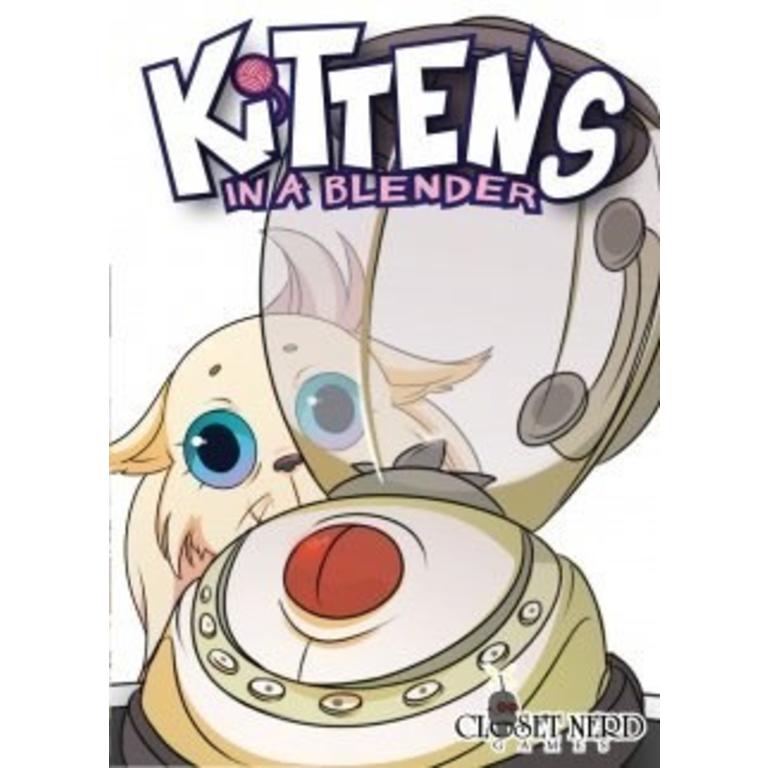
This is a twisted game especially if one considers themselves a kitten lover. Another fast-paced card game, Kittens in a Blender, is pretty much exactly how it sounds and has players working to save all their own kittens from a gruesome ending. Victory is defined by saving one’s precious litter of kittens but can also come with the caveat of losing a few to the blender! The objective is to save one’s own kittens while sending your opponents’ kittens to the blender.

The game-play is very simple with players taking turns to move, switch, and discard their kittens, as well as their opponents’ either to the doom they await in The Blender, the temporary neutral-zone that is The Counter, or the safe hamlet of The Box. What makes it interesting is that players can just as easily transfer their opponents’ kittens from The Box to either The Counter or The Blender while simultaneously saving their own. This is pretty much the aggravation factor in the game.

Blend cards can be used to destroy the kittens in The Blender, saving the kittens in The Box, and moving the kittens on The Counter into The Blender (which can be countered by another player’s Blend “Pulse” card). All in all, you get to direct your hatred toward the opponent of choice or just go all out and wreak havoc on just about everyone including your own kittens.

Alongside a variety of other cards including “Kittens in the Blender”, “The Box to the Blender” and many more there is a compendium of actions that make the game a hoot. The game ends when all 16 of the Blend cards have been played. Players count the number of saved kittens (+2 points) and blended kittens (-1 point), with the highest score being the winner.

Best of all, the box states, “A portion of the proceeds will be donated to a no kill cat shelter.”

For those board game fans among my readers, I would highly suggest these two games for an entertaining night at home or at your nearest board-game cafe.


Book Review: The Dark Lord Trilogy

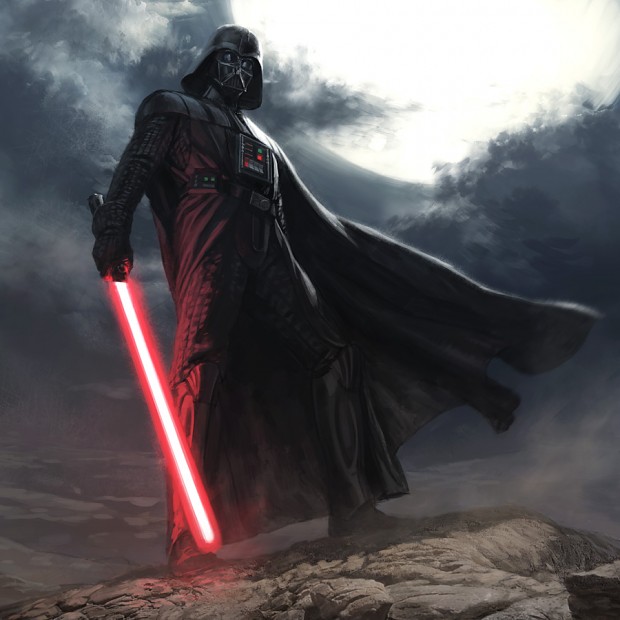
My first experience of a Star Wars movie was Return of the Jedi. I was quite young, and with little to zero knowledge of the English language. Nevertheless, George Lucas’ creativity, and the seemingly expansive world of Star Wars with its magnificent Star Destroyers, exotic planets and alien species, the imposing Darth Vader, and the pure awesomeness of lightsabers got me hooked. I have remained a fan of the franchise ever since.

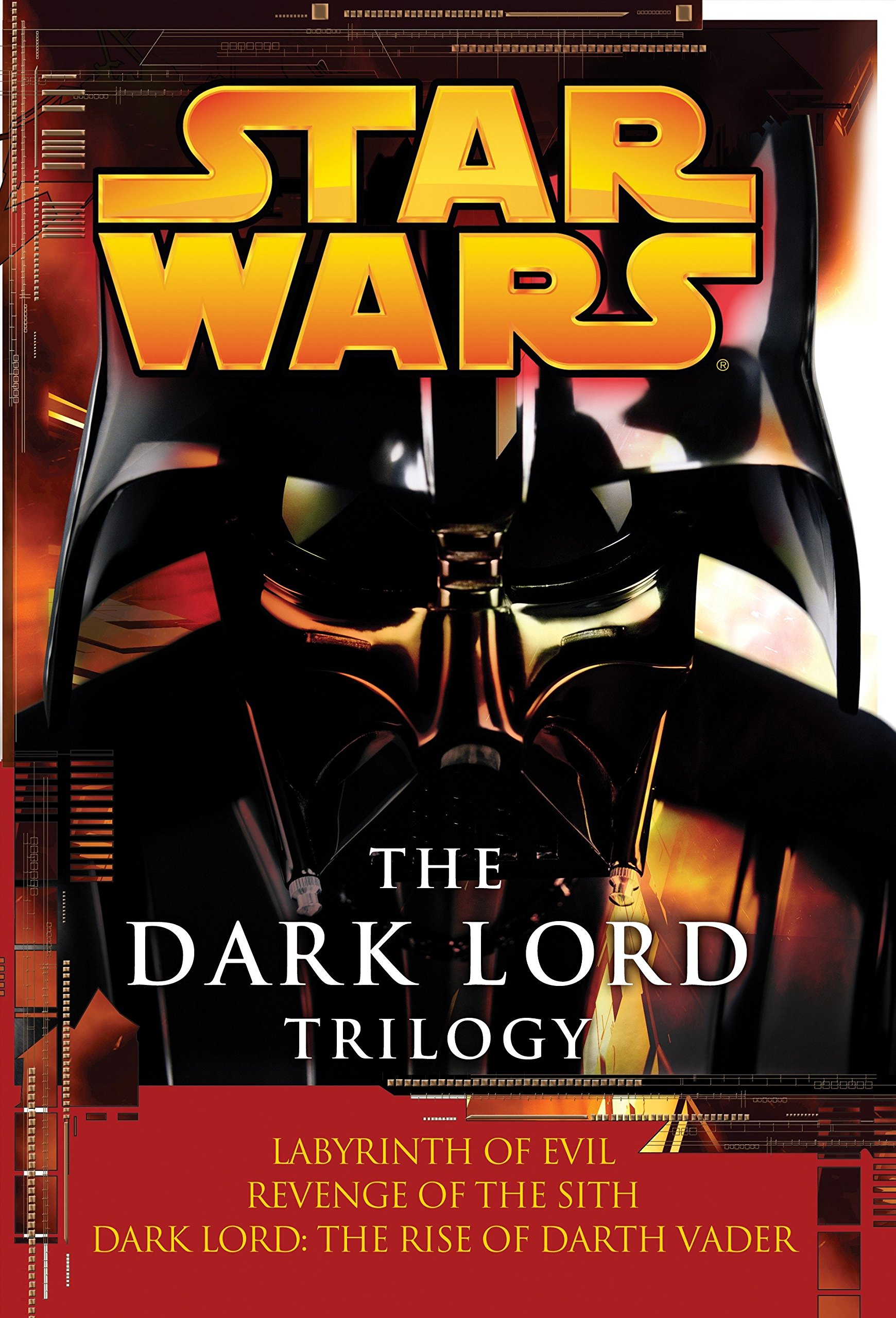
Star Wars The Dark Lord Trilogy was an engrossing experience that revisited events surrounding my favorite movie of the prequel trilogy, Revenge of the Sith. The book is in fact a combination of three novels: Labyrinth of Evil, Revenge of the Sith, and Dark Lord: The Rise of Darth Vader.

While the book is not necessarily considered to be fully canon (excluding the novelization of Revenge of the Sith) in the present state of the franchise, the volume as a whole offers a unique perspective for the reader into the struggles of the “hero with no fear” Anakin Skywalker, his fall, and subsequent evolution into the dark lord of the Sith, Darth Vader.

Having watched the animated Clone Wars series (2003 and 2008 versions) I initially didn’t expect to be surprised (in terms of content) by the book. Having now completed the volume, I  can say I was sorely mistaken.

Knowing what is to come in Revenge of the Sith adds a sense of emergency throughout James Luceno’s Labyrinth of Evil. The Labyrinth of Evil provides an in-depth perspective of the epic chain of events leading into the last days of the Republic and the inevitable fall of the Jedi Order. Luceno takes the audience deeper into the pysche of the prominent players of the stage including fan-favorites Obi-Wan Kenobi, Mace Windu, Master Yoda, Padme Amidala, and many more as they walk towards their irrevocable fates in Revenge of the Sith. The events play out through the thoughts of the characters rather than as standalone observations adding greater depth and personality to the encounter.

“The circle is now complete” in Stover’s Revenge of the Sith where our heroes meet their  inenvitable downfall. As readers, we are left to wonder what could have been had certain plot threads met their rightful end but these thoughts are drowned amid the torrent of emotions that surround Anakin Skywalker: fear, guilt, betrayal, trust, friendship, and love, and leaving him the burned and mutilated husk of a man eventually reborn as Darth Vader. 

“You killed her because, finally, when you could have saved her, when you could have gone away with her, when you could have been thinking about her, you were thinking about yourself…and now your self is all you will ever have.”

“The hero with no fear” is an ironic moniker for Anakin Skywalker as throughout the events of his life leading up to his fall, he lives very much in fear, and rightfully so. Anakin’s childhood as a slave, his love for his lost mother, and wife Padme Amidala, alongside an uncertain future where he perceives the loss of his loved ones, are the instruments of his fall and the crux of his fears. Yet, it is those very same fears that make him who he is, a human.

Master Yoda’s perception and neglect of this basic fact, and the Jedi Council’s twisted interpretation of human emotion run contradictory to their own attachments to the Republic. Consequently, the fall of the Jedi becomes a foregone conclusion and to the readers, a deserving end to an order that had become stale, ignorant, and self-absorbed in its own search and control of power.

“Fear is the path to the dark side. Fear leads to anger. Anger leads to hate. Hate leads to suffering.”

Anakin is reborn in the fires of Mustafar as the newly christened Darth Vader. Despite the various “machinations” that he now dons as the impregnable Dark Lord of the Sith, the final story of the volume, Dark Lord: The Rise of Darth Vader, covers Anakin’s misconceptions, enduring guilt, self-doubt, and his true rise as “the hero with no fear.” With his rise, the Jedi endure a humbling transition under the hand of the galaxy’s ruthless new Emperor and his dreaded right hand, Darth Vader.

Related image

The Dark Lord Trilogy is a must-read for all Star Wars fans alike. A tale of epic proportions, the stories add even more perspective to the classic space opera that is Star Wars.  While I would not suggest the novella for the newly initiated, the rich literature of the Star Wars universe beckons you forth to a galaxy far, far, away.

You can get started with this guide on the now defunct expanded universe which remains the source of Disney’s inspirations for current Star Wars products.

Living in the Past, ’96: A Movie Review

This post is a first for me as it is a review of a 2018 Tamil film which made waves in my home state of Tamil Nadu, India upon its release. Having watched the movie only recently, and being a Tamil movie enthusiast, I was left wondering how I had missed it at all.

’96 is a romantic drama starring prominent Kollywood actors Vijay Sethupathi and Trisha Krishnan in the lead roles of Ram and Jaanu, two high school sweethearts from the 1996 batch meeting again at a reunion, 22 years after their initial parting.

The plot progresses periodically between episodes of Ram and Jaanu’s past in 1996 when they were classmates in high school and fell in love, to their present state 22 years later. Their reunion, and subsequent interactions in coming to terms with their present lives form the crux of the film in an excellent eulogy capturing the nostalgia of first-love, the inevitability of time, and the power of memories.

A movie succeeds when it is able to make its audience part of its story.  Unlike most movies where I have played the classic part of the audience as a third-party individual looking in at the protagonists’ journey from a removed space, ’96 offered a refreshing and unique experience where I felt drawn into the world of Ram and Jaanu as though I were one of their close friends relating with their journey.

This is achieved largely through the original background score  of ’96. The music is evocative, providing  a unique dialogue that embraces the subtle emotions and silence reflected in the company of the protagonists, while simultaneously transcending the story by drawing the audience into their journey.

Indeed, Ram and Jaanu’s experiences reminded me of my very own efforts in writing Our Last Summer: A Personal Memoir as well as A Little Bit of Everything. Both books were motivated by my desires to capture and immortalize cherished memories from high school and the last few years of my life. The fundamental themes of love, memories, the inexorable passage of time, and the very act of remembering and living in the past as evidenced by the characters in the movie touched me deeply and served as an additional reminder of my personal life resolution to “cherish the memories of the past, live the present, and happily anticipate the future.”

I learned this lesson in the company of a tragic event in my life. It has helped me since to become stronger as an individual in making my future by remembering the past that builds my present and appreciating the subtle and simple things that I often tend to take for granted in my day to day adventures. 

Ram and Jaanu face those very same questions and find their answers in ’96. I leave it to you, my readers, to find out their journey’s end and be inspired to engage in your own drive down memory lane. ’96 joins the prestigious group of a select set of movies that have come from the Tamil film industry that I believe transcend its culture and language. I highly recommend the film for all my readers as it is readily available on Youtube, Google Play, or Einthusan.

Movie Review: Joker

First of all, I would like to state that this will be a SPOILER-FREE review. With audiences still pouring in, and only a week since its initial release on October 4, 2019, I felt it best to be tight-lipped about the details and instead provide a general outlook on how my movie experience turned out to be.

Image result for joker

As you all know by now, I’m a huge comic-book fan. My loyalties lean toward DC though I also enjoy several titles from Marvel and the MCU. Among the pantheon of DC and Marvel superheroes and villains, Batman and Joker rank as my favorites.

The Joker has been brought to life on the big-screen via the acting chops of several actors including Cesar Romero, Jack Nicholson, Mark Hamill (voice-acting), Heath Ledger, Jared Leto, and now in Joker, Joaquin Phoenix. Being a huge fan of Ledger’s work in The Dark Knight and after the promising trailer for Todd Phillip’s Joker, I had some pretty high expectations walking into the theater.

Joker met my expectations and even more. In short, Joaquin Phoenix hit it out of the park. Two hours later, as the credits swung over the screen, I couldn’t help but feel elated about revisiting some of the best titles in the Joker compendium, many of which served as subtle inspirations for various elements in the movie.

Joker does not match the present stereotype of popular action-oriented comic book movies and is vastly different in the portrayal of its pivotal character compared to The Dark Knight. Phoenix’s performance serves more as a character study of a super-villain, whose psyche has thus far been explored at least in the context of movie adaptations, from the perspective of his rival, the Batman. This trope is overturned in the Joker where we get a tour-de-force of his psyche in what can only be described, as Batman himself put it in The World’s Finest, “With the Joker, expect the unexpected.”

Joker presents a world in limbo largely framed within the closets of Arthur Fleck’s unhinged mind. It is a world where truth and falsity, reality and illusion all coexist making the audience’s perception of the character vary wildly from pity, remorse, fear, and a certain sense of justice. These emotions are further amplified by Phoenix’s portrayal of the Joker as a reflection of the society in what serves to be a glorious “killing joke” of Arthur Fleck’s descent into insanity.

Image result for joker and batman the killing joke

While it still remains up in the air if this particular rendition of the Joker will carry over into the DCEU, its a promising run of the major titles that DC have released with Wonder Woman, and Aquaman. Joker is a must-watch for all comic book and neutral fans alike. In my humble opinion, Joker ranks on par with Christopher Nolan’s The Dark Knight (though in very different ways) and is an enthralling, curious, transcending, and riveting journey and study of one of the most iconic super-villains ever created in popular culture.

My Rating: 4.5/5

A Boatload of Reading

The last month of pseudo-relaxing has followed a successful reset of my PhD research accompanied by a boatload of reading of graphic novels and comic books. Marvel’s Endgame was the initial spark that set ablaze my voracious appetite on revisiting various titles from the past.  While Endgame signaled

in the marvel cinematic universe (MCU), a moment met by mixed emotions among the fans, I was glad to move on from what was a decade of movies and get back to roots with the comics that had been in my reading list for several years.

This would be most apt for fans of Captain America and Iron Man. 

Although I lean more towards DC as a comic book fan than Marvel, I have thoroughly enjoyed reading stories from both universes. Considering the recent MCU releases, I found an obvious choice to begin with The Infinity Gauntlet, following which I have been on a blatantly biased run of DC titles. But at some point, you need to call a break and get your head out of the books, so I’ve decided to use this opportunity to briefly review the titles I’ve read thus far for both the experienced and amateur comic book fans among my readers.

While Marvel and DC have both gone through major relaunches of their respective universes over the recent years (New 52, DC Rebirth, Marvel Legacy) the titles I have chosen to review predate these events, and involve a mix of standalone novels that serve as perspectives into leading characters from the respective universes as well as sagas that span lengthy series.

The Infinity Gauntlet

If Thanos in MCU’s Infinity War was draped in shades of an anti-hero or a pragmatic villain, the Thanos of The Infinity Gauntlet identifies strongly with his sobriquet of The Mad Titan. The Infinity Gauntlet is the stage of a climactic struggle (and yet the first of many to follow) that pits the Avengers and literally all of Marvel’s pantheon of heroes and cosmic entities against the Mad Titan in the backdrop of what is largely a friend-zone drama between Thanos and the female entity that is Death. To capture the heart of his eternal love, we follow Thanos in what is an enjoyable and at times weirdly comical adventure that pits the balance of the universe at stake.

infinitygauntlety.png

Superman: Red Son

Swinging into the DC universe, we have a title that is literally one of the best stories in the history of the Man of Steel. Superman: Red Son is a groundbreaking title from DC with a twist on the familiar tale of a Kryptonian rocketship that crash-lands on Earth carrying an infant who will one day become the most powerful being on the planet. Rather than being raised in Smallville, Kansas and become a hero who fights for “…truth, justice, and the American way,” in Red Son, Superman finds  a new home in the Soviet Union where he becomes “…the Champion of the common worker who fights a never-ending battle for Stalin, socialism, and the international expansion of the Warsaw Pact,” making us all look up toward the skies and say, “Look! Up in the Sky! It’s a bird! It’s a plane! It’s…Russian Superman!”

supermanredson

Batman: Year One & Batman: The Long Halloween

A foil to Superman in many ways, Batman ranks among the most popular superheroes of the DC medium. Written by Frank Miller, shortly after the publication of The Dark Knight Returns (a storyline that inspired several sequences in Christopher Nolan’s The Dark Knight trilogy), Batman: Year One is another reinterpretation of a classic hero, and provides a detailed perspective on his origins, the humanity behind the caped crusader’s rationale, as well as his struggles, and growth to become the seemingly invincible hero we know him to be.

batman


alfred-is-tired-of-batman-amp-039-s-crap_o_6047215

The end of Batman: Year One (1986) transitions perfectly into Batman: The Long Halloween (2011) where we follow a compelling adventure in Batman’s early career. The humanity of the Dark Knight, often overlooked by most readers, is in plain view in a story where Batman confronts a former friend turned foe in Harvey Dent.

‘I believe in Harvey Dent,” a line repeated frequently to great purpose in The Long Halloween.


Alongside Superman: Red Son, these two titles hold up as great standalone stories that focus on the inherent humanity and fragility behind the essentially unbreakable beacons of justice, and truth these characters serve to be, making them suitable for amateur comic book readers.

Infinite Crisis & Final Crisis

Rounding off this blog post, we have two more titles that serve as DC’s counterpart to Marvel’s The Infinity Gauntlet. Infinite Crisis and Final Crisis span events that can be considered as the DC Universe’s darkest days. Infinite Crisis serves as a lead-in to the events of Final Crisis. In both cases, our heroes are faced with crises of cosmic proportions that bring together many familiar and unfamiliar faces in the pantheon of DC heroes.

crisis

Infinite Crisis highlights a critical moment that has divided Earth’s three greatest heroes: Superman, Batman, and Wonder Woman. As such, the burden falls upon long-lost heroes from the past and other less recognized faces from the DC pantheon to set things straight in a crisis that spans infinite universes. On the other hand, Final Crisis follows the efforts of DC’s “Thanos” (but much better, in my humble opinion) Darkseid who takes advantage of the fallout from the prior crisis and decides to remake reality and the universe in his dark image.

Both Infinite Crisis and Final Crisis are among the last set of publications that preceded DC’s ultimately unsuccessful relaunch in the New 52, and their stories involve hero slug-fests and bouts on a global and universal scale.  While these two titles would be most suitable for the well-versed DC fan, the stories are nonetheless a joy to read through for the pure fun, and escapism they provide into the world of DC’s superheroes.

Pretty similar to what Darkseid essentially tries to achieve with the anti-life equation in Final Crisis. 

This completes my reviews of the works I have read so far. I’m pretty sure the coming week will see another visit to the public library as I strive to go through the remaining books in what seems to be my endless reading list. See you all next week!