Hi everyone, it has been a while (there is a bigger story to this, which I will get to in my next post)!
Back in February, I published a post Getting Started in Science Writing where I discussed my efforts toward a career as a science writer. Since then, I have made decent progress, and had the gracious luck of finding a few opportunities to flex my science writing skills.
Today marked my first, very teeny-tiny step towards my goals as a science writer with my ComSciCon-CanWest submission being posted on their blog. The subject matter covers my own doctoral research: Mimicking photosynthesis in nature using metal nanoparticles.
The article is written in a manner that everyone can read it, regardless of their academic background. Hope you all get a chance to swing by and check in on the post and find out what I’ve been slogging on over the last four years of my life!
After a long and meaningful break, I will be back very soon this weekend. We have so much to catch up on!
Every now and then when I visit the nearby used bookshop in my neighborhood, Wee Book Inn, I am lucky enough to come across an awesome find. Amidst the crazy slog that was my thesis writing, it was equally important that I maintained my mental health. Taking a walk around the neighborhood helped a lot in that aspect, and of course visiting the bookstore (after a period of closure due to the pandemic) was an additional bonus.
This time around, my little adventure to the store, led me to a reunion with a childhood friend,
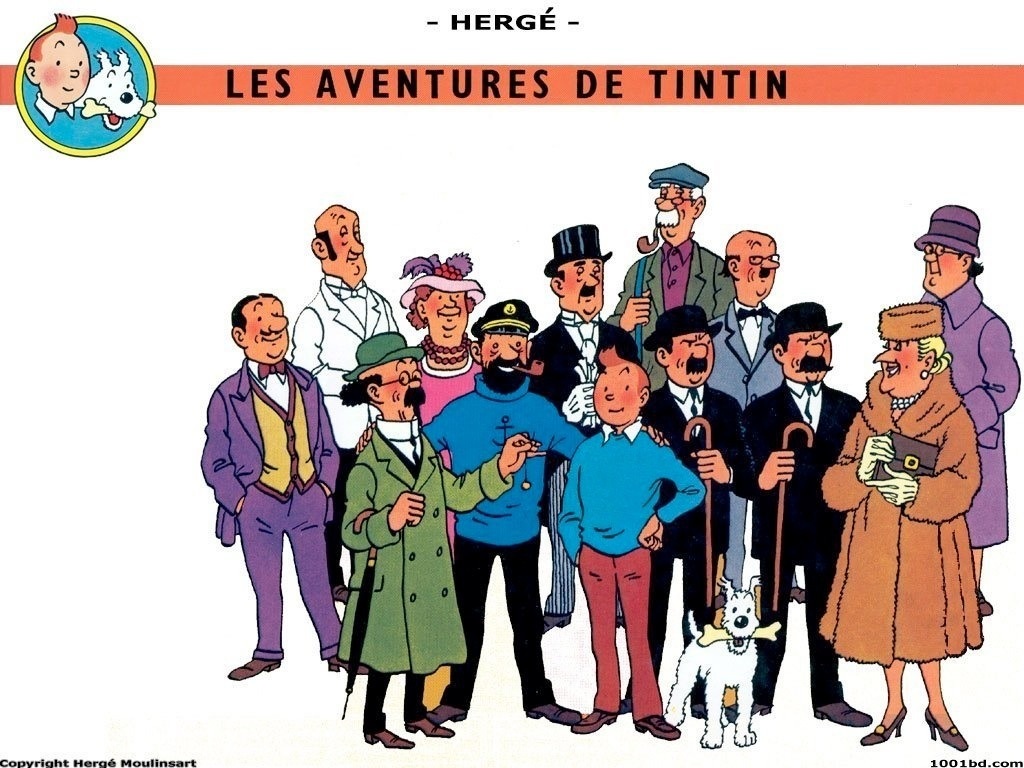
My first encounter with Tintin followed his adventures on a TV screen rather than on print. On the occasional trip to Chennai, the capital state of my home state Tamil Nadu, India, we would transit at my parents’ favorite go-to hotel at one Hotel Maurya. (It is still there to this day!) This would provide my younger counterpart the luxurious opportunity to watch cartoons on cable TV (something that we lacked back at my home). It was on one such occasion that I got to watch an episode of The Adventures of Tintin TV series.
I was hooked! But, it wasn’t until a few years later when my family moved to Egypt that I got to read the actual comics as part of my French language studies during middle school. Given this history, it didn’t take much persuasion, on my part, to purchase this particular copy from Wee Book Inn which was very fresh in state, despite being used.
In the days that followed, my breaks from writing my thesis largely involved falling back into Tintin’s world. Among the three adventures in this book, I would have to say The Blue Lotus, covering his adventures in China during its period of invasion by Imperial Japan, was my favorite. Reading Tintin’s adventures as an adult has also provided fresh perspective on how the material has aged with time. Though there remains cultural and ethnic stereotypes that are glaring under the current atmosphere of societal norms, these stumbles are waylaid by the continued appeal I feel for Tintin in its primary themes of friendship beyond borders, loyalty, adventure, learning, honor, and compassion.
Tintin and Chang’s friendship is representative of camaraderie beyond borders. Chang’s character was indeed based on Chang Chong-Jen, a real life friend of Hergé.
The comic book medium also provides the reader the choice to build beyond the world provided by the writer/artist in their imagination of how they interpret the main characters of a work. While Tintin and his world may reflect the knowledge and views of Hergé during the era of the early 1900s, we as readers can build our own perspective on the famed protagonist while also learning from the maligned visions of the world he occupies. While one may also argue extensively about the political events referenced in Tintin’s adventures, the takeaway message from Hergé’s work is on the irreplaceable value of human compassion, the importance of friendship, and the honor in standing up for the afflicted and those who you love.
Reading Tintin as a kid widened my view of the world. Having experienced my personal share of racism and bullying, in my teen years, Tintin certainly was one of my heroes. While he seems ordinary at the outset, Tintin’s wits, quick thinking, honesty, compassion, kindness, and all-around good nature make him a hero of timeless values, and one that serves to be inspiration. I certainly was inspired by him as a kid. Still am to this day. His adventures, uncanny luck, and ability to solve mysteries is also something that I’m sure all readers would love to have.
Nor to forget, Snowy is that awesome and cute companion we all want!
I would later find out that this particular volume is the first of eight in a set, which is now in my wish list. While the complete set has a high price tag of $200, it is a must-have collection for Tintin fans. Alternatively, one could also go for the DVD Box Set collection of the TV series which follows the comics by the panel, and lastly, The Adventures of Tintin movie inspired by three volumes of the Tintin series – The Crab with the Golden Claws (1941), The Secret of the Unicorn (1943) and Red Rackham’s Treasure (1944) is an entertaining watch and available on Netflix and other streaming sites.
My doctoral studies commenced in Fall 2017. I wouldn’t have predicted then that the last 1.5 years of my PhD would involve a global pandemic. I have spent much of 2020 plus the last few months working from home, and contrary to the popular vote, time seems to have flown by.
I’m now on the final lap of my doctoral studies. Productivity and efficiency have been my daily mantra since my last post. It wasn’t easy, but after two weeks of 12 hour work cycles supplemented by some unhealthy snacks, energy drinks, and some encouraging music for company, I finished compiling my thesis. Thesis fatigue would soon set in afterward, and I would spend an additional week allowing my fried brain cells to recalibrate.
The break gave me much needed time to relax, get my sleep cycle back in line, and get back to normalcy. The finish line beckons with my doctoral defense looming in the near future but with my thesis writing complete, I can now have a balanced diet of studying while gradually ramping up my transition toward a post-doctoral career in writing and art.
That being said, I can now catch up on my initial slew of posts that I had intended prior to my study frenzy. There is much to be done and I intend to keep up with some nice stories I had planned to share with all of you alongside some new science to entertain on The Procrastinating Scientist, and artwork to post on my Instagram feed.
After attending the Lightbox Expo I was hard-pressed to start an Instagram account dedicated to my artwork. Aside from The Pensive Reverie and The Procrastinating Scientist, my presence on other social media platforms is sparse.
My lack of interest in social media notwithstanding I would be a bigger fool to deny that social media can be a productive resource on its own for individuals pursuing creative endeavors. Nevertheless, I was initially reluctant as I felt my art skills were too amateurish to warrant sharing my work in a public platform.
But, the journey is always a part of reaching our goals and destinations. Thus, I have decided to start an Instagram which will record my rare successes, frequent stumbles, and hilarious fails in my journey to be an artist.
Much of what I intend to share on Instagram will revolve around my growing art skills, my brief stints of inspiration, and whatever is the ensuing result when my ideas meet paper and pencil.
For those among my readers who are also active on Instagram, I would really appreciate your support by following my adventures on this platform as well. So, with that being said, here’s to a prosperous Instagram art journey at Ajay Peter Manuel@lockeinart.
They say the pen is mightier than the sword, let’s hope my pencil is equally mighty in reproducing the worlds that flourish in my brain.
I love writing, and even more so being lost in imagination of the worlds I desire to construct for my stories. The last I remember, my love for drawing was at its peak during my early teens. With my father being a pretty good amateur artist himself, I tried to emulate him by drawing whatever subject that piqued my interest in the weekly kids’ magazine. But as the years passed, my interest in drawing evolved to resemble an empty, short-sided affair amid random spurts of creativity.
Much of that changed in 2017 when I completed my second book, A Little Bit of Everything. It was around then that I seriously began engaging in the possibility of a creative career. Much thanks to my awesome wife and our love for manga, comics, and animated media I began yearning for more than just writing a story. I wished to draw out the worlds of my imagination and make them come to life.
I enrolled in an introductory art class at the local arts center in Edmonton in 2017 and not too long after completing A Little Bit of Everything, I purchased the Wacom Intuos Comic to begin my foray into digital art. Having used this drawing tablet for about four years now, I felt it was time for a review.
Digital art comes with the caveat that one must NOT mistakenly assume that it is easier. In general, one must first learn how to draw to be able to be good at all. Switching between traditional and digital media offers select advantages and disadvantages but it does not correspond to your drawing skills getting better. Rather, what makes the difference is practice; the more you practice (no matter what media) the better you get at drawing.
After installing the Wacom Intuos Comic, I began exploring the digital medium landscape by trying out the limited-time software offer of Clip Studio Paint, alongside various other different free software including FireAlpaca, Krita, etc.
The surface of the tablet is smooth and quite sensitive (which can be managed via tablet settings). What did take a while to get used to was the hand-eye coordination between the tablet and the screen. This is because the Wacom Comic is a drawing tablet as opposed to a graphics tablet. Though this was highly frustrating at first, I eventually got the hang of it. Having to balance your hand-eye coordination also motivated the good practice of focusing on my monitor, and observing the subject of my drawing, as opposed to switching back and forth from my tablet to the screen (as one is often prone to do when drawing with pencil and paper).
The Wacom Intuos Comic comes with a pen as well as extra nibs provided in the package. Getting used to the tablet also involved getting the hang of how the pen worked on the tablet’s surface. Much of this was made flexible via the tablet software allowing one to make relevant modifications on pen pressure to helping it feel akin to an actual pencil.
My art journey over the last four years has been an on and off affair between my doctoral studies and whenever I get a chance to draw. The Wacom Intuos Comic in my opinion is an awesome drawing tablet. The greatest pro to it is the fact that it introduces you to drawing on a tablet with ease. It is light-weight, looks awesome and can be carried wherever you want. The caveat is that it is a drawing tablet and therefore requires you to have a computer around to be able to do any kind of drawing.
The Wacom Comic that I bought in 2017 still looks brand new though the smudges and the pen marks on the tablet have grown visible over the years. Recently, I upgraded to a new graphics tablet in the XP-Pen Artist 15.6 Pro. My reasons in doing so stemmed from THE one personal con I had with the Wacom Intuos Comic: a small working area.
Being a giraffe (I’m 6’2’’, long ass fingers, and lanky as heck) in my own rights, despite getting used to the hand-eye coordination involved in using the drawing tablet, I often struggled with the small working area (7 inches) which left me often feeling uncomfortable and cramped up during long drawing sessions.
Obviously, this is a personal opinion. I have found many artists who are physically similar and just fine using the same. In my case, translating the free space in traditional media of pen and pencil (on a drawing desk) to the Wacom was difficult no matter how much I tried. I would ultimately find a working process in doing my rough sketches by hand mostly and using the Wacom as the final resort for finishing touches.
This doesn’t take away the fact that the Wacom Intuos Comic is the perfect tablet for anyone to start their journey in the digital medium. On those days when I can’t lug around my XP Pen, the Wacom Comic remains my go-to portable drawing tablet. Learning software aside, I’ve loved working on the Wacom Intuos Comic. The added bonus of the free software, and relatively cheap prize (around $80) makes it a perfect comic for the budget artist. At this point in time, I believe the Wacom Intuos Comic is no longer offered at the Wacom site, but its successor in the Wacom Intuos S is equally competitive and smartly priced for the budget artist.
With that said, as I wrap up the remaining chapters of my doctoral studies and shift my focus to more creative endeavors (with a new graphics tablet to boot), I intend to keep you all posted on my progress starting with a follow-up post on my new Instagram where I intend to share all my success and the occasional (hopefully) hilarious fails in my journey to become a competent artist.
After nearly 8 years of service, my Lenovo G505s laptop had enough of it. While still performing pretty well, it was obvious I required a new computer.
Well… not anymore. Goodbye, old friend.
Having always wanted to build a custom PC of my own, I spent several weeks leading up to Christmas 2020 researching on the topic before finally getting my build completed over the last week of 2020.
Building a computer from scratch provides one the perfect customizable machine for one’s needs, but it can be daunting the first time around.
Altogether, it was a wonderful learning experience which I would like to share here today, alongside some tips and resources that I found real handy for those among my audience who might want to give this a try as well.
The immediate pros of building your own PC is that it offers a viable option for a customizable workstation at home for a price range that you get to fix for the most part. With most of us still working from home during this pandemic, it is also an awesome project to have at hand as a thoughtful distraction. The cons to building a PC is largely restricted to one’s own dedication and patience. It is one particular endeavor where some prior research and reading can really pay off, and that is where my journey began as well.
Even before I started on building the PC, I spent nearly a month reading through tutorial guides online, and watching several Youtube tutorials to get the general gist of things. This gave me the initial courage required to put my foot through the door. My top three resources on this note would be the following:
Having done my relevant research, it was time to choose the type of system I required. I wished for something that was in the middle of the road with options for upgrades if ever required, but having enough juice to satisfy my gaming and artistic interests. It was then time to select the parts of my system, the Lego blocks that I would put together.
Every fully-functioning computer is made of pretty much the same basic components:
(1) The Central Processing Unit (CPU) – the brain of the computer. The better the CPU the more tasks it can perform at once, and perform them faster. At the same time, unless you’re performing intense tasks like video editing, streaming, or high-end gaming, you will most probably not take advantage of your CPU’s full speed.
(2) The Motherboard – the foundation/base of your system upon which all your components get aligned. The motherboard is no different than a circuit board and provides all the relevant features your machine would need like USB ports, expansion card slots for audio, video, and Wi-Fi etc.
(3) The Random Access Memory – the RAM is the short-term memory of your computer. It stores data and also helps your computer run programs faster and more than one at a time. The larger the RAM the more programs you can run simultaneously.
(4) The Graphics Card – basically handles the graphics. Your monitor hooks to the graphics card and basically draws what you see on your desktop. Some motherboards usually come with an integrated graphics card, and others don’t. The more high-end games you wish to play, the better your graphics card must be.
(5) Drives – Basically your storage, and long term memory of your computer. Hard drives (HDD) were the norm and still are to a certain extent though there has been a shift towards Solid State Drives (a miniature version of the bulky HDD). SSDs are generally more expensive, less bulky, faster, and use less energy while HDDs are less expensive, more bulky, slower, and use more energy.
(6) Power Supply- Directs electricity to the components in your machine. Generally, the higher performance system you have, the higher the wattage power supply that will be required. The last part to buy, once you’ve finalized all your other parts and how much electricity they require.
(6) Other Parts to Consider – If you are old school and still have some CDs and DVDs lying around, consider buying an Optical Drive (I did). A computer case will hold all your parts together. If you wish to have Wi-Fi rather than wired Ethernet, you may require a Wi-Fi card. Most obviously, you will require a monitor, keyboard, mouse, and of course the relevant operating system software you wish to use (Windows or MacOS).
While at first read, this may seem overwhelming https://pcpartpicker.com/ provides a wonderful System Builder resource alongside an in-built catalogue of PC parts on the market with their pricing information to assist in making your builds. Upon choosing your parts, the System Builder checks for any compatibility issues in the parts chosen, and also offers suggestions for the estimated Wattage which helps gauge the type of power supply you want to buy. The community at PC Part Picker is a friendly reference where you can get the opinion of other amateur PC builders and pros alike for their opinion on your build.
Once you have decided on your parts, I would ideally choose a sales period to make your purchases so that you can save as much money as possible. In my case, I purchased all my parts during the Black Friday and Cyber Monday sales. My purchases varied directly from the vendor or through third party services such as https://www.newegg.ca/, https://www.memoryexpress.com/ (for those in Canada), Amazon, Bestbuy, etc.
Building the PC in and of itself was quite similar to building a Lego House from scratch. The videos referenced earlier alongside the PC guides were my go-to references. The PC parts themselves come with straightforward instruction pamphlets on putting the components together. At this stage, my biggest advice would be to have a clean surface, a magnetic/ordinary screwdriver kit, and a timely reminder to discharge any static electricity on yourself by touching a metal surface (like your PC case) regularly.
With that said, I thoroughly enjoyed building my PC. It is a confidence boosting exercise on its own, and it feels damn good when you complete it. If at all one does get stuck at some point, as I did on many occasions, DO NOT GET frustrated. Take some time away, and return to the puzzle with a fresh mind. If at all possible, reach out to your gamer friends as there is a fairly high chance that some of them have built their own PC. In my case, it helped for pure enthusiasm that Superman aka Henry Cavill started and finished building his PC around the same time that I did.
It took an entire day’s focus to put it together, but the effort was worth it!
For those among my readers who have any questions related to building a PC or are in the process of building their own PC, feel free to leave a comment.
Firstly, belated Happy New Year greetings to all my readers!!!
Shortly after my previous post at the end of November, I embarked on a PC building mission that I had been planning for nearly a year. After eight years of usage, my lovely laptop (a Lenovo G505s) deserved a break. It was also time that I switched gears to a PC to accommodate my personal aspirations in digital art and writing. The occasional gaming came as a bonus.
Being a complete amateur to building a PC, I spent much of November reading up on the parts required to build a system while planning my budget for the subsequent purchases. Though it seemed intimidating in the beginning, once the individual parts began to arrive, I couldn’t help but feel excited.
As Edmonton edged toward another Covid-19 lockdown mid-December, I bundled up all the parts onto my office space in my apartment and began building the PC. I was determined to finish the process over the course of a day, and I was mighty proud that I was able to. Reading up on the process as well as watching multiple Youtube videos of others’ mistakes beforehand really made a world of a difference.
I would succeed in completing the build by the afternoon and following a nerve wracking few minutes while turning on the power supply, I was elated to find that my efforts paid off in a fully functioning PC that is now geared with my favorite games, and digital art software.
Unfortunately, thanks to a sensitive nose and a sudden drop in temperatures the same day, I would end up falling sick the following day. It wouldn’t be until late December that my circadian rhythm would right itself amid the change in weather, setting me off on my path to recovery, and finally being able to use my PC.
Over the last week, I’ve enjoyed the near silent workspace environment of my PC amidst some much-needed gaming and writing to cap off 2020. The next four months will be important as I round up my doctoral studies, and even more importantly, as my wife and I expect the newest member of our family.
2020 has been a tough year for many around the world. I’m thankful to the enduring support of my friends and family who have been so positive through it all. I’m also thankful to my loving wife who has been my strength and inspiration throughout this period. Stepping foot into 2021, I can’t wait to embark on a new journey with you and our little one. As a father-to-be, I intend to put to good use the sleepless nights that are to follow working on the final and most grueling phase of my graphic novel: drawing it all out. I also look forward to fully committing to a career in writing and animation following the completion of my doctoral studies.
As opposed to what may have been a very static 2020, I hope and wish 2021 will be a year of promising, and exciting transitions for everyone. I look forward to seeing you all in my follow up post where I shall detail my PC building process for those who are interested in building your very own PC from scratch.
The last few months have been positively engaging amid a busy schedule of activities from career networking, science writing conferences, symposiums, script writing, and a whole lot of research related to my PhD.
Rounding up the last lap of my doctoral studies, I had get as much work done as possible on relevant academic publications related to my thesis research. Amid the continuing restrictions posed by the pandemic, I couldn’t have gotten far in terms of progress had it not been for my peers and colleagues who have assisted me, and continue to do so, throughout this time period. I’m sincerely grateful for their efforts. Advancing into 2021, the weather forecast predicts books, and a whole lot of studying as I prepare for my thesis defense. All in all, I’ve kept busy and productive.
Studies aside, looking toward a post-academic future, career networking has been a must. I had a blast attending two stellar events in ScienceWriters2020 and ComSciConCanWest. Geared towards aspiring science writers, both events served as portals into the world of science writing. Though I couldn’t attend every single speaker session, the networking rooms offered by the two events were more than sufficient in providing a great sense of clarity toward pursuing a career in science communication and writing. I intend to have a separate post discussing both events for any aspiring science writers in my audience.
Much of the networking involved pretty much this as a first step with a more friendly and potentially rewarding approach.
Script writing concerning my graphic novel remains a slug fest but I can now see the light at the end of the tunnel. Weaving, ducking, and resolving the various plot holes and inconsistencies has helped me polish and fine tune the story to the best it can be. The script shall be ready by the end of the year, at which point the writing journey comes to an end and the artistic journey begins.
Staying afloat amid all of this seemed a daunting challenge but against the backdrop of joy and excitement as an expectant father, my doubts and uncertainties simply vanished. It has been an enlightening process supporting my lovely wife over the last few months of her pregnancy. Even more so, the experience has only increased my admiration and respect for her strength and patience through it all. The happiness of becoming a father notwithstanding, I can’t wait for all the sleepless nights that beckon in the near future. I’m sure I can put them to good use while simultaneously studying for my thesis defense.
That’s all for today folks! Catch you all at my next blog post!
The last two weeks have been a blast. Back-to-back events involving my doctoral research, comic book script, art and animation expos, and a bucket load of books that hit my purchase list have kept me on my toes.
Research during a pandemic
Most of us have had to work from home since COVID-19 introduced itself to the world. It has been the same for me for the most part of the last 5 months. September’s arrival marked the beginning of the final year of my doctoral studies and I’ve spent the last few weeks working intermittently between home and the university.
Science is a collaborative effort and I’m thankful to the support I have received from my colleagues who have assisted in my research especially during a period of time where most research facilities are running at smaller capacity. While this has generally led to a lower results yield, I count myself lucky in that the majority of my research was complete prior to the shutdown.
Nothing beats the joy of getting experimental results that work and support your paper.
Looking ahead, I have also had the chance to engage in some networking for science writing by getting a membership at the National Association of Science Writers, successful registration in a Science Write-a-thon event, submitting a few pitches to scientific journals (fingers crossed, I get to write about my research, the wait has been killing me), and starting a medium account where I also share my posts on The Procrastinating Scientist.
Lightbox
On that note, I made a giant leap in progress when it came to my efforts in pursuing a career in art and animation. Shout out to the Lightbox team for setting up an amazing expo over the course of a hyper-content loaded weekend.
The expo provided a wonderful insider look at the animation, arts, and comic book industry. Networking was also a big plus with sponsors and representatives from Disney, Pixar, etc. More than anything else, the expo provided a friendly and welcoming atmosphere. Be it if you are an amateur or a professional, there were no distinctions and the event altogether served as a wonderful community experience where everyone could learn from everyone.
An awesome source of inspiration, Lightbox left me wanting more. I cannot wait for next year’s expo in an experience that I heartily recommend to anyone who wishes to pursue a career in animation or the film industry.
Script and a whole lot of books
Attending Lightbox expo with a writer’s background (as opposed to an artistic background) gave me unique insights into my own progress with my comic book script. In art, it is very common for the instructor to advise the student to step back from his piece every now and then to gain a larger perspective of his project’s goal.
My experience at Lightbox made me do the same. My recent struggles in transcribing my script into art notwithstanding, I had to take a step back and recognize that there was still much left to do in organizing the plot, not to mention the plot holes that have been creeping out of nowhere in recent days.
It has been a steep learning curve but one that I have appreciated very much. It helped to find common ground in my struggles with many professional artists and writers who attended the expo. With that being said, I have made great progress in demolishing my original draft and elevating it toward greener pastures with every passing day. My goal is to have a fully polished script alongside preliminary concept art ready by the end of the year. Whether I make the deadline is up in the air but I know I’m going to enjoy every bit of it.
This brings us to the end of my two-week adventure. I hope you’ve all had a great weekend and I will see you soon with another post. My newly bought bookshelf speaks to the volumes of reading I will be doing in the coming weeks, so look forward to some book reviews in the near future.
When you arrive at a crossroad in life, you can guarantee that it will come with its fair share of mixed feelings and emotions. The last month has been just that amidst some giant leaps and developments in my personal life, and ergo, my absence from The Pensive Reverie. It has all been about perseverance amidst the changes that I expect moving forward (delightful as they are) in a committed relationship with my partner and one which will invite company in due time.
The experience has had far-reaching implications, often to hilarious effect, in various aspects of my life. From an adventurous sleeping cycle and a total re-organization of daily activities, the last month has kept me thinking if I’m back at the university dorms doing undergraduate studies.
Jokes aside, these recent developments have also led to difficult engagements in other aspects of my life largely revolving around family. Long back, I had written a post titled Constructing an Identitywhere I had identified myself as a third-culture kid.
Much of this was related to my experiences in traveling around the world to different countries throughout my teenage years, and the struggle that accompanied my efforts in balancing my cultural personality. Most of all,
I found the inability to openly discuss individual differences within my culture as a major obstacle in communication. Social interactions would rather become a form of control, followed by an equally weighted concern for internal, and external judgment.
During a pandemic, when you are living in the opposite corner of the world from your family, things get a little difficult. So, needless to say, much of August has also involved a consistent dose of perseverance, now spanning several years, in dealing with tumultuous family dynamics.
Communication can be darn difficult especially in situations where you expect it to be easy. A dollop of a multicultural relationship, topped with differing ideals and perspectives, make the ensuing conversations even more difficult. Despite this, I find it necessary to persevere because after all family is family. August has been fruitful in that I was able to find a measure of closure concerning much of these issues.
With that being said, I will return very soon with a new post and updates about my latest efforts in writing my graphic novel, and artistic adventures.