Remembering Our Faults

For starters, my absence the prior week was for naught. When your wife starts sounding like the second coming of Arnold Schwarzenneger and your own voice reverts to prepubescent days, you know the flu game is strong this season. Feeling under the weather is not enough to describe the hell that has been the past week, but here I am now, and all the merrier to finally be over with it.

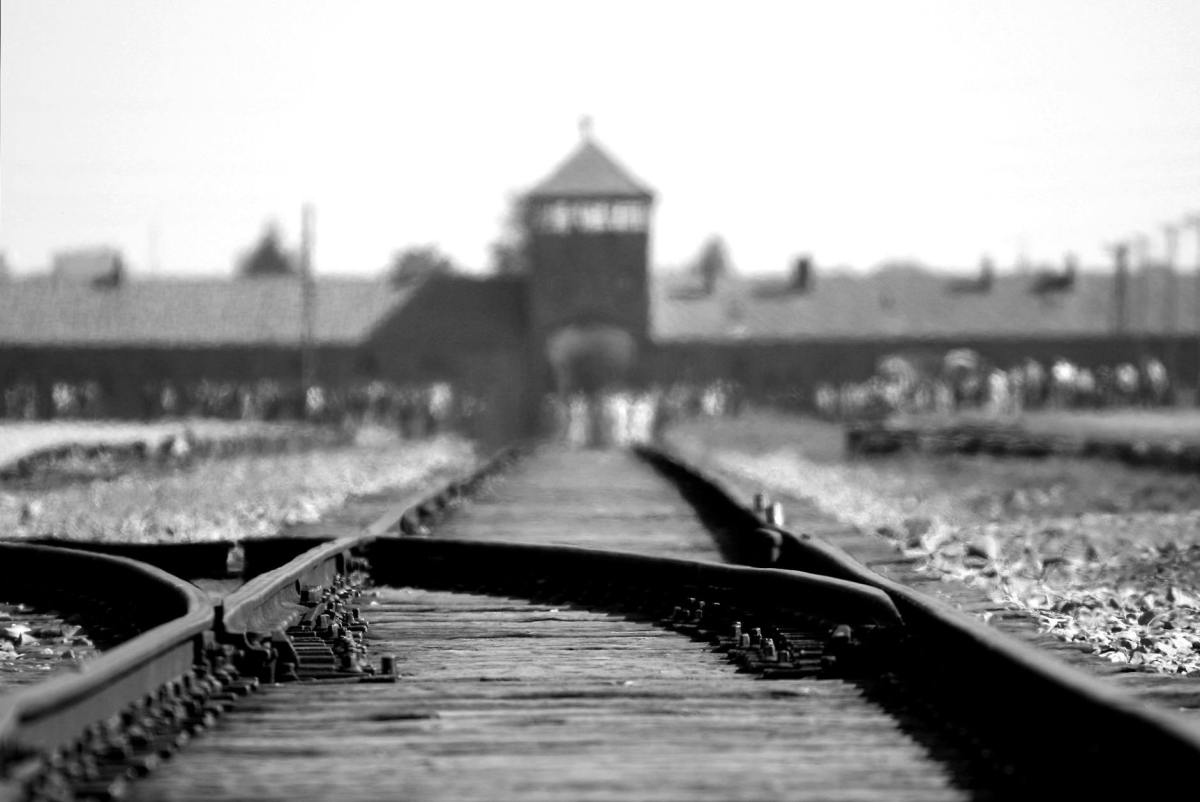
That being said, today’s post relays what went missing earlier. Falling sick gives you a good reason to relax. After all, rest is the best medicine. While the flu had destroyed my voice, my mental faculties remained sharp, and I had a lot to introspect about. Earlier, during my weekly visit to the local public library, I learned that January 27th observed International Holocaust Remembrance Day. Across from the reception desk was a table with several books and graphic novels related to the Holocaust. Perusing the selection reminded me of the last time I had read a book on the same topic. That was all the way back in high school.

From Art Spiegelman’s Maus to Elie Wiesel’s Night, my younger self had retreated in horror learning about the Holocaust. Wiesel’s graphic descriptions of his own survival at Auschwitz and Buchenwald had given me nightmares. The depravity that was in full flow leapt off the pages recounting the experiences of Holocaust victims. Those experiences also spoke to the enduring strength of those who survived and remain to this day.

That day at the library, I felt compelled to be drawn back into said world, now seemingly lost to memory. I picked out two titles that I found intriguing:
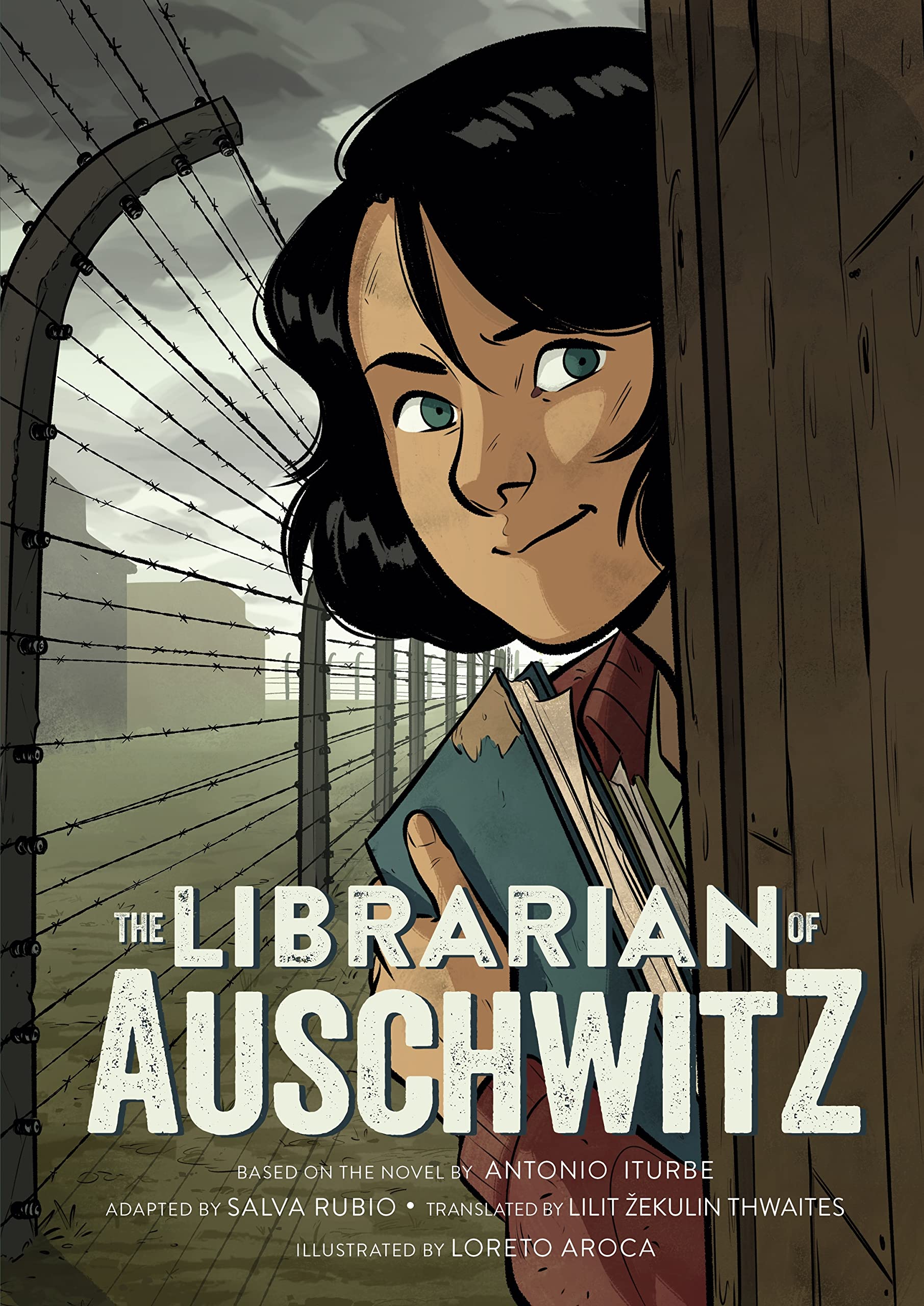
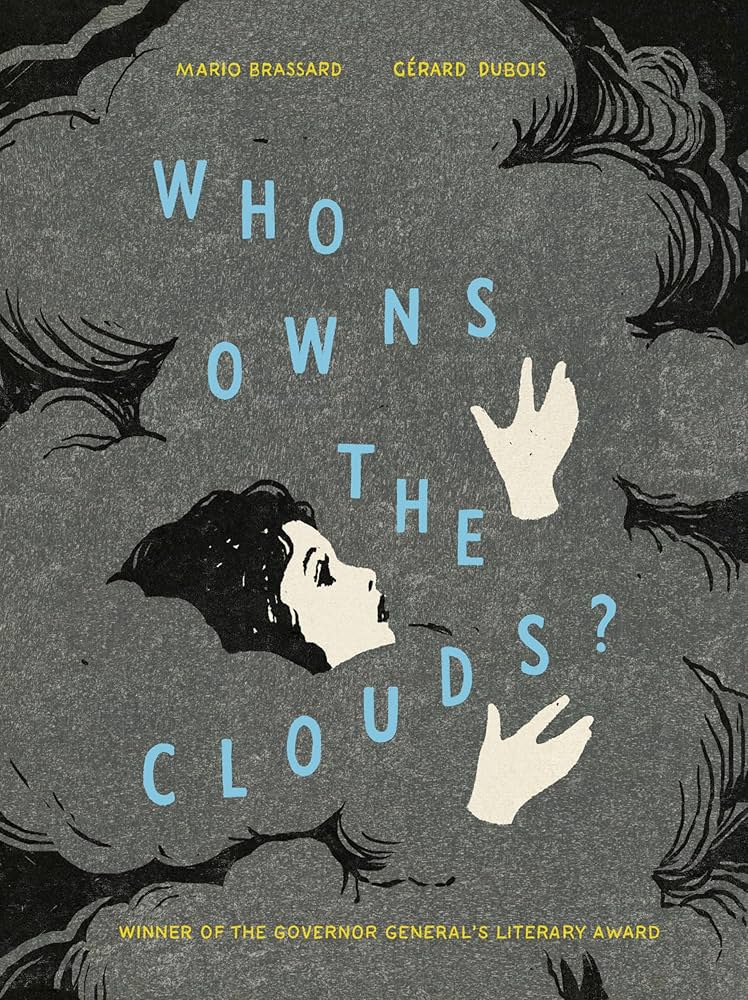
A few days later, I fell sick with the flu and spent my time reading the two books. My younger self had struggled to come to terms with the reality of the Holocaust, but as an adult, I felt more pensive revisiting this chapter in human history.

Who Owns the Clouds? and The Librarian of Auschwitz related the experiences of two young female protagonists, the impact the war and the Holocaust had on their families, their childhood, and their future. (Of course, there is a lot more to it, but I don’t want to give it all away; I highly recommend both titles!) Both protagonists undergo profound personal transformations (not always positive) that help them survive this tumultuous period of human affairs. The Holocaust is a telling moment in history that demonstrated the human capacity to inflict suffering and destruction. The subsequent horror took different forms in every generation. Both these books provide plenty of that, but that isn’t all there is to their purpose. Despite being two very different experiences, the two stories reitereate that even in the darkest of moments, not all is lost. The protagonists are uplifted by the actions of those who were courageous enough to stand up for their beliefs, to fight the good fight, and instill hope for the future.

My reading wasn’t a continuous process. I had to take breaks, and not for lack of focus, but due to frequent visits from my daughter, who took it upon herself to take care of her supposedly “ailing” father. Observing my daughter’s actions, I couldn’t help but juxtapose the protagonists’ realities onto hers. How would I react if something similar happened to my daughter? How would I protect her from a world that is torn asunder? It was not a pleasant thought, and it probably aggregated from a source of concern that has been on my mind of late.

Currently, there just doesn’t seem to be a pause button for the chaos unfolding across the world. Differences speak louder, and unity seems trivial. Social media has become a global echo chamber for negativity. Fall into this rabbit hole, and you are not coming out of it in one piece. As a person of color, I have experienced my fair share of racism and segregation. Now, here was my daughter, growing up as a biracial kid in a world where diversity was an excuse for division. What could I do to keep my daughter safe? What could I do to ensure that she would neither be a victim nor an instigator of the same negativity that seems to be running rampant in a global period of uncertainty and rapidly changing political landscapes (much like the history related by the books I had just read)?

It was not easy to mull these things over while battling the flu. Writing about it, I guess, is my way of finding courage and staying hopeful. It also helped that my daughter had all the answers. Much like the protagonists in the two books, whose innocence empowers their actions and guides them through their trials to do what is right, I found strength in my daughter’s actions. In a misplaced belief that I had fallen ill because of her, my daughter forced me to accept an apology on her part, later going on to reaffirm the importance of saying “Sorry” when one is at fault.

There was my answer. Making mistakes is part of being human, but it is more important to remember and learn from our faults. History teaches us a lot, and while it may seem distant from our present, the lessons of our past can help us move forward. This resonates with the discord of today’s global affairs and how the world just seems to want to tear itself up. Differences aren’t what set us apart, they serve as a gateway to connection and strength. It is in our courage to bridge them that we define our humanity.

Between stimulus and response there is a space. In that space is our power to choose our response. In our response lies our growth and our freedom. – Victor Frankl

Making A Difference

I’m fortunate enough to have been given the opportunities that I have had in my life. Thanks to my father’s employment in a prominent non-governmental organization (NGO) called PLAN International (a child rights organization that works with communities in many countries to alleviate child poverty), I, along with my family, have traveled to several countries around the world. We were modern-day nomads, traveling wherever my father’s work beckoned. Whenever possible, I joined my father on his daily adventures, allowing myself the opportunity to understand and learn the multifaceted nature of humanitarian service and development. It also helped that my father often brought his work home, leading to long-winded conversations on his day-to-day exploits.

Growing up, I tried to emulate my father. But as my future beckoned, I learned to find my own unique path, and destiny in life. Still, to this day, I carry the lessons I have learned in the presence of my father, most notably his compassion to his fellow human beings as well as his perseverance and commitment to his work. My father found great satisfaction in the simple act of helping others, and even more, in the happiness of his family. His efforts were largely directed to these objective. Thus, he made a big difference in my life, and of countless others. So it is not at all surprising that I too feel a strong calling toward contributing to the society and making a difference in the world.

Our world is riddled with doubt and confusion. The toils of war, civil unrest, corruption, racial and ethnic differences, climate change (along with an assortment of environmental issues), to name a few, are the great uncertainties of our time. These issues afflict our daily lives, standing as we are, mute and in the shadow of a persistent struggle to communicate and unite, as a species, toward a better and brighter future. At the crux of it all, we have allowed our fear and anger to dictate our choices and actions, leading the greater part of the world to be divided.

Take racism for instance, it manifests in many aspects of our social lives. It pervades modern-day societies and political systems; the basis of its strength is a volatile expression of pride, prejudice or aversion to others via discriminatory practices. Humanity has a deep history with racism, and its various forms including segregation, supremacism, xenophobia, nativism, hierarchical ranking, and other related social phenomena. Reaching back to the ancient societies of the past: Greeks, Romans, Indians, Arabs, and even further, to their predecessors, I find that racism was a by-product of our own vanity. Natural circumstances subscribed to humanity our beliefs in an expression of individuality, dividing and classifying us, into specific races. Racism is an institution, not an ideology, founded in capitalism and slave trade.

To me, racism is nothing more than a word that describes the highly- convoluted story that is human cooperation and communication. Is there a solution to this? I admit that many of the issues that plague modern society have great histories behind them, making it difficult to distinguish a unique solution in any case. Nevertheless, I believe we owe it to ourselves to iterate the necessity for action, particularly in recognition of alternatives that may provide the foundation for future solutions.

At one point in my life, I told my father that I would love to build a university. Finding inspiration in the Akademia of Plato, I modeled my university to be an institution that pioneered free thought. People could come and go, study what they must, openly discussing their thoughts with their peers, without fear or discrimination; a platform for reason and rational conversation. I still harbor this dream, though it is a work in progress (there remains more room for thought in the realization of such an institution, especially with regards to its structures and inner workings, but what matters to me is the message of such a concept). In knowledge, and in education, I found what I believed to be a solution towards the fractured communication of the human species. By educating ourselves, and our children in proactive and collaborative thinking we may slowly shear away towards a solution. By addressing our differences, openly and without fear, we may find unity. Of course, at this point, it becomes a question of how are we to do that? I find my answer again in what I proposed earlier. All of us are unique in our own ways, but it is in the same pride with which we define our individuality that we can also define our humanity. The hierarchical structures of knowledge and government weren’t constructed as a means to enslave our species, but as a medium to liberate ourselves in collective thought and action.

This will be the challenge of our time. Communication without fear, government without bias, education without limitations…While it may require an acceptance of short-term losses for the sake of long-term benefits, we must learn to recognize the importance of our world. While anger and fear may have allowed us to survive and evolve over the millennia, those very emotions can also fuel our motivation towards building a better world, not just for those who are alive now, but more importantly for those who follow us, our children, our legacy. Therein lies what may be a small part of the bigger picture, to learn to see ourselves as a global family rather than as select individuals.

My father had a bigger picture that motivated his own actions. It was his family. He found his strength in the happiness of his family, an emotion that he channeled into his work and in the lives of others whom he met and helped. Simply put, he made a difference. Just as much as ignorance can be bliss and can forestall change, anger can be proactive and enforce our will to action. I too want to make a difference, and though I have a long way to go, by expressing my anger, not to separate myself from others, but as a tool to define and communicate my knowledge, to help shape the world, I could one day just like everyone else, if they are willing to, be the difference that will become a brighter future.