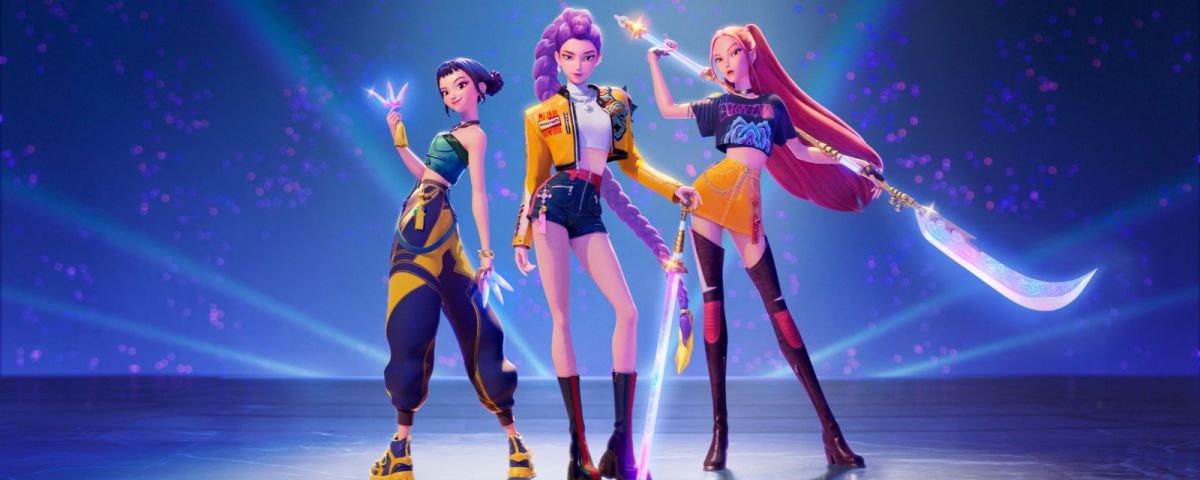
She can sing and dance; she has all the fans; she has two best buddies, a caring manager, and all the popularity one can desire. Still, behind her seemingly joyous disposition lies a subtle sadness that offers a window into her personal turmoil. This is Rumi from K-Pop Demon Hunters.
I know I’m a little late to the K-pop bandwagon, but I really didn’t expect this movie to hit me as deep as it did. Back in 2013, when Frozen was released, I remember the hysteria that followed suit. The songs from that movie were just about everywhere, and it got tiring pretty fast. BUT, after becoming a father and watching Frozen with my daughter, I could understand the hype. Still, I didn’t rate it very high on my list of animated movies. K-Pop Demon Hunters, though, is a whole different story.
I had the movie on my watchlist for quite some time. After my daughter kept mentioning Rumi frequently from her dayhome visits, I realized we might as well sit and watch the movie together. There I was on a Friday night, with a bowl of popcorn in my lap, getting ready to enjoy the movie with my family. An hour and a half later, my daughter gets ready for bed, and I’m sitting with a lump in my throat. The songs were great, and the animation was absolutely terrific. The comedy and gags (especially those hinting at a comical self-awareness of K-dramas) also landed really well. Most of all, the incorporation of cultural elements and a story that, while being simple and sweet, carried deeply profound messaging, hit hard.
Rumi, our protagonist, is part-demon and part-hunter. Rumi’s mentor, Celine, counsels Rumi on her mixed identity and maintains that it is a truth that must remain hidden until it can be “fixed.” Rumi keeps that secret, one which evolves into a generational trauma where one “must keep our fears and faults hidden”, and struggles with her fragmented identity while hiding it from her closest friends and Huntrix teammates, Mira and Zoey.
But, as we all know, the longer you keep such a secret, the heavier the burden. Rumi feels the weight of her identity come crashing down upon her once she meets her counterpart in Jinu, lead singer of the demon boy band (yeah, you heard that right), and a foil to Rumi. Jinu’s own regrets and guilt mirror Rumi’s struggles. The story revolves around how these two characters connect, reconcile their feelings, move forward, and a whole lot more.
I’m currently undergoing therapy to deal with some stuff in my personal life. Part of that involves third-culture kid syndrome, some generational trauma, and a dollop of internalized emotions and experiences. Put it all together, and you get me, the grown-ass adult sitting with a lump in his throat after watching K-Pop Demon Hunters.
This movie works really well on so many levels, especially with its messaging towards accepting differences and oneself, even with all our faults. Sometimes even the most well-intentioned wishes can cause hurt and pain, and sometimes this can come from those closest to us. In these moments, I’ve learned that you can find strength by trusting yourself and letting your emotions flow rather than repressing them. Being vulnerable about your emotions and misgivings don’t make you weak. It takes great strength to speak what is in your heart, and it is the best way forward to accepting oneself.
As Rumi and Jinu sing it, “We can’t fix it if we never face it.”
K-Pop Demon Hunters is a perfectly well-balanced movie for a diverse audience, and all the more reason that it has found great success. The ending certainly leaves you wanting more, and I’m glad to know that a sequel is in development. Rumi goes from hunting literal demons to battling the one within herself. The mystical barrier of the “honmoon” she has vowed to protect is a beautiful metaphor for her inner struggle and the repressed undercurrent of her emotions. Finally, her willingness to find strength by accepting herself and sharing that truth with her friends, who, in turn, embrace her, brings it all full circle with Rumi no longer hiding but shining, as she was born to be. In a way, I think that’s something we can all do for ourselves.
 The Pensive Reverie