Book Review: The Dark Lord Trilogy

My first experience of a Star Wars movie was Return of the Jedi. I was quite young, and with little to zero knowledge of the English language. Nevertheless, George Lucas’ creativity, and the seemingly expansive world of Star Wars with its magnificent Star Destroyers, exotic planets and alien species, the imposing Darth Vader, and the pure awesomeness of lightsabers got me hooked. I have remained a fan of the franchise ever since.
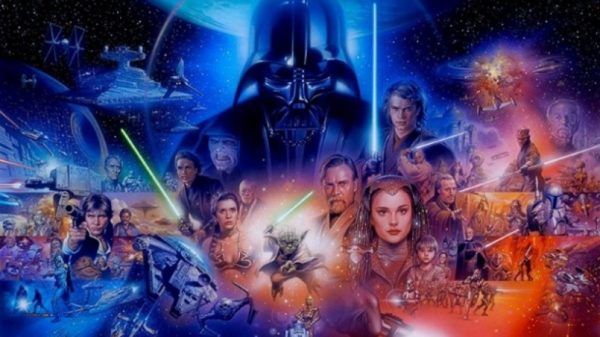
Star Wars The Dark Lord Trilogy was an engrossing experience that revisited events surrounding my favorite movie of the prequel trilogy, Revenge of the Sith. The book is in fact a combination of three novels: Labyrinth of Evil, Revenge of the Sith, and Dark Lord: The Rise of Darth Vader.
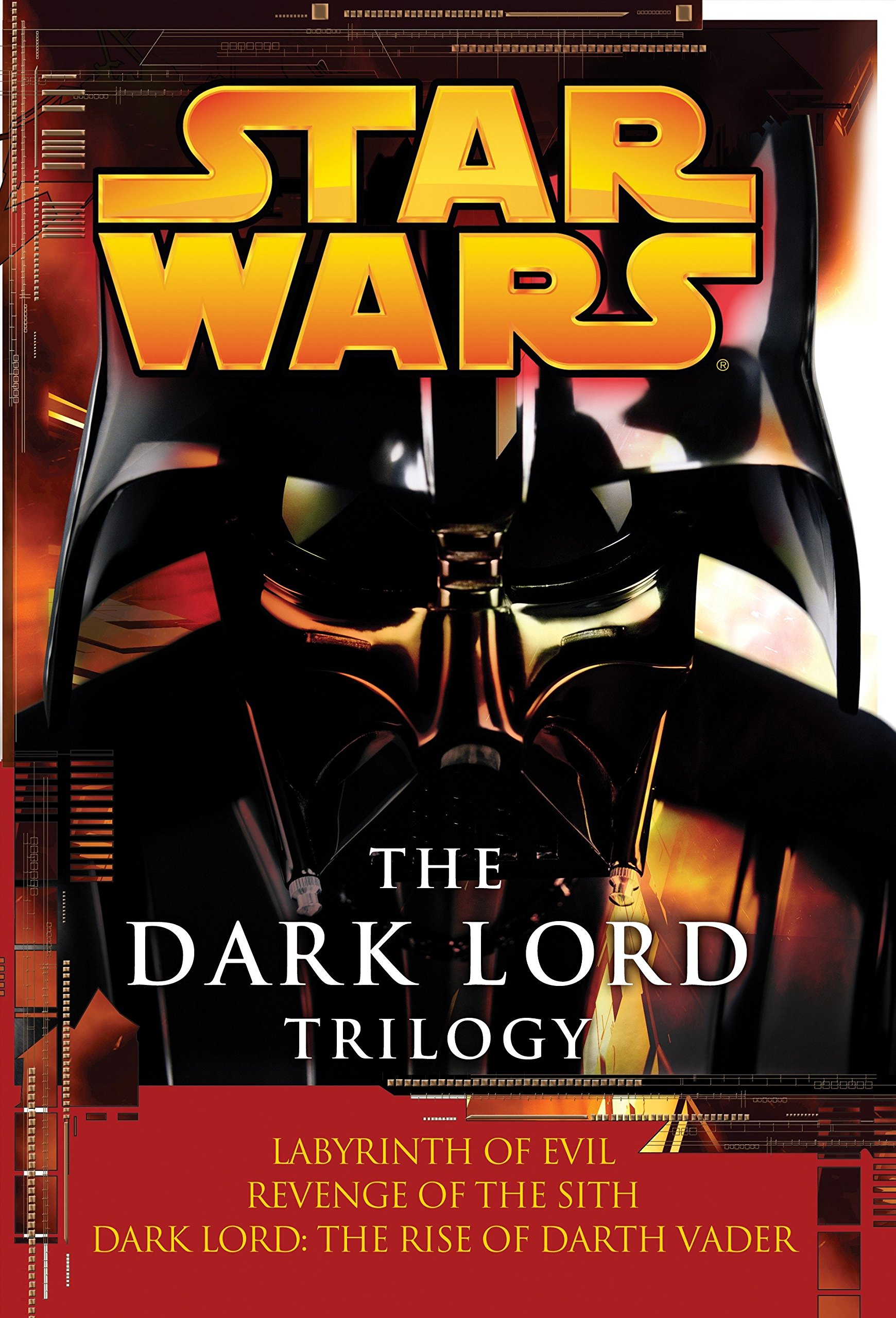
While the book is not necessarily considered to be fully canon (excluding the novelization of Revenge of the Sith) in the present state of the franchise, the volume as a whole offers a unique perspective for the reader into the struggles of the “hero with no fear” Anakin Skywalker, his fall, and subsequent evolution into the dark lord of the Sith, Darth Vader.

Having watched the animated Clone Wars series (2003 and 2008 versions) I initially didn’t expect to be surprised (in terms of content) by the book. Having now completed the volume, I  can say I was sorely mistaken.

Knowing what is to come in Revenge of the Sith adds a sense of emergency throughout James Luceno’s Labyrinth of Evil. The Labyrinth of Evil provides an in-depth perspective of the epic chain of events leading into the last days of the Republic and the inevitable fall of the Jedi Order. Luceno takes the audience deeper into the pysche of the prominent players of the stage including fan-favorites Obi-Wan Kenobi, Mace Windu, Master Yoda, Padme Amidala, and many more as they walk towards their irrevocable fates in Revenge of the Sith. The events play out through the thoughts of the characters rather than as standalone observations adding greater depth and personality to the encounter.

“The circle is now complete” in Stover’s Revenge of the Sith where our heroes meet their  inenvitable downfall. As readers, we are left to wonder what could have been had certain plot threads met their rightful end but these thoughts are drowned amid the torrent of emotions that surround Anakin Skywalker: fear, guilt, betrayal, trust, friendship, and love, and leaving him the burned and mutilated husk of a man eventually reborn as Darth Vader. 

“You killed her because, finally, when you could have saved her, when you could have gone away with her, when you could have been thinking about her, you were thinking about yourself…and now your self is all you will ever have.”

“The hero with no fear” is an ironic moniker for Anakin Skywalker as throughout the events of his life leading up to his fall, he lives very much in fear, and rightfully so. Anakin’s childhood as a slave, his love for his lost mother, and wife Padme Amidala, alongside an uncertain future where he perceives the loss of his loved ones, are the instruments of his fall and the crux of his fears. Yet, it is those very same fears that make him who he is, a human.

Master Yoda’s perception and neglect of this basic fact, and the Jedi Council’s twisted interpretation of human emotion run contradictory to their own attachments to the Republic. Consequently, the fall of the Jedi becomes a foregone conclusion and to the readers, a deserving end to an order that had become stale, ignorant, and self-absorbed in its own search and control of power.
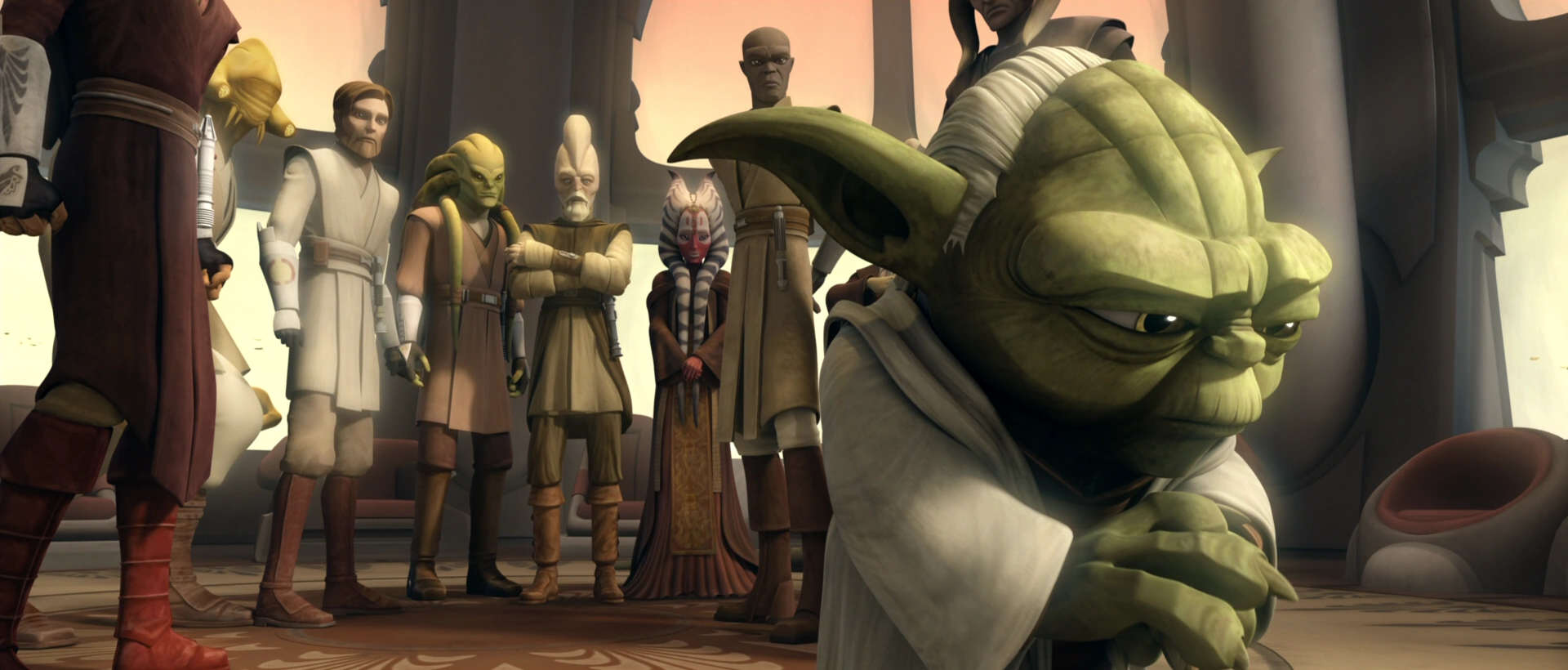
“Fear is the path to the dark side. Fear leads to anger. Anger leads to hate. Hate leads to suffering.”

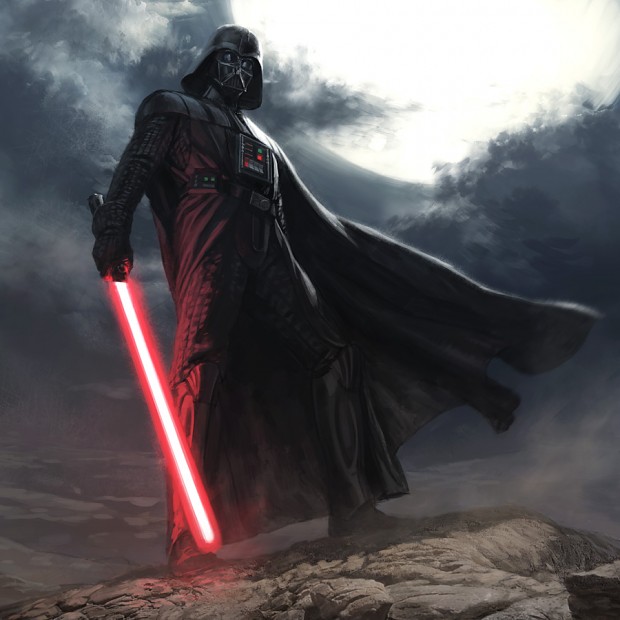
Anakin is reborn in the fires of Mustafar as the newly christened Darth Vader. Despite the various “machinations” that he now dons as the impregnable Dark Lord of the Sith, the final story of the volume, Dark Lord: The Rise of Darth Vader, covers Anakin’s misconceptions, enduring guilt, self-doubt, and his true rise as “the hero with no fear.” With his rise, the Jedi endure a humbling transition under the hand of the galaxy’s ruthless new Emperor and his dreaded right hand, Darth Vader.
Related image

The Dark Lord Trilogy is a must-read for all Star Wars fans alike. A tale of epic proportions, the stories add even more perspective to the classic space opera that is Star Wars.  While I would not suggest the novella for the newly initiated, the rich literature of the Star Wars universe beckons you forth to a galaxy far, far, away.

You can get started with this guide on the now defunct expanded universe which remains the source of Disney’s inspirations for current Star Wars products.


The Procrastinating Scientist

There he sits in his chair,
Ready to go through his checklist for the day,
Little does he know,
His mind has other games to play.

Experiments aside,
Its simulations for the time being,
To run the clock down,
Until lunch break comes calling.

Productivity is the motto at heart,
But thanks to an ample lack of sleep,
Such initial motivations,
Just fall apart.

Trying all he can and must,
To stay awake,
He takes a walk,
Maybe a short break.

Alighting onto the path of knowledge,
And hoping to get lost,
He picks up a review paper to go through,
Not aware his efforts will come at a high cost.

Page after page, with heavyset eyes,
He pores through the work,
Glancing every so often, tiringly, at the computer screen,
For any promising result, as would a wayward clerk.

To steady his periodic consciousness,
Intermittently, he is driven to source,
Those libraries of social media entertainment,
Youtube videos and Facebook of course.

Soon enough, work-hour comes to a close,
As the afternoon tide arrives,
And in its welcoming arms,
Life swings a surprise.

Lo and behold, he is struck by an epiphany,
A grasp at an ingenious thought,
Rushing, he notes down his idea,
Commending his mind on a battle well-fought.

Seeking the counsel of his Professor,
He wishes to share the excitement of his finding,
To his Jedi Master of sorts,
Having put to good use, his share of the funding.

And therein he meets an exhausted figure,
Forcing his will upon public grants all day,
Wishing nothing more than directing research,
That can bend to his singular way.

With only a few minutes at hand,
The padawan shares his thoughts,
The master applauding him,
On an idea well caught.

The day may have come to an end,
But the night remains,
For more experiments to begin,
And curiosity to retain.

For in science,
Results don’t come easy, as they say,
But procrastination, well done,
Can go a long way.

aa79a4567550b619b5c6ed067116afc1e52b00e5_hq

Revan

Peace is a lie, there is only passion. Through passion, I gain strength. Through strength, I gain power. Through power, I gain victory. Through victory, my chains are broken. The Force shall free me.

-The Sith Code

There is no emotion, there is peace. There is no ignorance, there is knowledge.There is no passion, there is serenity.There is no chaos, there is harmony.There is no death, there is the Force.

The Jedi Code

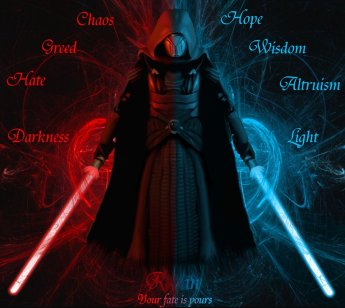
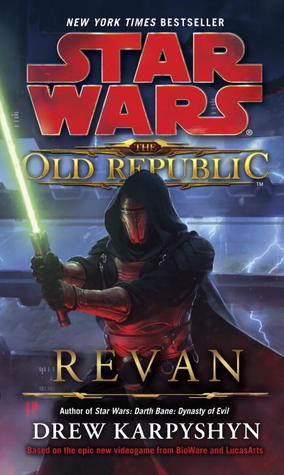
Revan’s search for his identity while strung between the polarizing dictates of the Jedi, and the Sith order, is at the crux of the plot of Star Wars: The Old Republic: Revan.  

“Hero, traitor, conqueror, villain, savior-the man called Revan has been all of these.”

Revan left Coruscant as a Jedi, sent on a mission to defeat the Mandalorians,  a warrior race immersed in a great tradition for war, and inhabiting the planet of Mandalore. He would prove to be successful, gaining the mask of Mandalore, a ceremonial war mask worn by the leader of the Mandalorians. The mask would become an enduring symbol of Revan’s power, and conquest. But with his rise, Revan fell, returning instead as a Sith Lord bent on destroying the Republic.

choose__revan__by_sadreams-d32zak2

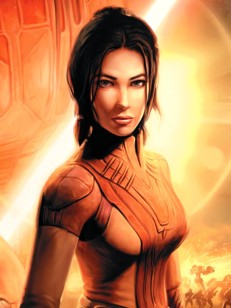
The man behind the mask would find his redemption through the love of a young, and promising Jedi named Bastila Shan,

BastilaAvatar

but paid the price for his crimes with the loss of his memories.   Guiding the Republic once again through the ravages of his past actions, Revan would assist the Jedi Order to reassert peace in the galaxy.

  “At the start, they were not much of a threat to speak of, but once the Jedi Revan had taken charge, things began to turn against us. The Republic fleets began to use more than just basic tactics. Feints, counterattacks, mass deceptions. Revan was a genius on the field. Revan abandoned worlds of their defenders so that others would be too fortified to strike, and was willing to make sacrifices in order to advance goals. And in the end, Revan proved too much for us.” – Canderous Ordo, a Mandalorian.

Now, an exile of the Jedi order, Revan lives a secretive, but comfortable life with his wife Bastila. Nevertheless, he remains tormented by nightmares that seek his return to the past, foreshadowing a growing threat that bodes its time in the dark. In order to recover his memories, and discover the source of the threat, Revan embarks on a journey that would culminate in his struggle against a powerful, and diabolic enemy. His failure could mean the end of the Republic, “but only death can stop him from” succeeding.

And that’s basically it.

13359972
A damn good book for any reader interested in the Star Wars lore!

Revan is an excellent book that draws the reader into the world of the Old Republic; a definite recommendation for both Stars Wars, and non-Star Wars fans alike. Though on the outset it may seem to be a story modeled around the journey of Anakin Skywalker, by the end of the book, Revan seals his place as a unique, and powerful character in his own right, within the Star Wars mythology.

What personally drew me to the book, and Revan’s character, was his enduring struggle against a very human desire for power. It is a concept that is at the heart of the central dichotomy of the Jedi, and the Sith, about which several plot lines revolve in the Star Wars universe.

tumblr_static_tumblr_static_64khnigid80s04oocoosk4ogk_640

I remember once walking past a blackboard at the university. The board had the message “Peace is …” with an abundance of scrawls, and notes left by other students with their opinions on peace. Their statements were food for thought. I eventually found some empty space at the corner of the board, and felt compelled to write, peace is what power defines. A few months later, I found myself reading Star Wars: The Old Republic: Revan. By the end of the book, I felt compelled once again to believe that peace is nothing more than compromised power.

I’m a fan of the Star Wars universe, and thus I couldn’t help myself in finding analogies to the politics of its worlds with the history of humanity. The current generation of youngsters face a world rapid in its growth, and unraveling in the myriad changes of modern-day society. Strife, inequality, ostracism, and tyranny still seem to echo in this hall of democracy, and unity that humanity seems to believe it represents. I’ve never been a fan of politics, yet I do not shun knowledge of its principles, and also understand its contribution to society.

What is peace? It is a difficult question, and a unique answer is nigh impossible.  I personally believe peace is a phase, somewhat like a smaller gear, in a larger system that defines society. While it may be revered, and glorified as an ideal of the highest standard, along with justice, and morality, peace is still very much a concept that adheres to the beliefs, and feelings of an individual as it would as a social contract to a greater populace.

dove-bird-for-world-peace-1280x1024-1024x819

In the Star Wars mythology, the Jedi Council, and the Sith seem to be two sides of the same coin, vying for power, though the Jedi distinguish themselves in their motivation towards peace, and harmony. While the Sith are open in their passion for power, the Jedi stand their ground as their counterpart, proclaiming themselves as protectors of the Republic. Revan, having been a hero of the Jedi, and a dark lord of the Sith, illustrates the illusions surrounding the motivations of both “cults.”

  “Is that what he was? Or was he always true to himself, no matter what personality he wore? And there is something that the Council may never understand. That perhaps Revan never fell. The difference between a fall and a sacrifice is sometimes difficult, but I feel that Revan understood that difference, more than anyone knew. The galaxy would have fallen if Revan had not gone to war. Perhaps he became the dark lord out of necessity, to prevent a greater evil.” – Sith Lord Kreia

As time passes, the Jedi grow stronger, unified in their purpose, while the Sith dwindle, succumbing to their lust for power that results in inner strife, and ultimately their demise. But after a millenia, the roles are reversed, and the Jedi are overthrown by the Sith. Having reached the status as peacekeepers of the Republic, the Jedi removed themselves from society, preferring the solace of their temples, and archives. In their rule, we see a shadow of Plato’s vision of a “Republic” ruled by philosophical warriors.

ProcessionalWay-Deceived
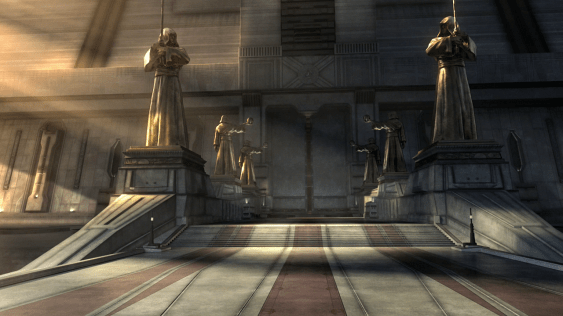
The Jedi Temple

But by throwing away their identity as peace-keepers (or social workers), the Jedi council’s disjunct views clash with societal, and communal paradigms, resulting in peace becoming a tool used to maintain the Republic that is now the foundation of the Jedi council’s political power, and authority.  Consequently, the Jedi fall victim to their own vanity. Meanwhile, the Sith’s ability to reassess, manipulate, and even become subservient to the current state of affairs, over generations, helps in their recovery, and victory over the Jedi.

Revan, Anakin Skywalker, and  other popular characters of the Star Wars lore symbolize this contest between the two factions, often defined as an eternal conflict towards balance in the force. Taken in the context of the Republic, and its citizens, this could also define the efforts toward a stable government. Revan’s position as an exile, and his dual personality as a Sith Lord, and a Jedi Master, help him succeed when he may be doomed to fail. By the end of the book, Revan doesn’t necessarily find answers to all his questions. Instead, he finds his peace in the hope that the future of his loved ones is safe. 

Peace is an ideal, and may never be achieved completely. It is a notion that requires us to address our own failures, individually, and as a species. While its results may be temporary, it is in the hope of such an ideal that our wars are waged, our beliefs are found, and our lives are balanced. In conclusion, peace is a question without an answer. Revan is a metaphor of this truth.

“Who I am is not important, my message is.” – Darth Revan