
The Prince, A Reflection Of Our World

Hi everyone, it’s been a while!

My absence over the last month has coincided with my directing a war upon many fronts, mostly revolving around my studies and research at the university. The slew of paper work resting by the side of my computer monitor serves as evidence of the ragged battlefield that has become my home over the last few months.

amjrVPN8m_480wa_v1
Studying…it’s a hard fought battle between Expectations…
tumblr_mfymmal6gd1rosuzvo1_500
and Reality…

But, with the semester coming to an end, I’ve had several windows of opportunity to kind of sit back and take a break from these daily battles. In setting the stage for the statesmanship of the enduring war that has been my PhD degree so far, I found an interesting perspective and a read worth the time in Niccolo Machiavelli’s The Prince.

Setting aside the  intricacies of 16th century Italian politics that often made me reference Wikipedia (since my purchase of a discounted edition of the book came without supplementary notes), Machiavelli’s realpolitik treatise was quite the enjoyable read.

Unlike the idealism portrayed in Plato’s Republic, Machiavelli’s distinctly non-idealistic guide to the nature of statecraft is obvious within the first few pages of reading. The amoral pragmatism expressed in his perspectives on how a prince should establish and maintain his power make it all the more obvious as to why the author’s name is considered synonymous to the devil, and an adjective for devilish cunning.

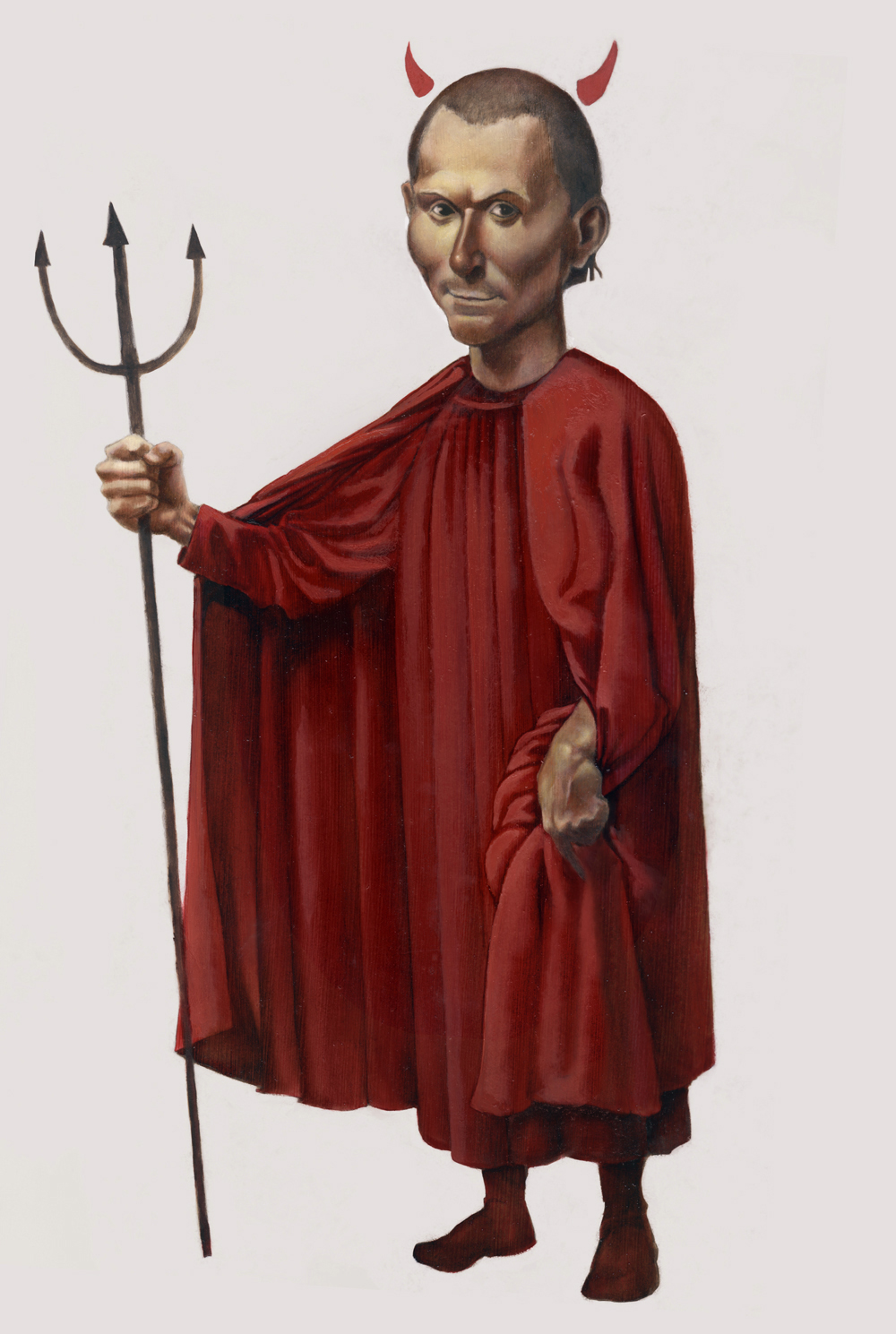
machiavelli-Zachary-Franzen3.jpg
“You’re the devil in disguise…” – pretty much what all religious institutions had to say about Old Nick.

Despite the crude and downright insipid methods that Machiavelli purports for use in the struggle for power, I couldn’t help but be drawn into his work, especially when considering the legacy it has left behind in world history and its persistent influence in the prevailing political climate.

Across the world, politicians continue breaking their promises or rather continue making empty promises; the meaning of politics has become distorted amidst what is a solicitation of power, followed by corruption, and atrocities of various sorts of nature. While it may seem that the democracies of the world have not advertised their affinity to Machiavelli’s teachings, elements of his work are prevalent in the administrative institutions of several nations around the world, and by their many leaders who have taken note of his recommendation to appear benevolent, moral and religious.

“It is necessary for a prince wishing to hold his own to know how to do wrong, and to make use of it or not according to necessity…” (ch XV)

“A prince ought to take care that he never lets anything slip from his lips that is not replete with the above-named five qualities, that he may appear to him who sees and hears him altogether merciful, faithful, humane, upright, and religious. There is nothing more necessary to appear to have than this last quality…” (ch XVIII)

Machiavelli’s teachings are inherently a reflection of the state of the world, and therein lies the power of its influence. No matter the millenia that may come to pass, the emphasis of Machiavelli’s teachings largely depend on the basic tenets of human nature, especially when confronted by the opportunity for power. In that front, it is not difficult to observe the diverse constructs of power integral to various institutions that serve as the foundations of modern-day society, from education to government.

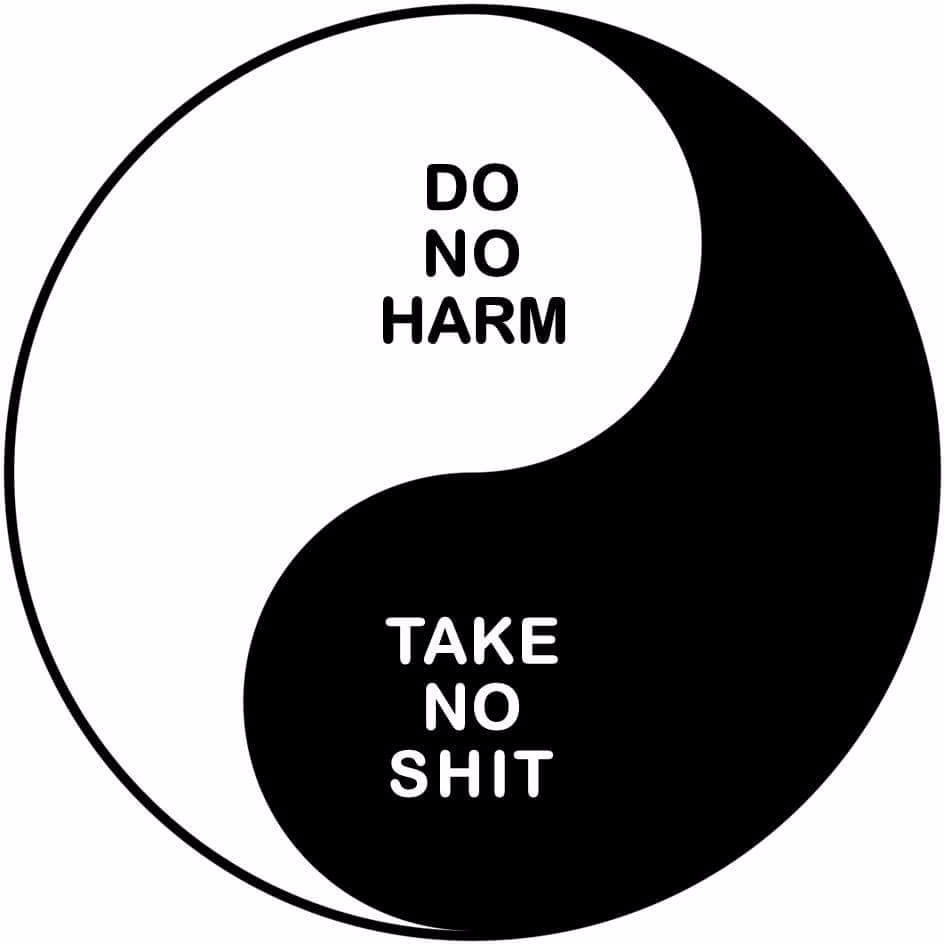
Nevertheless, Machiavelli’s obtuse perspectives on the employment of power can also serve as a case study for the positive outcomes that could be drawn from the knowledge of its opposite. A black and white perspective on the myriad complexities that dictate the ritualistic facets of human life is far too extreme, and while the idealism most often romanticized by philosophers and religious stalwarts may be a far-cry from reality, Machiavelli’s The Prince by describing one side of the extreme, leaves much for argument on the establishment of a grey middle ground of sorts.

Ch3RosB
The Tao of “The Prince” kind of borders between these two extremes.

In that vein, I suggest The Prince for anyone willing to engage and wrack their mind in a work that can essentially be described as a game of chess about human ethics and the corrupting potential of power.

As for myself, having completed my fair share of reading for the semester, I look forward to getting started on the next set of writing projects that have been stewing in the back of my mind for quite a while. As such, I hope to see you all again very soon in my next post where I will provide another short discussion of what writing means to me, both as a blogger and an aspiring author, and what exactly makes my imagination click!

Making A Difference

I’m fortunate enough to have been given the opportunities that I have had in my life. Thanks to my father’s employment in a prominent non-governmental organization (NGO) called PLAN International (a child rights organization that works with communities in many countries to alleviate child poverty), I, along with my family, have traveled to several countries around the world. We were modern-day nomads, traveling wherever my father’s work beckoned. Whenever possible, I joined my father on his daily adventures, allowing myself the opportunity to understand and learn the multifaceted nature of humanitarian service and development. It also helped that my father often brought his work home, leading to long-winded conversations on his day-to-day exploits.

Growing up, I tried to emulate my father. But as my future beckoned, I learned to find my own unique path, and destiny in life. Still, to this day, I carry the lessons I have learned in the presence of my father, most notably his compassion to his fellow human beings as well as his perseverance and commitment to his work. My father found great satisfaction in the simple act of helping others, and even more, in the happiness of his family. His efforts were largely directed to these objective. Thus, he made a big difference in my life, and of countless others. So it is not at all surprising that I too feel a strong calling toward contributing to the society and making a difference in the world.

Our world is riddled with doubt and confusion. The toils of war, civil unrest, corruption, racial and ethnic differences, climate change (along with an assortment of environmental issues), to name a few, are the great uncertainties of our time. These issues afflict our daily lives, standing as we are, mute and in the shadow of a persistent struggle to communicate and unite, as a species, toward a better and brighter future. At the crux of it all, we have allowed our fear and anger to dictate our choices and actions, leading the greater part of the world to be divided.

Take racism for instance, it manifests in many aspects of our social lives. It pervades modern-day societies and political systems; the basis of its strength is a volatile expression of pride, prejudice or aversion to others via discriminatory practices. Humanity has a deep history with racism, and its various forms including segregation, supremacism, xenophobia, nativism, hierarchical ranking, and other related social phenomena. Reaching back to the ancient societies of the past: Greeks, Romans, Indians, Arabs, and even further, to their predecessors, I find that racism was a by-product of our own vanity. Natural circumstances subscribed to humanity our beliefs in an expression of individuality, dividing and classifying us, into specific races. Racism is an institution, not an ideology, founded in capitalism and slave trade.

To me, racism is nothing more than a word that describes the highly- convoluted story that is human cooperation and communication. Is there a solution to this? I admit that many of the issues that plague modern society have great histories behind them, making it difficult to distinguish a unique solution in any case. Nevertheless, I believe we owe it to ourselves to iterate the necessity for action, particularly in recognition of alternatives that may provide the foundation for future solutions.

At one point in my life, I told my father that I would love to build a university. Finding inspiration in the Akademia of Plato, I modeled my university to be an institution that pioneered free thought. People could come and go, study what they must, openly discussing their thoughts with their peers, without fear or discrimination; a platform for reason and rational conversation. I still harbor this dream, though it is a work in progress (there remains more room for thought in the realization of such an institution, especially with regards to its structures and inner workings, but what matters to me is the message of such a concept). In knowledge, and in education, I found what I believed to be a solution towards the fractured communication of the human species. By educating ourselves, and our children in proactive and collaborative thinking we may slowly shear away towards a solution. By addressing our differences, openly and without fear, we may find unity. Of course, at this point, it becomes a question of how are we to do that? I find my answer again in what I proposed earlier. All of us are unique in our own ways, but it is in the same pride with which we define our individuality that we can also define our humanity. The hierarchical structures of knowledge and government weren’t constructed as a means to enslave our species, but as a medium to liberate ourselves in collective thought and action.

This will be the challenge of our time. Communication without fear, government without bias, education without limitations…While it may require an acceptance of short-term losses for the sake of long-term benefits, we must learn to recognize the importance of our world. While anger and fear may have allowed us to survive and evolve over the millennia, those very emotions can also fuel our motivation towards building a better world, not just for those who are alive now, but more importantly for those who follow us, our children, our legacy. Therein lies what may be a small part of the bigger picture, to learn to see ourselves as a global family rather than as select individuals.

My father had a bigger picture that motivated his own actions. It was his family. He found his strength in the happiness of his family, an emotion that he channeled into his work and in the lives of others whom he met and helped. Simply put, he made a difference. Just as much as ignorance can be bliss and can forestall change, anger can be proactive and enforce our will to action. I too want to make a difference, and though I have a long way to go, by expressing my anger, not to separate myself from others, but as a tool to define and communicate my knowledge, to help shape the world, I could one day just like everyone else, if they are willing to, be the difference that will become a brighter future.

The Dragons of Eden – Chapter 1 – The Cosmic Calendar

“What seest thou else in the dark backward and abysm of time?” – William Shakespeare

Time is a component quantity of our daily lives. It is symbolic of the indefinite progress of existence, and events that are generally considered to occur in an apparently irreversible sequence from the past, to the present, and onto the future.

The concept of time has been central to the growth, and evolution of human civilizations. It has also served as an important facet of knowledge that has been studied to a great effect in religion, philosophy, and science. But, to this day, an absolute definition of time still evades scholars.

In The Dragons of Eden, Sagan does not extend his arguments toward an extensive discussion on the concept of time, but rather focuses on its use as a metaphor to describe humanity’s place in the cosmos. To infer the future, it is necessary for us to understand our origins. This is the basis of Sagan’s approach.

Now, it is argued that the predecessors of modern-day human beings, the Homo sapiens¸ evolved somewhere between 250,000, and 400,000 years ago. This number pales in comparison to the appearance of the first primitive humans, such as the Australopithecines, which happened somewhere between 8-9 million years ago. But, even these events, are preceded by an even greater “vista of time” reaching far back into the history of our planet, the solar system, and the universe. Very little is known about these periods of time, and even with the numbers mentioned earlier, we still struggle to grasp the immensity of these time intervals (Figure 1).

Figure 1. Humanity is yet to define its existence amidst the vast cosmos.

Nevertheless, science has found success in the establishment of specific methods that have allowed us to date events from the remote past, such as geological stratification (Figure 2), and radioactive dating (Figure 3).

Figure 2. Geological stratification, bluntly said, involves the study of rock layers, and layering.
Figure 3. Radioactive dating is a technique involving the tracing of radioactive materials in select objects, carbon dating is one such method that is limited to the dating of organic (carbon-based) organisms.

These two methods have provided information on archaeological, paleontological, and geological events. Astrophysical theory has provided for the same on a grander scale involving the dating of stars, planetary surfaces, galaxies, and the even the age of the universe (Sagan states this to be 15 billion years old, though recent results from the Wilkinson Microwave Anisotropy Probe (WMAP) puts the number somewhere at 14 billion years old). The earliest event known in record is called the Big Bang, an intense explosion from the universe is said to have formed, but rather than a beginning, the Big Bang is generally considered to be a discontinuity in time where the earlier history of the universe was destroyed.

To put this further into perspective, Sagan introduces the Cosmic Calendar, where he compresses the 14-billion-year-old chronology of the universe, into the span of a single earth year. In this manner, one billion years of Earth history is the equivalent of twenty-four days of our cosmic year, and one second of the cosmic year is the same as 475 real revolutions of the Earth about the sun. The Cosmic Calendar is a humbling account of humanity’s place in the universe, with all our recorded history occupying the last few seconds of December 31.

Though a short chapter, Sagan’s use of the Cosmic Calendar is quite analogous to a common argument used in astronomy to provide a picture of our place in the universe (Figure 4).


Figure 4. Our place in the universe. The planet Earth is smaller than a speck among the greater part of the observable universe.

While the major premise of Sagan’s book focuses on discussions on the evolution of human intelligence, this introductory chapter is a necessary prelude that helps to symbolize the significance of the subject matter. While it may be true that humanity occupies an insignificant instance in the face of cosmic time, we are now embarking on a new cosmic year, one which is highly dependent on our ability as a species to come together, use our wisdom, and unique sensitivity to the world for our survival, and a greater future.

References