The Lost Artist – Chapter 1 – Where do I start?

Paper? Check. Pencil? Check. Eraser? Check. Drawing table? Check. Now, what do I do? Well, you draw.

Sounds simple enough, but it’s easy to put in action. The greatest challenge beginner artists face as they embark on their creative journey, be it as a hobby or as a long-term professional goal, is finding an answer to the big fat question staring back at them from a blank sheet of paper,

WHERE THE HECK DO I START?

The worst part about this question is in trying to find an answer you can easily fall into a rabbit hole of opinions, comments, and suggestions from various professionals in the field. All that information, coming from so many different directions, can leave one confused and stressed. I’ve been there and it took me nearly two years to get out of that cycle and find my own path toward my creative goals.

To start, the most common advice you get to hear is, to begin with the fundamentals. This covers everything from learning how to draw with lines, shapes, forms, adding value and texture, alongside a slew of other things like perspective, figure drawing, etc. While this approach works REALLY well for a lot of people, it isn’t necessarily the ONLY recipe for success.

When I started, I took this advice wholeheartedly and went hardcore on learning all the fundamentals. I sat there deconstructing my subjects into forms, practicing my lines, shading, and a lot more. But, after a while, the whole process felt tedious and, to be honest, boring.

I reached out to the community. I read about what other artists had done, and in most cases, the answer I got back was to keep pushing on. Practice makes perfect and that is true. Every artist and mentor I reached out to had the right idea but there was something more to their advice that flew completely under my radar.

After nearly a year of inconsistent progress, I took a step back to get some perspective. I gradually recognized that just as much as art is a subjective medium, so too is the process or path that one takes toward becoming an artist. There is truly no RIGHT way that works for all.

This doesn’t mean practice doesn’t make perfect or that learning the fundamentals doesn’t help. Rather, how one goes about learning the fundamentals or gearing practice sessions to their needs and interests can make an enormous difference in maintaining enthusiasm and commitment to their goals as an artist.

My initial approach had focused too hard on perfection and too fast on success and so much so that I never really got anywhere with it. I purchased a good chunk of reference books, looked up a lot of online resources and courses, practiced the fundamentals, jumping from one lesson to another, and only ended up being overwhelmed.

Taking a step back helped me realize there was nothing wrong in starting with what I liked to draw and slowly building out from there. In due course, I recognized the skills I needed to tackle different aspects of my projects and artwork while gauging it against the work of other established masters in the field.

Adopting what I considered a “project-oriented” approach, I redefined my artistic lessons based on my personal goals: to take the scripts and stories I write and bring them to life through art. I wanted to enhance my writing through art. And using that art, I wished to work toward a possible long-term goal as an animation director. [I have backups too in the form of a comic book artist]. I finally had a direction.

Having identified my destination, I was able to pinpoint the relevant skills I required to start my journey. The fundamentals were certainly important, but more so than that, was also the need to draw consistently. Revisiting the references I had scoured through earlier, I slowly put together a solo artist program (currently in progress and under continual development) that not only met my specific interests (from the types of drawing media I gravitated to, the styles, etc.) but also enabled me to learn my fundamentals through projects of my own liking.

While this approach is highly subjective to my personal goals, they gather inspiration from other artists in the field whose courses I have followed and who provide a great bunch of online resources that all beginner artists can follow. Thus far, I can say that I have found great success and motivation to keep up with my goals.

So, from this noob artist here to my awesome readers out there, if you are much like me (or otherwise) and prefer a project-oriented approach that also enables you to tackle and learn the fundamental skills necessary, my advice would be to start by identifying your personal goals for your art career.

Knowing a specific endpoint, no matter how far down the timeline, that you are aiming for can really help get you started in identifying the skills you need. This helps build focus and also avoid stretching yourself too thin.

Following this, use projects or subject areas that interest you as a platform to build your fundamentals in an iterative but dynamic learning process. For example, if you love drawing animals and love pen-and-ink as a medium, there is nothing wrong in structuring your studies to focus within that medium and build out from there.

You can begin by learning how to deconstruct animals into basic forms and build out the animal’s physical structure using lines. As pen-and-ink is a “linear” medium, you then get to add to the details using various kinds of line strokes. Through each step, you learn something fundamental and you get a drawing done.

If it wasn’t obvious, I love drawing animals too, and here is one of a lioness I happily whipped up using Clip Studio Paint.

Most importantly, recognize that it is completely OK if you are not satisfied with your end product. It is OK to fail. Just don’t dwell on it. Continue onward to another subject and work on what you missed the last time around. In what is a constructive and iterative process, you get to hone your skills regularly while also enjoying the process.

Using this approach protected me from getting overwhelmed by the resources out there and learning effectively in a piece-wise fashion. An apple a day keeps the doctor away. Similarly, learning one small facet a day, be it as simple as looking at subjects and deconstructing them into primitive forms, IS progress and can really keep your doubts away. Trust in the process! After all, you made it out of your own willingness to improve.

On that note, I will see you next in Chapter 2, where I share my experience of the first two months of my solo artist program, the courses I have undertaken, and some awesome resources that all beginner artists must indulge in.

And, as always, don’t forget to follow my artwork at LockeInArt on Instagram!
Moving from Science to Drawing

Drawing is tough.

It is even harder when you have a toddler to keep an eye out for. I got out of that particular fix once I moved to Calgary and I was able to allocate office space for myself at my new home. All of this took well over three months (between December to February), so drawing had to be on the backburner for a while (another reason for the lack of follow up posts in The Art Corner).

Now, having eased into a working routine this month, I was ready to go crazy with my art and keep up with the good vibes I had with my previous drawing of an eye back in November.

Unfortunately, the restart began with me careening into a major roadblock. Suffice to say, it took a lot of effort to overcome this obstacle. To relate this story, I need to revisit my childhood memories. Back then, I used to draw A LOT (art competitions, drawing classes, and a large stash of comics and kids magazines kept my creative juices flowing). What defined my work was the clarity with which I was able to approach whatever I wished to draw. I enjoyed the process.

Unfortunately, growing up has its toll.

In my case, drawing became less of an active interest by the time I finished my secondary education and it was science galore once I started university. It wasn’t until I began my doctoral studies that my continued passion for writing stirred my long-forgotten love for drawing. With every story I worked on, I really wanted to bring the worlds of my imagination to life on a piece of paper.

Long story short, I had to hit the drawing board again.

As I sat down to restart my drawing adventures this March, it became very obvious very quickly that my mindset needed a major shift. It wasn’t a case of, “I can’t draw!” Rather, after 12 years at university, my mind had grown accustomed to a strictly logical thought process. This had its fair share of benefits when I had to solve physics problems and what not but it didn’t translate well into my art process.

Incorporating a systematic approach to my art helped me easily build on specific skills such as the ability to deconstruct images into basic geometric shapes and objects. This was great for getting the basic structure of my subject, but when it came down to molding these geometric shapes to match reality, I found myself spending more time critiquing the details as opposed to getting my drawing done. This made even simple drawings and assignments very taxing. I realized I was thinking too hard, and needed to “let the art flow” and “loosen up.”

That was easier said than done, especially when it had to accompany a huge shift in mindset. Logic doesn’t follow very smoothly in art and part of drawing is to learn to be ok with restating and imperfections. That was a tough nut to crack for me.

Ironically, having a toddler running around in the house helped in this aspect. By the time I sat down to draw every evening, I was too tired mentally to engage as a critic. Rather, the process gradually shifted to just putting pencil to paper, being relaxed with my approach, and most importantly, being OK with it.

This made the difference. Moral of the story, “Keep it simple. Look, hold, and draw.”

So here we are with the pieces that I got to work on recently:

A product of my frustration. I needed a mental break one night, and just tried something ambitious: a rough sketch of a portrait that came up on my Facebook feed (Permissions obtained from Irina Akulenko). I didn’t care about how perfect my linework was, just kept restating and restating in what was an enjoyable 45 min drawing session. Gonna keep working on it to perfect it.

Getting back into Art – Drawing an Eye!

Life is a balancing act. For me, that boils down to juggling my day job as a freelance science writer and my nighttime adventures as an aspiring comic book artist.

It took me more than a decade to realize my passion for writing and art. In retrospect, its funny I didn’t catch it earlier especially when the answer was staring me in the face.

I love writing. It started off with personal projects and now I’m wrapping up the final script for a graphic novel that I hope to publish sometime in the distant future. Art was more an on and off companion since my childhood.

Now, I’m ready to really get into it, and polish my knowledge and skills. I still have a long way to go and there is much to learn. Having made a specific section called “Art Corner” in this blog, I hope to utilize it as an art journal of sorts where I can post my weekly progress.

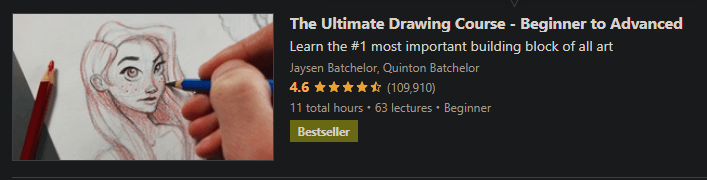
You have got to start with the fundamentals, and so I started off with this course on Udemy:

The first lesson was to draw a realistic eye, as best to our ability as possible. I would then draw the same eye, at the end of the course, as a means to gauge my progress.

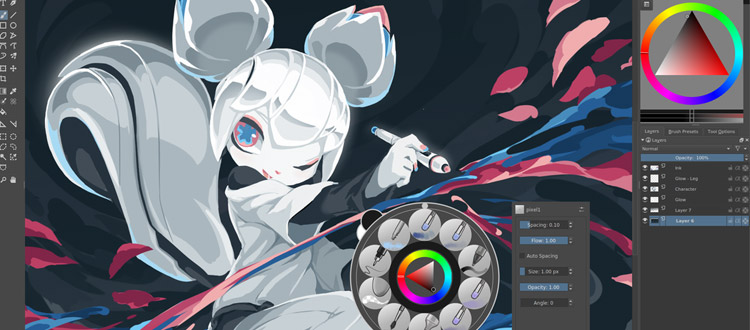
I’m a pencil and paper guy but with my recent foray into comics, I have also been interested in picking up digital art. So I did two eyes!

The one on the left is obviously done using pencil and paper, and the one on the right is an ongoing struggle in my digital foray.

I hope to keep up with my weekly projects and post consistently! Feel free to critique the hell out of it in the comments as it helps me even more. And, don’t forget, follow my art journey at LockeInArt on Instagram as well!

Follow me on Instagram!

After attending the Lightbox Expo I was hard-pressed to start an Instagram account dedicated to my artwork. Aside from The Pensive Reverie and The Procrastinating Scientist, my presence on other social media platforms is sparse.

My lack of interest in social media notwithstanding I would be a bigger fool to deny that social media can be a productive resource on its own for individuals pursuing creative endeavors. Nevertheless, I was initially reluctant as I felt my art skills were too amateurish to warrant sharing my work in a public platform.

But, the journey is always a part of reaching our goals and destinations. Thus, I have decided to start an Instagram which will record my rare successes, frequent stumbles, and hilarious fails in my journey to be an artist.

Much of what I intend to share on Instagram will revolve around my growing art skills, my brief stints of inspiration, and whatever is the ensuing result when my ideas meet paper and pencil.

For those among my readers who are also active on Instagram, I would really appreciate your support by following my adventures on this platform as well. So, with that being said, here’s to a prosperous Instagram art journey at Ajay Peter Manuel@lockeinart.

They say the pen is mightier than the sword, let’s hope my pencil is equally mighty in reproducing the worlds that flourish in my brain.

Reviewing the Wacom Intuos Comic and my art journey so far…

I love writing, and even more so being lost in imagination of the worlds I desire to construct for my stories. The last I remember, my love for drawing was at its peak during my early teens. With my father being a pretty good amateur artist himself, I tried to emulate him by drawing whatever subject that piqued my interest in the weekly kids’ magazine. But as the years passed, my interest in drawing evolved to resemble an empty, short-sided affair amid random spurts of creativity.

Much of that changed in 2017 when I completed my second book, A Little Bit of Everything. It was around then that I seriously began engaging in the possibility of a creative career. Much thanks to my awesome wife and our love for manga, comics, and animated media I began yearning for more than just writing a story. I wished to draw out the worlds of my imagination and make them come to life.

I enrolled in an introductory art class at the local arts center in Edmonton in 2017 and not too long after completing A Little Bit of Everything, I purchased the Wacom Intuos Comic to begin my foray into digital art. Having used this drawing tablet for about four years now, I felt it was time for a review.

Digital art comes with the caveat that one must NOT mistakenly assume that it is easier. In general, one must first learn how to draw to be able to be good at all. Switching between traditional and digital media offers select advantages and disadvantages but it does not correspond to your drawing skills getting better. Rather, what makes the difference is practice; the more you practice (no matter what media) the better you get at drawing.

After installing the Wacom Intuos Comic, I began exploring the digital medium landscape by trying out the limited-time software offer of Clip Studio Paint, alongside various other different free software including FireAlpaca, Krita, etc.

The surface of the tablet is smooth and quite sensitive (which can be managed via tablet settings). What did take a while to get used to was the hand-eye coordination between the tablet and the screen. This is because the Wacom Comic is a drawing tablet as opposed to a graphics tablet. Though this was highly frustrating at first, I eventually got the hang of it. Having to balance your hand-eye coordination also motivated the good practice of focusing on my monitor, and observing the subject of my drawing, as opposed to switching back and forth from my tablet to the screen (as one is often prone to do when drawing with pencil and paper).

The Wacom Intuos Comic comes with a pen as well as extra nibs provided in the package. Getting used to the tablet also involved getting the hang of how the pen worked on the tablet’s surface. Much of this was made flexible via the tablet software allowing one to make relevant modifications on pen pressure to helping it feel akin to an actual pencil.

My art journey over the last four years has been an on and off affair between my doctoral studies and whenever I get a chance to draw. The Wacom Intuos Comic in my opinion is an awesome drawing tablet. The greatest pro to it is the fact that it introduces you to drawing on a tablet with ease. It is light-weight, looks awesome and can be carried wherever you want. The caveat is that it is a drawing tablet and therefore requires you to have a computer around to be able to do any kind of drawing.

The Wacom Comic that I bought in 2017 still looks brand new though the smudges and the pen marks on the tablet have grown visible over the years. Recently, I upgraded to a new graphics tablet in the XP-Pen Artist 15.6 Pro. My reasons in doing so stemmed from THE one personal con I had with the Wacom Intuos Comic: a small working area.

Being a giraffe (I’m 6’2’’, long ass fingers, and lanky as heck) in my own rights, despite getting used to the hand-eye coordination involved in using the drawing tablet, I often struggled with the small working area (7 inches) which left me often feeling uncomfortable and cramped up during long drawing sessions.

Obviously, this is a personal opinion. I have found many artists who are physically similar and just fine using the same. In my case, translating the free space in traditional media of pen and pencil (on a drawing desk) to the Wacom was difficult no matter how much I tried. I would ultimately find a working process in doing my rough sketches by hand mostly and using the Wacom as the final resort for finishing touches.

This doesn’t take away the fact that the Wacom Intuos Comic is the perfect tablet for anyone to start their journey in the digital medium. On those days when I can’t lug around my XP Pen, the Wacom Comic remains my go-to portable drawing tablet. Learning software aside, I’ve loved working on the Wacom Intuos Comic. The added bonus of the free software, and relatively cheap prize (around $80) makes it a perfect comic for the budget artist. At this point in time, I believe the Wacom Intuos Comic is no longer offered at the Wacom site, but its successor in the Wacom Intuos S is equally competitive and smartly priced for the budget artist.

With that said, as I wrap up the remaining chapters of my doctoral studies and shift my focus to more creative endeavors (with a new graphics tablet to boot), I intend to keep you all posted on my progress starting with a follow-up post on my new Instagram where I intend to share all my success and the occasional (hopefully) hilarious fails in my journey to become a competent artist.

Touching base with Pencil and Paper

When I was young, I spent a good chunk of time at my grandparents. It helped that their house was situated right next to ours, and my grandfather’s collection of weekly kids comics and magazines were an abundant source of entertainment and inspiration for the kid in me.

img_20170505_191214596
My grandfather collected enough of these that we probably had over 500 of these thin magazines stacked up in a corner of the storage room.

Drawing came naturally to me back then, and I took any chance with a blank paper to draw whatever caught my eye. My grandfather fueled my imagination by sharing folk tales of old and just about everything that he knew while my grandmother indulged me with all the treats she could make to keep me energized with a full tummy.

11
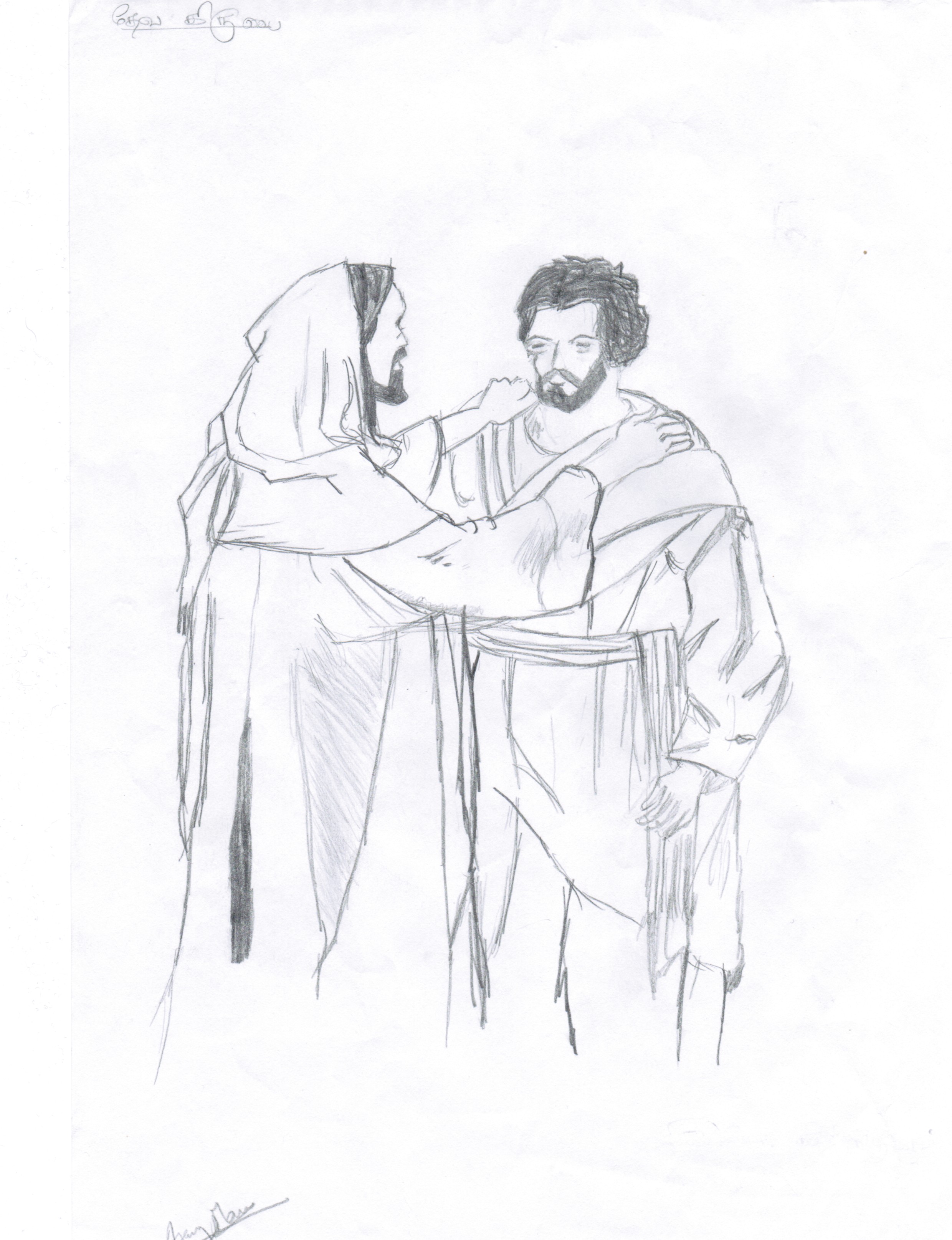
Being a Christian, my grandfather often shared his unique perspectives on the Bible. As a kid, the stories came off more as an epic fantasy, leading me to draw this rendition of Jesus and Simon Peter, no doubt referenced from an illustrated bible at his home.

As the years passed, my interest in drawing gradually took a backseat to my newfound love for writing. Rather than transpose what I felt was a simplified projection of my imagination onto paper, I felt it better to immerse in my imagination as a whole through writing. I was naive to think that between writing and art, one was lesser than the other.

Now, I have come full circle in realizing that art and writing are just two faces of the same coin. It is particularly sweet that I struck upon this knowledge in the process of completing the script to the graphic novel I have been developing over the last two years, and intend to dedicate in memory of my grandfather.

I have spent the last few weeks touching base with old friends in Pencil and Paper. It has been a difficult reunion to say the least, but we are gradually patching a decade of our on-and-off relationship in a newfound resolve to build a strong foundation for the future.

Frustration has been a loyal companion, but I’ve also used it as a source of motivation.

Firstly, I had to start by identifying the relevant skills I required to transition into the “graphical” aspect of my graphic novel. Phase Infinity, as I now call it, has all the characteristics of a long and arduous journey through diverse art courses intended to boost my amateurish skills while simultaneously churning out the artwork for my graphic novel.

To be honest, I find the final product to be a goal for the distant future. This isn’t necessarily discouraging as it is my first attempt after all. What has been annoying though is the persistent need to be overly critical about my work and for lack of any other word, too stiff and tight about my daily progress.

Figure drawing is my first priority as of this moment, and I have been enjoying it in all its gestures and forms. Consistency is the word for the rest of my year, as I hope to amass daily practice sessions.

Steve Huston has been my hero on this front, and I highly advice his books to my fellow artists among my readers.

Learning the human anatomy from an artistic perspective has also opened the door to some philosophy. Gesture drawing, in particular, has helped me embrace the fluid nature of our environments and our very bodies. For someone who has been enamored with the axiomiatic logistics of science and mathematics over the last decade or so, figure drawing has provided a refreshing, and new perspective of the world and its motions and rhythm.

Being a fan of Bruce, these two messages which aligned with the philosophy of gesture drawing became de facto screensavers in my mind throughout my artistic process.

That is all for today! I will keep you all updated with my struggles in art-realm over the coming weeks by sharing some of my art work in the Art Corner, as well as a review in my next post of one of my favorite artists in Kim Jung Gi.

To be Continued…

“Saying is one thing; doing is another.”

I spent the last few months in what amounted to a roller-coaster ride “parallel processing” all the variables that regulate my present life, and those I must now consider for my future.

I’m a guy who likes to live in the moment and not have to think too far ahead so, obviously, this was a problem. The floodgates opened with a series of conversations at work after I had successfully completed my candidacy examination.

giphy.gif

I was perfectly poised at the halfway point of my PhD degree, and on a near-constant basis, caught up in various conversations revolving around a necessity to plan ahead and begin setting the foundations for my career aspirations.

While much of the advice I received was in good spirit, it was quite overwhelming to take in all at once. It also served as a bitter pill that I hadn’t fully pushed myself to ask the important questions and seek the necessary answers for my future.

Thankfully, with this post, I can confidently say that I’m now on the road to getting my shit together and fully committing to my career aspirations.

Passions vs. Priorities

The world revolves around money, and I would be stupid to fool myself otherwise. I needed a good plan, and a backup to that plan, on top of another backup to my backup.

With that said, I spent the last few months heavily researching, not so much in science, but in life. I identified my passions as well as the priorities that come naturally as you grow older. As usual, it will ultimately be a balancing act, and one that I’m eager to dive into.

The goal: find a secure day-time job that fits my academic and scientific interests (ideally, a science writer), and serve as somewhat of a financial coverage, while simultaneously moonlight as a writer/artist….

giphy (1)
Who will take over the world!

Teaching at the university… 

My outlook on such a future was further strengthened in a recent opportunity as a guest lecturer for a higher-level undergraduate course at the university. As a teenager, I was a huge fan of the works of Carl Sagan. I was captivated by his ability to communicate complicated concepts in such concise and measured language.

Preparing for the lecture, I would try to emulate Sagan in my own way.  Unlike the usual recipe of wrestling with the concepts in my own privacy, I would wrestle with ideas on how to communicate my research to these undergraduate students.

The lecture itself would go “smoothly,”

51Gnol

From what I gathered talking to a few of the students, they seemed to have understood the points I had tried to get across. It was also clear I had a long way to go until I could reach the level of Dr. Sagan. Set against the backdrop of inner monologues on my career aspirations, the guest lecture experience was beneficial and altogether, a lot of fun.  

Looking ahead

With that being said, I am now in full-time pursuit of setting the foundations of my career in writing and art. Moving forward, there are two major changes I wished to share with my readers:

(1) A science blog, established independently from The Pensive Reverie, that I will publish this coming week on WordPress. It will serve as my primary platform towards my efforts to becoming a science writer.

(2) The continuation and refocusing of The Pensive Reverie as more of a personal outlet (along the lines of this post’s content) to share my daily adventures and thoughts in my efforts to moonlight as an author/artist.

That covers most of the fun surprises I have in store for all of you. I will see you all again very soon with a new post, and a new blog to boot on top of it!

Writing Comics and All That Comes With It…

Comics have always been a part of my life. Rolling back the years to my childhood at my hometown in Madurai, India, I can distinctly remember the excitement I felt every weekend awaiting the delivery of the weekly comics magazines that accompanied the local newspaper.

giphy

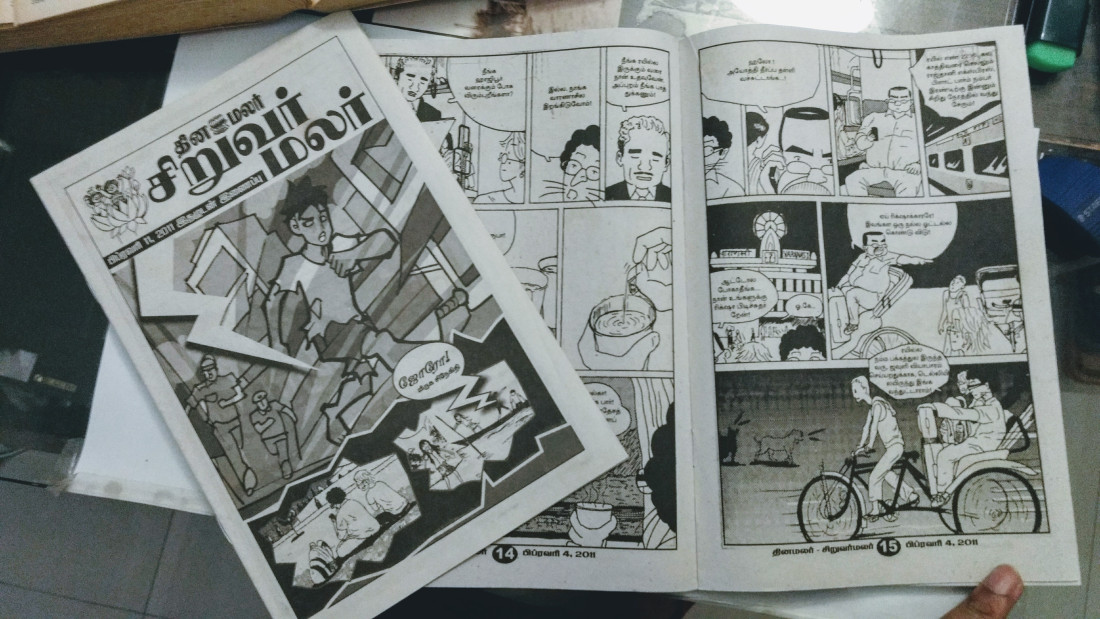
Siruvarmalar and Thangamalar, the literal translation beings “Kids’ Flower” and “Golden Flower,” provided a mashup of a children’s activity book mixed in with folktales, fables, and short stories presented in the format of a comic book.


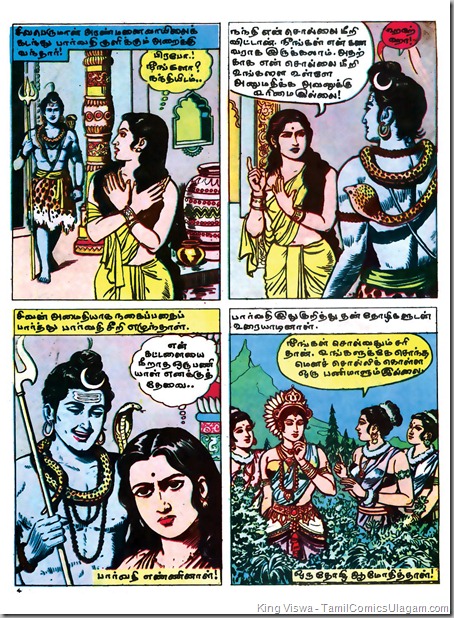
(Left) Sample cover of a Siruvarmalar  issue, and (Right) a sample comic strip from within detailing a mythological tale of the Hindu God Shiva. The characters observed are of my native language, Tamil.  

I would spend hours on end pouring over the enormous collection of said magazines that my grandfather stored away in his closet, and that would be a weekend well-spent.

My family’s departure from India to Egypt would result in a break of sorts from comics and my full-fledged introduction to their animated counterparts in cartoons and anime. A few more years down the road, and following the commencement of my post-secondary studies at university, I would rekindle my love for comics in Japanese manga, and other Western staples including DC, Marvel, and an assortment of graphical novels.

As an avid comic-book fan and as an aspiring writer, the goal of kick-starting my own comic-book had always been on my mind. Now, two weeks into writing the script for what I hope will be my first graphical novel, I’ve been thoroughly enjoying the diverse challenges that seem to crop up on every front as I try to bring my story together. A large part of these challenges originate from my unfamiliarity in tackling not only a new genre of writing but also a new medium.

giphy (1)
It’s a steep learning curve, but one worth embarking on. 

So, what have I learned so far:

1. Writing a comic is not exactly the same as writing a novel. They say a picture is a thousand words. That has become the driving motto of my work thus far, being that I spend a lot of my time imagining the outline of my story before settling down on the script. It is like constructing a silent motion film in my mind.

2. Attention to detail is important, but so is also being concise with what you want to convey to your readers. In writing the script, I found my greatest challenge in getting used to the fact that my dialogues would remain in a world separate from the art work that will serve to provide the emotions to my story. Thus, I had to keep my dialogues effective, concise, and kind of resonate with the emotions I wished to convey in the scene.

3. Writing a script may seem relatively easy ONLY at the start. This was somewhat of a lesson in humility. I began with lofty expectations, assuming that I would be able to complete the script to my comic over the period of a weekend. Boy, was I wrong! Let’s give it at the least till the end of summer, or maybe the end of the year.

4. Don’t overthink. Every writer has a quirk that makes them unique. Overthinking may be a popular category for many writers, and I can certainly be counted in that special group. It’s difficult but sometimes the best way to go about writing a script, not to mention a story in general, is to not overthink to the point where you hinder your own writing.

5. Temper your expectations. This is more of a personal challenge, in that I’ve always been the greatest critic of my own works to the point that my expectations get heavier and heavier. In writing my script, on several occasions, I had to step back and tell myself to relax and not place lofty expectations on myself, especially when it was my first outing in a new medium. Most importantly, I’ve learned my lesson in patience and perseverance. 

What I’ve said thus far may make it seem that resultant process of writing my novel script has turned me into

tumblr_mi2fwmDfza1ql41ypo1_500

The reality is quite different. As frustrating as the process can be, I’m relishing in the challenge, and it has only motivated me towards my goals. In 2 weeks, I have written 2 chapters, and that’s great while trying on one hand to balance my PhD studies. I hope to keep up the pace, maybe even go a little faster, and keep the ball rolling. Once the script is done, my efforts will be fully directed toward the necessary art work, but that’s a story for another day!

Adventures in Drawing – A New Beginning

Previously on “Adventures in Drawing,” I discussed several matters of art. I specifically placed emphasis on the three valuable lessons of learning to actively see thingsthe value of repetition, and drawing what one sees, not what one knows.

The second half of the drawing course followed the application of said rules with a series of projects. I had the wonderful opportunity to test my skills with various mediums from charcoal, graphite, and conté sticks. Along for the ride came an assortment of healthy drawing techniques I had learned earlier involving the use of guidelines, the ability to delineate depth and active perception in objects, as well as blind contour drawing etc. All in all, I thoroughly enjoyed the opportunity to test my skills with the various media (Figures 1-2).

Figure 1. Man’s best friend (using charcoal, and graphite). 


Having completed the course, I can certainly say that my knowledge, and library of resources pertaining to drawing has grown exponentially. If there is a takeaway message from my experiences so far, it would be the following: simply put, anyone can be an artist. All you need is an HB pencil, a sketchbook, and a little bit of incentive. Most importantly, practice makes perfect.

In my opinion, I view drawing, and art, in general, as a personal interpretation of one’s environment, and imagination; a realm of infinite possibilities. The uniqueness factor of one’s works is dictated not through the judgment of external critics but rather one’s own individuality. Thus, you have nothing to fear in the criticism of your own doodles. We are all artists in our own measure. As Mason Cooley put it, “Art begins with imitation, and ends in innovation.”

Figure 2. Unfinished swimmer (using conté sticks)

With every passing day, I get closer to achieving the same with my artwork. Once again, I’ve learned that practice makes perfect. (On a side note, it also helps to have an encouraging partner, especially one who goes out of their way to buy you a legit Japanese manga kit but I digress.) If I could briefly summarize the steps that I have taken so far in my journey in drawing, and that I wish to share to my fellow aspiring artists, they would be:

(1) Start with doodles, and doodle frequently. Sketch whatever you wish to sketch. Freedom of imagination, and action is important in drawing.

(2) Get a few guide books on the side, or even better, just parse through the overwhelming history of artists, and their works that we can readily find information about on the WWW (world-wide-web).

(3) Trying a short, and supplementary course is highly beneficial too. Learning drawing also involves the communication of ideas, and techniques. (Check out the arts center in your city. If you don’t have one, Udemy is a wonderful online resource for awesome, and cheap courses. And if that doesn’t work, then it’s even more simple, learn from nature, and become your own artist. There’s no limit to human creativity, and imagination.)

(4) Aggregate the lessons you learn in infinitesimal steps, and integrate them toward a full learning experience.

Moving on from here, I intend to eagerly pursue my dream of becoming a mangaka in the future. For those among my readers who are avid comic fans, and are particularly interested in making their own comics, I highly suggest the constructive anatomy, and figure drawing books written by Burne Hogarth, and George Bridgman (shown below) to get you started.

But after all is said, and done, remember to relax, and just have fun with it!

b213b41e0994cef2104f5f8dbff5fb00a437211b2eec08212df63096b798cee0

Transitions

Life is all about transitions. One moment, we find ourselves latched on to something, and the next instant there is something new around the corner that catches our attention. I have had to deal with my fair share of minute, but influential transitions owing to my absence over the last few weeks; ranging from decisions I have had to make on my academic career in pursuit of a PhD (which has incidentally become a wild-goose chase for funding opportunities), to my exodus in obtaining a driver’s license, and all the way to alighting upon the final stages of content editing my second book (Agent X)!

All of which brings me here today, back to my pensive reverie, during a stormy overcast in Edmonton that beckons me to take up the “keyboard” again, and get back to the blog posts I have been planning for a while. So without further ado, this is what we have to look forward to in the coming days!

Beginning with another recap of my “Adventures in Drawing” I will come full-circle as I complete my Drawing 101 course, and present a few more tricks I have learned over the past month.

Following this, we will shift gears, and in lieu with the current political “climate” (particularly with reference to the recent proceedings at the Paris Accords), I will provide a report on climate change, approaching the topic from a scientific, political, and socio-economic perspective.

I will also add another chapter to my review of Carl Sagan’s “Dragons of Eden,” as we explore the mechanisms of the human brain including the R-complex, the Limbic System, and the Neocortex.

Lastly, following up on a request from a reader, I will provide a learner’s review of Bitcoins, a crypto-currency, and modern digital payment system!

So, all in all, look forward to a good number of updates on the blog, and some healthy reading over the coming days everyone!

1dbde7d88d338e2872b77ea8a882c176