Dealing with Change – Redefining the present

Growing up in Madurai, India, I didn’t know much about the outside world beyond my hometown. When I was 10, my family moved to Egypt. We would spend five years there before moving to Sudan. Once I completed my secondary education in Sudan, I would depart to Canada for higher studies. Meanwhile, my family continued to travel around the world to Sierra Leone and UK, before finally returning to India.

The near-nomadic lifestyle my family adopted had its fair share of advantages and disadvantages. On one end, I obtained the best resources available for my education. Experiencing different cultures widened my perspective and helped in my personal growth as a young adult but it was also difficult when I had to confront cultural differences as I became exposed to multiple others.

On the other hand, moving from one place to another was not easy. For every hello, there was a goodbye. I did not like that. Suffice to say, completing my doctoral studies in Edmonton last year, the looming reality of a move to another city was not an exciting prospect.

Having lived in Edmonton for nearly twelve years, I did not want to leave. Newsflash! I had grown to dislike change. Some of my most cherished memories from university, like meeting my best friends and my wife, all happened in Edmonton. All of this made Edmonton, a second home of sorts. So moving, even if it were only three hours away to Calgary, was a difficult pill to swallow.

I wanted to resolve this issue and I found my solution in the most unexpected of sources: my baby daughter. She has the power to induce what I call an oxymoronic reality. In watching her grow and looking after her, she makes me feel that years have gone by when in reality no time has passed at all. Einstein’s relativity can take the backseat when it comes to her. In fact, daily life is a dynamic endeavor with her in the picture and change is the new normal.

Now they say that with age comes a reluctance towards change. Ironically, change is the defining theme to my daughter’s growth. It comes in a multitude of forms like separation anxiety, teething, learning to walk, etc. One way or another, I had to get used to it.

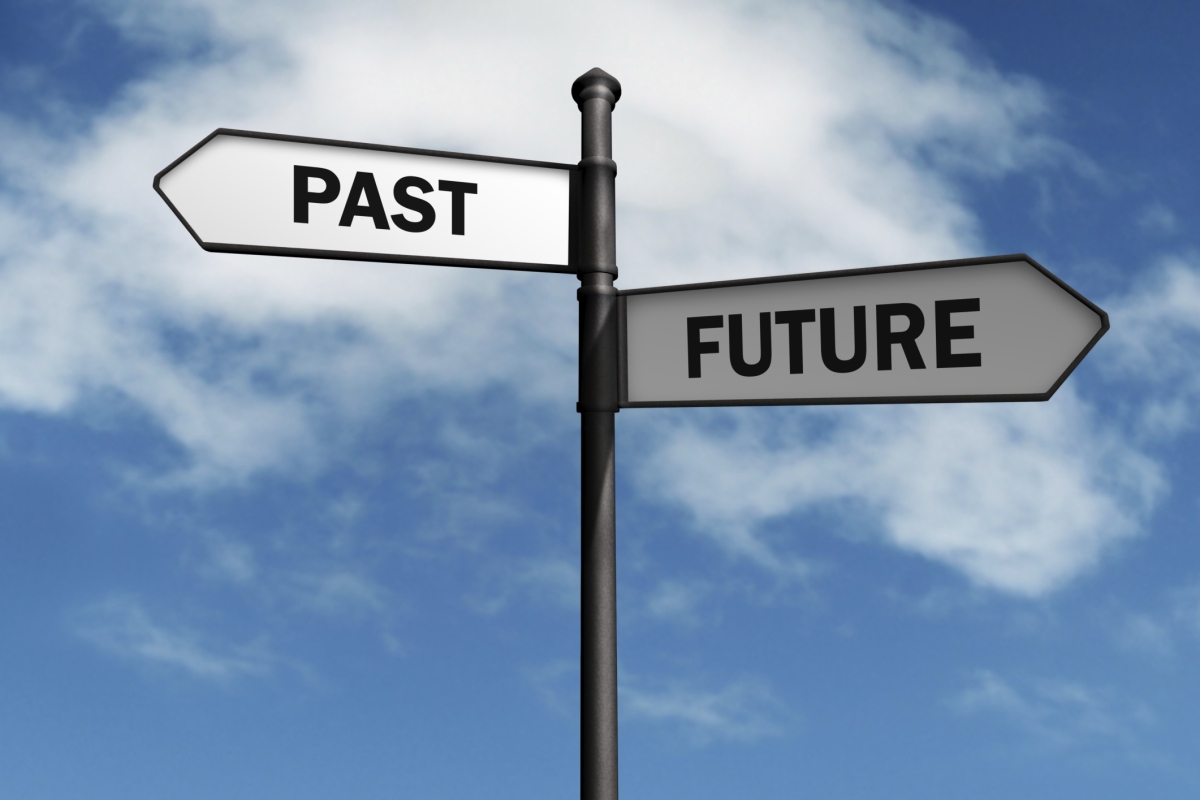
Weirdly enough, when push came to shove, I found myself willing to confront whatever my daughter had to throw at me head-on, without any uncertainty on my part and especially if it meant her happiness and comfort. It is in that spirit I realized, spending the last few months juggling between a one-man unpacking team and father, that change is not harmful. Rather, it helps maintain a healthy relationship between one’s past, present, and future.

Farewells and new beginnings will always be a part of this and I found comfort in knowing that whatever is lost to the past lives on in the present that I get to experience. My past made my present possible.

All this reflection brought me back to a quote/personal motto of mine back in high school, “Cherish the past, live the present, and happily anticipate the future.” Funnily enough, it is only now that I have realized the true meaning behind this statement. Better late than never!

Having now moved to Calgary, there is much to anticipate for the future, not to mention whatever new problem my baby daughter will throw at me and my wife tomorrow. In all of this, I take my misgivings in a positive light and focus on what is most important: the present, where I am now in pursuit of my dreams, growing alongside my baby daughter, and indulging in the changes that will be wonderful memories to cherish in the future.

Making A Difference

I’m fortunate enough to have been given the opportunities that I have had in my life. Thanks to my father’s employment in a prominent non-governmental organization (NGO) called PLAN International (a child rights organization that works with communities in many countries to alleviate child poverty), I, along with my family, have traveled to several countries around the world. We were modern-day nomads, traveling wherever my father’s work beckoned. Whenever possible, I joined my father on his daily adventures, allowing myself the opportunity to understand and learn the multifaceted nature of humanitarian service and development. It also helped that my father often brought his work home, leading to long-winded conversations on his day-to-day exploits.

Growing up, I tried to emulate my father. But as my future beckoned, I learned to find my own unique path, and destiny in life. Still, to this day, I carry the lessons I have learned in the presence of my father, most notably his compassion to his fellow human beings as well as his perseverance and commitment to his work. My father found great satisfaction in the simple act of helping others, and even more, in the happiness of his family. His efforts were largely directed to these objective. Thus, he made a big difference in my life, and of countless others. So it is not at all surprising that I too feel a strong calling toward contributing to the society and making a difference in the world.

Our world is riddled with doubt and confusion. The toils of war, civil unrest, corruption, racial and ethnic differences, climate change (along with an assortment of environmental issues), to name a few, are the great uncertainties of our time. These issues afflict our daily lives, standing as we are, mute and in the shadow of a persistent struggle to communicate and unite, as a species, toward a better and brighter future. At the crux of it all, we have allowed our fear and anger to dictate our choices and actions, leading the greater part of the world to be divided.

Take racism for instance, it manifests in many aspects of our social lives. It pervades modern-day societies and political systems; the basis of its strength is a volatile expression of pride, prejudice or aversion to others via discriminatory practices. Humanity has a deep history with racism, and its various forms including segregation, supremacism, xenophobia, nativism, hierarchical ranking, and other related social phenomena. Reaching back to the ancient societies of the past: Greeks, Romans, Indians, Arabs, and even further, to their predecessors, I find that racism was a by-product of our own vanity. Natural circumstances subscribed to humanity our beliefs in an expression of individuality, dividing and classifying us, into specific races. Racism is an institution, not an ideology, founded in capitalism and slave trade.

To me, racism is nothing more than a word that describes the highly- convoluted story that is human cooperation and communication. Is there a solution to this? I admit that many of the issues that plague modern society have great histories behind them, making it difficult to distinguish a unique solution in any case. Nevertheless, I believe we owe it to ourselves to iterate the necessity for action, particularly in recognition of alternatives that may provide the foundation for future solutions.

At one point in my life, I told my father that I would love to build a university. Finding inspiration in the Akademia of Plato, I modeled my university to be an institution that pioneered free thought. People could come and go, study what they must, openly discussing their thoughts with their peers, without fear or discrimination; a platform for reason and rational conversation. I still harbor this dream, though it is a work in progress (there remains more room for thought in the realization of such an institution, especially with regards to its structures and inner workings, but what matters to me is the message of such a concept). In knowledge, and in education, I found what I believed to be a solution towards the fractured communication of the human species. By educating ourselves, and our children in proactive and collaborative thinking we may slowly shear away towards a solution. By addressing our differences, openly and without fear, we may find unity. Of course, at this point, it becomes a question of how are we to do that? I find my answer again in what I proposed earlier. All of us are unique in our own ways, but it is in the same pride with which we define our individuality that we can also define our humanity. The hierarchical structures of knowledge and government weren’t constructed as a means to enslave our species, but as a medium to liberate ourselves in collective thought and action.

This will be the challenge of our time. Communication without fear, government without bias, education without limitations…While it may require an acceptance of short-term losses for the sake of long-term benefits, we must learn to recognize the importance of our world. While anger and fear may have allowed us to survive and evolve over the millennia, those very emotions can also fuel our motivation towards building a better world, not just for those who are alive now, but more importantly for those who follow us, our children, our legacy. Therein lies what may be a small part of the bigger picture, to learn to see ourselves as a global family rather than as select individuals.

My father had a bigger picture that motivated his own actions. It was his family. He found his strength in the happiness of his family, an emotion that he channeled into his work and in the lives of others whom he met and helped. Simply put, he made a difference. Just as much as ignorance can be bliss and can forestall change, anger can be proactive and enforce our will to action. I too want to make a difference, and though I have a long way to go, by expressing my anger, not to separate myself from others, but as a tool to define and communicate my knowledge, to help shape the world, I could one day just like everyone else, if they are willing to, be the difference that will become a brighter future.