
Embracing Differences: Lessons from My Brother’s Husband – Manga Review

Life is strange. One moment, we find ourselves surrounded by family and friends. These are people who we believe have our best interests at heart, provide valuable counsel on our beliefs and convictions, and accept us for who we are and who we wish to be. But, now and then, life presents a situation where those very people seem like strangers. In their place, someone else comes along. Someone we have never met before. Someone who, with no immediate cause or reason, and by the simple honesty of their actions, becomes family.

This is the reality that hits Yaichi, a work-at-home suburban dad in contemporary Tokyo. Formerly married to Natsuki and father to their young daughter Kana, Yaichi’s life takes a turn when a hulking Canadian named Mike Flanagan arrives at their doorstep. But Mike is no ordinary person. He is the widower of Yaichi’s estranged gay twin, Ryoji. What follows is a melancholic and beautiful story, authored by the critically acclaimed Gengoroh Tagame, that sheds light on the highly closeted Japanese gay culture and how the next generation can positively influence its future.  

Confronting Differences

For Yaichi, Mike’s arrival is akin to opening Pandora’s box. Hidden within its depths aren’t sickness, death, and misfortune, but Yaichi’s own inhibitions, fears, regrets, remorse, and apathy. As the story unfolds, Yaichi wrestles with these emotions in extended inner monologues, amid moments that highlight the disruptive influence of Mike’s presence.

These monologues are brutally straightforward and describe the void that separates Mike’s world from Yaichi’s and vice versa. Their relationship, in its infancy, involves a fair share of prejudices and veiled preconceptions that Yaichi holds about Mike’s identity as a gay man. Yaichi feigns ignorance as a coping mechanism. While he is aware of his personal inhibitions, Yaichi takes the easy way out, rather than coming to terms with his feelings. Mike’s arrival forces Yaichi to face his inner demons.

It is a rocky start. Both men are seemingly lost on how to proceed with their relationship as in-laws. On one side, we have Yaichi wrestling with his twin’s past. On the other hand, we have Mike, who wishes to complete his family. It is like an awkward tea party, until Kana comes along.

Our Children Are a Reflection of Us

“Daddy has a brother?! Men can marry each other?! Is that even allowed?!”

“Well, it’s like…In Japan, it’s not allowed, but I guess it’s possible in other parts of the world.”

“Huh? That’s weird. It’s weird that it’s ok over there, but not here.”

Growing up, we are taught about the systematic rules that govern our day to day lives. Somewhere along the way, we lose our ability to question and engage, as well as our capacity to change the world dynamically. Early childhood remains an exception. Filters are meaningless to children. They don’t see the world the way we do as adults. It is their greatest strength, and it is what makes them so damn endearing. It is also for this very reason that we adults have to keep ourselves in check. Our behavior, worldview, and the answers we provide to their questions are crucial. It is not an easy task, and in many cases, it is through our eyes that our children’s worlds often lose their colors.

Yaichi is cautious in his approach to raising Kana. Mike’s appearance throws a wrench in what is a mistakenly ignorant lifestyle. Unlike her father, Kana has no inhibitions and becomes immediately attached to her Canadian uncle. Her curiosity and willingness to ask complex questions often catch both men off guard. At the same time, Kana’s innocence guides the two men to have the conversations they need. Gradually, Yaichi begins to change, and as he does, he begins to recognize the weight of his responsibility as a father. He understands the burden he has inadvertently placed upon his daughter. Kana never needed protection from Mike. Rather, he had been protecting himself from coming to terms with his past.

Chasing Shadows

There is one more thing children are great at, and that is calling out adults for their double standards. Especially true when it is about making excuses for ourselves. Kana does the same to Yaichi, setting the stage for the latter to accept his shortcomings as a brother and a father. This ultimately enables Yaichi to seek redemption.

With Mike for company, he relives the childhood memories of his brother; memories buried deep in his heart. The resulting journey is one of fulfillment for both men and something that brings the whole family together. Yaichi’s redemption operates on multiple levels, illustrating how every individual is a product of various threads of influence, including family, cultural stereotypes, religious beliefs, and traditions. On the other hand, helping Yaichi through this process also ensures that Mike fulfills his husband’s wish for the latter to meet his family. From being reluctant about Mike’s presence in their lives, by the conclusion of the story, Yaichi feels encouraged by his company. Finding happiness in their differences, he openly states that Mike is a part of his family.

That pieces together the final message of the story. In this world, our lives are a transient phenomenon. There are very few who we get to meet, know, live with, and who live for us. In the short time that we have together, rather than dividing ourselves over our differences, let’s live with acceptance.

Gengoroh Tagame

The author of dozens of graphic novels, Gengoroh Tagame’s past works have primarily catered to the adult gay manga audience. My Brother’s Husband is his first all-ages title and an Eisner award-winning title at that. In a dramatic change from the graphic depictions of hypermasculinity, sadomasochism, and sexual violence common to his works, Tagame relies on various cultural motifs to elevate and distinguish the polarizing and heartbreaking nature of life in a highly closeted Japanese gay culture. My personal favorite in My Brother’s Husband involves varying cultural interpretations of otherwise structured sushi dishes to relate to Yaichi’s changing perception of Mike.

My Brother’s Husband is a heart-warming story describing how familial connections can originate from surprising corners of the world. The world is not as big as it used to be. Social media has contributed to this, and we are all caught up in its rapid frenzy, some of which is not entirely positive. My Brother’s Husband switches up the pace. It is heartbreaking, yet hopeful. It is painful, yet healing. It asks us to slow down and look around. It asks us to not throw our judgments upon others so haphazardly. It asks us to be willing to have a conversation. All this and more, in a beautifully rendered story that emphasizes the importance of compassion.

Seeking Perspective…

Curiosity is a defining characteristic of human nature. More often than not, our curiosity leads us to be engrossed in the minor details of our daily lives. This is particularly evident in this modern day and age where social media has become a prevalent source of knowledge, and entertainment. It is in our nature to ask questions, and seek answers. From an evolutionary perspective, we associate such traits as attributive of the “survival-of-the-fittest,” helping our species to provide and support for its survival, and reproduction.

The more we learn about our world, the greater do we struggle to define our existence.  Who am I? What is my purpose? These are questions we all ask at some point in our lives. We strive to find answers to said questions through the scope of our experiences. This allows us to examine and interpret our lives relative to those of others, such as our friends and family. By doing so, we gain perspective. Life is filled with dichotomies but it is within the structure of these relative measures of “compare-and-contrast” that we enrich our thoughts, and find a means to define our identities as unique individuals.

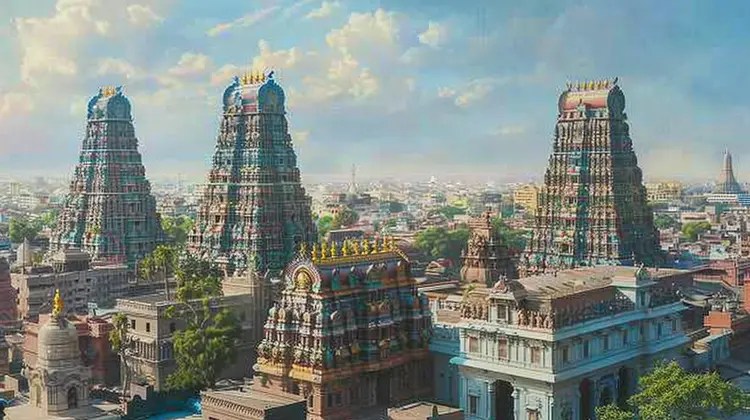
Returning to India, my homeland, was an experience that provided much needed perspective. It was a journey that had long been overdue since my arrival in Canada, eight years earlier (2009), for post-secondary studies. Up to that point, my life was a collage of the experiences I had at Egypt (where I completed my elementary education), and Sudan (where I completed my secondary education); experiences that now serve as the foundation of my identity. My life in Canada supplemented this foundation, further motivating my future dreams and aspirations.

While in India, I was frequently asked to express my opinions and observations on the state of things, under political and social contexts, in the country. Initially, I was inclined to believe that such inquiries were an inevitable motion of my status as an “outsider”, but this was a naive conclusion. In retrospect, I identified that such queries were simply another means to an end, in this case, an aggregation of knowledge via perspective. It is a facet of the curious case of cultural diffusion in India, a concept I am largely familiar with, in an identity crisis amid the divisive cultural and social experiences of my past and imminent future. Apart from enjoying my time with friends and family, my journey home allowed me to put this problem to rest.

Differences shouldn’t be a cause for silence or division but an incentive for discussion. Such an idea is applicable to the personal dynamics of a family, and other hierarchical structures as that of a government or a society. In observing my country and its culture, I had openly stated my surprise for the lack of active change and progress within the society.  I was motivated to blame the established bureaucracy which I felt had embezzled the citizens from what they deserved. Though civil services and liberties provided for the general run-of-the-mill needs and requirements of the common man and woman, the citizen’s willingness to call for active progress and change had been woefully bargained away by the existing political atmosphere, and the natural course of life. At the same time, in light of my statements, I felt a hypocrite. Though I was voicing my opinions, I hadn’t necessarily acted upon them. Vainly, I had reaped judgment, and deferred the call for action.

This prompted an awakening. The keyword was change, and thankfully enough, I built the courage to enact upon the differences that had once set me apart from my family. By openly communicating my thoughts, and feelings I paved the way for understanding and reconciliation. In this manner, I could voice my opinions, and prove them in action.  Now, back in my fortress of solitude in Edmonton, I can’t help but look forward to a brighter future where I intend to act upon the answers I’ve gained in my personal journey.  Having struggled to balance my past, and my future, I have come to realize that both these states of time are largely a measure of the present that I interpret. My trip to India offered a unique, and worldly view into these very dichotomies that now define the person I am. I hope to take this lesson, and apply it fruitfully in my aspirations to change the world for the better.

While the actions of our past may have implications for the future, we may find balance by being attentive to the present. This is a notion that is applicable to the individual as well as to the collective society, for rather than defer to alternatives in response to a problem it is imperative that we seek solutions through open communication, in the spirit of the inherent curiosity that makes all us different individuals, and yet one human species.