Life is a balancing act. For me, that boils down to juggling my day job as a freelance science writer and my nighttime adventures as an aspiring comic book artist.
It took me more than a decade to realize my passion for writing and art. In retrospect, its funny I didn’t catch it earlier especially when the answer was staring me in the face.
I love writing. It started off with personal projects and now I’m wrapping up the final script for a graphic novel that I hope to publish sometime in the distant future. Art was more an on and off companion since my childhood.
Now, I’m ready to really get into it, and polish my knowledge and skills. I still have a long way to go and there is much to learn. Having made a specific section called “Art Corner” in this blog, I hope to utilize it as an art journal of sorts where I can post my weekly progress.
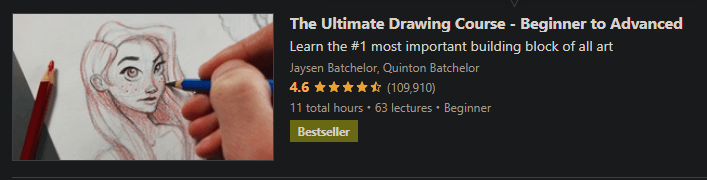
You have got to start with the fundamentals, and so I started off with this course on Udemy:
The first lesson was to draw a realistic eye, as best to our ability as possible. I would then draw the same eye, at the end of the course, as a means to gauge my progress.
I’m a pencil and paper guy but with my recent foray into comics, I have also been interested in picking up digital art. So I did two eyes!
The one on the left is obviously done using pencil and paper, and the one on the right is an ongoing struggle in my digital foray.
I hope to keep up with my weekly projects and post consistently! Feel free to critique the hell out of it in the comments as it helps me even more. And, don’t forget, follow my art journey at LockeInArt on Instagram as well!
Previously on “Adventures in Drawing,” I discussed several matters of art. I specifically placed emphasis on the three valuable lessons of learning to actively see things, the value of repetition, and drawing what one sees, not what one knows.
The second half of the drawing course followed the application of said rules with a series of projects. I had the wonderful opportunity to test my skills with various mediums from charcoal, graphite, and conté sticks. Along for the ride came an assortment of healthy drawing techniques I had learned earlier involving the use of guidelines, the ability to delineate depth and active perception in objects, as well as blind contour drawing etc. All in all, I thoroughly enjoyed the opportunity to test my skills with the various media (Figures 1-2).
Figure 1. Man’s best friend (using charcoal, and graphite).
Having completed the course, I can certainly say that my knowledge, and library of resources pertaining to drawing has grown exponentially. If there is a takeaway message from my experiences so far, it would be the following: simply put, anyone can be an artist. All you need is an HB pencil, a sketchbook, and a little bit of incentive. Most importantly, practice makes perfect.
In my opinion, I view drawing, and art, in general, as a personal interpretation of one’s environment, and imagination; a realm of infinite possibilities. The uniqueness factor of one’s works is dictated not through the judgment of external critics but rather one’s own individuality. Thus, you have nothing to fear in the criticism of your own doodles. We are all artists in our own measure. As Mason Cooley put it, “Art begins with imitation, and ends in innovation.”
Figure 2. Unfinished swimmer (using conté sticks)
With every passing day, I get closer to achieving the same with my artwork. Once again, I’ve learned that practice makes perfect. (On a side note, it also helps to have an encouraging partner, especially one who goes out of their way to buy you a legit Japanese manga kit but I digress.) If I could briefly summarize the steps that I have taken so far in my journey in drawing, and that I wish to share to my fellow aspiring artists, they would be:
(1) Start with doodles, and doodle frequently. Sketch whatever you wish to sketch. Freedom of imagination, and action is important in drawing.
(2) Get a few guide books on the side, or even better, just parse through the overwhelming history of artists, and their works that we can readily find information about on the WWW (world-wide-web).
(3) Trying a short, and supplementary course is highly beneficial too. Learning drawing also involves the communication of ideas, and techniques. (Check out the arts center in your city. If you don’t have one, Udemy is a wonderful online resource for awesome, and cheap courses. And if that doesn’t work, then it’s even more simple, learn from nature, and become your own artist. There’s no limit to human creativity, and imagination.)
(4) Aggregate the lessons you learn in infinitesimal steps, and integrate them toward a full learning experience.
Moving on from here, I intend to eagerly pursue my dream of becoming a mangaka in the future. For those among my readers who are avid comic fans, and are particularly interested in making their own comics, I highly suggest the constructive anatomy, and figure drawing books written by Burne Hogarth, and George Bridgman (shown below) to get you started.
But after all is said, and done, remember to relax, and just have fun with it!


 The Pensive Reverie