Graphic Novel Review – The Cartoon Introduction to Philosophy

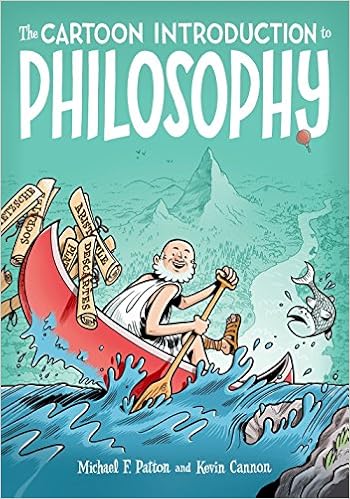
I love reading books, and especially so, when I’m sick. Last week was one such example when I endured a severe throat infection, spending my days doing the bare minimum of work that was necessary, and whiling away my remaining time alternating between bed-rest and pouring through the pages of my latest purchase from Chapters, The Cartoon Introduction to Philosophy, by Michael F. Patton and Kevin Cannon.
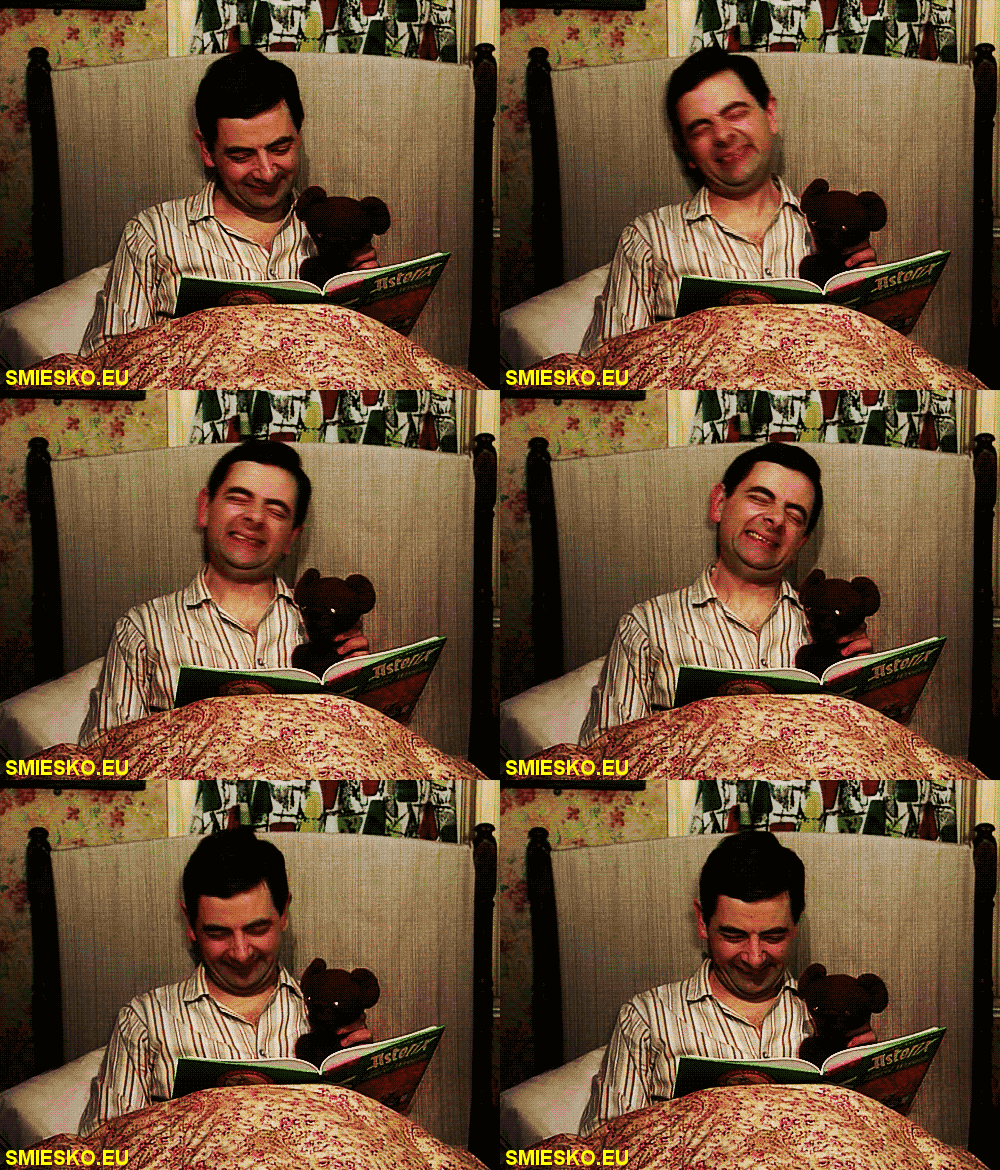
Amusing as it may be, I often find my mind to be a lot more productive when I’m sick compared to when I’m active.


My discovery of this book was by chance and followed my efforts to purchase another philosophy text I have reviewed in the past in Luc Ferry’s A Brief History of Thought. Having read Ferry’s work, I had a pretty good idea of what to expect in The Cartoon Introduction to Philosophy, which as is obvious from the title, is a cartoon rendition of the great tradition of philosophy. Incidentally, it is also the subject of my first official review of a graphic novel, and what a wonderful read it was.

While the work may be considered moderate in volume, it more than makes up for this in the expansive content that it covers. In what serves as an engaging and entertaining read of the philosophical landscape, the humorous and instructive prose of Professor Patton dances alongside the pivotal illustrations of Kevin Cannon that ring true with the classic idiom, “A picture is worth a thousand words.”

We are off to a great start as we get acquainted with our guide who is one of my favorites among the group of philosophers now considered as the pre-Socratics: Heraclitus.
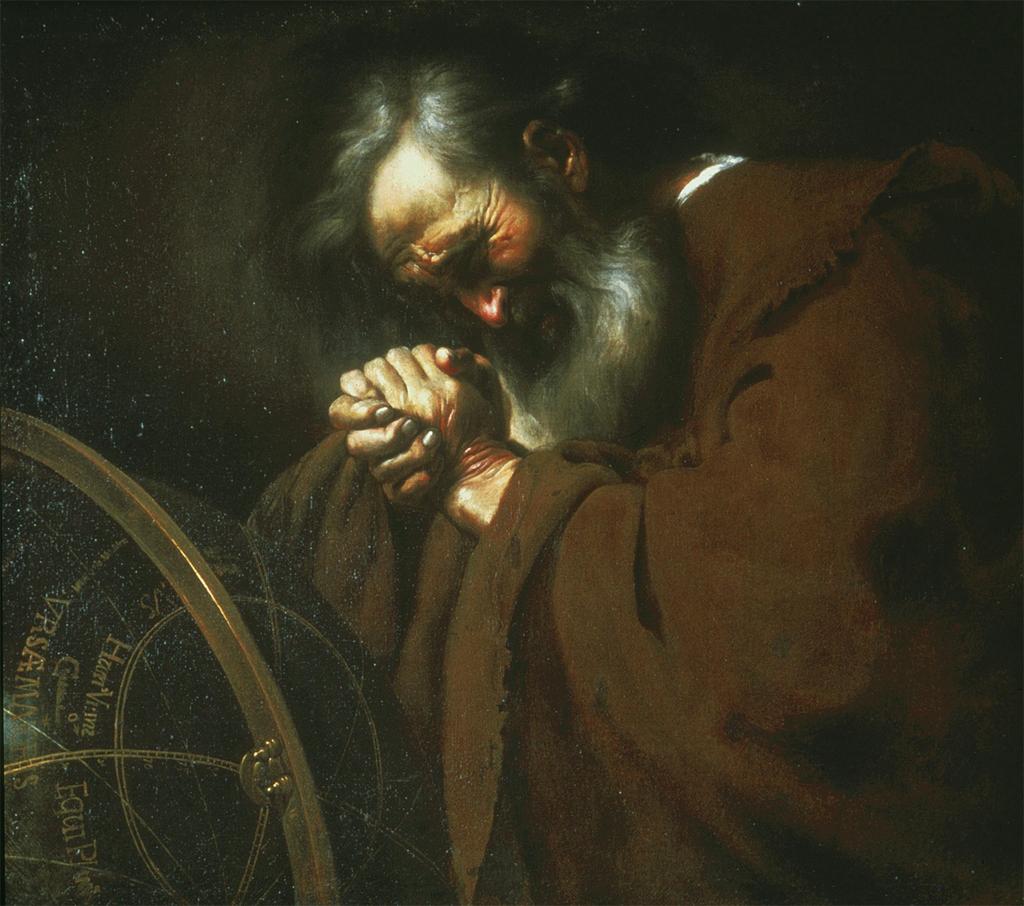
“Upon those who step into the same rivers, different and again different waters flow.”

Nicknamed “The Dark One” for his philosophical style, Heraclitus was a pre-Socratic Greek philosopher whose emphasis was on change and impermanence being the defining characteristics of our world as opposed to stability and balance.

Paddling alongside him on a metaphorical canoe, we set off on our journey through the long, and winding “river of philosophy.” Our adventures begin in the land of logic where we study the rules of reasoning  and thought. Our travails are not an individual effort as we are joined by a fellow philosopher in Aristotle whose strict deductive relationships help us bridge our premises and establish the conclusion of our argument.

We loosen up a fair bit upon the arrival of a good friend from the future (there is a fair amount of time travel in the plot) in John Stuart Mill whose inductive reasoning paves the way for his generalizations about past events to predict the future.


Sometimes we can be deductively inductive.


Having learned how to assert and defend our beliefs, we look ahead to understanding what we know and how we know it. Our perceptions are brought to light through our skepticism that warrants a fundamental truth independent of all our senses in Descartes’ proposition that “I think therefore I am.” Descartes’ presumptions are subsequently set to a blank slate or the tabula rasa  in John Locke’s empirical divisions of our world’s qualities, which are themselves ultimately laid to rest and grounded in the idealism of George Berkeley where the world is nothing more than a collection of ideas

Plato’s cave is a wonderful allegory on the differences between perception and reality. 

This of course leaves us with no with no doubt that our perception of the world cannot be taken for granted, and honestly with more doubts than when we began our journey. Nevertheless, the dialogue continues as we traverse the realm of our minds, being as indecisive as we can ever be in finding our mind-body connection, before beginning to question our free will or the possible lack of one in the existence of God, and finally come to terms with our responsibilities and actions as we are driven by our knowledge of the world in ethics. 

In what is a smart, witty, and up-to-date account, The Cartoon Introduction to Philosophy is a perfect starting point for any uninitiated reader in the pleasures of philosophy. Patton and Cannon have done a great job in providing a work that is sure to inspire the love and wisdom of learning or “philosophia” in both young and old. By the time we flip through the last page of the novel, it is obvious that our once metaphorical “river of philosophy” has now metamorphosed into an ocean comprised of various personalities, creativity, and a heck of a lot of thoughts in what is a gloriously concise compendium of a field of study that is its own protagonist.

The Dragons of Eden – Introduction

Mankind is poised midway between the gods and the beasts. – Plotinus

Plotinus’ quote is symbolic of a fundamental biological principle illustrating that man is descended from some lowly organized form, and which serves as the backdrop to the discussions Carl Sagan (Figure 1) presents in The Dragons of Eden. In order to provide a description of nature, and human growth, Sagan begins by discussing this principle, one that distinctly identifies the field from other physical sciences, evolution by natural selection.

Figure 1. Carl Sagan, noted astronomer, science communicator, and author of The Dragons of Eden.

Let’s digest that last bit, piece by piece. The word evolution is commonly used to describe the gradual development of something, from a simple to a more complex form. In scientific terms, evolution is the change evidenced in hereditary characteristics that are carried over successive generations in biological populations. It is the fundamental process that has led to biodiversity within species, and individual organisms.

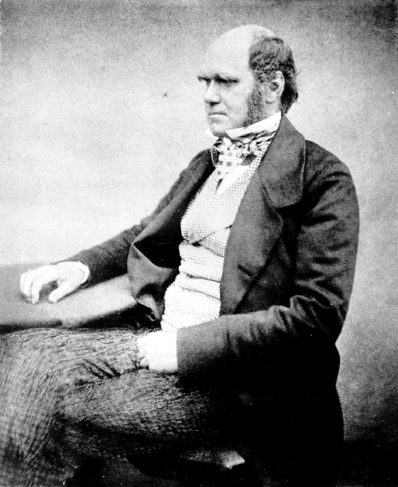
Figure 2. Charles Darwin

Natural selection was the brilliant discovery of Charles Darwin and Alfred Russell Wallace (Figures 2-3), detailed in the publication of their joint works in 1858. It is the theory that describes evolution, and is the preferential survival and reproduction of organisms that are by accident better adapted to the environment.

Figure 3. Alfred Russell Wallace

Natural selection is due to differences in the phenotypes of individual organisms. A phenotype is basically a composite description of an organism’s traits and characteristics including its physical and biochemical properties, as well as morphology, development, and behavior. An organism’s phenotype is a consequence of an organism’s genetic code, or genotype, along with environmental factors, and the collective influence and interaction of the two. It is important to differentiate natural selection from artificial selection, or selective breeding, where humans use animal and plant breeding to “select” for the development of particular characteristics by choosing which males and females of animal and plant species will sexually reproduce, and have offspring together.

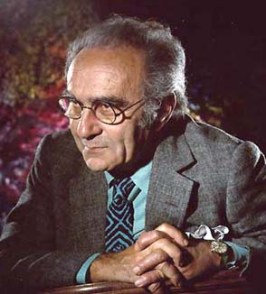
In The Dragons of Eden, Sagan, much like Jacob Bronowski (Figure 4), best remembered as the presenter and writer of the 1973 BBC television documentary series, The Ascent of Man, wants to provide an account of how human beings and human brains “evolved” or grew up together. By understanding the evolution of human beings and human brains, Sagan intends to provide a platform from which he can speculate on the nature of human intelligence, its evolution, and its future.

bronowski
Figure 4. Jacob Bronowski was a British mathematician, historian of science, theatre author, poet and inventor.

For starters, he addresses the role of knowledge and learning in a species’ ability to survive, and adapt to its environment. In order for an organism to survive, it must have the basic ability to extract and manipulate information from the environment. Most organisms depend on their genetic information to survive, but in their lifetime, they can also collect extragenetic information. On the other hand, humans and mammals exclusively depend on extragenetic information.

Mammals are warm-blooded (maintaining a constant body temperature compared to the temperature of the environment), vertebrate (have a backbone or spinal column) animals distinguished from other animal classes by their possession of hair or fur, the birth of live young, and the secretion of milk by the females for the nourishment of the young.

While our genetic history does exert a significant influence in our behavior, our brains allow for us to interact at a higher level with what we learn from the environment. This has drastically enhanced the chances of survival of the human species. Human beings have also invented extrasomatic knowledge, or information that can be stored outside our bodies, writing being a notable example. As Sagan points out, our dependence on extragenetic, and extrasomatic information is crucial to the survival of our species. Since the timescales involving evolutionary or genetic change is far too long, we cannot depend on a process that may take place over hundred thousands to millions of years in order to keep up with the changes that we encounter in the world. In fact, we now live in a time where our world is changing at an unprecedented rate. To deal with an unknown and perilous future, Sagan insists it will be necessary for humans to actively consider the changes in our environment, and learn to adapt, control, and adjust our lifestyles accordingly. Our survival relies on the evolution, growth, and sensitivity of human intelligence, which has been a solution and a cause to the many problems and changes that afflict our species (Figure 5).

Figure 5. Our evolution is tied to the growth of our environment, and vice versa.

Sagan’s interests in addressing the evolution of human intelligence is also an extension of the work he accomplished at SETI (Search for Extraterrestrial Intelligence) as the insights we derive from an investigation of terrestrial intelligence will help in our search for extraterrestrial intelligence.

Both the existence of those other civilizations and the nature of the messages they may be sending depend on the universality of the process of evolution of intelligence that has occurred on Earth. – Carl Sagan, The Dragons of Eden

Ultimately, his treatment of the evolution of the brain will assume that its workings, or what can be called the mind, are a result of its physiology and anatomy. His primary goal in addressing the evolution of human intelligence  is to dissect the various aspects of a subject that touches base with various other scientific fields. By understanding the evolution of human intelligence, he stresses the insight that can be gained from the interactions between brain physiology, anatomy, and human introspection.

485px-descartes_mind_and_body
Figure 6. René Descartes, addressed the mind-body problem in the 17th century. He believed that inputs from the environment were passed on by the sensory organs to the brain and from there to the immaterial spirit

With this approach, Sagan considers the “mind” to be the result of collective processes of the components of the brain, and chooses to not entertain the hypothesis of what is called the mind-body dualism (Figure 6). The mind-body problem deals with various arguments about how mental states, events, and processes can be related to physical states, and likewise, with the governing assumption that the human body is a physical entity, while the mind is non-physical. (The Stanford Enyclopedia of Philosophy is a wonderful primer’s read-through of this highly detailed topic.)

And that’s all there is to the introduction! While it may read as a book review, the introduction is a concise summary of what we will see later in the book. Now, to reiterate, Sagan’s work in The Dragons of Eden  is presented against the backdrop of the theory of evolution. Since its induction in science, evolution has garnered its share of controversy, and disagreement. To all my readers, by reviewing this book, I am in no way forcing these views, and arguments on you. Science is not dogmatic, neither should it be in its endeavor to discover the nature of our world, and our place in it. It is an open stage, and thus, I leave it to you, my readers,to decide on the views you wish to accept, and decline in my review of the book.

References