
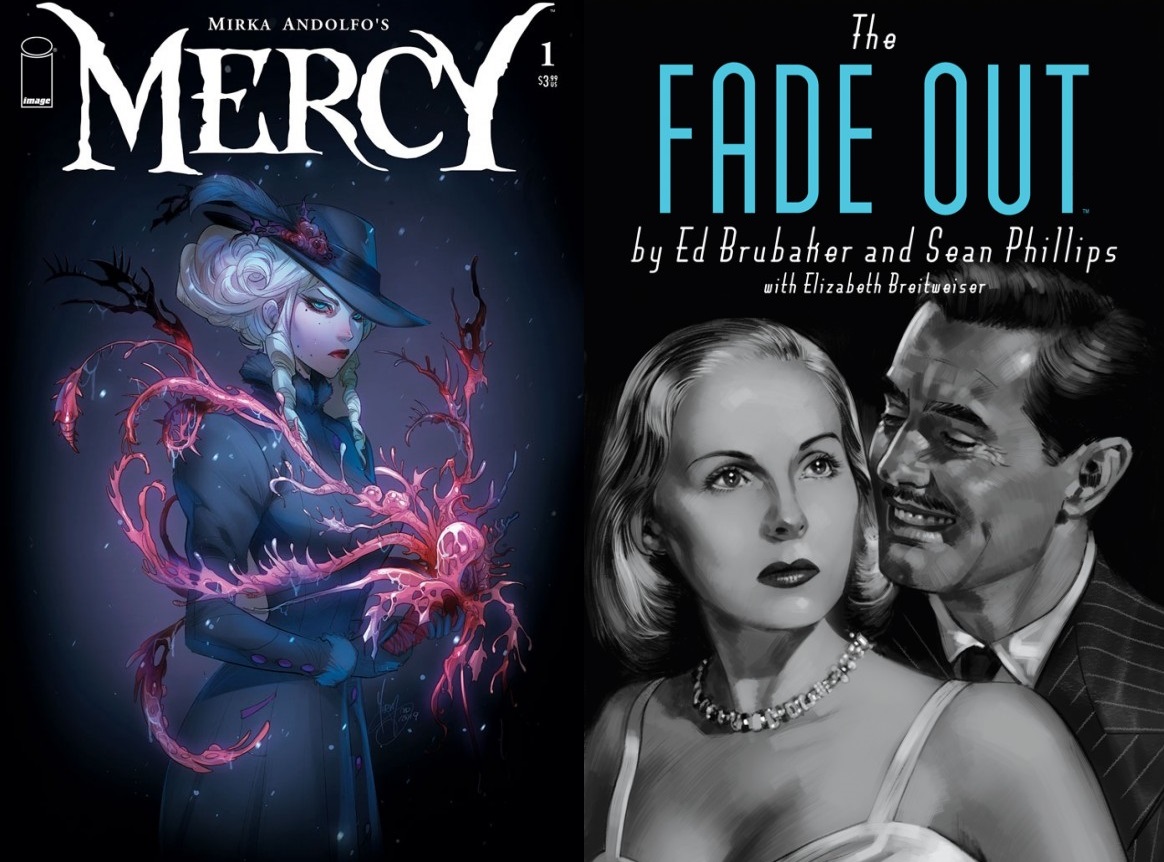
It was in 2020 that I had my last in-person comics haul at Warp 1- the friendly neighborhood comics and games store at Old Strathcona -before pandemic restrictions set in.
Little did I know that a year would pass until I actually got to read the comics I had purchased, thanks to an onset of events like the pandemic, working from home, completing my doctoral studies, looking for employment, and becoming a father.
As my baby daughter slowly settled into a manageable routine, I found pockets of time to catch up on all the reading I had missed out on, starting with,
Mercy – Mirka Andolfo
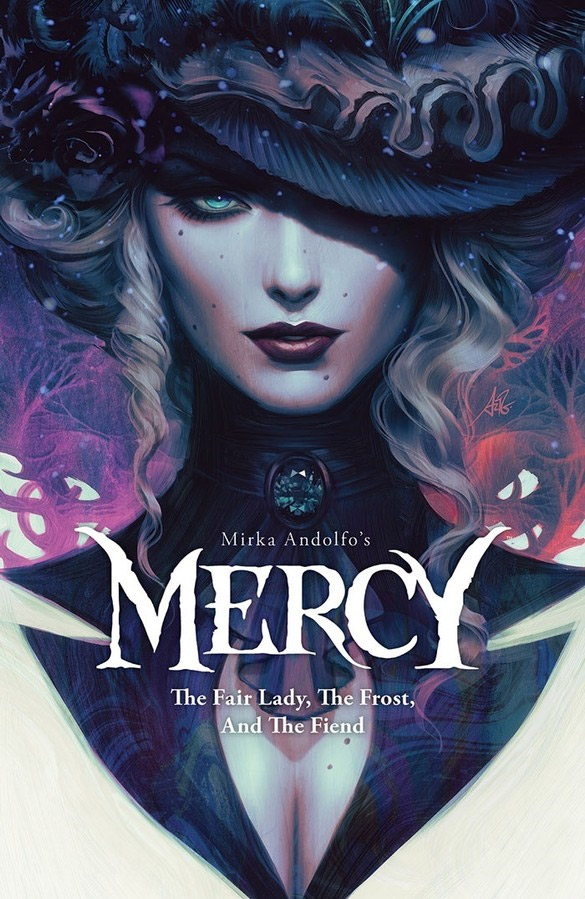
Any surprise on the tone of the story is thrown out the window as Mirka Andolfo’s graphic novel begins with a bang. Monsters are on the menu, and they are on the hunt for humans. But, these monsters are unique as they are hosted by select humans and are fighting for their own survival.
The prelude sets the stage for the characters in the present timeline, many of whom are haunted by events of their past that may or may not have something to do with the origins of these monsters. Wracked by guilt, these characters spend their present lives trying to reconcile their feelings with their actions in the past.
On the opposing side, we have a potent mix of personalities between Lady Hellaine, the titular character with a secret that she must protect, and Rory, the innocent little girl who believes that Hellaine is her mother. Set within the streets and tight-knit community of Woodsburgh, a small mining town close to the Canadian border, Mirka Andolfo’s story treads the path of the gothic horror genre with the town being victimized by a heinous creatures killings its citizens. The story revolves around finding the connection, if any, between these disturbances and the engimatic Lady Hellaine who has just arrived in Woodsburgh.
While the plot is a little predictable, the art work and the glorious color palette make up for the flaws. Slap in some religious symbolism, and a greater focus on the monsters we confront in human nature as opposed to the physical monsters themselves, Andolfo’s story provides a surprising and refreshing ending that leaves one wanting for more. It is essentially a horror story that questions what it means to be a monster.
The six editions of Mercy have been collected into one volume Mercy – The Fair Lady, The Frost, and The Fiend available in stores and online. If you are a fan of Victorian gothic-horror, this is one series to check out.
My personal rating: 8/10
Shifting from the Victorian gothic-horror set piece, and moving forward in time from the late 1800s to the mid-1900s, our next story brings us to the streets of Hollywood in,
The Fade Out – Ed Brubaker, Sean Phillips
I love film noir so I didn’t hesitate in picking up this title, and the graphic novel delivered in all departments.
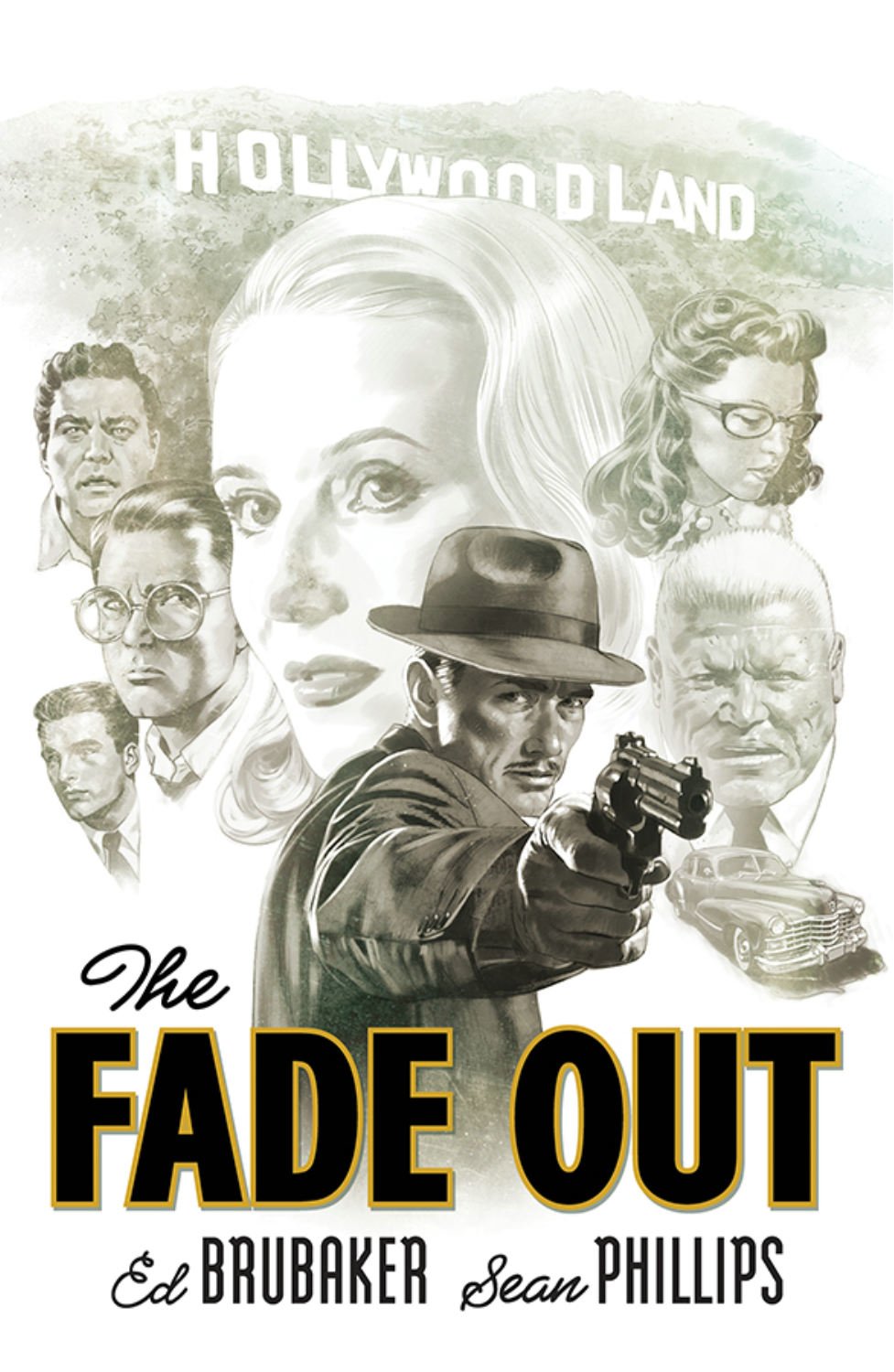
Enter Hollywood, 1948. Our main character is Charlie Parish, a writer stuck in the sets of a noir film that is plagued by endless reshoots in the aftermath of an up and coming starlet’s death. It isn’t a normal death by any means and suspicions abound among the cast as to who is responsible.
The Fade Out is unlike the usual mystery plot and there is much more to it than the generic murder story. What I really admired about this graphic novel was the research done by the writer to capture the atmosphere of Hollywood in 1948. Real life background events such as the Red Scare, a widespread fear for a potential rise of communism, World War II, and the Pearl Harbor bombings continue to torment the American psyche and are described near perfectly through Brubaker’s characters. Film is instrumental in allowing the public to immerse in a happier world, and the plot unravels much like a film within a film.
We, the readers, get to indulge in the underbelly of the film industry and witness its darker sides. All of this through the literal and figurative glasses of the main character Charlie Parish, who is somehow connected to the death of the starlet. Charlie himself is unable to recollect his connection to the murder. Feeling morally obligated to get to the bottom of the mystery, and disgusted by the industry’s attempts to sweep the story under the rug, we follow our disgruntled writer on his journey to discover the truth.
What makes the story click is not the usual cliché of solving a murder mystery. Rather, it is the reality of how vulnerable and powerless the common can be facing against authoritative institutions that determine and are crucial to one’s way of life. Charlie faces this very obstacle, fighting against the industry that is responsible for his paycheck, and the decision he makes in the end confronted by this oppressive power leaves the reader stunned.
The Fade Out is one graphic novel you don’t want to miss.
My personal rating: 10/10


 The Pensive Reverie