
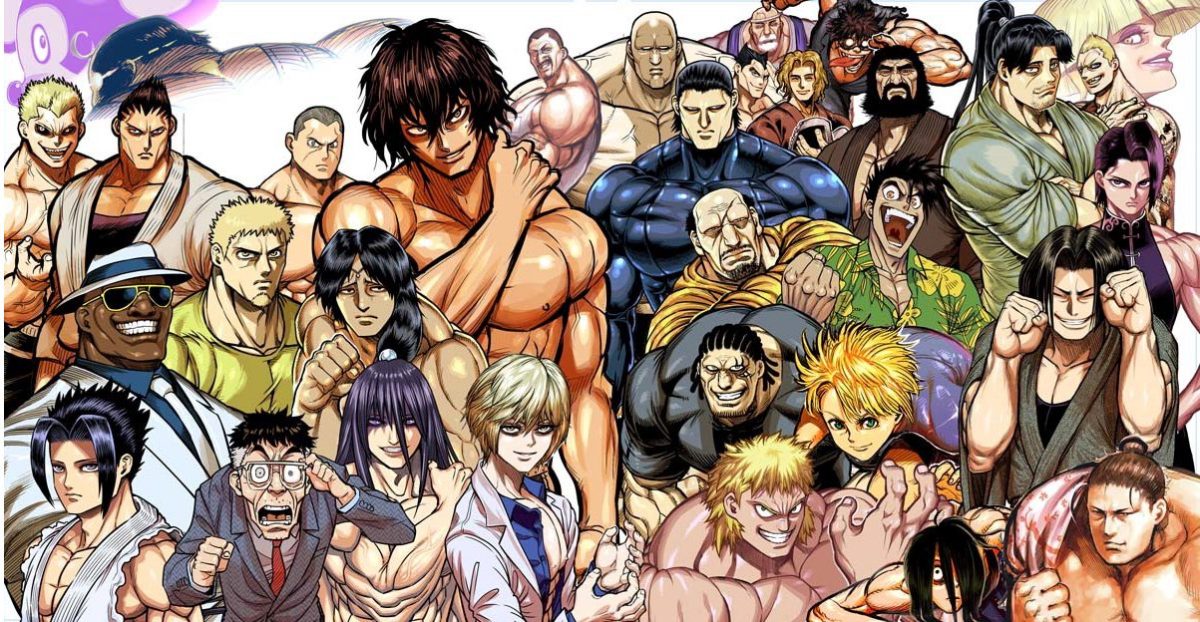
When you are sick, and your immune system is busy waging war while you feel like crap, the best motivator can be watching someone else getting beaten up for a change.

First and foremost, I do not condone any form of violence, but whenever I’m sick, I find my favorite pastime to either involve watching or playing action-oriented anime OR button-smashing fighting games.
In the past, during an episode of viral fever, my wife (then girlfriend) stocked me up with electrolyte drinks, snacks, and soups, then left for work, expecting me to get some good rest. She returned to find me sitting on the couch, surrounded by the very same, playing God of War on my PS3. I actually finished the original trilogy that one week while I was sick.
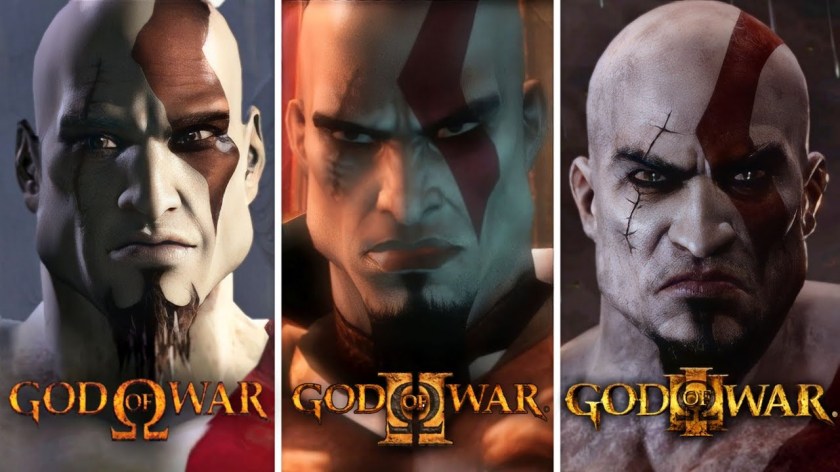
What can I say? It was a sick game.
This was when I was in my 20s. Now, after breaching the 30s, the warranty on my body parts has reached its final days. Video games don’t come as easily now. The fingers cramp up, and the shoulders ache. So, I’ve chosen the easy way out: Netflix. If you haven’t caught up, this is why I couldn’t bring myself to publish a post last weekend.
Now, being sick is as much a physical battle as it is a mental one. For a guy with allergies and nasal inflammation, catching a cold is never fun. It helps to get motivated, and what better way than to immerse yourself in an imaginative world of martial arts fighters. So with watery eyes, I looked down my Netflix playlist and got down to rewatching a classic: Kengan Ashura.
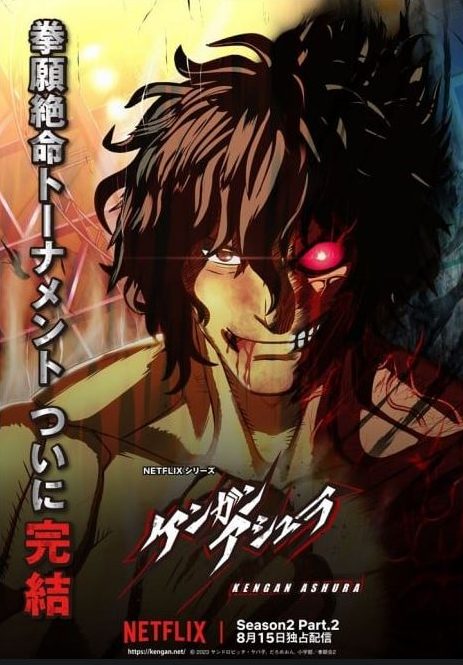
The Kengan Ashura series premiered on Netflix in 2019 and concluded in the summer of 2024. I was a latecomer and only got around to watching it in 2023. The series remained incomplete, and unable to contain my curiosity, I ended up reading the entire manga while waiting for new episodes.
Long story short, as far as action-oriented anime within the combat sport/martial arts genre goes, Kengan Ashura ranks among my top favorites. What makes the Kengan series unique in its genre is the protagonist’s journey. The traditional Japanese fighting anime trope usually involves a main character with little to no skill. This individual has to work hard to get to the top. Add a pinch of “power of friendship” and a “genius rival” to push him forward, and you have a classic shonen fighting anime script in your hands.
For those older anime fans (like me) who have grown tired of this formula, Kengan is a breath of fresh air. The crux of the plot unfolds in a high-stakes underground martial arts competition to determine the chairman of the Kengan Association. Corporate CEOs sponsor fighters in brutal, often no-holds-barred matches, with the winner deciding the new chairman or taking control of the association.
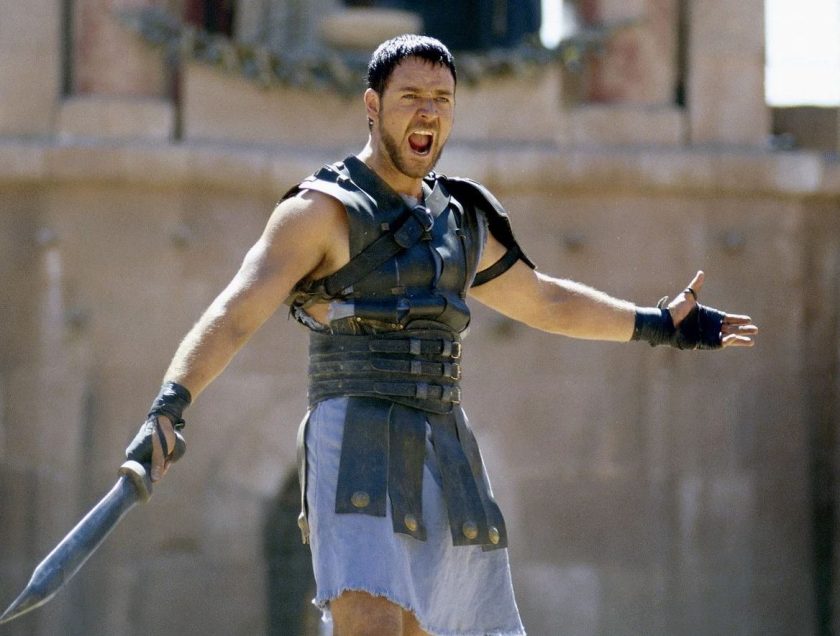
It’s anime Gladiator y’all…minus the swords, the slavery, and a few other things.
Our protagonist, Tokita Ohma, is battered from the beginning, and not for lack of skills. Ohma is a prodigious martial arts talent, but his tourney is a brutal struggle with a healthy dollop of bodily injury, psychological damage, and lots of pain. At some point, you feel like you are watching an 80’s rear-wheel drive Pontiac driving up an icy hill without any snow tires. On several occasions, the audience is left to wonder when Ohma will gas out.
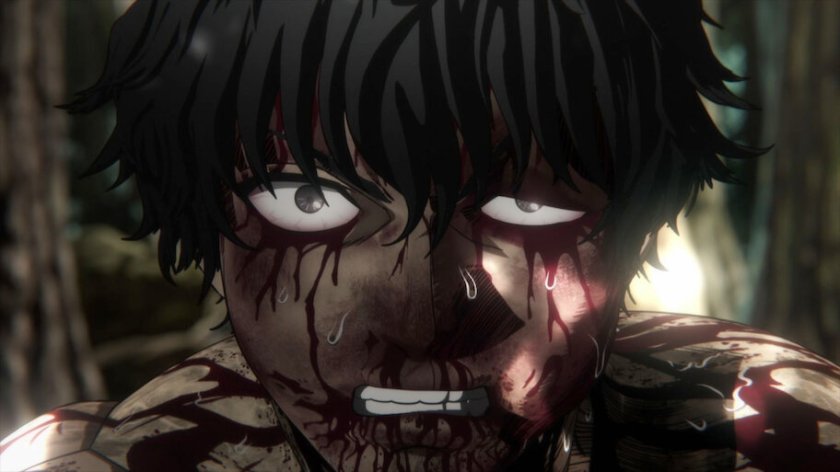
Get used to this…
Of course, there is a reason why Ohma is putting himself through this literal hell. I won’t spoil that particular plot thread, but what I did love is the throwback to martial arts characters from old-school Hong Kong shaolin cinema of the 80s and 90s. Ohma is a warrior, and he wants nothing more than to better himself on that path. How he gets to achieve this, and if he does, is the story, and one with a surprise ending. By the end of the series, you can clearly tell that Kengan Ashura has a lot more to give, with hints peppered throughout the series of a wider universe to explore.
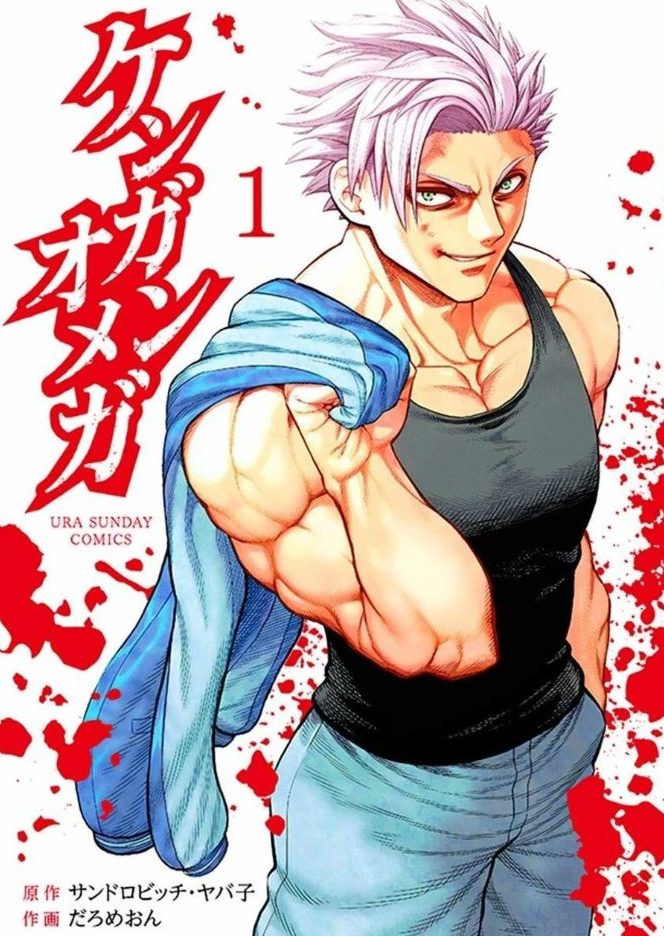
Nevertheless, Kengan Ashura is perfect as a one-off. Aside from the writing, the art is highly applaudable. The artist Daromeon goes to great lengths to convey dynamism in the fighting sequences.
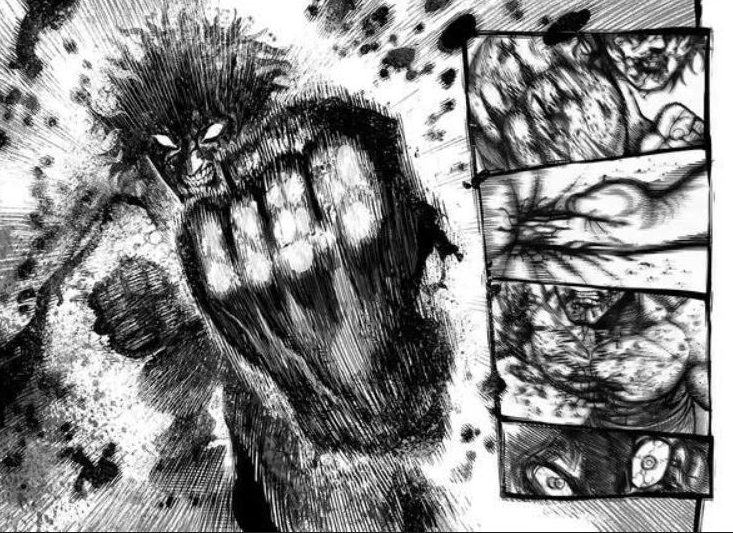
As a student of figure drawing and anatomy, I greatly appreciated the breakdowns and inspiration I found while going through the panels. It is rough work, but it flows perfectly. The anime uses 3D CGI, with mostly static 2D backgrounds, while the character models and action are in 3D. While a few may disagree, I felt this was perfect for showcasing the martial-arts choreography required by the manga.
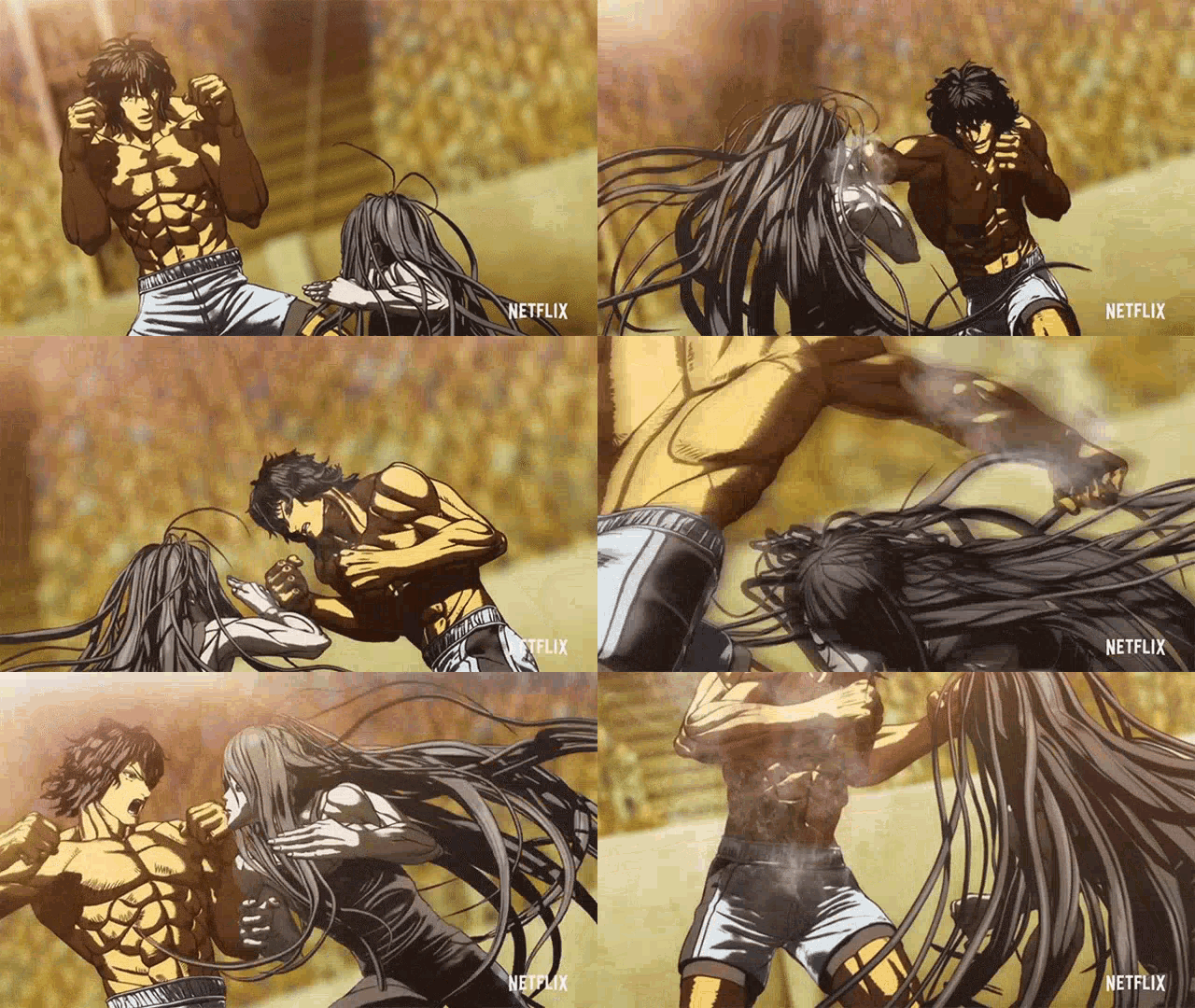
Last but not least, Ashura is also one of the few manga in which side characters receive great characterization. A tournament-style progression to the story also makes it easy to keep the cast tight and involved at all turns. This provides ample screentime for everyone’s favorites, barring a few cuts here and there in some fights.
That settles it! Now, while I continue the good fight against my cold (almost back to 100%), Kengan Ashura awaits new readers. I highly suggest giving it a chance, and if you are not so much into reading, the anime is a respectable adaptation you can enjoy on Netflix. Until next week, toodles!
 The Pensive Reverie