Meeting Tintin at the Inn

Every now and then when I visit the nearby used bookshop in my neighborhood, Wee Book Inn, I am lucky enough to come across an awesome find. Amidst the crazy slog that was my thesis writing, it was equally important that I maintained my mental health. Taking a walk around the neighborhood helped a lot in that aspect, and of course visiting the bookstore (after a period of closure due to the pandemic) was an additional bonus.

This time around, my little adventure to the store, led me to a reunion with a childhood friend,

Image 1 - The-Adventures-of-Tintin-Vol-1-Tintin-in-Americ

My first encounter with Tintin followed his adventures on a TV screen rather than on print. On the occasional trip to Chennai, the capital state of my home state Tamil Nadu, India, we would transit at my parents’ favorite go-to hotel at one Hotel Maurya. (It is still there to this day!) This would provide my younger counterpart the luxurious opportunity to watch cartoons on cable TV (something that we lacked back at my home). It was on one such occasion that I got to watch an episode of The Adventures of Tintin TV series.

I was hooked! But, it wasn’t until a few years later when my family moved to Egypt that I got to read the actual comics as part of my French language studies during middle school. Given this history, it didn’t take much persuasion, on my part, to purchase this particular copy from Wee Book Inn which was very fresh in state, despite being used.

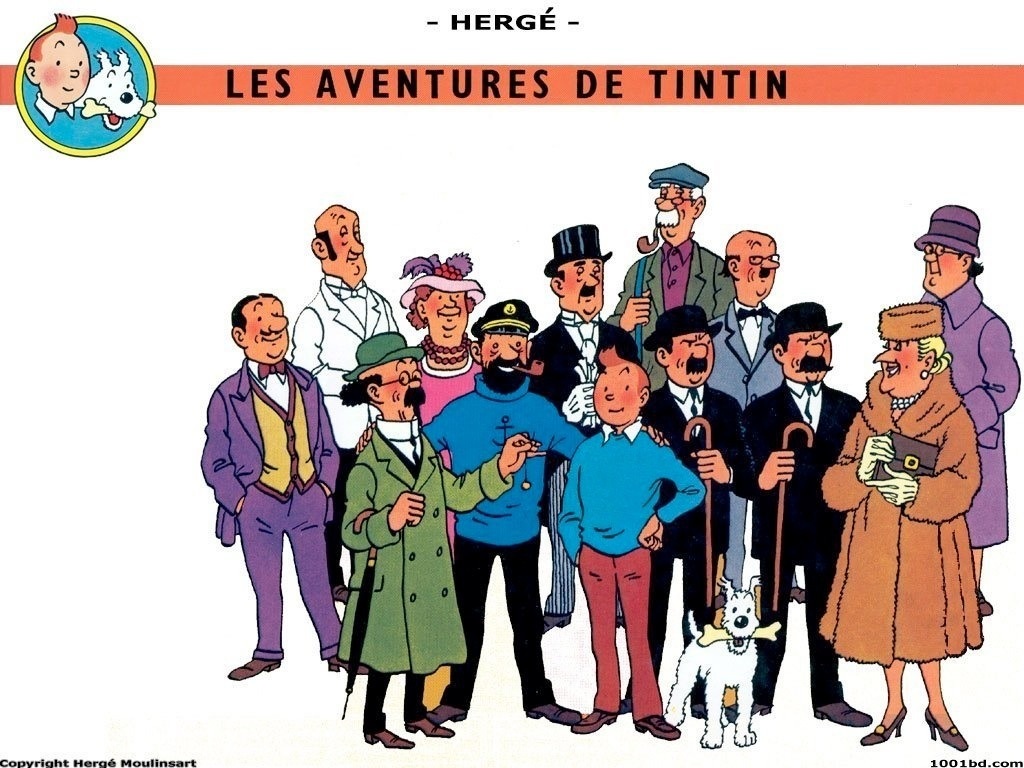
In the days that followed, my breaks from writing my thesis largely involved falling back into Tintin’s world. Among the three adventures in this book, I would have to say The Blue Lotus, covering his adventures in China during its period of invasion by Imperial Japan, was my favorite. Reading Tintin’s adventures as an adult has also provided fresh perspective on how the material has aged with time. Though there remains cultural and ethnic stereotypes that are glaring under the current atmosphere of societal norms, these stumbles are waylaid by the continued appeal I feel for Tintin in its primary themes of friendship beyond borders, loyalty, adventure, learning, honor, and compassion.

Tintin and Chang’s friendship is representative of camaraderie beyond borders. Chang’s character was indeed based on Chang Chong-Jen, a real life friend of Hergé.

The comic book medium also provides the reader the choice to build beyond the world provided by the writer/artist in their imagination of how they interpret the main characters of a work. While Tintin and his world may reflect the knowledge and views of Hergé during the era of the early 1900s, we as readers can build our own perspective on the famed protagonist while also learning from the maligned visions of the world he occupies. While one may also argue extensively about the political events referenced in Tintin’s adventures, the takeaway message from Hergé’s work is on the irreplaceable value of human compassion, the importance of friendship, and the honor in standing up for the afflicted and those who you love.

Reading Tintin as a kid widened my view of the world. Having experienced my personal share of racism and bullying, in my teen years, Tintin certainly was one of my heroes. While he seems ordinary at the outset, Tintin’s wits, quick thinking, honesty, compassion, kindness, and all-around good nature make him a hero of timeless values, and one that serves to be inspiration. I certainly was inspired by him as a kid. Still am to this day. His adventures, uncanny luck, and ability to solve mysteries is also something that I’m sure all readers would love to have.

Nor to forget, Snowy is that awesome and cute companion we all want!

I would later find out that this particular volume is the first of eight in a set, which is now in my wish list. While the complete set has a high price tag of $200, it is a must-have collection for Tintin fans. Alternatively, one could also go for the DVD Box Set collection of the TV series which follows the comics by the panel, and lastly, The Adventures of Tintin movie inspired by three volumes of the Tintin series – The Crab with the Golden Claws (1941), The Secret of the Unicorn (1943) and Red Rackham’s Treasure (1944) is an entertaining watch and available on Netflix and other streaming sites.

Reviewing the Wacom Intuos Comic and my art journey so far…

I love writing, and even more so being lost in imagination of the worlds I desire to construct for my stories. The last I remember, my love for drawing was at its peak during my early teens. With my father being a pretty good amateur artist himself, I tried to emulate him by drawing whatever subject that piqued my interest in the weekly kids’ magazine. But as the years passed, my interest in drawing evolved to resemble an empty, short-sided affair amid random spurts of creativity.

Much of that changed in 2017 when I completed my second book, A Little Bit of Everything. It was around then that I seriously began engaging in the possibility of a creative career. Much thanks to my awesome wife and our love for manga, comics, and animated media I began yearning for more than just writing a story. I wished to draw out the worlds of my imagination and make them come to life.

I enrolled in an introductory art class at the local arts center in Edmonton in 2017 and not too long after completing A Little Bit of Everything, I purchased the Wacom Intuos Comic to begin my foray into digital art. Having used this drawing tablet for about four years now, I felt it was time for a review.

Digital art comes with the caveat that one must NOT mistakenly assume that it is easier. In general, one must first learn how to draw to be able to be good at all. Switching between traditional and digital media offers select advantages and disadvantages but it does not correspond to your drawing skills getting better. Rather, what makes the difference is practice; the more you practice (no matter what media) the better you get at drawing.

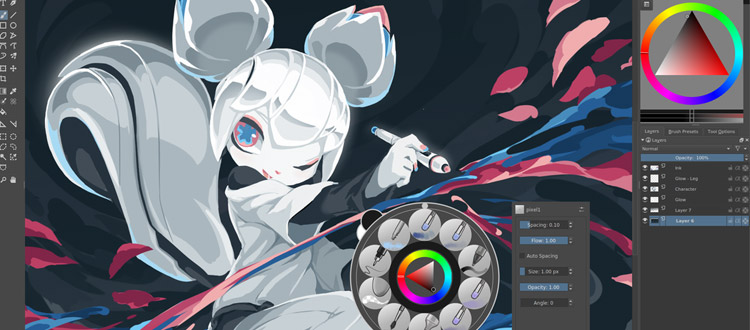
After installing the Wacom Intuos Comic, I began exploring the digital medium landscape by trying out the limited-time software offer of Clip Studio Paint, alongside various other different free software including FireAlpaca, Krita, etc.

The surface of the tablet is smooth and quite sensitive (which can be managed via tablet settings). What did take a while to get used to was the hand-eye coordination between the tablet and the screen. This is because the Wacom Comic is a drawing tablet as opposed to a graphics tablet. Though this was highly frustrating at first, I eventually got the hang of it. Having to balance your hand-eye coordination also motivated the good practice of focusing on my monitor, and observing the subject of my drawing, as opposed to switching back and forth from my tablet to the screen (as one is often prone to do when drawing with pencil and paper).

The Wacom Intuos Comic comes with a pen as well as extra nibs provided in the package. Getting used to the tablet also involved getting the hang of how the pen worked on the tablet’s surface. Much of this was made flexible via the tablet software allowing one to make relevant modifications on pen pressure to helping it feel akin to an actual pencil.

My art journey over the last four years has been an on and off affair between my doctoral studies and whenever I get a chance to draw. The Wacom Intuos Comic in my opinion is an awesome drawing tablet. The greatest pro to it is the fact that it introduces you to drawing on a tablet with ease. It is light-weight, looks awesome and can be carried wherever you want. The caveat is that it is a drawing tablet and therefore requires you to have a computer around to be able to do any kind of drawing.

The Wacom Comic that I bought in 2017 still looks brand new though the smudges and the pen marks on the tablet have grown visible over the years. Recently, I upgraded to a new graphics tablet in the XP-Pen Artist 15.6 Pro. My reasons in doing so stemmed from THE one personal con I had with the Wacom Intuos Comic: a small working area.

Being a giraffe (I’m 6’2’’, long ass fingers, and lanky as heck) in my own rights, despite getting used to the hand-eye coordination involved in using the drawing tablet, I often struggled with the small working area (7 inches) which left me often feeling uncomfortable and cramped up during long drawing sessions.

Obviously, this is a personal opinion. I have found many artists who are physically similar and just fine using the same. In my case, translating the free space in traditional media of pen and pencil (on a drawing desk) to the Wacom was difficult no matter how much I tried. I would ultimately find a working process in doing my rough sketches by hand mostly and using the Wacom as the final resort for finishing touches.

This doesn’t take away the fact that the Wacom Intuos Comic is the perfect tablet for anyone to start their journey in the digital medium. On those days when I can’t lug around my XP Pen, the Wacom Comic remains my go-to portable drawing tablet. Learning software aside, I’ve loved working on the Wacom Intuos Comic. The added bonus of the free software, and relatively cheap prize (around $80) makes it a perfect comic for the budget artist. At this point in time, I believe the Wacom Intuos Comic is no longer offered at the Wacom site, but its successor in the Wacom Intuos S is equally competitive and smartly priced for the budget artist.

With that said, as I wrap up the remaining chapters of my doctoral studies and shift my focus to more creative endeavors (with a new graphics tablet to boot), I intend to keep you all posted on my progress starting with a follow-up post on my new Instagram where I intend to share all my success and the occasional (hopefully) hilarious fails in my journey to become a competent artist.