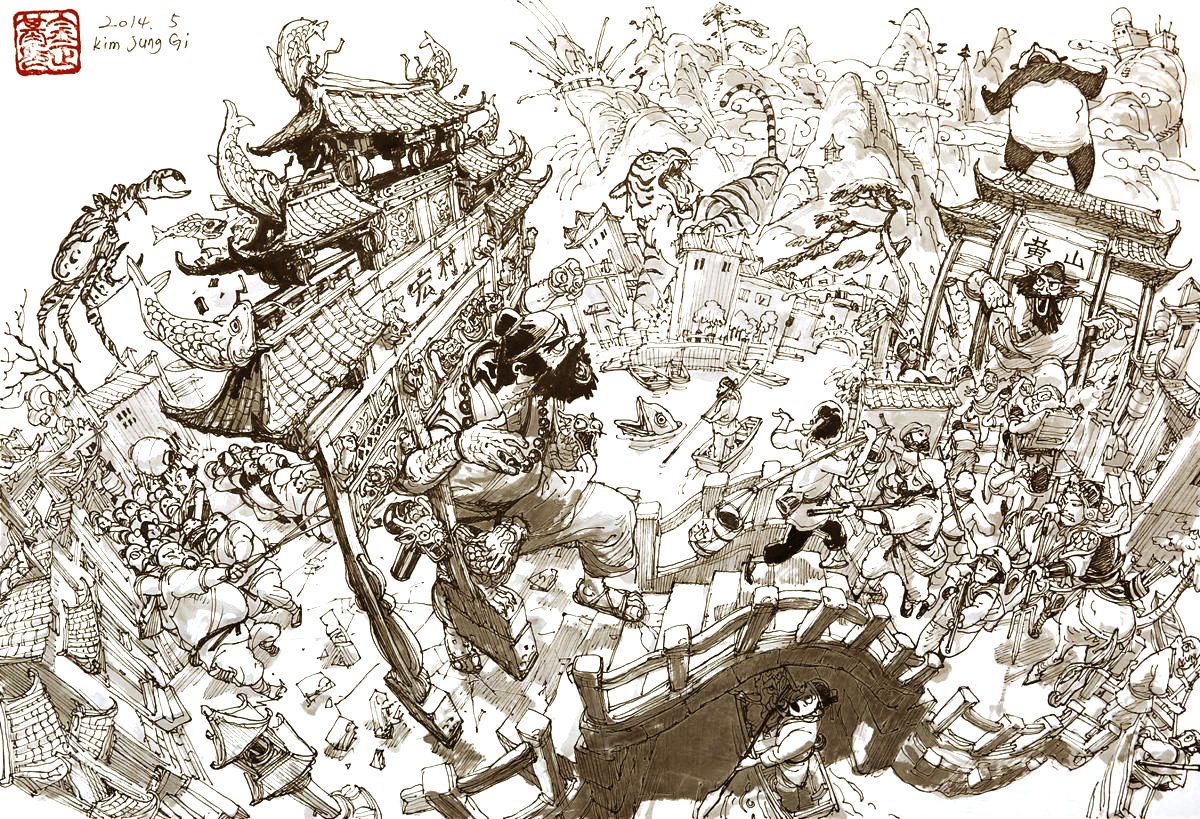
The art of Kim Jung Gi

For this post, I’m going to go short and sweet by being faithful to the old adage that “a picture is worth a thousand words.”

I came across Kim Jung Gi’s artwork back in 2016 during my first visit to Vancouver B.C. Taking cover from the torrential rain that day, my partner and I entertained a long detour through the Vancouver Art Gallery.

We spent almost two hours walking along the various corridors hosting a massive collection of diverse artists and their works. Our final destination would bring us to the section dedicated to artists within the manga/anime genre, and that is where I came across this,

and many more,

Never had I felt so engrossed into the details of an art piece. The details were dynamic and there were radical shifts from one point to another. Yet, despite these fluctuations, there was also an exceeding sense of balance in Kim Jung Gi’s artwork that provided insight into his creative process from the small to the large.

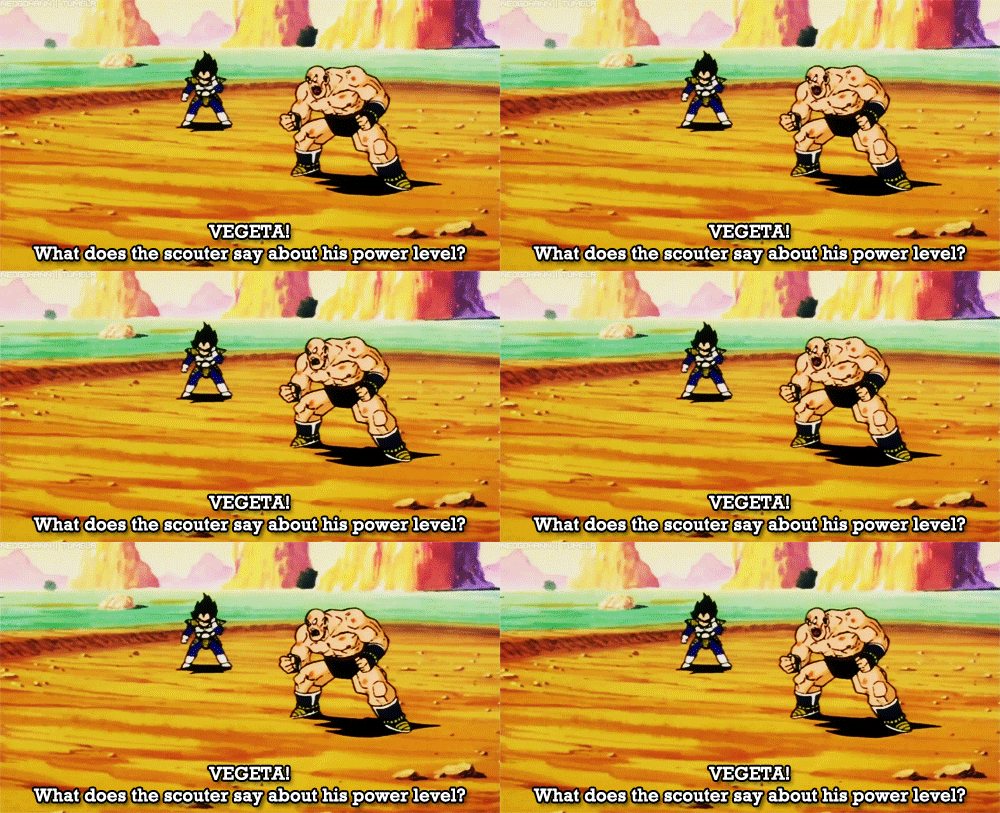
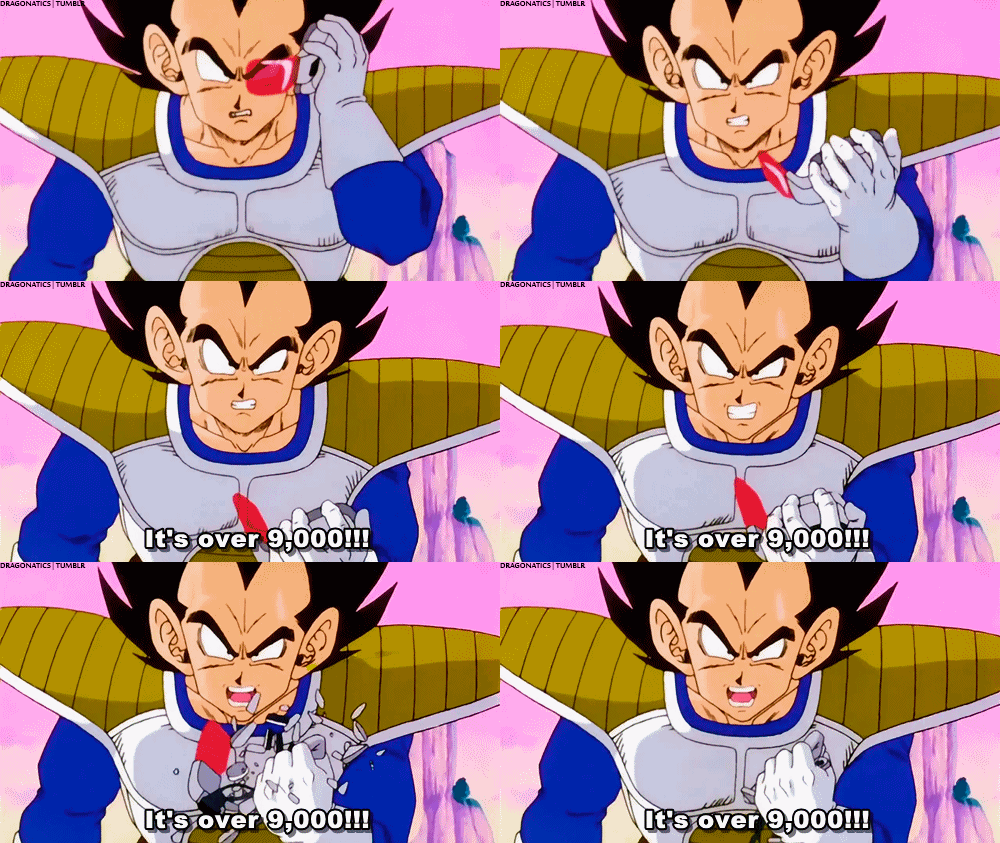
For a guy like me, who loves his astrophysics, this correspondence of the mechanics of the small and large pieces of the work only drew me in further. The gallery had a small TV showing Kim Jung Gi’s approach, and it floored me to see that the man literally drew from memory. Discussing his art work that day,  my partner and I would relate a classic conversation from Dragonball Z as an analogy of Kim Jung Gi’s artistic power levels:

tumblr_m96runst3c1r72ht7o2_r2_500
Me
c65d423e1bfdaa32304dfd4a1ff09800
My partner

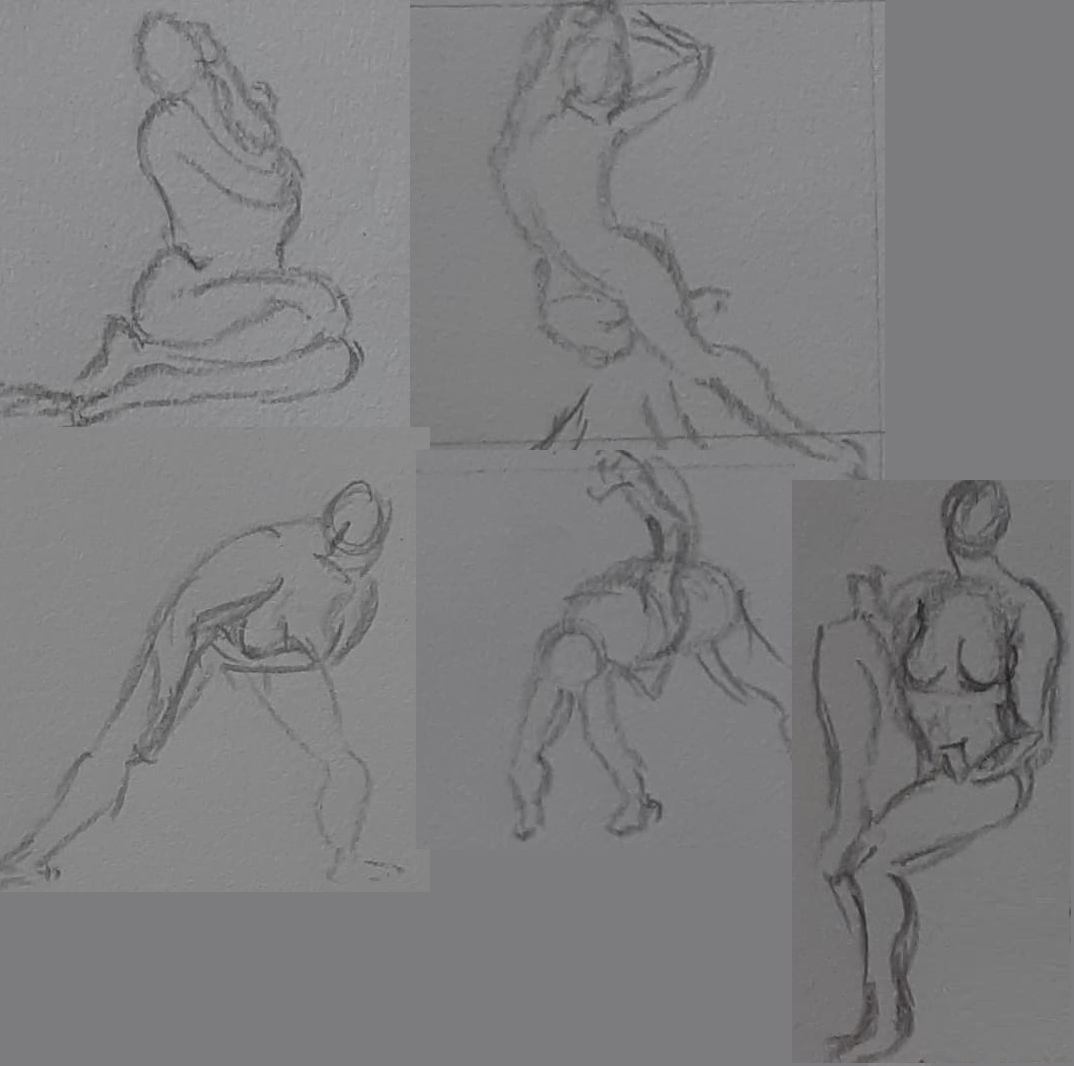
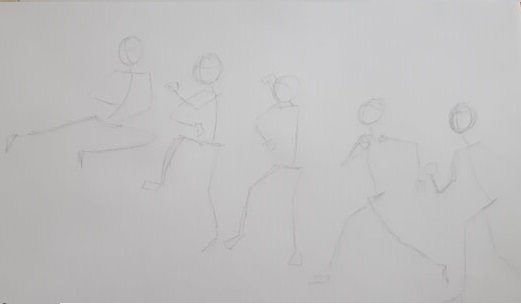
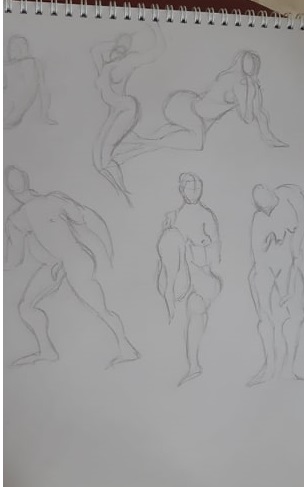
Over the last week, I’ve had a chance to improve a little further in my own journey through figure drawing. 

104947643_554448391857388_5485824118973520966_n
From this…
105538944_266640151087494_979940816938058642_n
To this…

It is in these moments that I draw inspiration from artists like Kim Jung Gi. While his art may be daunting to the eyes of an amateur, I cannot deny that in following up with the man’s biography, what has often been casually cataloged as innate talent, is in fact an amalgamation of hard work, dedication, and perseverance.

There is still a long way to go on the road to mastery as I’ve been told repeatedly by my peers and mentors. At the same, I’ve also been equally advised,

tenor

I guess that’s what makes the whole aspect of it so much fun as by being an artist you get to continually expand your horizons to your personal liking. In the artistic realm, Kim Jung Gi has one heck of a mileage owing to his near crazy dedication to art which he developed as a hobby and now a life-long career. I hope to do the same on my own end, and even if I were to never reach his level, I could say I take satisfaction in the all the minute details of the experience for the larger part of what it is: a story of its own.

For those among my readers interested in finding more of Kim Jung Gi’s artwork, his sketchbooks are an awesome portal into his world.

Touching base with Pencil and Paper

When I was young, I spent a good chunk of time at my grandparents. It helped that their house was situated right next to ours, and my grandfather’s collection of weekly kids comics and magazines were an abundant source of entertainment and inspiration for the kid in me.

img_20170505_191214596
My grandfather collected enough of these that we probably had over 500 of these thin magazines stacked up in a corner of the storage room.

Drawing came naturally to me back then, and I took any chance with a blank paper to draw whatever caught my eye. My grandfather fueled my imagination by sharing folk tales of old and just about everything that he knew while my grandmother indulged me with all the treats she could make to keep me energized with a full tummy.

11
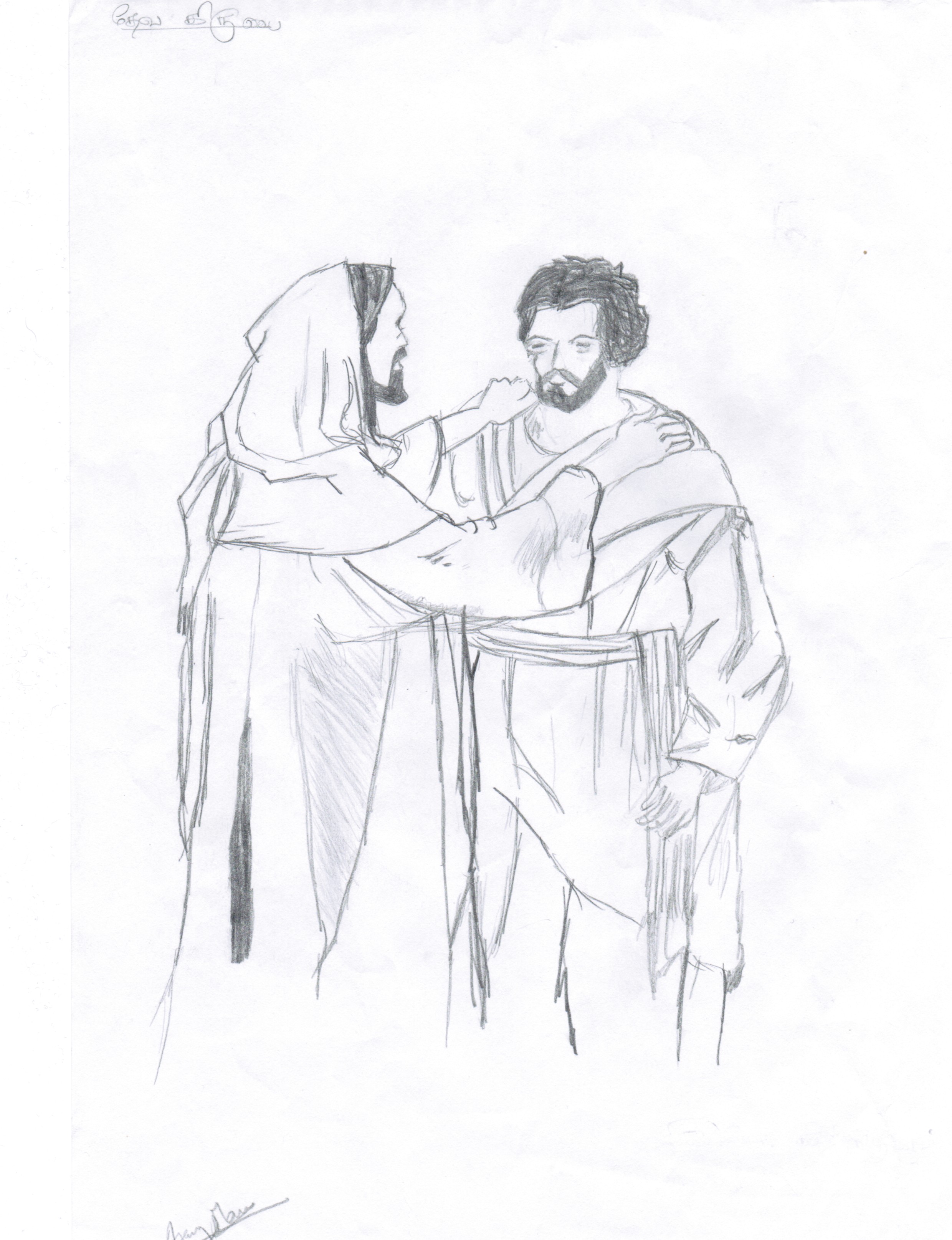
Being a Christian, my grandfather often shared his unique perspectives on the Bible. As a kid, the stories came off more as an epic fantasy, leading me to draw this rendition of Jesus and Simon Peter, no doubt referenced from an illustrated bible at his home.

As the years passed, my interest in drawing gradually took a backseat to my newfound love for writing. Rather than transpose what I felt was a simplified projection of my imagination onto paper, I felt it better to immerse in my imagination as a whole through writing. I was naive to think that between writing and art, one was lesser than the other.

Now, I have come full circle in realizing that art and writing are just two faces of the same coin. It is particularly sweet that I struck upon this knowledge in the process of completing the script to the graphic novel I have been developing over the last two years, and intend to dedicate in memory of my grandfather.

I have spent the last few weeks touching base with old friends in Pencil and Paper. It has been a difficult reunion to say the least, but we are gradually patching a decade of our on-and-off relationship in a newfound resolve to build a strong foundation for the future.

Frustration has been a loyal companion, but I’ve also used it as a source of motivation.

Firstly, I had to start by identifying the relevant skills I required to transition into the “graphical” aspect of my graphic novel. Phase Infinity, as I now call it, has all the characteristics of a long and arduous journey through diverse art courses intended to boost my amateurish skills while simultaneously churning out the artwork for my graphic novel.

To be honest, I find the final product to be a goal for the distant future. This isn’t necessarily discouraging as it is my first attempt after all. What has been annoying though is the persistent need to be overly critical about my work and for lack of any other word, too stiff and tight about my daily progress.

Figure drawing is my first priority as of this moment, and I have been enjoying it in all its gestures and forms. Consistency is the word for the rest of my year, as I hope to amass daily practice sessions.

Steve Huston has been my hero on this front, and I highly advice his books to my fellow artists among my readers.

Learning the human anatomy from an artistic perspective has also opened the door to some philosophy. Gesture drawing, in particular, has helped me embrace the fluid nature of our environments and our very bodies. For someone who has been enamored with the axiomiatic logistics of science and mathematics over the last decade or so, figure drawing has provided a refreshing, and new perspective of the world and its motions and rhythm.

Being a fan of Bruce, these two messages which aligned with the philosophy of gesture drawing became de facto screensavers in my mind throughout my artistic process.

That is all for today! I will keep you all updated with my struggles in art-realm over the coming weeks by sharing some of my art work in the Art Corner, as well as a review in my next post of one of my favorite artists in Kim Jung Gi.
William Erwin Eisner – A Perspective

Before quarantine became the new norm, there was a store a few minutes from my apartment that I would frequent on a weekly basis called Wee Book Inn.

A used bookstore, Wee Book Inn was my go-to destination whenever I fancied a random late night walk and on many occasions, casual dates with my partner. (The cat is also awesome.)

Apart from their diverse collection of literature, I was drawn to the venue as they also offered a healthy collection of comic books, often in very good condition, for their modest pricing. Needless to say, I’ve been a ravenous customer, and have trounced on any opportunity to land some good titles. In my efforts to explore the graphic novel medium over the last few years, Wee Book Inn has served as a wonderful resource for inspiration.

My most recent purchase of a collection of William Eisner’s graphic novels was the figurative equivalent of hitting jackpot. Prior to the purchase, I had only ever heard the name “Eisner” as part of the “Eisner Award” winning icon that graced the covers of popular and successful comic books. It wasn’t until after my discovery of the graphic novels that I realized Eisner was a prominent graphic novelist himself (I agree, it’s kinda stupid that I didn’t make this connection beforehand).

Will Eisner - Wikipedia

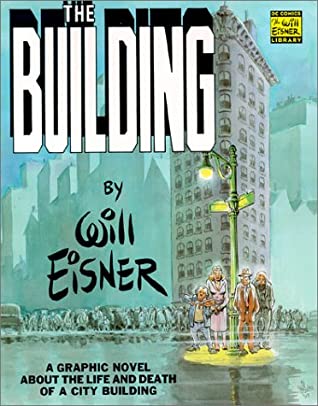
So far, I have finished reading two of his titles: Life on Another Planet and The Building. Eisner’s intricate penmanship on top of his unique presentation of panels and sequential storytelling immediately caught my attention. Much of Eisner’s graphic novels were published in the late 1970s in what have been early examples of the American graphic novel medium. In reading his works, it was easy to recognize the foundational aspects of Eisner’s penmanship in modern day comics and graphic novels. His style was reminiscent of the weekly newspaper cartoon strips I had read during my childhood in India.

It came as no surprise to find out that Eisner was also one of the earliest cartoonists to work in the American comic book industry with his earlier series The Spirit (1940-1952) setting a standard in experimentation of content and form in the graphic medium.

It was also easy to recognize the repetitive but endearing theme that characterizes much of Eisner’s works: humanity. Eisner’s graphic novels focus on the human psyche and its vulnerabilities through characters whose worlds seem to be a mote of dust against the larger order that is life.

1209837._SX318_

In Life on Another Planet, knowledge of first contact with an alien civilization becomes a reflection of tragic human foibles expressed in the collective and individual responses of governmental organizations, religious pariahs, and all the way down to homeless and impoverished individuals.

Meanwhile, in The Building, Eisner does a reverse sweep in humanizing a building through its relation to the lives of four different characters ranging from an anonymous citizen driven by guilt for the death of a child, a woman trapped in a marriage of convenience, a real-estate developer obsessed with aging, and an amateur musician whose music accompanies the drama of the former trio.

1535935._SX318_

Under the light of current circumstances in our world, the events of Life of Another Planet  were eerily relatable. The same could be said of The Building though the readers’ relationship to the characters originate from our personal memories toward past experiences and attachments in life (be it another person or an artifact).

Eisner wrote several graphic novels until his death in 2005. Many of his novels  converged in relating the history of New York’s immigrant communities, particularly Jews (elements of which is very notable in The Building). I was also lucky enough to purchase Eisner’s Graphic Storytelling and Visual Narrative where he details his thoughts as a lecturer about the craft and uses of sequential art.

As a student of the graphic novel medium, and as an ardent reader, I would highly suggest Eisner’s works to anyone interested in well-balanced examples of the art of story-telling.

April – Progress Report

I ended my previous update with this caption:

tenor (1)

stating that I would see you all very soon with another post. Keeping faithful to Goku’s relative discipline in keeping time, I’m now back a month down the road with another brief update. The last three weeks have wreaked havoc on my brain, positively speaking.

Having completed the rough draft for my comic book script, I would set it aside a few days before initiating my three-phase plan toward publication. Phase 1, which I have just completed, lived up to my expectations as being the most grueling of the three.

With the assistance of my partner (and my ideal reader in residence), we would painfully plod through the details of the script. Frustration was a persistent ally, and criticism was hard to swallow. But after two weeks of wracking my brain over the plot threads and some dubious plot holes, I was finally able to confirm the most self-consistent version of my script as I completed Phase 1 of my overview of the plot.

Phase 2 now begins where the objective is to formally type up the complete script alongside panel and dialogue descriptions. With an imaginary camera, I intend to spin out all the intricate details before I move on to Phase 3 where pencil will be put to paper to get the drawings done in what I expect will be the most time-consuming process of all.

Now that all the brainstorming is over, and the dust has settled a little bit, I expect to post once again on a weekly basis on The Pensive Reverie. While I continue to work from home to the extent that I could, I’ve been able to find some positive outlets in engaging my career goals.

On that front, I will now also be posting weekly updates on my science blog The Procrastinating Scientist as I begin to build what I hope will be the foundations for a career in science writing.

With that being said, I will see you all next week with a focus post on a graphic novelist and comic book artist whose style and fluidity I wish to emulate in my own work (if at all I can match up to it).

HINT: The initials of his name are W. E. E. and there is a pretty big award named after him in the comic book industry.

Finishing the script – a new journey

After an entire year, I finally finished the rough draft of my comic book script last weekend.

LikelyFinishedHerculesbeetle-max-1mb

This post is a little late to the party but my mind desperately needed a break from writing. The last few days have allowed me to recuperate as well as re-evaluate my goals and objectives with regards to the comic book, and to a larger extent, my future.

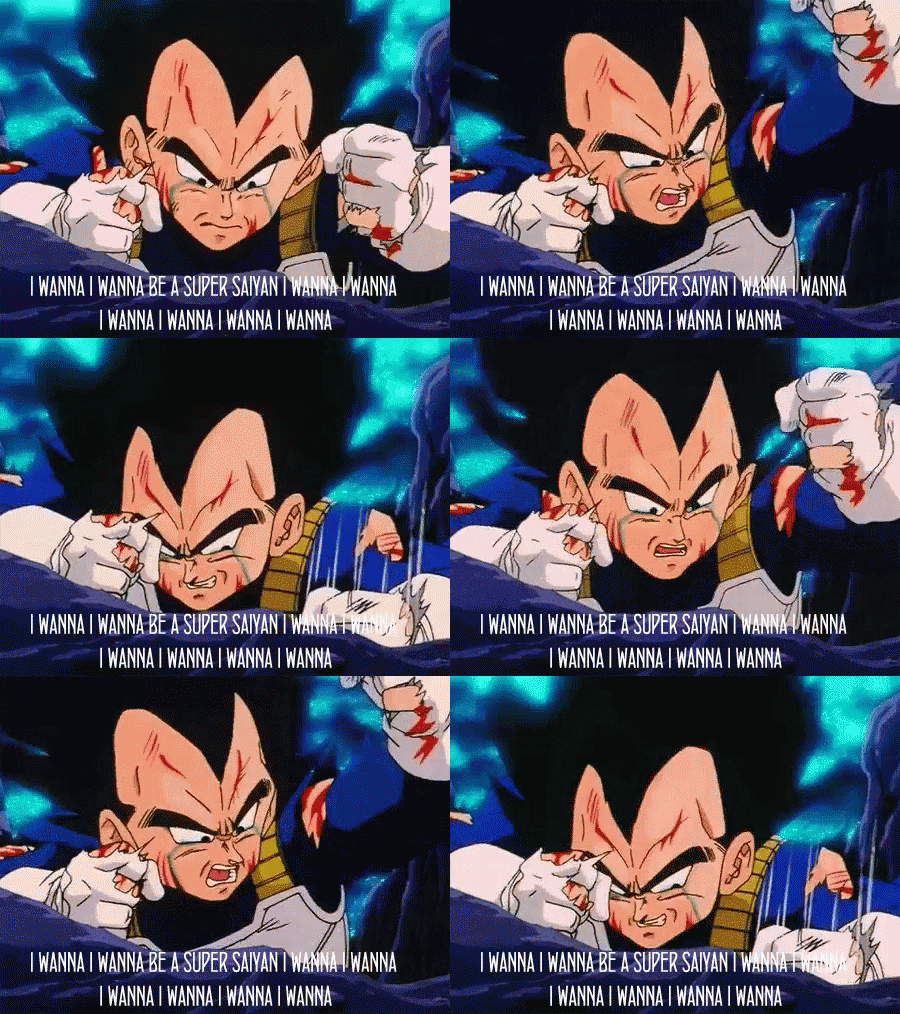
What I required was a dose of reality, and I got a good share of it reading reference books on making and publishing comics. While I’m very happy to have finished the rough draft, there still remains a lot to be done. Reading and listening to the words of professional writers and comic book artists has also made it very clear how the journey towards becoming a full-fledged writer/artist is not an easy one. There is still a long way to go, and there is even more to learn. I need to really patch up my art skills, and consistently improve my writing as well. It is a difficult career, and success is not guaranteed, but when all is said and done I find that what is required is a little bit of initiative and a whole lot of discipline.

tenor
Vegeta and I are on the same wavelength concerning this. 

I’ve been writing ever since high school. It started off with corny and over the top cheesy romantic teen novels. My first ever novel was titled, Love As It Is, so I think you get the point.

TediousClosedGreyhounddog-size_restricted
These novels now serve as comedic enterprises on those days when I’m stressed and don’t feel too good about my writing just so I can remind myself how much I have improved since.

Then came an autobiography in Our Last Summer that allowed me to reflect on the most dynamic stages of my life growing up from a scrawny teenager to a responsible adult. At it’s heart, the book was about family, friendship, and remembering my roots while paving my own path in life.

This soon followed suit with a short, fictionalized novel in A Little Bit of Everything.  Despite being fiction, the story touched base and drew inspiration from what I believe will remain the most important and memorable moments of my life. Writing A Little Bit of Everything helped me define who I am and who I wished to be as an individual. When I completed the book, I realized that what meant the most to me in life was to keep my loved ones happy, and share my happiness with them and others through my stories and writing. Now, having finished the script for my comic book, that emotion has become a resolution for what I’m convinced and determined will be the foundation for my future career. 

While the script is complete, I can’t deny that it will be a few more years until the comic book as a whole comes together. I have just begun dissecting an art course on line drawings and fundamentals. I have purchased a few more on figure drawing, perspective drawing, and animation, in a toolbox that I expect will grow in time. I will soon begin polishing my script and setting out the layouts for the comic while doing a hefty bit of research on topics relevant to the work. I will be juggling these activities in between brainstorming another novel and completing my doctoral studies.

I have my work cut for me but I look forward to this new adventure, one that I intend to share with all my readers, friends, and family. With your love and support, I intend to pull through. That being said, I hope you are all doing well and staying safe amidst the current COVID-19 pandemic!

tenor (1)
I’ll see you all very soon with another post.

Busy working from home!

Hi everyone,

It has been a while since my last post.  Amidst the current coronavirus crisis, I hope everyone is staying safe, and practicing social distancing.

The last month has been a roller coaster ride in my life but it all turned out for the better. In short, I have been busy with my studies (publishing a paper on my thesis research), adapting to the gradual changes amidst the current crisis, and engaging with my family.

As of now, my research has come to a halt as I’m largely studying from home while engaging in my comic book script. Having arrived at the climax of the work, I have about three more chapters to complete before I have the first draft of the script ready. I have also returned to dabbing in my art immersion studies during this period of isolation and and intend to share my progress with you all as I move forward.

In the meantime, I hope everyone continues to remain safe, follow the prescribed hygiene standards, and most importantly engaging yourself in whatever positive activities during this difficult time.

I hope to see you all very soon with a new post.

5-Minute Dungeon & Kittens in a Blender – Crowd Pleasers – Board Games Review

I have been an avid board games fan since childhood. My father introduced me to the classic collection of board games including Chess, Snakes & Ladders, Checkers, Ludo etc. These board game sessions would often involve all the members of my family. Thus, it comes as no surprise that my favorite genre of board games would be those that were easy-to-play crowd pleasers.

In that category, I have to give a shout out to a good friend and colleague of mine who introduced me to 5-Minute Dungeon & Kittens in a Blender, two spectacularly fun board games that I intend to review today!

5-Minute Dungeon

Image result for 5 minute dungeon

5-Minute Dungeon is a co-op, real-time card game, and a chaotic one at that where players are provided five minutes to defeat the monsters and boss of a randomized dungeon and escape.

While this may sound like any other “beat the monster” game, what makes 5-Minute Dungeon fun is that communication and teamwork are critical to the survival of the party especially when there’s no actual time to form a plan or predict the dangers that may lie ahead. The randomized dungeon monsters prove a strong obstacle where one may even completely fail to reach the boss level. The game involves a lot of thinking on your feet.

If I were to put the two scenarios that are usually provided for those interested in playing the game:

(1) The smaller your party, the less randomized your obstacles become, the easier it is to strategize on your feet under a time limit, with the caveat that crossing certain obstacles eventually become an impossibility (without a strong hand in luck).

(2) The larger your party, the more randomized your obstacles become, the more difficult it is to strategize on your feet under a time limit, with the caveat that it is easier to succeed in the obstacles, even though failure is a persistent presence at every turn.

Two of the ten character slots that can be assumed by players,  and each with their special skills. 

The gameplay is quite simple. Players generally assume the role of one of ten heroes, each holding special abilities and cards. Once the timer (5 min. limit) starts, you and your motley crew of wizards, thieves, and warriors etc. race to defeat all the monsters inside the dungeon.

Defeating a monster involves matching symbols from the hand with ones on the monster’s card. If you are successful in clearing the monsters in the dungeon, the game is by no means over, as a powerful dungeon boss awaits in the end. The players must then use their remaining hands to defeat the dungeon boss. If your hands fall short of the conditions to beat the boss, you restart the dungeon. Thus, you have to think and communicate with the other members of your party to have a balanced hand leading into the final battle. After the first boss is defeated, your adventures continue onward in the next dungeon and so on to the second boss. The timer is reset at each cycle, and every subsequent dungeon gets harder (there are a total of five dungeons to clear).

The game is pure fun, and very entertaining. Repetitive failures at clearing a dungeon do not lower the entertainment factor thanks to the randomized nature of the obstacles (via the shuffling of the cards). Finding balance within your party is mighty important. While taking inspiration from expansive RPG board games like Dungeons & Dragons, 5-Minute Dungeon provides its own twist in a faster, and chaotic gaming environment. Just beware that the game can turn into a shout-fest the longer it lasts and the larger your party, so make sure to have a warm drink nearby for a game that may inevitably result in a sore throat from all the laughter and shouting.

Kittens in a Blender

Image result for kittens in a blender

This is a twisted game especially if one considers themselves a kitten lover. Another fast-paced card game, Kittens in a Blender, is pretty much exactly how it sounds and has players working to save all their own kittens from a gruesome ending. Victory is defined by saving one’s precious litter of kittens but can also come with the caveat of losing a few to the blender! The objective is to save one’s own kittens while sending your opponents’ kittens to the blender.

The game-play is very simple with players taking turns to move, switch, and discard their kittens, as well as their opponents’ either to the doom they await in The Blender, the temporary neutral-zone that is The Counter, or the safe hamlet of The Box. What makes it interesting is that players can just as easily transfer their opponents’ kittens from The Box to either The Counter or The Blender while simultaneously saving their own. This is pretty much the aggravation factor in the game.

Blend cards can be used to destroy the kittens in The Blender, saving the kittens in The Box, and moving the kittens on The Counter into The Blender (which can be countered by another player’s Blend “Pulse” card). All in all, you get to direct your hatred toward the opponent of choice or just go all out and wreak havoc on just about everyone including your own kittens.

Alongside a variety of other cards including “Kittens in the Blender”, “The Box to the Blender” and many more there is a compendium of actions that make the game a hoot. The game ends when all 16 of the Blend cards have been played. Players count the number of saved kittens (+2 points) and blended kittens (-1 point), with the highest score being the winner.

Best of all, the box states, “A portion of the proceeds will be donated to a no kill cat shelter.”

For those board game fans among my readers, I would highly suggest these two games for an entertaining night at home or at your nearest board-game cafe.


Book Review: The Dark Lord Trilogy

My first experience of a Star Wars movie was Return of the Jedi. I was quite young, and with little to zero knowledge of the English language. Nevertheless, George Lucas’ creativity, and the seemingly expansive world of Star Wars with its magnificent Star Destroyers, exotic planets and alien species, the imposing Darth Vader, and the pure awesomeness of lightsabers got me hooked. I have remained a fan of the franchise ever since.

Star Wars The Dark Lord Trilogy was an engrossing experience that revisited events surrounding my favorite movie of the prequel trilogy, Revenge of the Sith. The book is in fact a combination of three novels: Labyrinth of Evil, Revenge of the Sith, and Dark Lord: The Rise of Darth Vader.

While the book is not necessarily considered to be fully canon (excluding the novelization of Revenge of the Sith) in the present state of the franchise, the volume as a whole offers a unique perspective for the reader into the struggles of the “hero with no fear” Anakin Skywalker, his fall, and subsequent evolution into the dark lord of the Sith, Darth Vader.

Having watched the animated Clone Wars series (2003 and 2008 versions) I initially didn’t expect to be surprised (in terms of content) by the book. Having now completed the volume, I  can say I was sorely mistaken.

Knowing what is to come in Revenge of the Sith adds a sense of emergency throughout James Luceno’s Labyrinth of Evil. The Labyrinth of Evil provides an in-depth perspective of the epic chain of events leading into the last days of the Republic and the inevitable fall of the Jedi Order. Luceno takes the audience deeper into the pysche of the prominent players of the stage including fan-favorites Obi-Wan Kenobi, Mace Windu, Master Yoda, Padme Amidala, and many more as they walk towards their irrevocable fates in Revenge of the Sith. The events play out through the thoughts of the characters rather than as standalone observations adding greater depth and personality to the encounter.

“The circle is now complete” in Stover’s Revenge of the Sith where our heroes meet their  inenvitable downfall. As readers, we are left to wonder what could have been had certain plot threads met their rightful end but these thoughts are drowned amid the torrent of emotions that surround Anakin Skywalker: fear, guilt, betrayal, trust, friendship, and love, and leaving him the burned and mutilated husk of a man eventually reborn as Darth Vader. 

“You killed her because, finally, when you could have saved her, when you could have gone away with her, when you could have been thinking about her, you were thinking about yourself…and now your self is all you will ever have.”

“The hero with no fear” is an ironic moniker for Anakin Skywalker as throughout the events of his life leading up to his fall, he lives very much in fear, and rightfully so. Anakin’s childhood as a slave, his love for his lost mother, and wife Padme Amidala, alongside an uncertain future where he perceives the loss of his loved ones, are the instruments of his fall and the crux of his fears. Yet, it is those very same fears that make him who he is, a human.

Master Yoda’s perception and neglect of this basic fact, and the Jedi Council’s twisted interpretation of human emotion run contradictory to their own attachments to the Republic. Consequently, the fall of the Jedi becomes a foregone conclusion and to the readers, a deserving end to an order that had become stale, ignorant, and self-absorbed in its own search and control of power.

“Fear is the path to the dark side. Fear leads to anger. Anger leads to hate. Hate leads to suffering.”

Anakin is reborn in the fires of Mustafar as the newly christened Darth Vader. Despite the various “machinations” that he now dons as the impregnable Dark Lord of the Sith, the final story of the volume, Dark Lord: The Rise of Darth Vader, covers Anakin’s misconceptions, enduring guilt, self-doubt, and his true rise as “the hero with no fear.” With his rise, the Jedi endure a humbling transition under the hand of the galaxy’s ruthless new Emperor and his dreaded right hand, Darth Vader.

Related image

The Dark Lord Trilogy is a must-read for all Star Wars fans alike. A tale of epic proportions, the stories add even more perspective to the classic space opera that is Star Wars.  While I would not suggest the novella for the newly initiated, the rich literature of the Star Wars universe beckons you forth to a galaxy far, far, away.

You can get started with this guide on the now defunct expanded universe which remains the source of Disney’s inspirations for current Star Wars products.

Trinkets from the ’90s

We all have a To-Do List, and every time we make one, there is always something that we inevitably push off to the end. In my case, it was cleaning up the storage room in my apartment.

After months of “surface” organization, I got off my lazy ass this week and put in some real time. Having accumulated an array of materials from when I had first begun my undergraduate studies (and prior), what was expected to be a painful process turned out to be very enjoyable.

Among the mislabeled cardboard and storage boxes, I found an assortment of items that served as references to various trinkets from the ’90s and early 2000s (my childhood and teenage years) in what now seems to be a lost time.

I was hard-pressed to choose my top 10 favorites (in no particular order) in what I found. For those readers among my audience who were born in the ’90s (and possibly earlier) I hope we share common grounds in relating to these memories.

(1) Dial-Up Internet & MSN Messenger

The iconic screeching sounds of connecting (and re-connecting) to the World Wide Web so that I could chat with my friends via MSN Messenger after school is an enduring memory. I used MSN Messenger up till 2011 (when I was in the second year of my undergraduate studies at university) by which point it was done and dusted and Facebook had taken over.

(2) Trackballs/Boxed Computers/Floppy Disks

My family had one shared PC system hosting Windows XP and man was it the hoot to get some game time on it. The trackballs would get broken often and replacements were a frequent necessity. Floppy disks were the fashion while I was in elementary school, and it wasn’t until middle school (around 2006) that I got my hands on CDs (700 MB were certainly big storage back then), but it wouldn’t be long till  the USBs (and the GIGA-bytes) came into fashion.

(3) Cassette Players/Discman

On that vein, I would carry cassette players and discman all the way up to my early high-school years. These were the bomb, and unlike my first I-pod which seemed so fragile, these looked like they could withstand anything (and on many occasions, did).

(4) Boxed Television

2289946a1b8baa9d275ec7406ec43a90

Not much different from the boxed computers. Boxed TVs were the fashion in my family until only very recently. In fact, the basement I lived in a few years ago, had a boxed TV that was compatible with my PS3. The graphics, on the other hand, were certainly not.

(5) 240p/360p

DCr8SXIXoAEmvbh

Kids these days make too much of a fuss for videos that lack 1080p resolution. Back in my days, 144p was the king. Our eyes never really necessitated the measurement of focusing on resolution until the culture of pixel diversity kicked in.

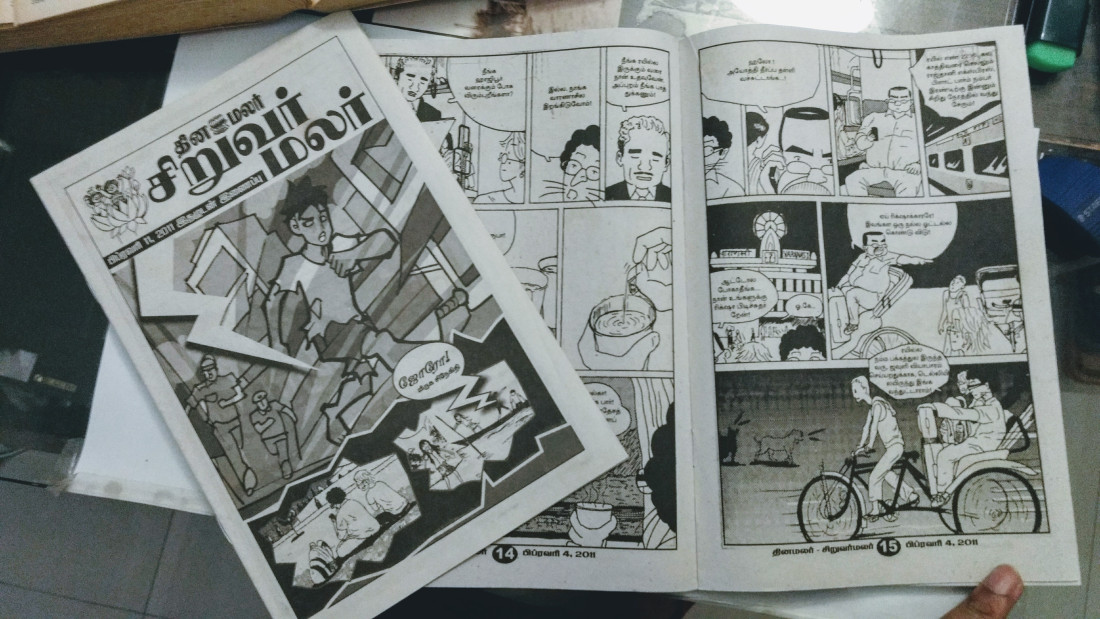
(6)  Siruvar Malar

A callback to my childhood in India, I grew up reading the Tamil counterpart of what were children’s newspapers/comics. These magazines were my weekly entertainment and would be delivered with the Friday newspapers. The magazines would be peppered with folktales, crossword puzzles, brain twisters, and just about everything that made a kid happy. My grandfather collected over thousands of these magazines in what was a treasure trove of memories that I shared with him in my childhood. I can certainly attribute the origin of my aspirations to become a writer and comic-book artist to these magazines.

(7) Spinning Tops /Beyblade

In my hometown of Madurai, India, you weren’t a cool kid if you didn’t know how to spin a top. I would spend many hours learning the art, much of which initially involved slamming the top on the ground, before eventually becoming a street master. Dueling tops in my childhood in the ’90s would later transform into my love for Beyblade in the early 2000s.

(8) Slap Bracelets + Tazos

While I didn’t get to wear a watch frequently, I did get to wear these slap bracelets  along with a few of my “bracelet buddies” throughout my middle school days in the early 2000s. I would also host a gigantic collection of tazos during the Nintendo Pokemon craze of that time period. My family lived in Egypt back then, and unfortunately, my mother would throw the tazos away prior to our departure from the country. Despite their loss, I will always remember the memorable fights I had with my younger sister bargaining between Pokemon tazos as we became Lays chips (through which they were promoted) junkies.

(9) Multicolored Pens

7963c248245a7dc601d116fad1072f78

As a kid, I felt a certain amount of authority after buying a multicolored pen, especially when I had been frequently told that red/green/blue colored pens could only be utilized by teachers! These pens were just that cool. Even now, I would love to buy one just for the sake of it.

(10) Simpler Pleasures

images

In conclusion, I got my storage sorted out, and in return inherited a flood of nostalgia on the simple pleasures that is my experience of the ’90s and early 2000s.

Living in the Past, ’96: A Movie Review

This post is a first for me as it is a review of a 2018 Tamil film which made waves in my home state of Tamil Nadu, India upon its release. Having watched the movie only recently, and being a Tamil movie enthusiast, I was left wondering how I had missed it at all.

’96 is a romantic drama starring prominent Kollywood actors Vijay Sethupathi and Trisha Krishnan in the lead roles of Ram and Jaanu, two high school sweethearts from the 1996 batch meeting again at a reunion, 22 years after their initial parting.

The plot progresses periodically between episodes of Ram and Jaanu’s past in 1996 when they were classmates in high school and fell in love, to their present state 22 years later. Their reunion, and subsequent interactions in coming to terms with their present lives form the crux of the film in an excellent eulogy capturing the nostalgia of first-love, the inevitability of time, and the power of memories.

A movie succeeds when it is able to make its audience part of its story.  Unlike most movies where I have played the classic part of the audience as a third-party individual looking in at the protagonists’ journey from a removed space, ’96 offered a refreshing and unique experience where I felt drawn into the world of Ram and Jaanu as though I were one of their close friends relating with their journey.

This is achieved largely through the original background score  of ’96. The music is evocative, providing  a unique dialogue that embraces the subtle emotions and silence reflected in the company of the protagonists, while simultaneously transcending the story by drawing the audience into their journey.

Indeed, Ram and Jaanu’s experiences reminded me of my very own efforts in writing Our Last Summer: A Personal Memoir as well as A Little Bit of Everything. Both books were motivated by my desires to capture and immortalize cherished memories from high school and the last few years of my life. The fundamental themes of love, memories, the inexorable passage of time, and the very act of remembering and living in the past as evidenced by the characters in the movie touched me deeply and served as an additional reminder of my personal life resolution to “cherish the memories of the past, live the present, and happily anticipate the future.”

I learned this lesson in the company of a tragic event in my life. It has helped me since to become stronger as an individual in making my future by remembering the past that builds my present and appreciating the subtle and simple things that I often tend to take for granted in my day to day adventures. 

Ram and Jaanu face those very same questions and find their answers in ’96. I leave it to you, my readers, to find out their journey’s end and be inspired to engage in your own drive down memory lane. ’96 joins the prestigious group of a select set of movies that have come from the Tamil film industry that I believe transcend its culture and language. I highly recommend the film for all my readers as it is readily available on Youtube, Google Play, or Einthusan.